Aquatic Milkweed
Asclepias perennis
Last reviewed: September 2026
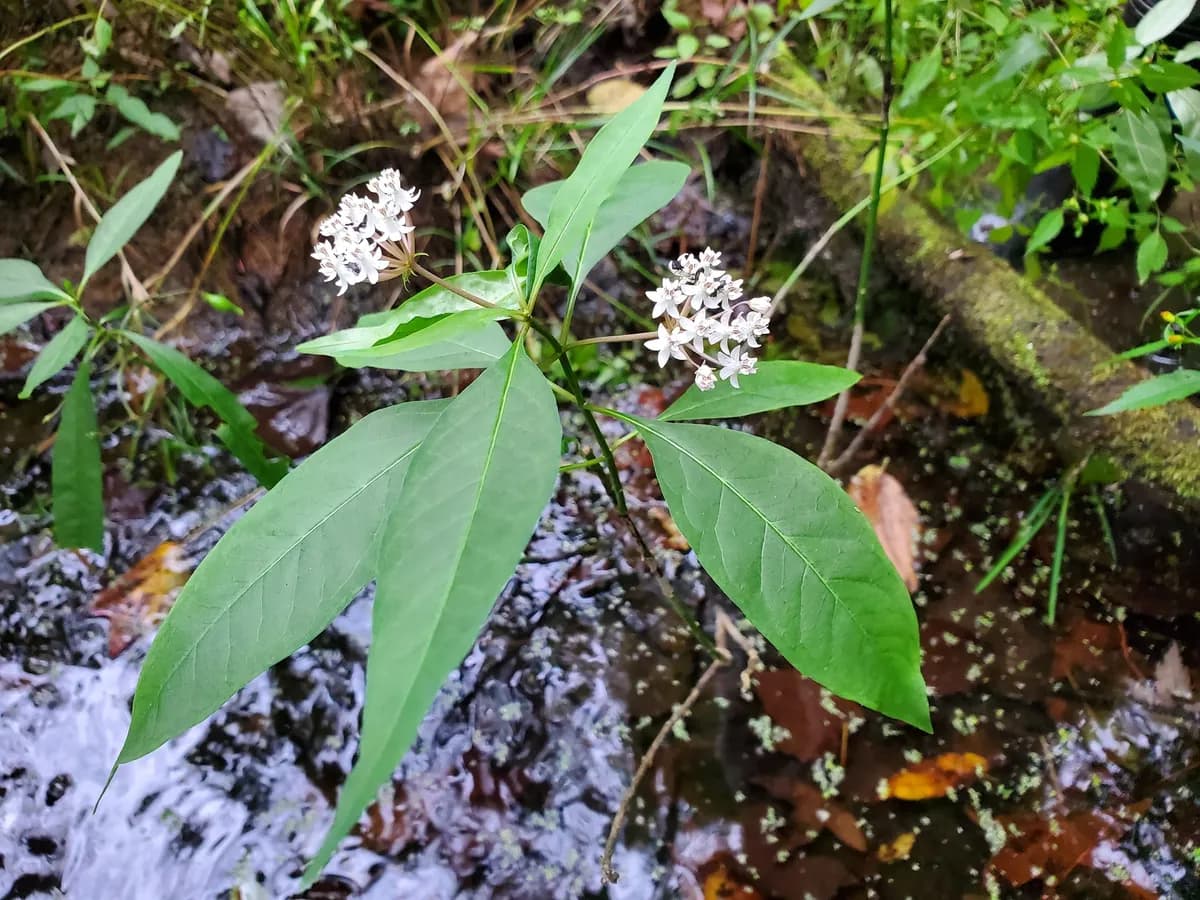
Asclepias perennis, or aquatic milkweed, is a wetland forb that blooms from March through August in swampy, wet-soil habitats across the Gulf Coast and lower Mississippi Valley. It favors full sun and consistently moist to wet soil.
Aquatic Milkweed is toxic to dogs and cats.
Listed as toxic by the ASPCA Animal Poison Control Center (opens in new tab) (last reviewed 2026-05-21). If your pet has been exposed, call the ASPCA Animal Poison Control Center at (888) 426-4435and your veterinarian's emergency line.
Pollinator Patch flags toxic plants so you can choose a pet-safe native alternative for your yard.
Light
full sun
Water
medium
Size
18"–24" H × 6"–12" W
Bloom
Mar, Apr, May, Jun, Jul, Aug
Native to
AL, AR, FL, GA and 9 more states
Pollinators
butterflies, bees
Before you buy
Your city may pay you to plant this
Cities and water utilities offer rebates for replacing lawn with native and water-wise plants. We track 452 programs across 44 states, each with a link to the provider and the date we last checked it.
Find rebates in your areaBrowse plants for this ecoregion
Aquatic Milkweed is a compact native perennial that produces small white flowers from spring through summer. This moisture-loving plant forms neat clumps and stays relatively low, making it suitable for areas with consistent water availability.
Growing Aquatic Milkweed
Grow Aquatic Milkweed in full sun and medium water. Mature plants reach 18 to 24 inches tall and spread 6 to 12 inches wide. Expect low maintenance to keep it looking intentional in a front yard.
How to care for Aquatic Milkweed, by region
How to care for Aquatic Milkweed where it is actually grown: year-round basics plus what to do each season, region by region, with the sources for each.
Care guidance last updated: September 2026
Southern Coastal Plain (includes Orlando, FL)
Year-round
Care basics for growing aquatic milkweed as a wet-spot native in the Orlando area, plus what to know about its toxicity to pets and its role as a monarch and queen host plant.
- Aquatic milkweed is a Florida native found naturally in swamps, ditches, and streambank wetlands across the state, so it wants a spot in your yard that stays wet or boggy rather than average garden soil.
- Full sun to light shade both work in the Orlando area. What matters more than sun exposure is moisture, keep the roots consistently wet.
- This species is the host plant for monarch and queen butterfly caterpillars, so expect chewed leaves during the growing season, that is a sign the plant is doing its job.
- All parts of milkweed, including this species, are toxic to dogs and cats per the ASPCA, so plant it somewhere pets are not likely to chew on it, especially puppies and curious cats.
- After flowers fade, snip off seed pods before they split open if you want to limit self-seeding and keep the planting tidy.
A rain garden or pond-edge planting of aquatic milkweed reads as an intentional wet-spot solution, which makes it an HOA-friendly way to handle a soggy corner instead of leaving it bare or weedy.
Fall
Fall care for aquatic milkweed in the Orlando area, timed to the monarch migration passing through Central Florida as rainfall tapers off.
- Fall is when Central Florida sees monarch butterflies passing through on their southward migration, so aquatic milkweed still blooming in October and November gives them a nectar and egg-laying stop along the way.
- Rainfall tapers off through fall in the Orlando area, so start checking soil moisture again and water if the wet spot begins to dry out between the season's lighter rains.
- Let some seed pods mature and split in fall if you want to collect seed or let the patch spread naturally into the wet area. Otherwise keep snipping them off for a tidier look.
- Nights start cooling by late November. Cut back any leggy growth to keep the clump neat before winter.
Trimming leggy fall growth before winter keeps the wet-spot planting looking deliberate through the season, which is the part of an HOA-friendly design that holds up when a plant is between its showiest moments.
Winter
Winter care for aquatic milkweed in the Orlando area, covering mild dry-season watering and how the plant handles Central Florida's occasional frost.
- A hard freeze in the Orlando area, rare but possible in December or January, can knock aquatic milkweed back to the ground. The perennial roots survive in the wet soil and it regrows in spring.
- After any frost damage, cut back blackened stems to keep the area tidy. There is no need to protect the roots, the plant is adapted to come back from its base.
- Winter is Central Florida's dry season, so keep an eye on the wet spot. A mild winter with less rain can still leave the soil drier than this species prefers.
- Caterpillar activity slows way down in winter since most monarchs have moved further south, but a warm stretch can still bring queen butterflies through in a mild Orlando winter.
Cutting back frost-blackened stems promptly keeps a winter-dormant wet spot looking cared for rather than dead, which is what keeps a native planting reading as HOA-friendly year round.
Spring
Spring care for aquatic milkweed in the Orlando area, when Central Florida's dry season makes watering the top priority as new growth and egg-laying begin.
- Spring in the Orlando area is usually the driest stretch of the year, so this is when aquatic milkweed needs the most attention to watering, do not let the wet spot it lives in dry out.
- New growth appears as temperatures warm, and this is when monarch and queen butterflies start laying eggs, so caterpillar chewing on fresh leaves is expected and a good sign, not a problem to fix.
- Check the undersides of leaves for oleander aphids, common on milkweed in Central Florida in spring, and knock them off with a strong stream of water rather than spraying insecticide near a plant caterpillars are actively feeding on.
- If a stray late cold snap browns a few leaves, trim them back. The plant recovers quickly once spring warmth returns.
- This is a good window to add a few more aquatic milkweed plants or divide an established clump if the wet area has room.
Keeping spring growth watered and pest-checked so it fills in evenly, rather than looking patchy or stressed, keeps a wet-spot planting reading as intentional and HOA-friendly.
Summer
Summer care for aquatic milkweed in the Orlando area, during Central Florida's rainy season and peak monarch and queen caterpillar activity.
- Summer is Central Florida's rainy season, so aquatic milkweed is in its element. Daily thunderstorms usually keep the wet spot it needs naturally saturated without much help from you.
- This is peak bloom and peak caterpillar season. Expect monarch and queen caterpillars to strip leaves down to bare stems at times, the plant is a fast regrower and will leaf back out.
- If a heat wave brings a dry stretch between storms, check the soil and water if the ground starts to dry out rather than stay consistently wet.
- Milkweed bugs often cluster on seed pods in the Orlando heat. They rarely cause serious damage and can be left alone or brushed off by hand.
- Deadhead spent flower clusters through the summer to encourage more blooms and keep the planting looking tended rather than overgrown.
Deadheading through the rainy season keeps a fast-growing summer clump looking maintained instead of wild, which matters most for an HOA-conscious gardener with a visible wet spot near the front yard.
Sources: USDA Forest Service, Plant of the Week: Asclepias perennis, Florida Museum of Natural History, White Swamp Milkweed (Asclepias perennis), ASPCA, Toxic and Non-Toxic Plants: Milkweed
Want these tasks as reminders timed to your yard? Pollinator Patch turns this guidance into a season-by-season care plan for the plants you actually grow.
In an HOA neighborhood
Aquatic Milkweed is an HOA-friendly choice. Maintenance level: low. Tidiness: 3 out of 5.
Works well in: front yard, foundation, street edge, mid zone.
Wildlife value
Essential host plant for monarch butterflies and supports various native bees. The long blooming period provides nectar resources throughout much of the growing season.
Common questions
- What kind of site does aquatic milkweed need in a garden?
- Aquatic milkweed grows best in full sun with soil that stays consistently moist to wet. It handles seasonal flooding well and is a good fit for rain gardens, pond edges, and low spots that hold water after storms.
- When does Asclepias perennis bloom?
- It flowers over a long season, typically from March into August, with clusters of small white to pale pink blooms.
- Does aquatic milkweed attract pollinators?
- Yes, its flowers draw butterflies and bees, and like other milkweeds it can also serve as a host plant for monarch caterpillars.
- Is aquatic milkweed hard to establish?
- It is not difficult in the right spot, but it does poorly in dry, well-drained soil. Consistent moisture is the main requirement for it to thrive.
- Is Aquatic Milkweed toxic to dogs?
- Yes. Aquatic Milkweed is listed as toxic to dogs by the ASPCA Animal Poison Control Center (aspca.org). If your pet has been exposed, call the ASPCA Animal Poison Control Center at (888) 426-4435.
- Is Aquatic Milkweed toxic to cats?
- Yes. Aquatic Milkweed is listed as toxic to cats by the ASPCA Animal Poison Control Center (aspca.org). If your cat has been exposed, call the ASPCA Animal Poison Control Center at (888) 426-4435.
- Is Aquatic Milkweed HOA-friendly?
- Aquatic Milkweed is generally an HOA-friendly choice in the right placement, with low maintenance.
These answers were drafted with an AI model from this plant's data. Verify care details with a local expert.
Native range data from vouchered herbarium specimen records and regional native plant society lists. Pollinator and host plant associations compiled from GBIF, iNaturalist, and published ecological literature.
If something looks wrong
Common plant problems, and what to check first
These come up on almost any plant. Each guide lists the likely causes in the order they are worth ruling out, with one thing to check before you act on any of them, and links to the source it came from.
- It is dying right after planting
- Leaves turning yellow
- Wilting even though I watered it
- Brown crispy leaf tips
- Bugs on the plant
Pollinator Patch flags toxic plants like Aquatic Milkweed and shows pet-safe natives for your ecoregion instead.
Planning a bed around it? Start a free plan with this plant
Not sure where to start? Take the 2-minute yard quiz