Buffalograss
Bouteloua dactyloides
Last reviewed: October 2026
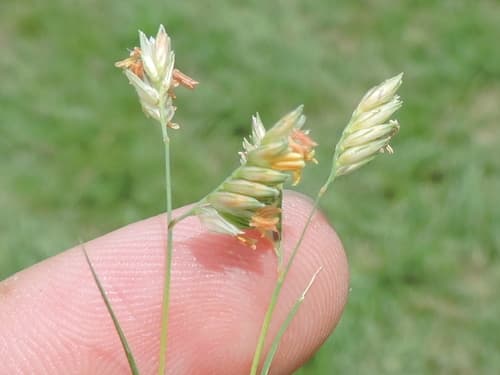
Buffalo grass is a low, sod forming prairie grass that thrives in full sun with minimal water and blooms from May through August.
Toxicity unknown
Buffalograss (Bouteloua dactyloides) is not listed by the ASPCA Animal Poison Control Center (opens in new tab) or the other sources we check, so we have no verdict for it either way. Absence from those lists is not a clearance. If your pet shows symptoms after eating any plant, call the ASPCA at (888) 426-4435.
The USDA PLANTS Database (opens in new tab) does not flag Buffalograss as toxic to livestock.
Light
full sun
Water
low
Size
3"–12" H × 12"–24" W
Bloom
May, Jun, Jul, Aug
Native to
AR, AZ, CO, GA and 18 more states
Pollinators
bees, beetles, butterflies
Before you buy
Your city may pay you to plant this
Cities and water utilities offer rebates for replacing lawn with native and water-wise plants. We track 459 programs across 44 states, each with a link to the provider and the date we last checked it.
Find rebates in your areaPicture natives in your own yard
Upload a photo of your yard and Patch Vision shows a rendering of it planted with natives for your region, like Buffalograss.


Browse plants for this ecoregion
Buffalo grass is a low-growing native prairie grass that forms dense, fine-textured mats. This drought-tolerant species stays relatively short and creates a neat, uniform appearance throughout the growing season. It produces small, inconspicuous flower spikes during summer months.
Growing Buffalograss
Grow Buffalograss in full sun and low water. Mature plants reach 3 to 12 inches tall and spread 12 to 24 inches wide. Expect low maintenance to keep it looking intentional in a front yard.
How to care for Buffalograss, by region
How to care for Buffalograss where it is actually grown: year-round basics plus what to do each season, region by region, with the sources for each.
Care guidance last updated: August 2026
Cross Timbers (includes Fort Worth, TX)
Year-round
Buffalograss is a warm season native grass found in the Blackland Prairie and Cross Timbers ecoregions of North Texas, which cover the Fort Worth and Dallas area. It works as a low input turf built for local heat and dry spells.
- Native to the Blackland Prairie and Cross Timbers ecoregions of North Texas, so it is naturally suited to the interior of the Dallas Fort Worth metroplex.
- Needs full sun, at least six to eight hours a day, and thins out in shade.
- Handles both the sandier soils around Fort Worth and the heavier clay soils around Dallas, and does not need amended soil to establish.
- Very low water needs once established, often getting by on about half an inch to an inch and a half of rain a month.
- Warm season grass that greens up in late spring and goes dormant, turning tan rather than dying, in winter.
Fall
Fall is the wind down toward dormancy, timed around the Fort Worth area's typical first freeze in late November.
- Growth slows as days shorten, plan the last nitrogen feeding no later than August so the grass is not pushed into soft new growth right before frost.
- The average first freeze in the Dallas Fort Worth area is around November 22, buffalograss will start turning tan and going dormant around that time.
- Keep mowing at the same 2.5 to 4 inch height into fall, there is no need to scalp the lawn late in the season.
- Overseeding with a cool season grass on top is optional and mostly a color choice, buffalograss itself does not need it to get through winter.
One clean, even mow before dormancy sets in keeps the lawn reading as tended rather than neglected once it turns tan for winter.
Winter
Buffalograss goes fully dormant for winter in the Fort Worth area, and the tan color that follows is normal, not a dying lawn.
- The lawn goes fully dormant and turns tan to light brown for winter, this is normal and not a sign of a dead lawn.
- No mowing or fertilizing is needed while dormant, roughly December through February in North Texas.
- Foot traffic on the dormant lawn is fine, but hold off on herbicide or major soil work until spring green-up.
The tan winter color is normal seasonal dormancy, not a dead lawn, worth mentioning if an HOA committee raises it.
Spring
Spring is green-up and, if needed, establishment season for buffalograss in the Fort Worth area, timed to the local last freeze.
- Buffalograss usually greens up around April, once soil temperatures warm past about 65 degrees, a few weeks after the average last freeze near March 12 in the Dallas Fort Worth area.
- If plugging or overseeding a new patch, wait until nighttime temperatures stay reliably above 60 degrees, typically late April into May, for the best establishment.
- Hold off on fertilizer until the lawn is fully green, then one light nitrogen application, no more than half a pound of nitrogen per 1,000 square feet, is enough to start the season.
- Mow at 2.5 to 4 inches, and wait for the first real flush of new growth before the first cut.
Summer
Summer is buffalograss's strong season, it is built for Dallas Fort Worth heat and needs very little help from the homeowner.
- Summers here regularly reach the mid to upper 90s, and buffalograss handles that heat well with little supplemental water.
- Established lawns usually only need watering during extended dry spells, roughly half an inch to an inch and a half a month is enough to keep it green.
- Watch for weeds like crabgrass or bermudagrass, since summer heat and rain favor faster growing invaders more than they favor buffalograss.
- One more light nitrogen feeding in early to mid summer is plenty, more fertilizer mostly just adds mowing and weed pressure, not buffalograss health.
Sources: Lady Bird Johnson Wildflower Center, Bouteloua dactyloides plant profile, Native Plant Society of Texas, Bouteloua dactyloides native plant page, Texas A&M AggieTurf, buffalograss species profile, National Weather Service Fort Worth/Dallas, average first and last freeze dates
Texas Blackland Prairies (includes Dallas, TX)
Year-round
Buffalograss is a warm season native grass found in the Blackland Prairie and Cross Timbers ecoregions of North Texas, which cover the Fort Worth and Dallas area. It works as a low input turf built for local heat and dry spells.
- Native to the Blackland Prairie and Cross Timbers ecoregions of North Texas, so it is naturally suited to the interior of the Dallas Fort Worth metroplex.
- Needs full sun, at least six to eight hours a day, and thins out in shade.
- Handles both the sandier soils around Fort Worth and the heavier clay soils around Dallas, and does not need amended soil to establish.
- Very low water needs once established, often getting by on about half an inch to an inch and a half of rain a month.
- Warm season grass that greens up in late spring and goes dormant, turning tan rather than dying, in winter.
Fall
Fall is the wind down toward dormancy, timed around the Dallas area's typical first freeze in late November.
- Growth slows as days shorten, plan the last nitrogen feeding no later than August so the grass is not pushed into soft new growth right before frost.
- The average first freeze in the Dallas Fort Worth area is around November 22, buffalograss will start turning tan and going dormant around that time.
- Keep mowing at the same 2.5 to 4 inch height into fall, there is no need to scalp the lawn late in the season.
- Overseeding with a cool season grass on top is optional and mostly a color choice, buffalograss itself does not need it to get through winter.
One clean, even mow before dormancy sets in keeps the lawn reading as tended rather than neglected once it turns tan for winter.
Winter
Buffalograss goes fully dormant for winter in the Dallas area, and the tan color that follows is normal, not a dying lawn.
- The lawn goes fully dormant and turns tan to light brown for winter, this is normal and not a sign of a dead lawn.
- No mowing or fertilizing is needed while dormant, roughly December through February in North Texas.
- Foot traffic on the dormant lawn is fine, but hold off on herbicide or major soil work until spring green-up.
The tan winter color is normal seasonal dormancy, not a dead lawn, worth mentioning if an HOA committee raises it.
Spring
Spring is green-up and, if needed, establishment season for buffalograss in the Dallas area, timed to the local last freeze.
- Buffalograss usually greens up around April, once soil temperatures warm past about 65 degrees, a few weeks after the average last freeze near March 12 in the Dallas Fort Worth area.
- If plugging or overseeding a new patch, wait until nighttime temperatures stay reliably above 60 degrees, typically late April into May, for the best establishment.
- Hold off on fertilizer until the lawn is fully green, then one light nitrogen application, no more than half a pound of nitrogen per 1,000 square feet, is enough to start the season.
- Mow at 2.5 to 4 inches, and wait for the first real flush of new growth before the first cut.
Summer
Summer is buffalograss's strong season, it is built for Dallas Fort Worth heat and needs very little help from the homeowner.
- Summers here regularly reach the mid to upper 90s, and buffalograss handles that heat well with little supplemental water.
- Established lawns usually only need watering during extended dry spells, roughly half an inch to an inch and a half a month is enough to keep it green.
- Watch for weeds like crabgrass or bermudagrass, since summer heat and rain favor faster growing invaders more than they favor buffalograss.
- One more light nitrogen feeding in early to mid summer is plenty, more fertilizer mostly just adds mowing and weed pressure, not buffalograss health.
Sources: Lady Bird Johnson Wildflower Center, Bouteloua dactyloides plant profile, Native Plant Society of Texas, Bouteloua dactyloides native plant page, National Weather Service Fort Worth/Dallas, average first and last freeze dates, Texas A&M AggieTurf, buffalograss species profile
In an HOA neighborhood
Buffalograss is an HOA-friendly choice. Maintenance level: low. Tidiness: 4 out of 5.
Works well in: front yard, foundation, street edge, mid zone.
- May brown slightly in winter despite evergreen classification
Wildlife value
The flowers attract native bees and beetles during the blooming period. As a native grass, it provides habitat and food sources for various prairie insects and small wildlife.
Common questions
- When does buffalo grass bloom?
- Buffalo grass produces its small flower spikes from May through August, with male and female flowers appearing separately on the same plant.
- How much water does buffalo grass need?
- Buffalo grass is adapted to low water conditions and can persist on rainfall alone once established, making it a common choice for dry, unirrigated lawns and pastures.
- What kind of light does buffalo grass need?
- Buffalo grass needs full sun and does not perform well in shaded or partially shaded sites.
- Do pollinators visit buffalo grass?
- Bees and beetles have been observed visiting buffalo grass flowers, though the grass is primarily wind pollinated like most grasses.
- Is Buffalograss toxic to livestock?
- The USDA PLANTS Database does not flag Buffalograss as toxic to livestock.
- Is Buffalograss HOA-friendly?
- Buffalograss is generally an HOA-friendly choice in the right placement, with low maintenance.
These answers were drafted with an AI model from this plant's data. Verify care details with a local expert.
Native range data from the World Checklist of Vascular Plants (Kew). Pollinator and host plant associations compiled from GBIF, iNaturalist, and published ecological literature.
If something looks wrong
Common plant problems, and what to check first
These come up on almost any plant. Each guide lists the likely causes in the order they are worth ruling out, with one thing to check before you act on any of them, and links to the source it came from.
- It is dying right after planting
- Leaves turning yellow
- Wilting even though I watered it
- Brown crispy leaf tips
- Bugs on the plant
Ready to grow Buffalograss? Add it to your garden in Pollinator Patch to track it and get season-by-season care guidance.