Bunchflower
Melanthium virginicum
Last reviewed: September 2026
Bunchflower (Melanthium virginicum) is a perennial forb native to AL, AR, DC, DE and 22 more states. It blooms in June, July, and August. The flowers draw beetles, flies, and native bees.
Toxicity unknown
Bunchflower (Melanthium virginicum) is not listed by the ASPCA Animal Poison Control Center (opens in new tab) or the other sources we check, so we have no verdict for it either way. Absence from those lists is not a clearance. If your pet shows symptoms after eating any plant, call the ASPCA at (888) 426-4435.
Light
full sun
Water
medium
Size
36"–60" H × 18"–24" W
Bloom
Jun, Jul, Aug
Native to
AL, AR, DC, DE and 22 more states
Pollinators
beetles, flies, native bees
Before you buy
Your city may pay you to plant this
Cities and water utilities offer rebates for replacing lawn with native and water-wise plants. We track 458 programs across 44 states, each with a link to the provider and the date we last checked it.
Find rebates in your areaPicture natives in your own yard
Upload a photo of your yard and Patch Vision shows a rendering of it planted with natives for your region, like Bunchflower.


Browse plants for this ecoregion
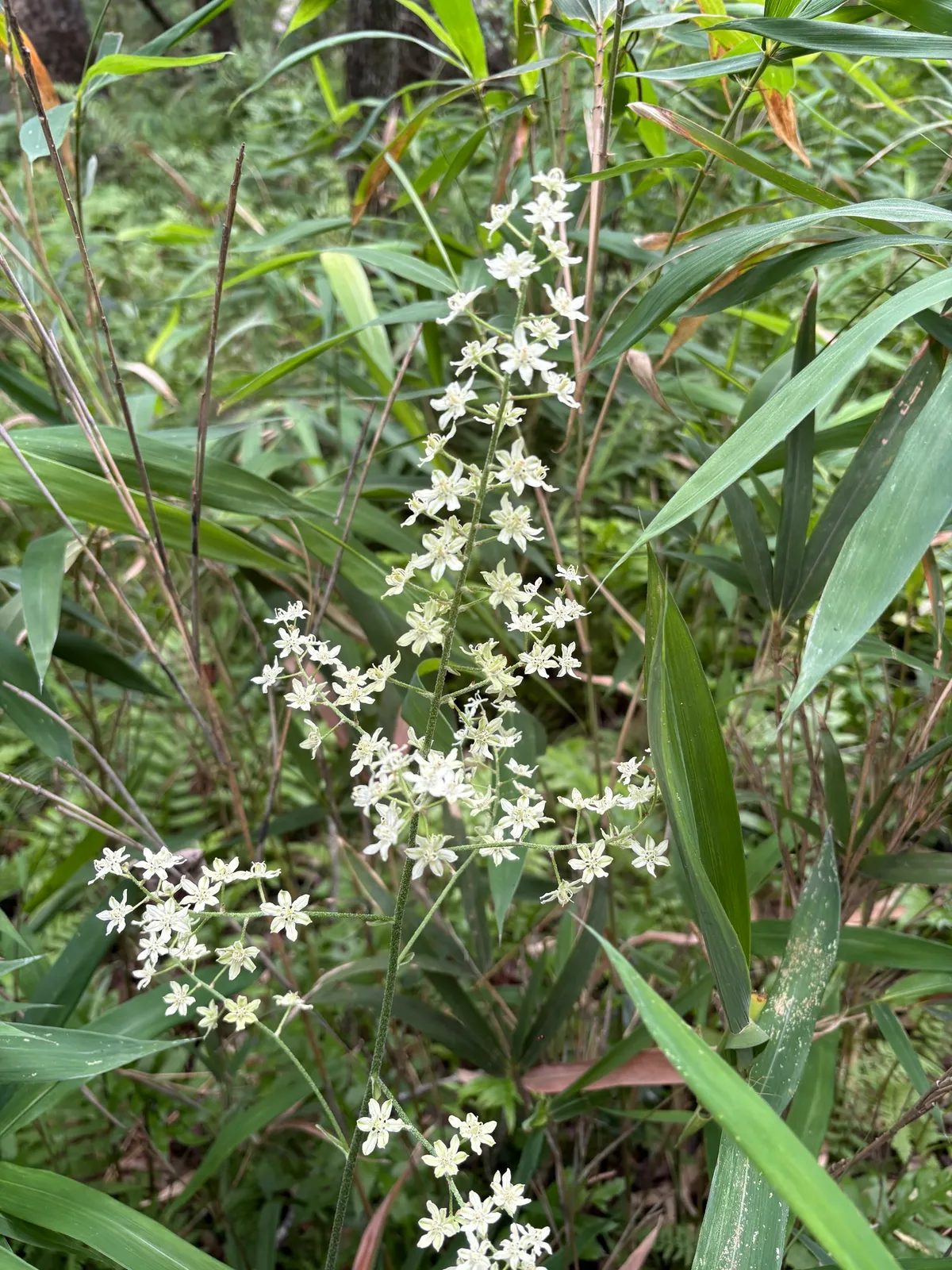
A tall perennial with grass-like basal leaves and a stout flowering stalk topped by a spike of star-shaped, greenish-white flowers. It grows in wet meadows and prairies, standing well above surrounding vegetation.
Growing Bunchflower
Grow Bunchflower in full sun and medium water. Mature plants reach 36 to 60 inches tall and spread 18 to 24 inches wide.
How to care for Bunchflower, by region
How to care for Bunchflower where it is actually grown: year-round basics plus what to do each season, region by region, with the sources for each.
Care guidance last updated: September 2026
Ouachita Mountains (includes Hot Springs, AR)
Year-round
Bunchflower is a native Arkansas wildflower that settles well into Hot Springs area beds once it has steady moisture, needing little upkeep beyond consistent water and patience while it establishes.
- Give it full sun to light shade and soil that stays evenly moist. It naturally grows in wet prairies, seepage areas, and damp meadows, so it struggles if the bed dries out for long stretches.
- Expect upright flower stalks 3 to 5 feet tall carrying green white flower clusters from June through August, right through the Hot Springs summer.
- New plants often take a couple of growing seasons to settle in before they flower well, so do not expect a full show the first year.
- This plant is native to Arkansas and much of the eastern and southeastern United States, so it fits naturally into a Hot Springs area garden without needing extra soil amendments to mimic a different climate.
Its upright habit and native pedigree make it an HOA-friendly choice for a rain garden edge or a damp corner bed in Hot Springs.
Fall
Fall is a cutback and clean up season for bunchflower as it finishes blooming and heads into dormancy.
- Flowering wraps up by late summer, so by fall the seed heads are drying and the foliage starts to yellow.
- Leave the dried stalks standing into fall if you can. They hold seed for natural spread and give some winter structure to the bed.
- As nights cool heading toward the first frost, growth slows and the plant redirects energy back into its root system for winter.
- Fall is a reasonable time to divide an overcrowded clump, once the heat of summer has broken, giving new divisions cool weather to root in before winter.
Standing seed heads can look untidy to some HOA reviewers, so cutting stalks back to a few inches once they have browned keeps the bed looking intentional.
Winter
Winter is a dormant, hands off season for bunchflower in the Hot Springs area.
- The plant dies back to the ground and spends winter as a dormant root crown. There is nothing to water or feed during this period.
- Hot Springs winters, roughly USDA zone 7b to 8a, are mild with occasional hard freezes. This species is a perennial adapted to the region and needs no covering or extra protection.
- If you did not cut back dried stalks in fall, late winter, before new growth starts, is the last easy window to clear them out.
- Mark the spot if the bed is otherwise bare in winter. Bunchflower is slow to re-emerge in spring, and it is easy to accidentally dig into a dormant crown.
A cleared, marked bed reads as tended rather than neglected during the bare winter months.
Spring
Spring is mostly a waiting season for bunchflower in Hot Springs. Foliage returns and the plant builds toward its summer bloom.
- New basal leaves emerge as soil warms in early to mid spring. Keep the area consistently moist since this plant is adapted to wet meadows and seepage spots, not dry beds.
- Arkansas's average last frost-free date is around April 15, so spring is a good window to plant new bunchflower or divide an established clump once nights have warmed past that point.
- Skip heavy fertilizing. It is adapted to naturally damp, fertile soils rather than a rich feed, and too much fertilizer can produce floppy growth.
- No flowers yet this season. The bloom stalks are building through late spring ahead of the summer show.
Low spring foliage stays tidy and out of the way, an easy background plant that will not draw attention before it blooms.
Summer
Summer is bunchflower's main season in Hot Springs. It flowers through the hottest stretch of the year and needs steady moisture to keep looking good.
- Flower stalks open from June into August, exactly when Hot Springs summers turn hot and humid. This is the plant's showiest stretch.
- Water deeply during dry spells. Its natural habitat is wet prairies and seeps, so it will wilt and brown at the edges faster than most drought-tolerant natives if the soil dries out.
- Full sun to light afternoon shade both work, and a little afternoon shade can help the flower clusters hold up better in the hottest weeks.
- Deadheading is not necessary. Let the seed heads develop if you want the clump to spread on its own over time.
Tall, upright bloom stalks read as an intentional planting rather than an overgrown patch, keeping it HOA-friendly through peak summer.
Sources: Lady Bird Johnson Wildflower Center - Veratrum virginicum (Melanthium virginicum) native range and growing conditions, University of Arkansas Cooperative Extension - Spring Planting Tips (average last frost-free date)
Wildlife value
The open flower spikes attract a range of pollinators including beetles, flies and native bees.
Common questions
- How much sun does Bunchflower need?
- Bunchflower grows best in full sun conditions.
- When does Bunchflower bloom?
- Bunchflower blooms in June, July, and August.
- Where is Bunchflower native?
- Bunchflower (Melanthium virginicum) is native to AL, AR, DC, DE and 22 more states, per the World Checklist of Vascular Plants (Kew).
- What pollinators does Bunchflower attract?
- Bunchflower draws beetles, flies, and native bees.
Native range data from the World Checklist of Vascular Plants (Kew). Pollinator and host plant associations compiled from GBIF, iNaturalist, and published ecological literature.
If something looks wrong
Common plant problems, and what to check first
These come up on almost any plant. Each guide lists the likely causes in the order they are worth ruling out, with one thing to check before you act on any of them, and links to the source it came from.
- It is dying right after planting
- Leaves turning yellow
- Wilting even though I watered it
- Brown crispy leaf tips
- Bugs on the plant
Ready to grow Bunchflower? Add it to your garden in Pollinator Patch to track it and get season-by-season care guidance.