California Wild Buckwheat
Eriogonum fasciculatum
Last reviewed: September 2026
Eriogonum fasciculatum, California buckwheat, is a low water shrub that blooms from May through September with clusters of small white to pink flowers, thriving in full sun on dry slopes, chaparral, and coastal scrub.
California Wild Buckwheat (Eriogonum fasciculatum) is not flagged as toxic to dogs or cats by Plants For A Future (PFAF) (opens in new tab) (last reviewed 2026-05-21). This verdict does not come from the ASPCA. If your pet shows symptoms after eating any plant, call the ASPCA at (888) 426-4435.
The USDA PLANTS Database (opens in new tab) does not flag California Wild Buckwheat as toxic to livestock.
Light
full sun
Water
low
Size
12"–48" H × 24"–72" W
Bloom
May, Jun, Jul, Aug, Sep
Native to
AZ, CA, NV, UT
Pollinators
bees, butterflies, moths
Before you buy
Your city may pay you to plant this
Cities and water utilities offer rebates for replacing lawn with native and water-wise plants. We track 459 programs across 44 states, each with a link to the provider and the date we last checked it.
Find rebates in your areaPicture natives in your own yard
Upload a photo of your yard and Patch Vision shows a rendering of it planted with natives for your region, like California Wild Buckwheat.


Browse plants for this ecoregion
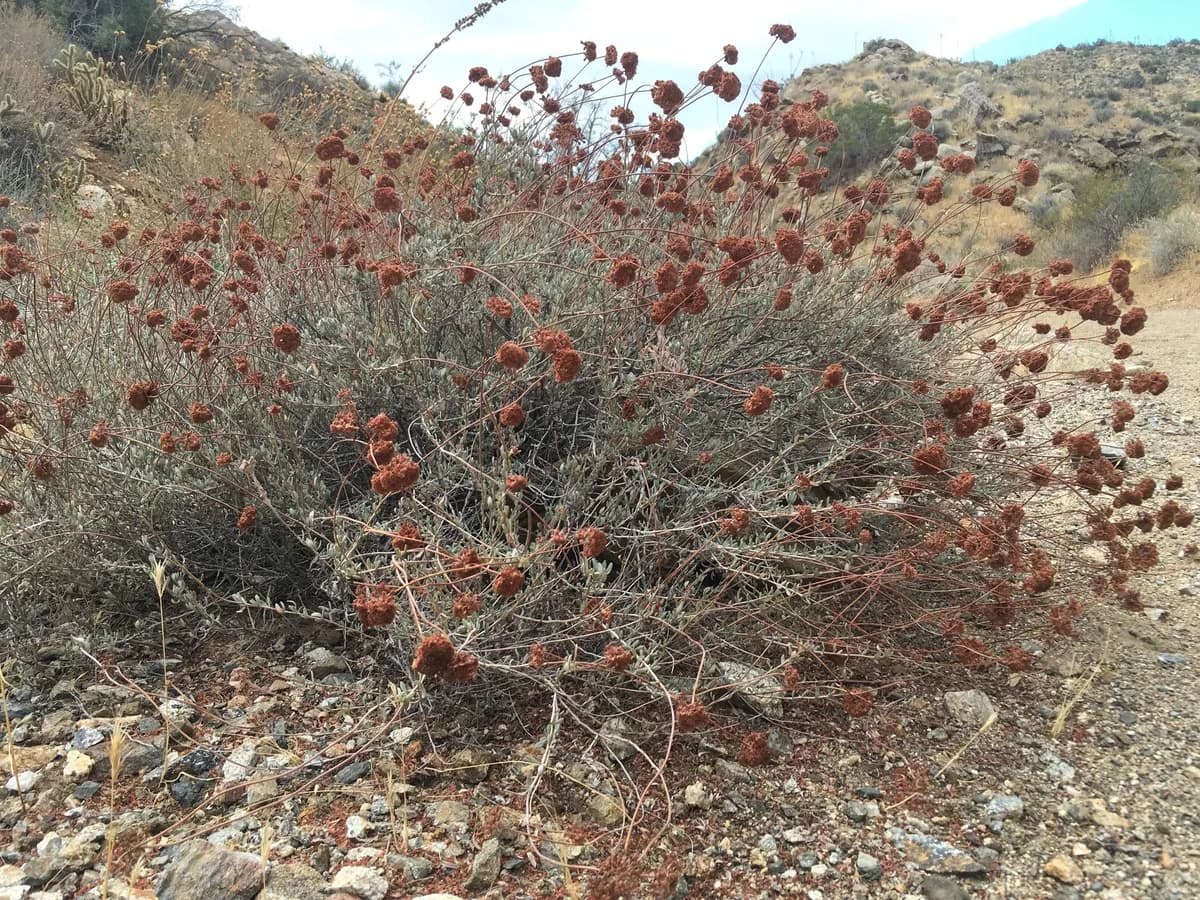
A hardy native shrub with clusters of white to pink flowers that age to a rusty brown. It forms a rounded mound of narrow gray-green leaves and produces abundant blooms from spring through fall.
Growing California Wild Buckwheat
Grow California Wild Buckwheat in full sun and low water. Mature plants reach 12 to 48 inches tall and spread 24 to 72 inches wide. Expect low maintenance to keep it looking intentional in a front yard.
How to care for California Wild Buckwheat, by region
How to care for California Wild Buckwheat where it is actually grown: year-round basics plus what to do each season, region by region, with the sources for each.
Care guidance last updated: August 2026
Sonoran Basin and Range (includes Phoenix, AZ)
Year-round
California Buckwheat is a tough, low-water desert shrub that likes full sun, poor rocky soil, and almost no fussing. The fastest way to kill it in a Phoenix yard is too much water, so water deep and rarely and let the ground dry out between drinks.
- Plant in full sun in fast-draining decomposed-granite or caliche soil. Do not amend the hole with potting mix or compost, since this desert native does better in lean soil.
- Water deep and infrequent. Once established, a slow soak every 2 to 4 weeks in the cool months and every 7 to 10 days in the hottest stretch is plenty. Let the top few inches dry out before you water again.
- Top the bed with a 2 to 3 inch layer of decomposed granite or gravel, not wood bark. Bark looks out of place in the low desert and traps moisture against the crown.
- Skip fertilizer entirely. Desert natives resent rich soil and grow leggy and weak when fed.
Fall
Fall is the prime season in the low desert. The heat breaks, the plant settles in, and October and November are the best time both to plant new buckwheat and to tidy up the shrub after its long summer bloom.
- Plant in October or November. Cooler air lets the roots establish through the mild winter so the shrub is ready before next summer's heat. This is the single best planting window of the year.
- As the flowers fade to their rusty color, shear the spent bloom heads and lightly shape the shrub. A cut back now keeps it compact and encourages a fuller plant.
- Water new fall plantings deeply right after planting, then every 1 to 2 weeks while roots take hold. Established plants need only a deep soak every 2 to 3 weeks as things cool.
- Top off the decomposed-granite mulch to a 2 to 3 inch layer while you have the bed open, and keep it pulled back slightly from the base of the stems.
Cutting back the spent bloom heads and shaping the shrub in fall keeps the plant looking cared for rather than overgrown, which reads as intentional and lowers the chance of an HOA violation letter over an untidy front yard.
Winter
Winter in Phoenix is a mild cool season, not a true dormancy. Buckwheat is frost-hardy in the Phoenix core and needs very little from you, mostly just less water.
- Water sparingly. Gentle winter rains from December through March often cover most of the plant's needs, so a deep soak every 3 to 4 weeks only when the ground is dry is plenty.
- No frost protection is needed for an established plant in the Phoenix core, since California Buckwheat shrugs off the light frosts here. Only a brand new planting in an open cold spot might want a light cover on a rare hard freeze night.
- Hold off on any hard pruning until fall. Light removal of dead wood is fine, but save the real shaping for after the bloom.
- Keep the bed clean of blown-in leaves and litter so the decomposed-granite surface stays crisp through the cooler months.
Spring
Spring in Phoenix means warming days and the start of new growth for buckwheat, with its first white flowers opening as May arrives. This is the time to taper off the winter watering, not ramp it up.
- Cut back the winter watering as days warm through March and April. A deep soak every 2 to 3 weeks is enough for an established plant.
- Early spring is a weaker secondary planting window if you missed fall. If you plant now, water new roots more often through the first summer and get them in before the real heat hits.
- Refresh any thin spots in the decomposed-granite mulch so the root zone stays cool and the bed still reads clean.
- Do not fertilize to push spring growth. Let the plant flush on its own and enjoy the first white blooms starting in May.
A tidy decomposed-granite bed with the shrub kept off the sidewalk reads as intentional desert xeriscape, which is the expected HOA-friendly front-yard look in Phoenix and helps avoid a violation letter over a bed that looks unkept.
Summer
Summer is the stress season, not the growing peak. Buckwheat blooms right through it and feeds bees, butterflies, and moths, but the June foresummer is dry and brutal and the July to September monsoon changes everything about how you water.
- In the dry June foresummer, give an established plant a deep soak every 7 to 10 days. In its first one or two summers, water a bit more often so the young roots do not cook.
- Once the monsoon rains start in July, back off the hose. Warm downpours do the watering for you, and the number one killer now is overwatering on top of the rain.
- Do not plant in summer. Setting a new shrub in the ground from May through July in Phoenix heat is the most common local mistake and usually ends in a dead plant.
- Leave the flowers up through summer. They are an active nectar and host source for bees, butterflies, and moths in the hottest months when little else is blooming.
Sources: Arizona-Sonora Desert Museum, Eriogonum fasciculatum plant profile, USDA PLANTS Database, Eriogonum fasciculatum California buckwheat, University of Arizona Cooperative Extension, fall planting and pruning for desert natives, Arizona Native Plant Society, low desert native shrub care, Desert Botanical Garden, desert gardening and seasonal watering guidance, Lady Bird Johnson Wildflower Center, Eriogonum fasciculatum native plant database
Southern California/Northern Baja Coast (includes Los Angeles, CA)
Year-round
California wild buckwheat is native to the hills and canyons right around Los Angeles, so once it settles in it wants to be left alone more than helped.
- This species is native to coastal sage scrub and chaparral from the Santa Barbara coast down through northern Los Angeles County, so LA's dry summers and mild winters are exactly what it evolved for.
- Give it full sun and fast-draining soil. Skip compost or rich amended soil, lean soil is what keeps this plant compact and long lived instead of floppy and short lived.
- Water every week or two through the first summer after planting to help roots establish, then taper down to occasional deep watering or none at all once it is a year or two old.
- It is a heavy pollinator plant. Bees work the flowers constantly, and it is a caterpillar host plant for the Mormon metalmark and Acmon blue butterflies, meaning their caterpillars actually eat this plant's leaves as part of their life cycle.
- There is no ASPCA listing for this exact species, but ASPCA does list a close relative, Eriogonum umbellatum (also called wild buckwheat), as non-toxic to dogs, cats, and horses, and no California native buckwheat is flagged as toxic on ASPCA's lists. Treat this as reassuring rather than a confirmed determination, since the exact species has not been individually tested.
Fall
By fall the flowers are fading to rusty brown, and this is the season to decide how tidy versus wild you want the plant to look through winter.
- Flower clusters dry to a rust-red color that many people like leaving standing, since they feed finches and other seed-eating birds through fall and into winter.
- If a tidier front-yard look matters more to you, shear off the spent flower stalks now. Cut back to just above the green foliage, never into bare woody stems.
- Fall is one of the best times to plant new California buckwheat in the LA area. Cooling temperatures and typical fall rain help new roots establish before next summer's heat.
- Do not fertilize in fall. This plant is adapted to lean soil, and added nutrients tend to make growth soft, floppy, and more prone to falling over.
Shearing the dried flower stalks back to the foliage line in fall is an HOA-friendly way to keep the front yard looking tended while the plant is otherwise dormant.
Winter
Winter in Los Angeles is the buckwheat's quiet season, it is usually not flowering, so this is the one stretch where a harder structural prune will not cost you any blooms.
- This is generally the plant's rest period before flowering starts back up in spring, so if the shrub has gotten woody or overgrown, a harder cutback now is the least disruptive time to do it.
- Do not shear it into a tight ball or cut back to bare wood with no green growth left on a stem, that can kill that section of the plant. Always leave some live foliage on every stem you cut.
- LA's winter rains are usually enough on their own. Hold off on supplemental watering unless it is an unusually dry winter with weeks between storms.
- Watch drainage during heavy rain years. In a spot that stays soggy, winter is when root rot symptoms like blackened lower stems tend to show up first.
A careful winter structural prune, leaving some green on every stem, is the HOA-conscious way to reset an overgrown buckwheat's shape before spring bloom starts.
Spring
Spring is when California buckwheat starts flowering in the LA basin, so this is a season to watch it bloom, not to prune it back hard.
- Flowering often begins as early as March in the LA area and runs into fall, so hold off on any hard pruning now or you will cut off the flowers pollinators are actively using.
- New spring growth can look a little floppy after winter rain. A light shaping trim of just the stem tips is fine before flower buds open if you want a tidier look.
- Watch for aphids clustering on tender new growth tips. A strong blast of water from the hose usually knocks them off without needing any spray.
- Spring, while there is still rain and mild temperatures, is a good time to plant a new California buckwheat if you are adding one to the yard.
Keeping any spring shaping light and even, rather than skipping it, gives an HOA-conscious tidy look while still leaving the flower buds intact for pollinators.
Summer
Summer is the buckwheat's peak bloom and its toughest-love season in LA, it wants heat and almost no water once it is established.
- This is peak bloom season. Flowers often stay showy from late spring through summer, then dry to an attractive rust-red color that needs no deadheading to still look good.
- If the plant has been in the ground more than a year, cut back on or skip supplemental water entirely. Regular summer irrigation is the most common way people accidentally kill this plant with kindness.
- Keep it away from lawn sprinklers or drip lines meant for thirstier plants nearby. Overwatered buckwheat is prone to root rot and stem dieback.
- The dried rust-colored flower heads left standing through summer are not a problem, finches and other seed-eating birds feed on them.
Sources: Calscape (California Native Plant Society) - California Buckwheat species page, Lady Bird Johnson Wildflower Center - Eriogonum fasciculatum plant profile, ASPCA - Toxic and Non-Toxic Plant List, Dogs, ASPCA - Wild Buckwheat (Eriogonum umbellatum) toxicity entry, Calscape - Mormon Metalmark (Apodemia mormo) host plants, Calscape - Acmon Blue (Icaricia acmon) host plants
In an HOA neighborhood
California Wild Buckwheat is an HOA-friendly choice in the right placement. Maintenance level: low. Tidiness: 2 out of 5.
Works well in: foundation, mid zone.
- Rusty brown seed heads persist after blooming
- Can appear leggy or sparse in poor conditions
- May look too informal for traditional landscape preferences
Wildlife value
Host plant for Mormon metalmark, Acmon blue.
Extremely valuable to native wildlife, supporting over 30 butterfly species including endangered butterflies, plus numerous bee species, moths, and beneficial insects.
Common questions
- How much water does California buckwheat need?
- Once established, Eriogonum fasciculatum needs very little supplemental water and does best on dry, well drained slopes typical of chaparral and coastal scrub.
- When does California buckwheat bloom?
- It flowers from May through September, producing rounded clusters of small white to pink blossoms that darken as they age.
- What pollinators visit California buckwheat?
- Bees, butterflies, and moths regularly visit the flowers, making it a valued nectar source in gardens and restoration plantings.
- What light does California buckwheat need to grow well?
- It grows best in full sun and can tolerate part sun, though flowering is usually fullest with more direct light exposure.
- Is California Wild Buckwheat toxic to dogs?
- California Wild Buckwheat is not flagged as toxic to dogs by Plants For A Future (PFAF). This verdict does not come from the ASPCA.
- Is California Wild Buckwheat toxic to cats?
- California Wild Buckwheat is not flagged as toxic to cats by Plants For A Future (PFAF). This verdict does not come from the ASPCA.
- Is California Wild Buckwheat toxic to livestock?
- The USDA PLANTS Database does not flag California Wild Buckwheat as toxic to livestock.
- Is California Wild Buckwheat HOA-friendly?
- California Wild Buckwheat is generally an HOA-friendly choice in the right placement, with low maintenance.
These answers were drafted with an AI model from this plant's data. Verify care details with a local expert.
Native range data from vouchered herbarium specimen records and regional native plant society lists. Pollinator and host plant associations compiled from GBIF, iNaturalist, and published ecological literature.
If something looks wrong
Common plant problems, and what to check first
These come up on almost any plant. Each guide lists the likely causes in the order they are worth ruling out, with one thing to check before you act on any of them, and links to the source it came from.
- It is dying right after planting
- Leaves turning yellow
- Wilting even though I watered it
- Brown crispy leaf tips
- Bugs on the plant
Ready to grow California Wild Buckwheat? Add it to your garden in Pollinator Patch to track it and get season-by-season care guidance.