Foothill Lupine
Lupinus albifrons
Last reviewed: September 2026
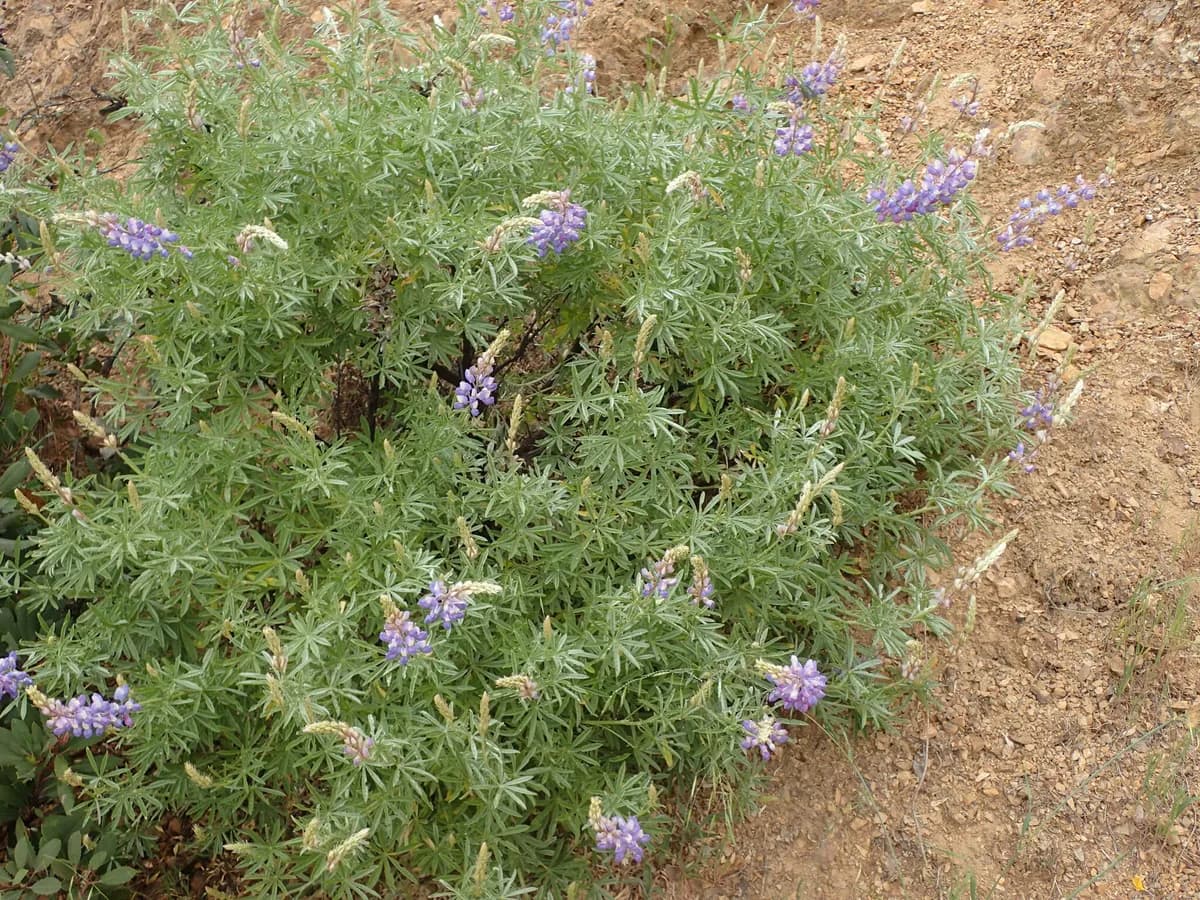
Lupinus albifrons is a silvery leaved shrub that blooms from March through June with tall spikes of purple flowers. It grows well in full sun with low water in dry, well drained slopes and coastal scrub.
Foothill Lupine (Lupinus albifrons) is not flagged as toxic to dogs or cats by Plants For A Future (PFAF) (opens in new tab) (last reviewed 2026-05-21). This verdict does not come from the ASPCA. If your pet shows symptoms after eating any plant, call the ASPCA at (888) 426-4435.
Light
full sun
Water
low
Size
12"–48" H × 12"–48" W
Bloom
Mar, Apr, May, Jun
Native to
CA, OR
Pollinators
bees, butterflies
Before you buy
Your city may pay you to plant this
Cities and water utilities offer rebates for replacing lawn with native and water-wise plants. We track 459 programs across 44 states, each with a link to the provider and the date we last checked it.
Find rebates in your areaPicture natives in your own yard
Upload a photo of your yard and Patch Vision shows a rendering of it planted with natives for your region, like Foothill Lupine.


Browse plants for this ecoregion
Foothill lupine is a striking native shrub with silvery-gray foliage and vibrant purple flower spikes that bloom in spring and early summer. This drought-tolerant evergreen grows 1-4 feet tall with an equal spread, creating an attractive mound of texture in sunny landscapes.
Growing Foothill Lupine
Grow Foothill Lupine in full sun and low water. Mature plants reach 12 to 48 inches tall and spread 12 to 48 inches wide. Expect low maintenance to keep it looking intentional in a front yard.
How to care for Foothill Lupine, by region
How to care for Foothill Lupine where it is actually grown: year-round basics plus what to do each season, region by region, with the sources for each.
Care guidance last updated: July 2026
Southern California/Northern Baja Coast (includes Los Angeles, CA)
Year-round
Silver bush lupine is an easy, low-water native shrub for the Los Angeles coast that only lives about 3 to 5 years, so the real job is letting it reseed itself and keeping summer water off it.
- Grow it in full sun with sharp, fast-draining soil and give it almost no summer water once it is established.
- It is short-lived, roughly 3 to 5 years, so let a few seed pods ripen and drop each year, or collect seed, so young plants replace it.
- Tidy spent flower spikes and shape lightly after bloom, but never cut back into the old woody stems.
- It is native to California including the Southern California coast, and it is a larval host for blue butterflies such as the Mission blue (Xerces Society).
Fall
Fall is the best planting time on the LA coast, so anything you put in now roots over the cool wet winter.
- Plant new silver bush lupine in October or November, after the first rains, in full sun with fast-draining soil.
- Scatter or press in collected seed now if you want more plants to fill in.
- Water a brand-new planting just to settle it, then let the coming winter rains take over.
- Skip fertilizer. This plant does best in lean, poor soil.
Winter
Winter is the cool, wet growing season when the plant greens up, so the job is mostly leaving it alone and watching drainage.
- Let the winter rain do the watering. Do not add irrigation on top of already wet soil.
- Check that water drains away fast and never pools around the base.
- Hold off on pruning until after the spring bloom.
- No fertilizer needed this season.
Spring
Spring is peak bloom for the silver-blue spikes, and as flowering winds down you do a light tidy and leave a few pods so it can reseed.
- Enjoy the silver-blue flower spikes from March into June and leave the plant unwatered if the winter rains were normal.
- As the spikes finish, snip off the spent flower stalks to keep it looking neat.
- Leave a few seed pods on the plant to ripen and drop so it can reseed itself.
- Do light shaping only, and never cut back into the old woody growth.
- The spring bloom is a strong nectar source for native bees and butterflies.
Snipping the spent flower spikes after bloom reads as intentional upkeep and keeps the shrub from looking ragged, which is the kind of tidy edge that avoids a curb-appeal complaint. Leave a few pods tucked lower on the plant so it still reseeds.
Summer
Summer is the hot, dry, semi-dormant season, and the single most important thing is to keep irrigation off an established plant.
- Give an established plant no summer water. Wet summer soil rots the crown and roots fast.
- Water only a first-year plant, and even then lightly, then wean it off.
- Keep drainage sharp and pull any mulch back from the base of the stem.
- Expect some leaf drop or a tired look in the heat. That is normal dry-season rest, not a signal to water.
Sources: Calscape (California Native Plant Society): Silver Lupine, Lupinus albifrons, Xerces Society: Mission Blue Butterfly Recovery Plan (lupine larval host plants), USDA PLANTS Database: Lupinus albifrons (LUAL4)
In an HOA neighborhood
Foothill Lupine is an HOA-friendly choice. Maintenance level: low. Tidiness: 3 out of 5.
Works well in: front yard, foundation, mid zone.
- May look less manicured than non-native ornamentals
- Seed pods can appear untidy if not pruned after flowering
Wildlife value
Host plant for Boisduval's blue, silvery blue, acmon blue.
Foothill lupine is highly attractive to native bees and butterflies, serving as an important nectar source during its spring bloom period. Some butterfly species also use it as a larval host plant.
Common questions
- When does foothill lupine bloom?
- Foothill lupine generally flowers from March through June, sending up spikes of purple blooms above its silvery foliage.
- What pollinators does foothill lupine attract?
- Bees and butterflies regularly visit the flowers for nectar and pollen, and lupines are also used as host plants by several butterfly species.
- How much water does foothill lupine need once established?
- It prefers low water and good drainage, doing best on dry slopes and in soils that are not kept consistently moist.
- What growing conditions suit foothill lupine best?
- It grows best as a shrub in full sun with sandy or rocky, well drained soil, which mimics the open slopes and scrub where it is commonly found.
- Is Foothill Lupine toxic to dogs?
- Foothill Lupine is not flagged as toxic to dogs by Plants For A Future (PFAF). This verdict does not come from the ASPCA.
- Is Foothill Lupine toxic to cats?
- Foothill Lupine is not flagged as toxic to cats by Plants For A Future (PFAF). This verdict does not come from the ASPCA.
- Is Foothill Lupine HOA-friendly?
- Foothill Lupine is generally an HOA-friendly choice in the right placement, with low maintenance.
These answers were drafted with an AI model from this plant's data. Verify care details with a local expert.
Native range data from vouchered herbarium specimen records and regional native plant society lists. Pollinator and host plant associations compiled from GBIF, iNaturalist, and published ecological literature.
If something looks wrong
Common plant problems, and what to check first
These come up on almost any plant. Each guide lists the likely causes in the order they are worth ruling out, with one thing to check before you act on any of them, and links to the source it came from.
- It is dying right after planting
- Leaves turning yellow
- Wilting even though I watered it
- Brown crispy leaf tips
- Bugs on the plant
Ready to grow Foothill Lupine? Add it to your garden in Pollinator Patch to track it and get season-by-season care guidance.