Large Leaf White Indigo
Baptisia lactea
Last reviewed: September 2026
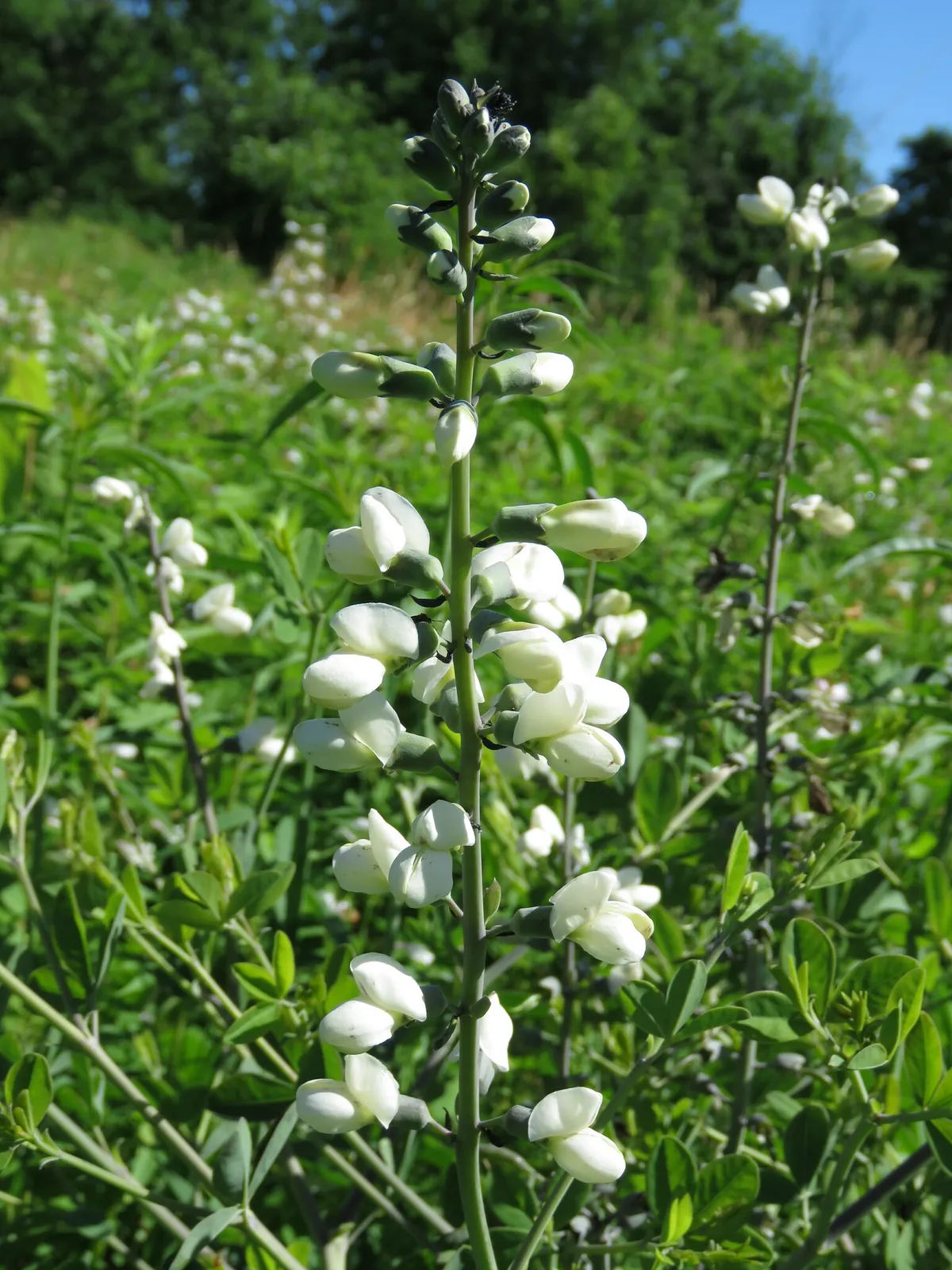
Baptisia lactea is a tall prairie forb with white pea-like flower spikes blooming May through July. It thrives in full sun with low water once established, common in tallgrass prairies and open fields across the central and southern United States.
Toxicity unknown
Large Leaf White Indigo (Baptisia lactea) is not listed by the ASPCA Animal Poison Control Center (opens in new tab) or the other sources we check, so we have no verdict for it either way. Absence from those lists is not a clearance. If your pet shows symptoms after eating any plant, call the ASPCA at (888) 426-4435.
Light
full sun
Water
low
Size
24"–48" H × 24"–36" W
Bloom
May, Jun, Jul
Native to
AR, FL, GA, IA and 17 more states
Pollinators
bees, butterflies
Before you buy
Your city may pay you to plant this
Cities and water utilities offer rebates for replacing lawn with native and water-wise plants. We track 459 programs across 44 states, each with a link to the provider and the date we last checked it.
Find rebates in your areaPicture natives in your own yard
Upload a photo of your yard and Patch Vision shows a rendering of it planted with natives for your region, like Large Leaf White Indigo.


Browse plants for this ecoregion
White wild indigo produces tall spikes of creamy white flowers in late spring and early summer, followed by interesting black seed pods that rattle in the wind. This sturdy perennial forms a neat, shrub-like clump with blue-green foliage that turns golden in fall.
Growing Large Leaf White Indigo
Grow Large Leaf White Indigo in full sun and low water. Mature plants reach 24 to 48 inches tall and spread 24 to 36 inches wide. Expect low maintenance to keep it looking intentional in a front yard.
How to care for Large Leaf White Indigo, by region
How to care for Large Leaf White Indigo where it is actually grown: year-round basics plus what to do each season, region by region, with the sources for each.
Care guidance last updated: August 2026
Western Gulf Coastal Plain (includes Houston, TX)
Year-round
White wild indigo is a tough, long-lived perennial that grows a wide, brushy clump of blue-green leaves topped with tall flower spikes. In the Houston area our clay gumbo soil holds water longer than the well-drained soil this plant prefers, so give it a wide planting hole and break up the clay so roots can spread and water can drain away from the crown. Water it regularly through its first growing season while the deep taproot gets established, then back off. This plant handles Houston's summer heat and humidity well and only needs extra water during a long dry stretch. It does not need fertilizer because it is a legume that pulls its own nitrogen from the air through bacteria on its roots. Give it a spot with at least six hours of direct sun, in shade it gets tall and floppy and blooms less. The taproot is deep and brittle, so pick a permanent spot the first time, this plant does not move well once it settles in. The most common mistake in this climate is planting it somewhere that stays soggy after our heavy rains, which can rot the crown, or trying to dig it up and move it after year one.
- Dig a wide hole and break up Houston's clay so the roots can spread and drain.
- Water deeply and regularly the first growing season, then only during long dry spells.
- Give it at least six hours of direct sun for the strongest bloom and sturdiest stems.
- Skip the fertilizer, this legume makes its own nitrogen.
- Pick a permanent spot. The taproot is deep and brittle and hates being moved.
Fall
Fall is when white wild indigo finishes its yearly cycle here in Houston. Once we get our first real cold snap, usually around late November into early December, the leaves and stems blacken and the plant goes into full dormancy. This is the time to cut the blackened stems back if you want a tidy front-yard look for the HOA, or you can leave them standing through winter for texture and wildlife value. If left alone, the whole dried plant can eventually snap off at the base and tumble across the yard scattering seed as it goes, which is a neat trick but can also mean stray seedlings showing up nearby next spring if you would rather that not happen. Either way, do not worry about protecting the plant from cold, its root system handles a typical Houston winter fine.
- Wait for the first hard freeze, usually late November into December here, before cutting back.
- Cut blackened stems to the ground for a tidy look, or leave them for winter interest.
- The dried plant can break off and tumble, scattering seed. Cut it back if you want to avoid volunteer seedlings.
- No winter protection needed. Established roots handle Houston's mild winters fine.
- Skip watering once the plant goes dormant.
Cutting the blackened stems back after the first freeze gives the bed a clean, HOA-friendly look going into winter.
Winter
Winter is the quiet season for white wild indigo in Houston. If you did not cut it back in fall, this is your last easy window to do it, ideally before new growth starts pushing up in late winter, since cutting through the fresh spring shoots by accident is easy to do and can set the plant back. The plant itself is fully dormant and shows nothing above ground, but the deep root system is unaffected by our typical light frosts and short cold snaps. Houston rarely sees a hard freeze that would threaten an established plant, so no mulching or covering is needed for cold protection. Just leave the crown alone and let it rest until spring.
- Cut back any remaining dead stems now if you skipped it in fall, before new shoots emerge.
- Watch for the first new shoots in late winter and cut carefully around them, not through them.
- No mulch or frost cover needed. Houston winters are mild enough for established roots.
- Skip watering and fertilizing during dormancy.
- Leave the crown undisturbed, this is not the time to divide or move the plant.
A clean cutback before spring keeps the winter silhouette tidy for HOA-conscious front yards.
Spring
Spring is when white wild indigo puts on its best show in Houston. Thick, dark shoots push up fast in late winter to early spring, growing noticeably day to day once they get going, so do not worry if it looks like nothing is happening and then suddenly a lot is. In the Houston area it typically blooms earlier than it does farther north, often starting in April, with tall white flower spikes rising above the blue-green foliage. Bumblebees are the main pollinators, they are strong enough to grip the flower's curved lower petal and push their way in to reach the nectar and pollen inside. New spring growth can occasionally get nipped by a late cold snap since Houston's average last frost lands around the beginning of March, but established plants shrug this off and just regrow. Leave the emerging shoots alone. They are brittle when young and snap easily if bumped or stepped on.
- Watch for fast, thick shoots pushing up in late winter, this is normal for this plant.
- Expect bloom to start earlier here than in northern gardens, often by April.
- Bumblebees do most of the pollinating, so plant it where you can watch them work.
- Protect young shoots from foot traffic. They are brittle and snap easily.
- No need to fertilize or heavily water in spring once the plant is established.
Summer
Once the spring flowers fade, usually by late spring to early summer, the plant shifts its energy into forming seed pods and holding onto its handsome blue-green foliage through Houston's hot, humid summer. This plant is genuinely heat and humidity tolerant once established, so it should not need regular watering unless Houston goes through an extended dry stretch with no rain for a couple of weeks. Good air flow around the plant matters more here in summer because our humidity can encourage fungal leaf problems if plants are crowded together or sitting in constant moisture. If you do not care for the look of the drying seed pods, you can snip the spent flower stalks off, this is optional and does not hurt the plant either way. Otherwise, leave the pods, they will slowly darken through summer as part of the plant's natural cycle.
- Water only during an extended dry spell. Established plants handle Houston humidity fine.
- Give plants room to breathe. Crowding raises the risk of fungal leaf spots in our humidity.
- Seed pods form after bloom and slowly darken, this is normal, not a problem.
- Deadhead spent flower stalks if you prefer a tidier look. It is optional.
- No fertilizer needed through summer.
If your HOA cares about tidy beds, snipping the spent flower stalks right after bloom gives a neater front-yard look without hurting the plant.
Sources: Baptisia (False or Wild Indigo) - Clemson Home & Garden Information Center, Baptisia False Indigo FAQ - Growing Wild Nursery, Bumble Bees and Baptisia: A Pollination Story - Xerces Society, Baptisia lactea (White Wild Indigo) - Minnesota Wildflowers (community tip)
In an HOA neighborhood
Large Leaf White Indigo is an HOA-friendly choice. Maintenance level: low. Tidiness: 4 out of 5.
Works well in: front yard, foundation, street edge, mid zone.
Wildlife value
Host plant for clouded sulfur, wild indigo duskywing.
The flowers attract native bees and butterflies, while the seeds provide food for birds. This plant also serves as a host for several native moth and butterfly species.
Common questions
- When does Baptisia lactea bloom?
- Baptisia lactea typically blooms from May through July, producing tall white flower spikes above its blue green foliage.
- What kind of light and water does Baptisia lactea need?
- This plant prefers full sun and, once its deep taproot is established, tolerates low water well, making it a good choice for dry prairie or meadow plantings.
- Do pollinators visit Baptisia lactea?
- Bees and butterflies visit Baptisia lactea for nectar and pollen, and the flower spikes are a common feature of prairie and meadow pollinator habitat.
- What growing conditions suit Baptisia lactea best?
- It grows best in open, sunny sites with well drained soil, similar to the tallgrass prairie and glade habitats where it is commonly found.
- Is Large Leaf White Indigo HOA-friendly?
- Large Leaf White Indigo is generally an HOA-friendly choice in the right placement, with low maintenance.
These answers were drafted with an AI model from this plant's data. Verify care details with a local expert.
Native range data from the World Checklist of Vascular Plants (Kew). Pollinator and host plant associations compiled from GBIF, iNaturalist, and published ecological literature.
If something looks wrong
Common plant problems, and what to check first
These come up on almost any plant. Each guide lists the likely causes in the order they are worth ruling out, with one thing to check before you act on any of them, and links to the source it came from.
- It is dying right after planting
- Leaves turning yellow
- Wilting even though I watered it
- Brown crispy leaf tips
- Bugs on the plant
Ready to grow Large Leaf White Indigo? Add it to your garden in Pollinator Patch to track it and get season-by-season care guidance.