Live Oak
Quercus virginiana
Last reviewed: September 2026
Quercus virginiana is a sprawling evergreen tree common along the Gulf and South Atlantic coastal plains, growing in full sun with moderate water needs and blooming in March, April and May.
Live Oak (Quercus virginiana) is not on the ASPCA Animal Poison Control Center toxic plant list for dogs or cats (aspca.org (opens in new tab), last reviewed 2026-05-21). If your pet shows symptoms after eating any plant, call the ASPCA at (888) 426-4435.
The USDA PLANTS Database (opens in new tab) does not flag Live Oak as toxic to livestock.
Light
full sun
Water
medium
Size
480"–600" H × 720"–720" W
Bloom
Mar, Apr, May
Native to
AL, FL, GA, LA and 5 more states
Pollinators
butterflies
Before you buy
Your city may pay you to plant this
Cities and water utilities offer rebates for replacing lawn with native and water-wise plants. We track 452 programs across 44 states, each with a link to the provider and the date we last checked it.
Find rebates in your areaBrowse plants for this ecoregion
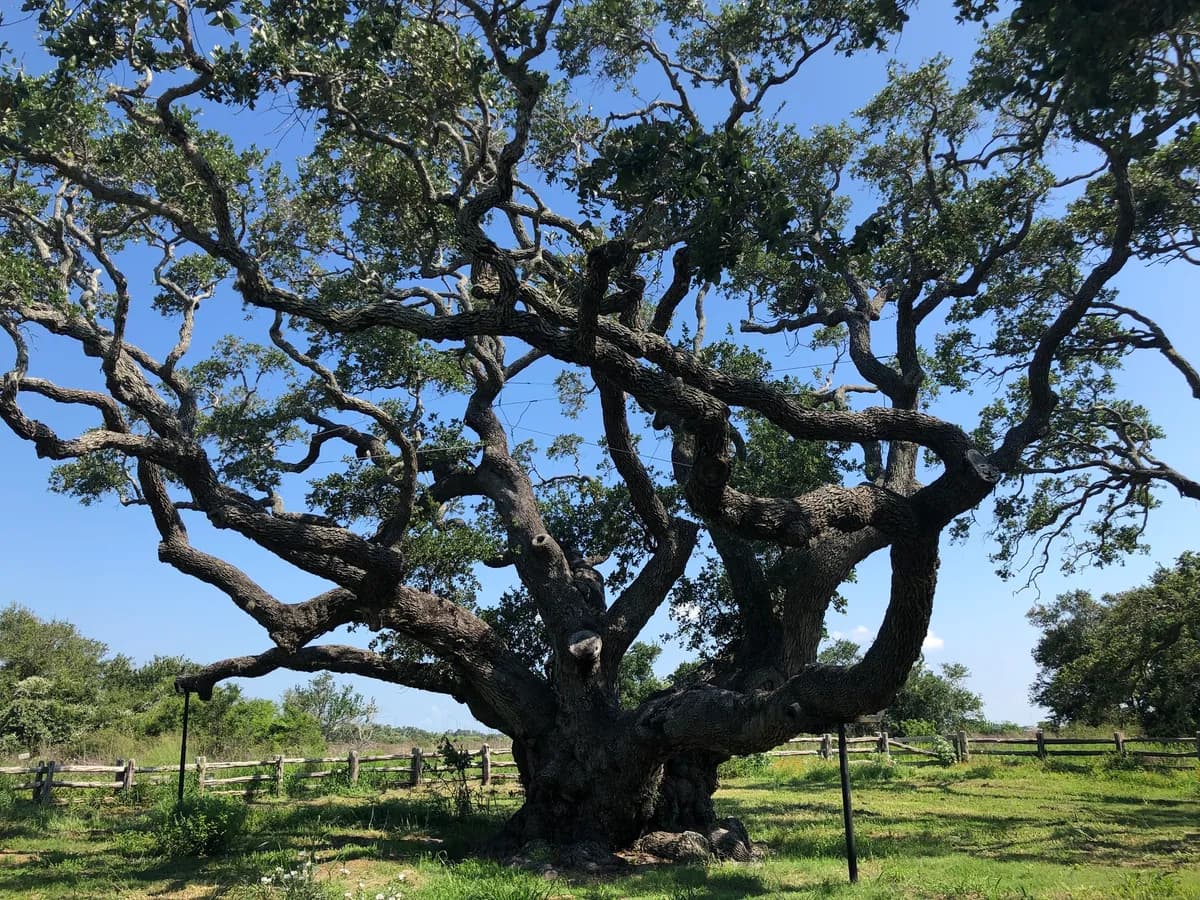
Live Oak is Texas's iconic native shade tree, forming a broad, spreading canopy with distinctive horizontal branching. This majestic semi-evergreen tree provides excellent shade and develops a picturesque, gnarled character with age. It's the quintessential Texas landscape tree, prized for its durability and classic appearance.
Growing Live Oak
Grow Live Oak in full sun and medium water. Mature plants reach 480 to 600 inches tall and spread 720 to 720 inches wide. Expect low maintenance to keep it looking intentional in a front yard.
How to care for Live Oak, by region
How to care for Live Oak where it is actually grown: year-round basics plus what to do each season, region by region, with the sources for each.
Care guidance last updated: September 2026
Cross Timbers (includes Fort Worth, TX)
Year-round
Live oak is a slow, steady, long-lived shade tree native to North Texas. It looks evergreen but actually drops its old leaves each spring, and once established it needs very little from a homeowner beyond room to grow.
- Plant it at least 20 to 30 feet from the house, driveway, or foundation so the mature canopy (60 to 100 feet wide) and root system have room.
- Water deeply once a week for the first two growing seasons to establish deep roots, then let rainfall carry it most years.
- In heavy black clay, set the root ball an inch or two above grade so water does not pool at the trunk; in the sandier soils west of the metro, water more often through the first couple of summers since the ground drains faster.
- Skip regular fertilizer; an established live oak in North Texas rarely needs it.
- Keep grazing cattle and horses away from young oak leaves and fallen acorns, especially in spring; tannins in both can cause serious GI and kidney problems.
A mature live oak reads as an established, intentional landscape anchor rather than an experiment; most HOAs favor a shade tree like this over turf removal alone.
Fall
Fall is the best time in North Texas to plant a new live oak, and for an established tree, fall is mostly a wait for winter. A heavy acorn drop will start and that is normal, not a sign of stress.
- Plant a new live oak between October and December so roots can establish over the mild winter ahead of next summer's heat.
- Expect a heavy acorn drop starting in September through November; rake fallen acorns off walkways and driveways so they do not become a slip hazard.
- Keep grazing cattle and horses away from fresh fallen acorns; ASPCA lists oak as toxic to horses (gallotannin, causing colic and kidney related symptoms), and Texas A&M AgriLife documents the same tannins causing poisoning in cattle.
- Deep water any newly planted or first year live oak through fall dry spells, since North Texas autumn rainfall is unpredictable.
Raked and bagged acorns, plus swept walkways, keep the tree reading as tended rather than a fall mess factor for the whole yard.
Winter
Live oaks are mild winter trees in North Texas and need little attention until pruning season opens in late winter. The main risks are a hard freeze on a young trunk and pruning at the wrong time of year.
- Wrap or shield the trunk of a live oak younger than 2 to 3 years before a hard freeze (below 20 degrees), since young bark can split; established trees do not need this in a typical North Texas winter.
- Do not prune between February and June, the highest risk window for oak wilt spread through fresh cuts, per Texas A&M AgriLife; if a hazard branch must come off in that window, make the fewest cuts possible and paint every wound immediately.
- If pruning is needed, do it in December or January while the tree is fully dormant and oak wilt risk is lowest.
- Watch for yellow and brown streaking along leaf veins; that is the classic early sign of oak wilt and is worth a call to a certified arborist rather than a DIY fix.
- Skip winter fertilizing; a dormant tree cannot use it.
A wrapped young trunk, or a professional's freshly painted pruning cut, reads as careful tree care rather than a construction mishap; take the wrap off once the hard freeze risk passes so it does not sit into spring.
Spring
Spring is when a live oak looks messiest: old leaves drop just as new growth pushes out, and small yellow catkins litter the ground. This is the tree's normal cycle, not a sign of decline.
- Expect leaf drop from roughly mid February through April as old leaves fall while new ones emerge at the same time.
- Yellow catkins (the tree's flowers, blooming March through May) will drop within a few weeks; rake or mow over them along with old leaves to keep beds and walkways tidy.
- Keep fresh spring growth out of reach of grazing cattle and horses; Texas A&M AgriLife notes the leaves of highest tannin concern are the small new ones, smaller than a squirrel's ear.
- If planting a new live oak, spring works but is not the best window in North Texas; fall planting gives roots more time to establish before summer heat.
- Do not prune during spring; February through June is the highest risk period for oak wilt spread through fresh cuts.
Heavy leaf and catkin drop can look neglected if it sits on turf or the driveway for weeks; a quick rake-through during this window keeps the yard reading as maintained.
Summer
July and August are the real test for a live oak in North Texas, especially one that is not fully established yet. Deep, infrequent watering through the hottest stretches matters more than any other summer task.
- Water a first or second summer live oak deeply, about 15 to 20 gallons per session, once or twice a week during 100 degree stretches with no rain.
- Keep a 3 to 4 inch layer of mulch out to the drip line, pulled back a few inches from the trunk, to hold soil moisture and moderate soil temperature.
- Watch for scorched or curled leaf edges on a young tree; that signals drought stress, not disease, and means it needs more water, not less.
- Do not fertilize during summer heat; feeding a heat stressed tree can do more harm than good.
- An established, multi year live oak in North Texas is fairly drought tolerant and usually handles the summer dry spell without supplemental water.
A clean mulch ring around the trunk reads as deliberate landscaping rather than a neglected yard.
Sources: Lady Bird Johnson Wildflower Center: Quercus virginiana, ASPCA: Oak (Quercus) toxic and non-toxic plants, AgriLife Today: Livestock owners encouraged to be aware of potentially toxic plants, AgriLife Today: Prevent the spread of oak wilt in Texas
Mississippi Valley Loess Plains (includes Memphis, TN)
Year-round
Live oak is native to this ecoregion, and in the Memphis area it grows as a long lived, wide spreading evergreen to semi evergreen shade tree, though it sits near the cold edge of its normal range in zone 8a.
- Give it full sun and plenty of room. Mature live oaks can spread wider than they are tall.
- It tolerates a wide range of soils, including the clay common around Memphis, once established.
- Water young trees regularly the first two to three years. Established trees are drought tolerant.
- Keep mulch a few inches away from the trunk and 2 to 3 inches deep over the root zone.
- Plan planting distance from the house and sidewalks early. The canopy and roots both get large.
A live oak's long term shape and shade make it a strong HOA-friendly street or yard tree if it has room to spread.
Fall
Acorns drop from live oak through fall in the Memphis area, and the mild fall weather makes it a good season to plant a new tree.
- Rake up fallen acorns from walkways and driveways for a tidy front yard.
- Keep acorns away from dogs. The ASPCA lists oak acorns as mildly toxic to pets, since tannins can cause stomach upset.
- Fall planting lets roots establish before Memphis's next hot summer.
- Watch for squirrel activity, which increases sharply once acorns start dropping.
Winter
Winter, from November through February, is the lowest risk and best window to prune live oak in the Memphis area.
- Schedule any structural pruning for the dormant winter months to limit oak wilt risk.
- Zone 8a winters are usually mild, but young live oaks can suffer leaf burn in an unusual hard freeze or ice event.
- Wrap or shield young trunks if a hard freeze warning is issued in the first couple of winters after planting.
- Check for storm damage after ice events and prune promptly with painted cuts if needed.
Winter pruning keeps the canopy's shape clean before spring growth.
Spring
Live oaks are evergreen but drop their old leaves in spring, usually March into April in the Memphis area, right around when new growth and small flowers appear.
- Do not be alarmed by a spring leaf drop. Live oaks shed old foliage as new leaves come in.
- Avoid pruning live oaks in spring. This is one of the highest risk windows for oak wilt transmission by sap feeding beetles.
- Rake and dispose of the dropped leaves to keep the yard tidy through this transition.
- Check young trees for winter dieback and prune only dead wood, using painted cuts if pruning is unavoidable.
The spring leaf drop is temporary. Raking it up keeps the yard looking kept while new growth fills in.
Summer
Memphis summers are hot and humid, and live oak handles the heat well once established, but this season carries real oak wilt risk if the tree is wounded.
- Never prune live oak from April through August in this region. Beetles that spread oak wilt are most active in warm months.
- If a branch breaks in a summer storm, paint the wound immediately rather than waiting.
- Water deeply during extended dry spells, especially for trees planted in the last few years.
- Watch for wilting or browning leaves starting at the top of the canopy, an early oak wilt symptom worth reporting to an arborist.
Sources: USDA NRCS Plant Guide: Live Oak (Quercus virginiana), Lady Bird Johnson Wildflower Center: Quercus virginiana, ASPCA Toxic and Non-Toxic Plants: Oak, Iowa State University Extension: Pruning Oak Trees to Avoid Oak Wilt
Texas Blackland Prairies (includes Dallas, TX)
Year-round
Live oak is a slow, steady, long-lived shade tree native to North Texas. It looks evergreen but actually drops its old leaves each spring, and once established it needs very little from a homeowner beyond room to grow.
- Plant it at least 20 to 30 feet from the house, driveway, or foundation so the mature canopy (60 to 100 feet wide) and root system have room.
- Water deeply once a week for the first two growing seasons to establish deep roots, then let rainfall carry it most years.
- In heavy black clay, set the root ball an inch or two above grade so water does not pool at the trunk; in the sandier soils west of the metro, water more often through the first couple of summers since the ground drains faster.
- Skip regular fertilizer; an established live oak in North Texas rarely needs it.
- Keep grazing cattle and horses away from young oak leaves and fallen acorns, especially in spring; tannins in both can cause serious GI and kidney problems.
A mature live oak reads as an established, intentional landscape anchor rather than an experiment; most HOAs favor a shade tree like this over turf removal alone.
Fall
Fall is the best time in North Texas to plant a new live oak, and for an established tree, fall is mostly a wait for winter. A heavy acorn drop will start and that is normal, not a sign of stress.
- Plant a new live oak between October and December so roots can establish over the mild winter ahead of next summer's heat.
- Expect a heavy acorn drop starting in September through November; rake fallen acorns off walkways and driveways so they do not become a slip hazard.
- Keep grazing cattle and horses away from fresh fallen acorns; ASPCA lists oak as toxic to horses (gallotannin, causing colic and kidney related symptoms), and Texas A&M AgriLife documents the same tannins causing poisoning in cattle.
- Deep water any newly planted or first year live oak through fall dry spells, since North Texas autumn rainfall is unpredictable.
Raked and bagged acorns, plus swept walkways, keep the tree reading as tended rather than a fall mess factor for the whole yard.
Winter
Live oaks are mild winter trees in North Texas and need little attention until pruning season opens in late winter. The main risks are a hard freeze on a young trunk and pruning at the wrong time of year.
- Wrap or shield the trunk of a live oak younger than 2 to 3 years before a hard freeze (below 20 degrees), since young bark can split; established trees do not need this in a typical North Texas winter.
- Do not prune between February and June, the highest risk window for oak wilt spread through fresh cuts, per Texas A&M AgriLife; if a hazard branch must come off in that window, make the fewest cuts possible and paint every wound immediately.
- If pruning is needed, do it in December or January while the tree is fully dormant and oak wilt risk is lowest.
- Watch for yellow and brown streaking along leaf veins; that is the classic early sign of oak wilt and is worth a call to a certified arborist rather than a DIY fix.
- Skip winter fertilizing; a dormant tree cannot use it.
A wrapped young trunk, or a professional's freshly painted pruning cut, reads as careful tree care rather than a construction mishap; take the wrap off once the hard freeze risk passes so it does not sit into spring.
Spring
Spring is when a live oak looks messiest: old leaves drop just as new growth pushes out, and small yellow catkins litter the ground. This is the tree's normal cycle, not a sign of decline.
- Expect leaf drop from roughly mid February through April as old leaves fall while new ones emerge at the same time.
- Yellow catkins (the tree's flowers, blooming March through May) will drop within a few weeks; rake or mow over them along with old leaves to keep beds and walkways tidy.
- Keep fresh spring growth out of reach of grazing cattle and horses; Texas A&M AgriLife notes the leaves of highest tannin concern are the small new ones, smaller than a squirrel's ear.
- If planting a new live oak, spring works but is not the best window in North Texas; fall planting gives roots more time to establish before summer heat.
- Do not prune during spring; February through June is the highest risk period for oak wilt spread through fresh cuts.
Heavy leaf and catkin drop can look neglected if it sits on turf or the driveway for weeks; a quick rake-through during this window keeps the yard reading as maintained.
Summer
July and August are the real test for a live oak in North Texas, especially one that is not fully established yet. Deep, infrequent watering through the hottest stretches matters more than any other summer task.
- Water a first or second summer live oak deeply, about 15 to 20 gallons per session, once or twice a week during 100 degree stretches with no rain.
- Keep a 3 to 4 inch layer of mulch out to the drip line, pulled back a few inches from the trunk, to hold soil moisture and moderate soil temperature.
- Watch for scorched or curled leaf edges on a young tree; that signals drought stress, not disease, and means it needs more water, not less.
- Do not fertilize during summer heat; feeding a heat stressed tree can do more harm than good.
- An established, multi year live oak in North Texas is fairly drought tolerant and usually handles the summer dry spell without supplemental water.
A clean mulch ring around the trunk reads as deliberate landscaping rather than a neglected yard.
Sources: Lady Bird Johnson Wildflower Center: Quercus virginiana, ASPCA: Oak (Quercus) toxic and non-toxic plants, AgriLife Today: Livestock owners encouraged to be aware of potentially toxic plants, AgriLife Today: Prevent the spread of oak wilt in Texas
Want these tasks as reminders timed to your yard? Pollinator Patch turns this guidance into a season-by-season care plan for the plants you actually grow.
In an HOA neighborhood
Live Oak takes more care to keep looking intentional in a front yard. Maintenance level: low. Consider it for backyard or mid-zone beds rather than the street edge.
Works well in: backyard only.
- Tree size exceeds typical HOA-friendly range
- Best suited for backyard or with special approval
Wildlife value
Live Oaks support over 200 species of butterflies and moths as caterpillar host plants, making them exceptional wildlife trees. The acorns feed numerous birds, squirrels, and other wildlife throughout fall and winter.
Common questions
- When does Quercus virginiana bloom?
- Quercus virginiana produces small, inconspicuous flowers in March, April and May, typically alongside new leaf growth.
- Do pollinators use Quercus virginiana?
- Quercus virginiana flowers are wind pollinated, but the tree serves as a larval host for several butterfly species, including hairstreaks.
- How much water does Quercus virginiana need?
- Established Quercus virginiana trees tolerate medium to low moisture and handle periods of drought well once their root systems mature.
- What light conditions suit Quercus virginiana best?
- Quercus virginiana grows best in full sun but tolerates part sun to part shade, especially as a younger tree in a woodland setting.
- Is Live Oak toxic to dogs?
- Live Oak is not on the ASPCA Animal Poison Control Center toxic plant list for dogs (aspca.org).
- Is Live Oak toxic to cats?
- Live Oak is not on the ASPCA Animal Poison Control Center toxic plant list for cats (aspca.org).
- Is Live Oak toxic to livestock?
- The USDA PLANTS Database does not flag Live Oak as toxic to livestock.
- Is Live Oak HOA-friendly?
- Live Oak takes more care to look intentional in a front yard. Consider it for backyard or mid-zone beds rather than the street edge.
These answers were drafted with an AI model from this plant's data. Verify care details with a local expert.
Native range data from vouchered herbarium specimen records and regional native plant society lists. Pollinator and host plant associations compiled from GBIF, iNaturalist, and published ecological literature.
If something looks wrong
Common plant problems, and what to check first
These come up on almost any plant. Each guide lists the likely causes in the order they are worth ruling out, with one thing to check before you act on any of them, and links to the source it came from.
- It is dying right after planting
- Leaves turning yellow
- Wilting even though I watered it
- Brown crispy leaf tips
- Bugs on the plant
Ready to grow Live Oak? Add it to your garden in Pollinator Patch to track it and get season-by-season care guidance.
Planning a bed around it? Start a free plan with this plant
Not sure where to start? Take the 2-minute yard quiz