Narrowleaf Gumweed
Grindelia lanceolata
Last reviewed: October 2026
Watering reminders and freeze alerts for Narrowleaf Gumweed, free in the app.


Toxicity unknown
Narrowleaf Gumweed (Grindelia lanceolata) is not listed by the ASPCA Animal Poison Control Center (opens in new tab) or the other sources we check, so we have no verdict for it either way. Absence from those lists is not a clearance. If your pet shows symptoms after eating any plant, call the ASPCA at (888) 426-4435.
Light
full sun
Water
low
Size
12"–60" H × 18"–24" W
Bloom
Jul, Aug, Sep
Native to
AL, AR, KS, KY and 8 more states
Pollinators
bees, butterflies, beetles
Before you buy
Your city may pay you to plant this
Cities and water utilities offer rebates for replacing lawn with native and water-wise plants. We track 461 programs across 44 states, each with a link to the provider and the date we last checked it.
Find rebates in your areaPicture natives in your own yard
Upload a photo of your yard and Patch Vision shows a rendering of it planted with natives for your region, like Narrowleaf Gumweed.
Browse plants for this ecoregion
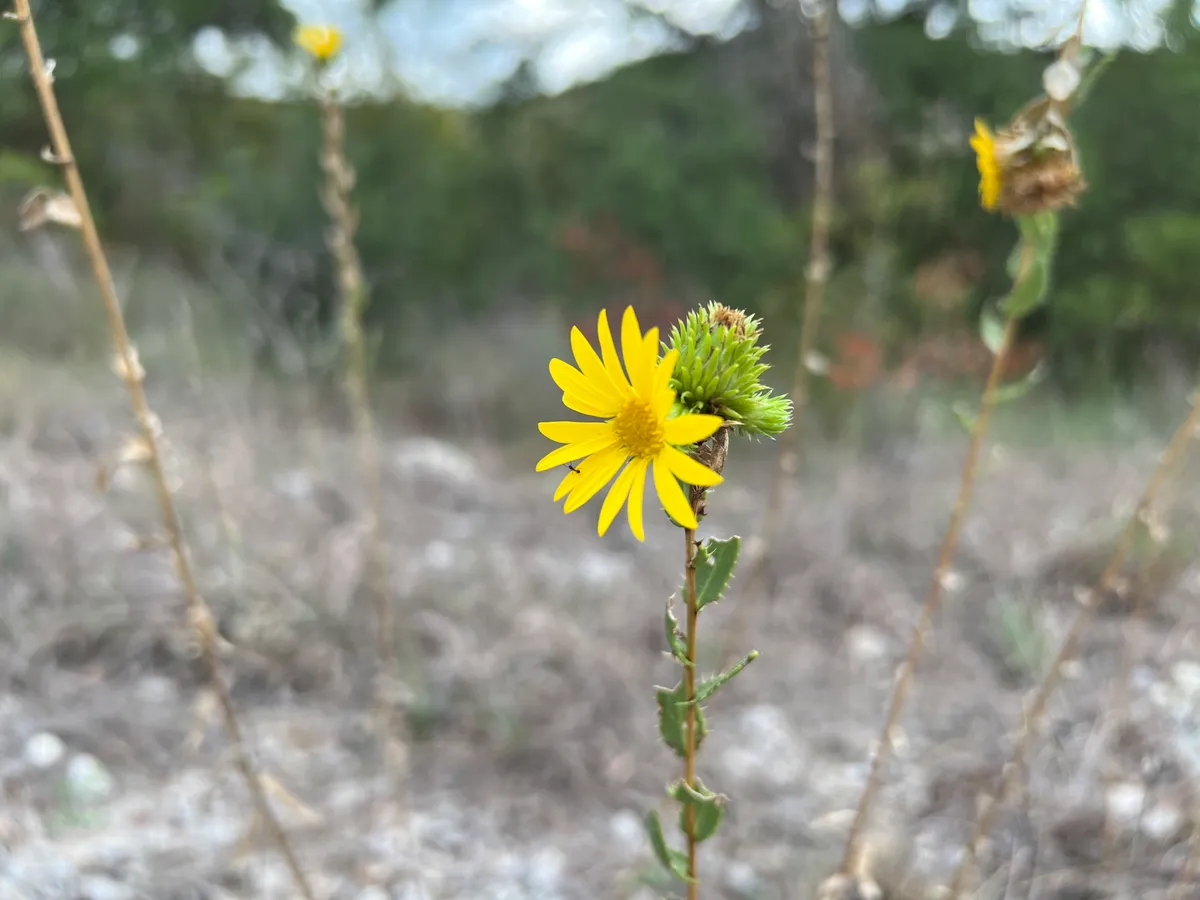
Narrowleaf gumweed is a compact prairie wildflower that produces bright yellow, daisy-like flowers from July through September. This drought-tolerant perennial forms neat clumps and requires minimal care once established. The sticky flower buds and resinous foliage give the plant its distinctive 'gumweed' name.
How to care for Narrowleaf Gumweed, by region
How to care for Narrowleaf Gumweed where it is actually grown: year-round basics plus what to do each season, region by region, with the sources for each.
Care guidance last updated: October 2026
Texas Blackland Prairies (includes Dallas, TX)
Year-round
Narrowleaf gumweed is a sun-loving, drought tolerant yellow bloomer for dry, rocky or sandy spots.
- Plant in full sun.
- It likes gravelly, rocky, sandy, shallow, well drained soil.
- Water needs are low to medium and it is drought tolerant.
- It reaches 1 to 5 feet tall and 1.5 to 2 feet wide.
- It can be short-lived or biennial depending on region.
Fall
Fall is for seed and optional sowing.
- Flowers continue through October.
- Seed germinates readily and October sowing reportedly gives higher yields.
- Seeds feed birds and offer winter interest.
Winter
Gumweed seed heads add winter interest.
- Seeds offer winter interest and food for birds.
- It is deciduous.
- The source lists no special winter care.
Spring
Spring is a good time to check drainage and spacing.
- Give it full sun and well drained soil.
- Water needs are low to medium.
- It is a deciduous plant, so new growth restarts in the growing season.
Summer
Summer brings yellow flowers and low water needs.
- Yellow flower heads open from June through October.
- It is drought tolerant.
- Bees visit the flowers.
In an HOA neighborhood
Narrowleaf Gumweed takes more care to keep looking intentional in a front yard. Maintenance level: low. Consider it for backyard or mid-zone beds rather than the street edge.
Works well in: backyard only.
- Sticky, resinous foliage may appear unkempt
- Common name includes 'weed' which creates negative perception
- Can look sparse and weedy when not in bloom
Wildlife value
The long blooming period provides nectar for bees, butterflies, and beetles throughout late summer. Seeds attract small birds and the plant serves as a host for some native moth species.
Common questions
- How much sun does Narrowleaf Gumweed need?
- Narrowleaf Gumweed grows best in full sun conditions.
- When does Narrowleaf Gumweed bloom?
- Narrowleaf Gumweed blooms in July, August, and September.
- Where is Narrowleaf Gumweed native?
- Narrowleaf Gumweed (Grindelia lanceolata) is native to AL, AR, KS, KY and 8 more states, per the World Checklist of Vascular Plants (Kew).
- What pollinators does Narrowleaf Gumweed attract?
- Narrowleaf Gumweed draws bees, butterflies, and beetles.
- Is Narrowleaf Gumweed HOA-friendly?
- Narrowleaf Gumweed takes more care to look intentional in a front yard. Consider it for backyard or mid-zone beds rather than the street edge.
Native range data from the World Checklist of Vascular Plants (Kew). Pollinator and host plant associations compiled from GBIF, iNaturalist, and published ecological literature.
If something looks wrong
Common plant problems, and what to check first
These come up on almost any plant. Each guide lists the likely causes in the order they are worth ruling out, with one thing to check before you act on any of them, and links to the source it came from.
- It is dying right after planting
- Leaves turning yellow
- Wilting even though I watered it
- Brown crispy leaf tips
- Bugs on the plant
Ready to grow Narrowleaf Gumweed? Add it to your garden in the Pollinator Patch App to track it and get season-by-season care guidance.