Pecan
Carya illinoinensis
Last reviewed: October 2026
Carya illinoinensis, or pecan, is a large deciduous tree that grows well in full sun along riverbottoms and floodplain soils across the southern and midwestern United States, blooming in April and May.
Toxicity unknown
Pecan (Carya illinoinensis) is not listed by the ASPCA Animal Poison Control Center (opens in new tab) or the other sources we check, so we have no verdict for it either way. Absence from those lists is not a clearance. If your pet shows symptoms after eating any plant, call the ASPCA at (888) 426-4435.
The USDA PLANTS Database (opens in new tab) does not flag Pecan as toxic to livestock.
Light
full sun
Water
high
Size
720"–900" H × 480"–900" W
Bloom
Apr, May
Native to
AR, IA, IL, IN and 8 more states
Pollinators
bees, beetles, butterflies
Before you buy
Your city may pay you to plant this
Cities and water utilities offer rebates for replacing lawn with native and water-wise plants. We track 459 programs across 44 states, each with a link to the provider and the date we last checked it.
Find rebates in your areaPicture natives in your own yard
Upload a photo of your yard and Patch Vision shows a rendering of it planted with natives for your region, like Pecan.


Browse plants for this ecoregion
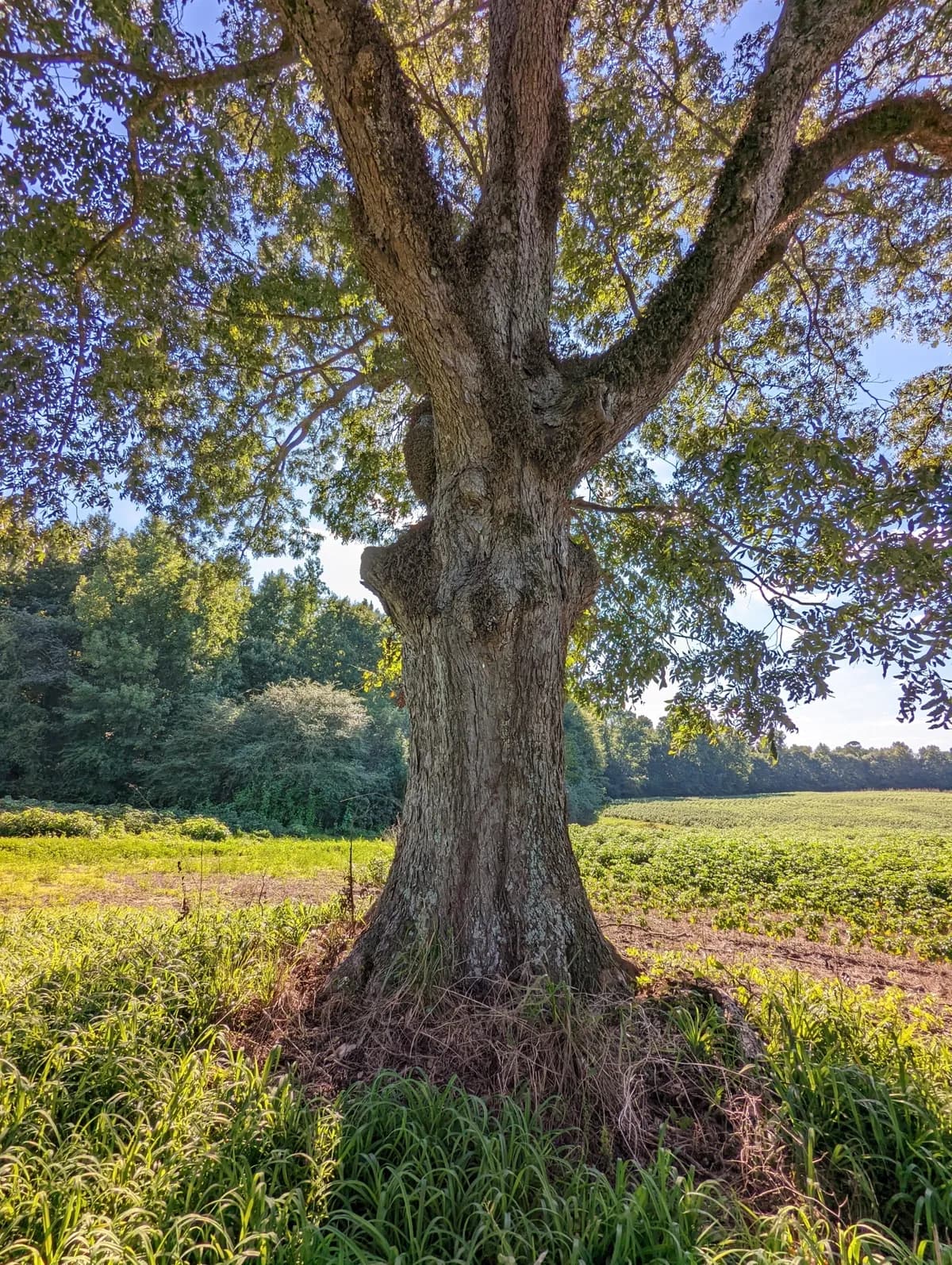
Pecan is a large, stately native tree that produces edible nuts and provides excellent shade. It has compound leaves that turn golden yellow in fall and develops a broad, rounded crown with age.
Growing Pecan
Grow Pecan in full sun and high water. Mature plants reach 720 to 900 inches tall and spread 480 to 900 inches wide. Expect moderate maintenance to keep it looking intentional in a front yard.
How to care for Pecan, by region
How to care for Pecan where it is actually grown: year-round basics plus what to do each season, region by region, with the sources for each.
Care guidance last updated: July 2026
Cross Timbers (includes Fort Worth, TX)
Year-round
Pecan is a large native shade tree, native to North Texas, that will eventually top 60 to 100 feet, so treat it as a long-term structural planting rather than a foundation shrub, and expect nut drop, pollen, and leaf litter every year.
- Plant it at least 30 to 40 feet from the house, driveway, and any fence line so the mature canopy and root spread have room to grow.
- Water a young tree deeply 2 to 3 times a week through its first two summers using about 2 to 3 gallons per inch of trunk diameter each time, then taper to occasional deep soaks once it is established.
- In the heavy black clay soils, watch new spring growth for stunted, bunched, wavy-edged leaves, a sign of zinc deficiency called pecan rosette that alkaline clay makes more common; a foliar zinc sulfate spray corrects it. In the sandier soils west of the metro, zinc deficiency is less common but the tree still needs more frequent water through the first two summers because that soil drains faster.
- Rake up fallen nuts and hulls regularly rather than letting them collect, since pecans are high in fat and eating a large quantity can cause vomiting, diarrhea, or pancreatitis in dogs (ASPCA).
- Hold off on fertilizing a tree younger than one year old; established pecans respond well to a balanced fertilizer applied in late winter before bud break.
Because it will eventually dominate the yard, give it deliberate distance from the house and walkways so the mature size reads as an intentional shade tree, not something that overgrew the space.
Fall
Fall is nut harvest season for pecan, typically October into November, and it is also the better season in North Texas to plant a new shade tree since cooler weather lets roots establish before next summer's heat.
- Nuts typically ripen and begin dropping in October and November as the husks split and turn brown.
- Rake up fallen nuts and husks regularly, especially where pets have yard access, since eating a large quantity of nuts can cause vomiting, diarrhea, or pancreatitis (ASPCA).
- If planting a new pecan, fall through early winter is the better window for a large shade tree compared to spring, giving roots months to establish before summer heat arrives.
- Expect a heavier leaf drop than most trees as the compound leaves shed through fall; plan to rake regularly rather than let it pile against a fence or foundation.
- Water a newly fall-planted tree deeply once a week through the first months even as temperatures cool.
Regular nut and leaf cleanup through fall keeps a large pecan from reading as an unmaintained yard, especially near sidewalks and driveways.
Winter
Pecan is fully dormant in winter and needs little beyond structural pruning while it is bare, and established trees handle North Texas's mild winters and short hard freezes without extra care.
- Prune out crossing, damaged, or low-hanging branches in January or February while the tree is dormant and the branch structure is easy to see.
- Established pecans handle typical North Texas winters without protection; only a tree in its first winter benefits from a layer of mulch over the root zone.
- Hold fertilizer until late winter, just before bud break in March, rather than applying it earlier.
- Clear leftover fallen nuts and leaves before spring growth starts.
- During an occasional severe Arctic outbreak, wrap the trunk of a first or second year tree to help prevent bark splitting from the hard freeze.
A dormant pecan is bare and can look stark in winter; a clean bed and mulch ring under it read as maintained rather than neglected.
Spring
Spring is bloom and pollen season for pecan, with small yellow-green catkins showing in April and May, and it is a workable window in North Texas to plant a new tree before summer heat sets in.
- Plant new bare-root or containerized pecans from late February through April, before leaf-out finishes for the year.
- Water a newly planted tree deeply 2 to 3 times a week through spring; do not let the root ball dry out while roots are establishing.
- Expect a heavy drop of yellow-green pollen catkins in April, which can dust cars, patios, and pool covers for a week or two.
- Watch new leaves for the stunted, wavy, pale look of zinc deficiency if the tree is in alkaline clay soil, and treat with a foliar zinc spray as new growth starts.
- Hold off fertilizing a tree in its first year; wait until it is established.
Pollen drop is temporary and normal for a large shade tree; sweeping walkways and patios during the two-week peak keeps the yard from looking neglected.
Summer
July and August heat is the real test for a young pecan in North Texas; established trees tolerate it well, but anything planted in the last one to two years needs consistent water to make it through.
- Give young trees (under 2 years) a slow, deep soak 2 to 3 times a week during 100F stretches, using roughly 2 to 3 gallons per inch of trunk diameter per watering.
- Keep 2 to 3 inches of mulch out to the drip line, pulled back a few inches from the trunk, to hold soil moisture and moderate root temperature.
- Watch for browning leaf edges during the hottest weeks; on a young tree this usually means it needs more frequent water, not less.
- Trees three years and older generally need only occasional deep watering through summer unless drought is severe.
- Skip pruning during summer heat and wait for the dormant winter season instead.
Scorched leaf edges on a young tree can read as neglect from the street; keeping up the deep-watering schedule prevents it.
Sources: Lady Bird Johnson Wildflower Center: Carya illinoinensis, ASPCA: People Foods to Avoid Feeding Your Pets, Gillespie County AgriLife Extension: Commercial Pecans, Controlling Rosette and Zinc Deficiency, Texas A&M AgriLife Extension: How to Water Trees, Texas A&M AgriLife Extension: Texas Tree Planting Guide
Texas Blackland Prairies (includes Dallas, TX)
Year-round
Pecan is a large native shade tree, native to North Texas, that will eventually top 60 to 100 feet, so treat it as a long-term structural planting rather than a foundation shrub, and expect nut drop, pollen, and leaf litter every year.
- Plant it at least 30 to 40 feet from the house, driveway, and any fence line so the mature canopy and root spread have room to grow.
- Water a young tree deeply 2 to 3 times a week through its first two summers using about 2 to 3 gallons per inch of trunk diameter each time, then taper to occasional deep soaks once it is established.
- In the heavy black clay soils, watch new spring growth for stunted, bunched, wavy-edged leaves, a sign of zinc deficiency called pecan rosette that alkaline clay makes more common; a foliar zinc sulfate spray corrects it. In the sandier soils west of the metro, zinc deficiency is less common but the tree still needs more frequent water through the first two summers because that soil drains faster.
- Rake up fallen nuts and hulls regularly rather than letting them collect, since pecans are high in fat and eating a large quantity can cause vomiting, diarrhea, or pancreatitis in dogs (ASPCA).
- Hold off on fertilizing a tree younger than one year old; established pecans respond well to a balanced fertilizer applied in late winter before bud break.
Because it will eventually dominate the yard, give it deliberate distance from the house and walkways so the mature size reads as an intentional shade tree, not something that overgrew the space.
Fall
Fall is nut harvest season for pecan, typically October into November, and it is also the better season in North Texas to plant a new shade tree since cooler weather lets roots establish before next summer's heat.
- Nuts typically ripen and begin dropping in October and November as the husks split and turn brown.
- Rake up fallen nuts and husks regularly, especially where pets have yard access, since eating a large quantity of nuts can cause vomiting, diarrhea, or pancreatitis (ASPCA).
- If planting a new pecan, fall through early winter is the better window for a large shade tree compared to spring, giving roots months to establish before summer heat arrives.
- Expect a heavier leaf drop than most trees as the compound leaves shed through fall; plan to rake regularly rather than let it pile against a fence or foundation.
- Water a newly fall-planted tree deeply once a week through the first months even as temperatures cool.
Regular nut and leaf cleanup through fall keeps a large pecan from reading as an unmaintained yard, especially near sidewalks and driveways.
Winter
Pecan is fully dormant in winter and needs little beyond structural pruning while it is bare, and established trees handle North Texas's mild winters and short hard freezes without extra care.
- Prune out crossing, damaged, or low-hanging branches in January or February while the tree is dormant and the branch structure is easy to see.
- Established pecans handle typical North Texas winters without protection; only a tree in its first winter benefits from a layer of mulch over the root zone.
- Hold fertilizer until late winter, just before bud break in March, rather than applying it earlier.
- Clear leftover fallen nuts and leaves before spring growth starts.
- During an occasional severe Arctic outbreak, wrap the trunk of a first or second year tree to help prevent bark splitting from the hard freeze.
A dormant pecan is bare and can look stark in winter; a clean bed and mulch ring under it read as maintained rather than neglected.
Spring
Spring is bloom and pollen season for pecan, with small yellow-green catkins showing in April and May, and it is a workable window in North Texas to plant a new tree before summer heat sets in.
- Plant new bare-root or containerized pecans from late February through April, before leaf-out finishes for the year.
- Water a newly planted tree deeply 2 to 3 times a week through spring; do not let the root ball dry out while roots are establishing.
- Expect a heavy drop of yellow-green pollen catkins in April, which can dust cars, patios, and pool covers for a week or two.
- Watch new leaves for the stunted, wavy, pale look of zinc deficiency if the tree is in alkaline clay soil, and treat with a foliar zinc spray as new growth starts.
- Hold off fertilizing a tree in its first year; wait until it is established.
Pollen drop is temporary and normal for a large shade tree; sweeping walkways and patios during the two-week peak keeps the yard from looking neglected.
Summer
July and August heat is the real test for a young pecan in North Texas; established trees tolerate it well, but anything planted in the last one to two years needs consistent water to make it through.
- Give young trees (under 2 years) a slow, deep soak 2 to 3 times a week during 100F stretches, using roughly 2 to 3 gallons per inch of trunk diameter per watering.
- Keep 2 to 3 inches of mulch out to the drip line, pulled back a few inches from the trunk, to hold soil moisture and moderate root temperature.
- Watch for browning leaf edges during the hottest weeks; on a young tree this usually means it needs more frequent water, not less.
- Trees three years and older generally need only occasional deep watering through summer unless drought is severe.
- Skip pruning during summer heat and wait for the dormant winter season instead.
Scorched leaf edges on a young tree can read as neglect from the street; keeping up the deep-watering schedule prevents it.
Sources: Lady Bird Johnson Wildflower Center: Carya illinoinensis, ASPCA: People Foods to Avoid Feeding Your Pets, Gillespie County AgriLife Extension: Commercial Pecans, Controlling Rosette and Zinc Deficiency, Texas A&M AgriLife Extension: How to Water Trees, Texas A&M AgriLife Extension: Texas Tree Planting Guide
In an HOA neighborhood
Pecan takes more care to keep looking intentional in a front yard. Maintenance level: moderate. Consider it for backyard or mid-zone beds rather than the street edge.
Works well in: backyard only.
- Extremely large size (50-100 feet) inappropriate for most residential lots
- Drops nuts and debris that require cleanup
- Can interfere with power lines and structures
Wildlife value
The tree supports bees and beetles during its spring blooming period. Its nuts are valuable food for squirrels, birds, and other wildlife.
Common questions
- How much sun does Carya illinoinensis need?
- Carya illinoinensis grows best in full sun, generally needing at least six hours of direct light a day to form a strong, well branched canopy.
- When does Carya illinoinensis bloom?
- Carya illinoinensis produces small green catkins in April and May, typically before the leaves are fully expanded.
- How much water does Carya illinoinensis need?
- This tree is often found in bottomland and floodplain soils, so it tolerates periods of higher moisture but performs well with average, medium watering once it is established.
- What visits the flowers of Carya illinoinensis?
- Pecan flowers are mainly pollinated by wind, though bees and beetles will sometimes visit the catkins to collect pollen.
- Is Pecan toxic to livestock?
- The USDA PLANTS Database does not flag Pecan as toxic to livestock.
- Is Pecan HOA-friendly?
- Pecan takes more care to look intentional in a front yard. Consider it for backyard or mid-zone beds rather than the street edge.
These answers were drafted with an AI model from this plant's data. Verify care details with a local expert.
Native range data from vouchered herbarium specimen records and regional native plant society lists. Pollinator and host plant associations compiled from GBIF, iNaturalist, and published ecological literature.
If something looks wrong
Common plant problems, and what to check first
These come up on almost any plant. Each guide lists the likely causes in the order they are worth ruling out, with one thing to check before you act on any of them, and links to the source it came from.
- It is dying right after planting
- Leaves turning yellow
- Wilting even though I watered it
- Brown crispy leaf tips
- Bugs on the plant
Ready to grow Pecan? Add it to your garden in Pollinator Patch to track it and get season-by-season care guidance.