Palmer penstemon
Penstemon palmeri
Last reviewed: October 2026
Palmer penstemon (Penstemon palmeri) is a perennial forb native to AZ, CA, NM, NV and 1 more states. It blooms in April, May, June, and July. The flowers draw bees and hummingbirds.
Toxicity unknown
Palmer penstemon (Penstemon palmeri) is not listed by the ASPCA Animal Poison Control Center (opens in new tab) or the other sources we check, so we have no verdict for it either way. Absence from those lists is not a clearance. If your pet shows symptoms after eating any plant, call the ASPCA at (888) 426-4435.
Light
full sun
Water
low
Size
36"–60" H × 18"–24" W
Bloom
Apr, May, Jun, Jul
Native to
AZ, CA, NM, NV and 1 more states
Pollinators
bees, hummingbirds
Before you buy
Your city may pay you to plant this
Cities and water utilities offer rebates for replacing lawn with native and water-wise plants. We track 458 programs across 44 states, each with a link to the provider and the date we last checked it.
Find rebates in your areaPicture natives in your own yard
Upload a photo of your yard and Patch Vision shows a rendering of it planted with natives for your region, like Palmer penstemon.


Browse plants for this ecoregion
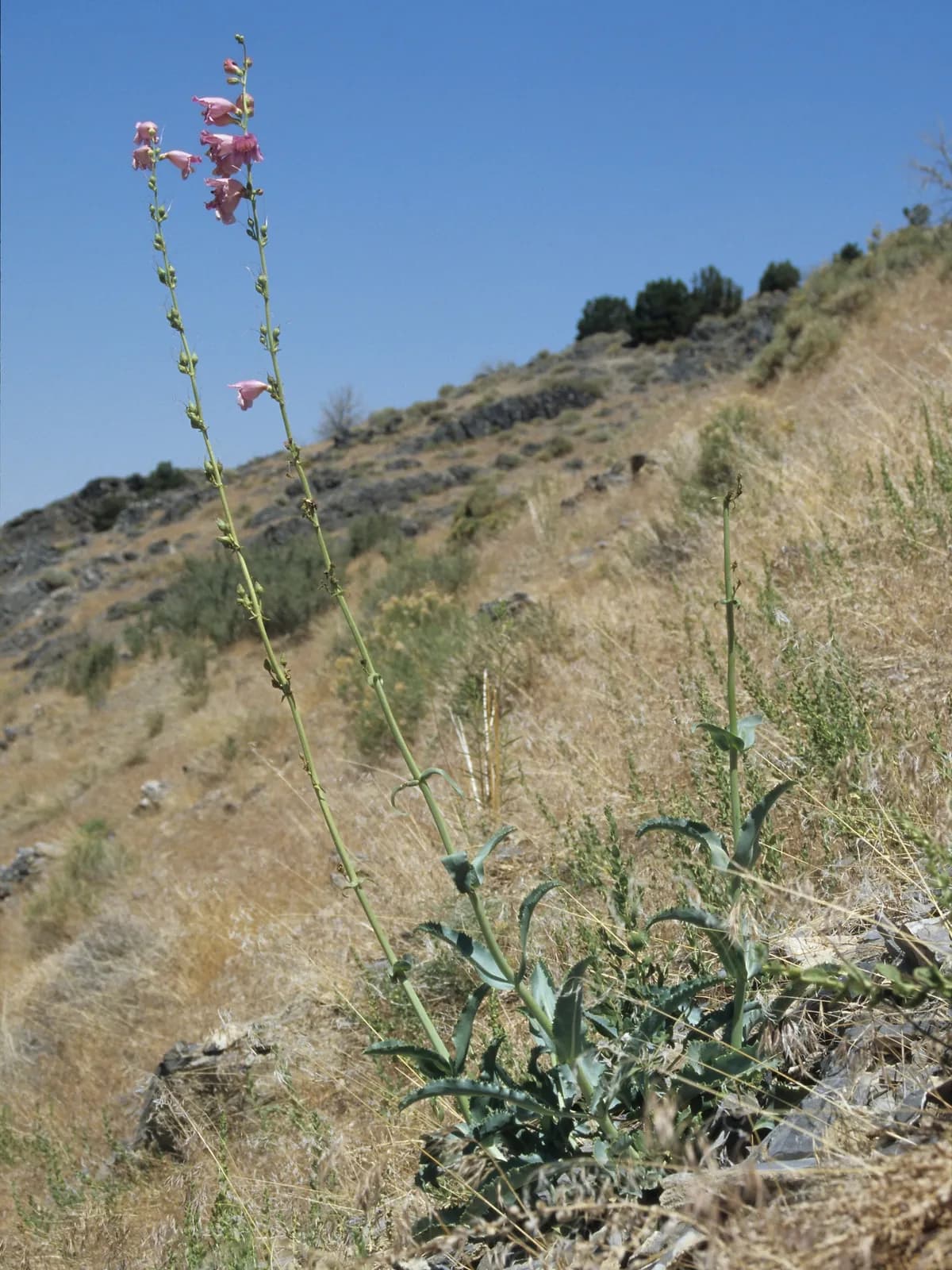
A tall, short-lived perennial with bold gray-green leaves and dense spikes of fragrant, inflated pink flowers rising well above the foliage in a strong vertical accent. It can be short-lived but reseeds readily in well-drained soil.
Growing Palmer penstemon
Grow Palmer penstemon in full sun and low water. Mature plants reach 36 to 60 inches tall and spread 18 to 24 inches wide.
How to care for Palmer penstemon, by region
How to care for Palmer penstemon where it is actually grown: year-round basics plus what to do each season, region by region, with the sources for each.
Care guidance last updated: September 2026
Chihuahuan Deserts (includes El Paso, TX)
Year-round
Palmer's penstemon is a fragrant, fast-growing perennial from desert mountains in California, Arizona, and Utah. It is not documented as native to Texas, but it is one of the most widely planted Southwest xeriscape penstemons and generally performs well in hot, dry, alkaline conditions like El Paso's.
- Plant in full sun in dry, rocky, well-drained soil. Lady Bird Johnson Wildflower Center lists its native soil as dry and rocky with low water needs, a close match to El Paso's caliche.
- Avoid fertilizer and avoid planting in old garden beds with rich, worked soil. This species is prone to root problems in soil that stays too fertile or too wet.
- Water established plants once or twice a month at most. Overwatering is the most common way this species is lost in cultivation.
- It is short-lived, typically 4 to 5 years, so plan to let it reseed or take cuttings rather than expecting a single planting to last indefinitely.
Its upright flower spikes and fragrant blooms make it a good front-bed accent, but plan for gaps every few years since it is short-lived.
Fall
Fall is a lower-water, lower-maintenance season for this plant, with milder El Paso temperatures matching its preference for dry, temperate conditions.
- Continue infrequent watering, no more than once or twice a month, as temperatures cool.
- Fall is a reasonable time to collect and sow seed if you want to replace plants nearing the end of their 4 to 5 year lifespan.
- Avoid cutting the plant back hard in fall. Leave most foliage in place heading into winter.
- Skip mulch heavy in organic matter around the crown. Keep the area lean and well drained.
Winter
Palmer's penstemon is adapted to cold desert mountain winters, so El Paso's freezes are generally within what this species can handle once established.
- Stop supplemental watering almost entirely in winter except during extended dry spells.
- Leave dead or dormant foliage in place through winter rather than cutting it back, it offers the crown some protection during freezes.
- Good drainage matters most in winter. Wet, cold soil around the crown is the most likely way to lose this plant to winter weather.
- Wait for clear new growth in spring before deciding a plant did not survive, since it can be slow to show new growth after a hard freeze.
Spring
Spring is peak bloom season for Palmer's penstemon and also the best time to plant new starts in El Paso before summer heat sets in.
- Expect flowering to begin around May, consistent with its documented May-to-June bloom window, sometimes stretching into early summer here.
- Plant new starts after the last frost into unamended, fast-draining soil, watering twice a week only until roots establish.
- Deadhead spent flower spikes to extend bloom and to limit excess self-seeding if you want a tidier bed.
- Watch young plants during dry, windy spring weeks. New transplants can dry out fast in exposed, breezy spots.
Summer
Once established, Palmer's penstemon shifts into a low-maintenance summer mode, tolerating El Paso's heat well as long as the soil stays on the dry side.
- Cut back watering to once or twice a month through summer for established plants. More frequent water in heavy soil increases the risk of root disease.
- Cut spent flower stalks back after bloom finishes to keep the plant tidy and encourage new basal growth.
- Expect little to no bloom during the hottest weeks. That is normal, not a sign of a problem.
- Leave some seed heads on the plant if you want volunteers next year, since this short-lived species relies on reseeding to persist in a bed.
Sources: Lady Bird Johnson Wildflower Center - Penstemon palmeri, Texas A&M AgriLife Extension - El Paso County Master Gardeners
Wildlife value
The fragrant flower spikes are a strong draw for bumble bees and hummingbirds during the spring bloom.
Common questions
- How much sun does Palmer penstemon need?
- Palmer penstemon grows best in full sun conditions.
- When does Palmer penstemon bloom?
- Palmer penstemon blooms in April, May, June, and July.
- Where is Palmer penstemon native?
- Palmer penstemon (Penstemon palmeri) is native to AZ, CA, NM, NV and 1 more states, per vouchered herbarium specimen records and regional native plant society lists.
- What pollinators does Palmer penstemon attract?
- Palmer penstemon draws bees and hummingbirds.
Native range data from vouchered herbarium specimen records and regional native plant society lists. Pollinator and host plant associations compiled from GBIF, iNaturalist, and published ecological literature.
If something looks wrong
Common plant problems, and what to check first
These come up on almost any plant. Each guide lists the likely causes in the order they are worth ruling out, with one thing to check before you act on any of them, and links to the source it came from.
- It is dying right after planting
- Leaves turning yellow
- Wilting even though I watered it
- Brown crispy leaf tips
- Bugs on the plant
Ready to grow Palmer penstemon? Add it to your garden in Pollinator Patch to track it and get season-by-season care guidance.