Pitcher's Clematis
Clematis pitcheri
Last reviewed: August 2026
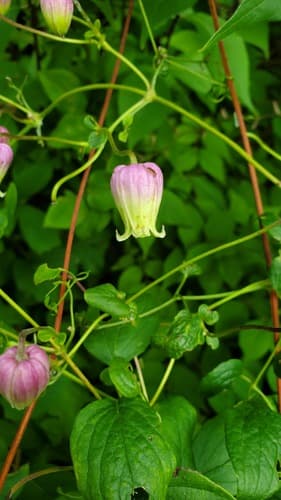
Clematis pitcheri is a climbing vine with small, urn-shaped purple flowers that bloom from June through August. It suits woodland edges, thickets, and fence lines with part sun and medium moisture.
Pitcher's Clematis is toxic to dogs and cats.
Listed as toxic by the ASPCA Animal Poison Control Center (opens in new tab) (last reviewed 2026-05-21). If your pet has been exposed, call the ASPCA Animal Poison Control Center at (888) 426-4435and your veterinarian's emergency line.
Pollinator Patch flags toxic plants so you can choose a pet-safe native alternative for your yard.
Light
part sun
Water
medium
Size
60"–180" H × 36"–96" W
Bloom
Jun, Jul, Aug
Native to
AL, AR, IA, IL and 10 more states
Pollinators
bees, hummingbirds
Before you buy
Your city may pay you to plant this
Cities and water utilities offer rebates for replacing lawn with native and water-wise plants. We track 452 programs across 44 states, each with a link to the provider and the date we last checked it.
Find rebates in your areaBrowse plants for this ecoregion
Pitcher's clematis is a native climbing vine that produces distinctive purple, pitcher-shaped flowers from June through August. This deciduous perennial can reach 5-15 feet in height and spreads 3-8 feet, making it ideal for trellises, arbors, or fences where it can climb and display its unique blooms.
Growing Pitcher's Clematis
Grow Pitcher's Clematis in part sun and medium water. Mature plants reach 60 to 180 inches tall and spread 36 to 96 inches wide. Expect moderate maintenance to keep it looking intentional in a front yard.
How to care for Pitcher's Clematis, by region
How to care for Pitcher's Clematis where it is actually grown: year-round basics plus what to do each season, region by region, with the sources for each.
Care guidance last updated: July 2026
Cross Timbers (includes Fort Worth, TX)
Year-round
Pitcher's clematis (also called leatherflower) is a native climbing vine with small, thick, urn shaped purple flowers from early summer through late summer. It grows well on a trellis, mailbox post, or fence and dies back to the ground each winter before returning in spring.
- Give it a trellis, wire, or fence to climb since it holds on by twining leaf stems, not tendrils that grip on their own
- Plant in part sun to full sun; more shade means fewer flowers
- Water regularly the first growing season to establish roots, then it tolerates heat and short dry spells
- Keep the base of the vine shaded (mulch or a low neighboring plant works) while letting the top reach sun, the classic clematis planting trick
- This plant is toxic to dogs, cats, and horses if chewed or eaten, per the ASPCA, so keep it away from pets that browse foliage
A trellised native vine on a support reads as a deliberate garden feature, not overgrowth, which is the easiest way to keep this HOA-friendly.
Fall
Flowering winds down in September and the vine starts dying back to the ground as it enters dormancy, which is normal for this species and not a sign of a problem.
- Let the foliage yellow and dry on its own rather than pulling it while it is still green
- In heavy black clay, plant new vines high on a slight mound or amend the hole for drainage before fall rains arrive; in the sandier soils west of the metro, keep watering through dry fall stretches since it drains faster and holds less moisture
- Cut back dead stems to a few inches above the ground once they are fully brown, usually by late fall
- Fall is also a good time to add or fix a trellis for next year since the vine is dormant and out of the way
Cutting back the dead stems once they brown keeps the trellis looking intentional over winter instead of covered in dry, tangled vine.
Winter
The vine is fully dormant in winter, dying back to the ground with just the crown and roots surviving underground through North Texas's mild winters and occasional hard freezes.
- No watering needed unless the winter turns unusually dry for several weeks in a row
- Leave the crown undisturbed, it will resprout from the base in spring even though nothing is visible above ground
- A layer of mulch over the crown gives extra protection during a severe Arctic outbreak, though established plants usually handle typical North Texas winters without it
- Use the dormant season to plan or repair the trellis before spring growth returns
Spring
Spring is the best time to plant this vine in North Texas and to set up whatever it will climb, since new growth takes off quickly once the soil warms after the mid March last frost.
- Plant after the mid March last frost date once nights stay reliably above freezing
- Install the trellis, wire, or fence support at planting time so young stems have something to grab onto right away
- Water two to three times a week for the first six weeks while roots establish
- Watch for the first twining stems in April and gently guide them toward the support if they are not finding it on their own
Getting the support in place at planting keeps the vine trained upward from the start instead of sprawling across the bed later.
Summer
This is the vine's bloom season, with small purple, urn shaped flowers opening from June through August, and also the season it needs the most watering help through North Texas heat.
- Water deeply once or twice a week during 100F-plus stretches, more often for a vine planted within the last year
- Keep the root zone mulched two to three inches deep to hold moisture and keep roots cool, since clematis roots prefer shade even though the vine itself wants sun
- Deadhead spent flowers if you want a tidier look, though it is not required for rebloom
- Check that twining stems are still following the trellis rather than reaching into a neighboring shrub or the ground
A well watered vine that stays on its trellis through the hottest weeks avoids the wilted, ragged look that draws complaints; a stressed, drooping vine off its support does not.
Sources: ASPCA Toxic and Non-Toxic Plants: Leatherflower, Lady Bird Johnson Wildflower Center: Clematis pitcheri
Texas Blackland Prairies (includes Dallas, TX)
Year-round
Pitcher's clematis (also called leatherflower) is a native climbing vine with small, thick, urn shaped purple flowers from early summer through late summer. It grows well on a trellis, mailbox post, or fence and dies back to the ground each winter before returning in spring.
- Give it a trellis, wire, or fence to climb since it holds on by twining leaf stems, not tendrils that grip on their own
- Plant in part sun to full sun; more shade means fewer flowers
- Water regularly the first growing season to establish roots, then it tolerates heat and short dry spells
- Keep the base of the vine shaded (mulch or a low neighboring plant works) while letting the top reach sun, the classic clematis planting trick
- This plant is toxic to dogs, cats, and horses if chewed or eaten, per the ASPCA, so keep it away from pets that browse foliage
A trellised native vine on a support reads as a deliberate garden feature, not overgrowth, which is the easiest way to keep this HOA-friendly.
Fall
Flowering winds down in September and the vine starts dying back to the ground as it enters dormancy, which is normal for this species and not a sign of a problem.
- Let the foliage yellow and dry on its own rather than pulling it while it is still green
- In heavy black clay, plant new vines high on a slight mound or amend the hole for drainage before fall rains arrive; in the sandier soils west of the metro, keep watering through dry fall stretches since it drains faster and holds less moisture
- Cut back dead stems to a few inches above the ground once they are fully brown, usually by late fall
- Fall is also a good time to add or fix a trellis for next year since the vine is dormant and out of the way
Cutting back the dead stems once they brown keeps the trellis looking intentional over winter instead of covered in dry, tangled vine.
Winter
The vine is fully dormant in winter, dying back to the ground with just the crown and roots surviving underground through North Texas's mild winters and occasional hard freezes.
- No watering needed unless the winter turns unusually dry for several weeks in a row
- Leave the crown undisturbed, it will resprout from the base in spring even though nothing is visible above ground
- A layer of mulch over the crown gives extra protection during a severe Arctic outbreak, though established plants usually handle typical North Texas winters without it
- Use the dormant season to plan or repair the trellis before spring growth returns
Spring
Spring is the best time to plant this vine in North Texas and to set up whatever it will climb, since new growth takes off quickly once the soil warms after the mid March last frost.
- Plant after the mid March last frost date once nights stay reliably above freezing
- Install the trellis, wire, or fence support at planting time so young stems have something to grab onto right away
- Water two to three times a week for the first six weeks while roots establish
- Watch for the first twining stems in April and gently guide them toward the support if they are not finding it on their own
Getting the support in place at planting keeps the vine trained upward from the start instead of sprawling across the bed later.
Summer
This is the vine's bloom season, with small purple, urn shaped flowers opening from June through August, and also the season it needs the most watering help through North Texas heat.
- Water deeply once or twice a week during 100F-plus stretches, more often for a vine planted within the last year
- Keep the root zone mulched two to three inches deep to hold moisture and keep roots cool, since clematis roots prefer shade even though the vine itself wants sun
- Deadhead spent flowers if you want a tidier look, though it is not required for rebloom
- Check that twining stems are still following the trellis rather than reaching into a neighboring shrub or the ground
A well watered vine that stays on its trellis through the hottest weeks avoids the wilted, ragged look that draws complaints; a stressed, drooping vine off its support does not.
Sources: ASPCA Toxic and Non-Toxic Plants: Leatherflower, Lady Bird Johnson Wildflower Center: Clematis pitcheri
Want these tasks as reminders timed to your yard? Pollinator Patch turns this guidance into a season-by-season care plan for the plants you actually grow.
In an HOA neighborhood
Pitcher's Clematis is an HOA-friendly choice in the right placement. Maintenance level: moderate. Tidiness: 3 out of 5.
Works well in: foundation, mid zone.
- Requires sturdy support structure
- Can look bare and untidy in winter
- May appear wild or uncontrolled if not properly managed
Wildlife value
The unusual pitcher-shaped flowers attract bees and hummingbirds during the summer blooming period. As a native clematis, it provides nectar for pollinators and potential nesting material for birds.
Common questions
- When does Clematis pitcheri bloom?
- Clematis pitcheri blooms from June through August, producing nodding, bell-shaped purple flowers along its climbing stems.
- What pollinators visit Clematis pitcheri?
- Bees and hummingbirds are the main visitors, drawn to the nectar in its downward-facing flowers.
- How much sun and water does Clematis pitcheri need?
- It grows best in part sun with medium soil moisture, though established plants can tolerate brighter light or drier spells.
- How does Clematis pitcheri grow and climb?
- It is a herbaceous to semi-woody vine that climbs by twisting its leaf stalks around fences, shrubs, and other nearby supports.
- Does Clematis pitcheri lose its leaves in winter?
- Yes, it is deciduous and dies back to the ground or to woody stems each winter, regrowing in spring.
- Is Pitcher's Clematis toxic to dogs?
- Yes. Pitcher's Clematis is listed as toxic to dogs by the ASPCA Animal Poison Control Center (aspca.org). If your pet has been exposed, call the ASPCA Animal Poison Control Center at (888) 426-4435.
- Is Pitcher's Clematis toxic to cats?
- Yes. Pitcher's Clematis is listed as toxic to cats by the ASPCA Animal Poison Control Center (aspca.org). If your cat has been exposed, call the ASPCA Animal Poison Control Center at (888) 426-4435.
- Is Pitcher's Clematis HOA-friendly?
- Pitcher's Clematis is generally an HOA-friendly choice in the right placement, with moderate maintenance.
These answers were drafted with an AI model from this plant's data. Verify care details with a local expert.
Native range data from the World Checklist of Vascular Plants (Kew). Pollinator and host plant associations compiled from GBIF, iNaturalist, and published ecological literature.
If something looks wrong
Common plant problems, and what to check first
These come up on almost any plant. Each guide lists the likely causes in the order they are worth ruling out, with one thing to check before you act on any of them, and links to the source it came from.
- It is dying right after planting
- Leaves turning yellow
- Wilting even though I watered it
- Brown crispy leaf tips
- Bugs on the plant
Pollinator Patch flags toxic plants like Pitcher's Clematis and shows pet-safe natives for your ecoregion instead.
Planning a bed around it? Start a free plan with this plant
Not sure where to start? Take the 2-minute yard quiz