Powderpuff
Mimosa strigillosa
Last reviewed: August 2026
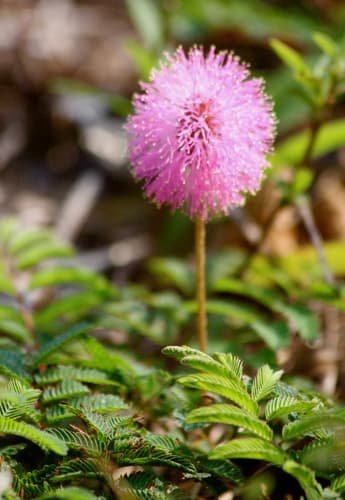
Mimosa strigillosa, or powderpuff, is a low, mat forming groundcover with pink puffball blooms from March through August. It thrives in full sun on sandy or clay soils across the Gulf Coast and southern plains.
Toxicity unknown
Powderpuff (Mimosa strigillosa) is not listed by the ASPCA Animal Poison Control Center (opens in new tab) or the other sources we check, so we have no verdict for it either way. Absence from those lists is not a clearance. If your pet shows symptoms after eating any plant, call the ASPCA at (888) 426-4435.
Light
full sun
Water
low
Size
9"–12" H × 12"–24" W
Bloom
Mar, Apr, May, Jun, Jul, Aug
Native to
AL, AR, FL, GA and 5 more states
Pollinators
butterflies, bees, nectar insects
Before you buy
Your city may pay you to plant this
Cities and water utilities offer rebates for replacing lawn with native and water-wise plants. We track 452 programs across 44 states, each with a link to the provider and the date we last checked it.
Find rebates in your areaBrowse plants for this ecoregion
Powderpuff mimosa is a low-growing native groundcover that produces charming pink, fluffy ball-shaped flowers from spring through summer. This drought-tolerant perennial spreads to form a dense mat with delicate, fern-like foliage that adds fine texture to the landscape.
Growing Powderpuff
Grow Powderpuff in full sun and low water. Mature plants reach 9 to 12 inches tall and spread 12 to 24 inches wide. Expect low maintenance to keep it looking intentional in a front yard.
How to care for Powderpuff, by region
How to care for Powderpuff where it is actually grown: year-round basics plus what to do each season, region by region, with the sources for each.
Care guidance last updated: September 2026
Cross Timbers (includes Fort Worth, TX)
Year-round
Sunshine mimosa, also called powderpuff (Mimosa strigillosa), is a low ground-hugging Texas native in the pea family with ferny leaves that fold shut when touched and pink puffball blooms through most of the growing season.
- Give it full sun to light shade. More sun means more of the pink puffball blooms.
- It wants well drained ground. Fort Worth's sandy Cross Timbers soil drains on its own. In Dallas's heavier Blackland Prairie clay, work in some compost or plant it on a slight mound so roots don't sit in standing water.
- Water it regularly through the first growing season while it puts down roots. After that it handles Texas heat and dry spells well.
- It spreads by rooting its own stems as it grows, so give it room. It tolerates light foot traffic and occasional mowing, which is why some homeowners use it as a lawn substitute.
- The leaflets fold up within seconds of being touched or brushed. That is normal behavior, not a sign the plant is struggling.
- It is native to Texas, including the Blackland Prairie region, and it is a caterpillar host plant for the little yellow butterfly (Pyrisitia lisa). Nibbled foliage in season is the plant doing its job, not damage to fix.
Fall
Fall is when sunshine mimosa starts slowing down on its way into winter dormancy.
- Blooming tapers off and growth slows as days get shorter and cooler.
- Ease off watering as the plant heads toward dormancy. It needs less as the weather cools.
- Early fall is a good window to plant or divide it, since it has time to root in before the first hard freeze.
- Foliage may start looking ragged before frost hits. That is the plant shutting down for the season, not something to fix.
Winter
Winter is dormancy. Top growth dies back with frost and the plant regrows from its base in spring.
- Expect the foliage to die back to the ground after a hard freeze in North Texas winters. The crown and root system survive underground and send up new growth in spring.
- Skip watering unless the winter turns unusually dry. A dormant plant does not need it.
- The bare patch is asleep, not dead. Leave the roots in place rather than tilling the spot under or replacing it.
- If the browned dead growth bothers you along a front bed, mow or trim it back once it is fully brown.
Mowing or trimming the browned winter growth along a front walkway or bed edge keeps the dormant patch looking maintained rather than neglected.
Spring
Spring is when sunshine mimosa comes out of winter dormancy and starts blooming.
- New growth comes up from the crown and runners in early to mid spring, and blooms usually start by March and keep going into summer.
- Keep a newly planted patch watered through spring. This is the main root establishment window.
- Skip the fertilizer. As a legume it makes its own nitrogen, and feeding it mostly feeds weeds instead.
- If a runner spreads somewhere you do not want it, hand pull it now while it is young, before it roots down along its length.
Summer
Summer is peak bloom and peak growth for sunshine mimosa in North Texas heat.
- Established plants shrug off Texas summer heat and dry stretches. A plant still in its first year wants a deep soak whenever the top couple inches of soil dry out.
- Expect the pink puffball blooms to keep coming through summer, drawing bees and little yellow butterflies.
- It spreads fast in summer heat and can creep past its bed. Trim wandering runners back to the line you want and it fills back in quickly.
- You may see small patches of chewed foliage. That is usually little yellow caterpillars feeding, which is expected and not a pest problem to treat.
Trimming the runners at your walkway or bed edge in summer keeps the patch looking tended instead of unruly.
Sources: USDA NRCS Plant Guide: Powderpuff (Mimosa strigillosa), Lady Bird Johnson Wildflower Center: Mimosa strigillosa, Native Plant Society of Texas: Mimosa strigillosa
Texas Blackland Prairies (includes Dallas, TX)
Year-round
Sunshine mimosa, also called powderpuff (Mimosa strigillosa), is a low ground-hugging Texas native in the pea family with ferny leaves that fold shut when touched and pink puffball blooms through most of the growing season.
- Give it full sun to light shade. More sun means more of the pink puffball blooms.
- It wants well drained ground. Fort Worth's sandy Cross Timbers soil drains on its own. In Dallas's heavier Blackland Prairie clay, work in some compost or plant it on a slight mound so roots don't sit in standing water.
- Water it regularly through the first growing season while it puts down roots. After that it handles Texas heat and dry spells well.
- It spreads by rooting its own stems as it grows, so give it room. It tolerates light foot traffic and occasional mowing, which is why some homeowners use it as a lawn substitute.
- The leaflets fold up within seconds of being touched or brushed. That is normal behavior, not a sign the plant is struggling.
- It is native to Texas, including the Blackland Prairie region, and it is a caterpillar host plant for the little yellow butterfly (Pyrisitia lisa). Nibbled foliage in season is the plant doing its job, not damage to fix.
Fall
Fall is when sunshine mimosa starts slowing down on its way into winter dormancy.
- Blooming tapers off and growth slows as days get shorter and cooler.
- Ease off watering as the plant heads toward dormancy. It needs less as the weather cools.
- Early fall is a good window to plant or divide it, since it has time to root in before the first hard freeze.
- Foliage may start looking ragged before frost hits. That is the plant shutting down for the season, not something to fix.
Winter
Winter is dormancy. Top growth dies back with frost and the plant regrows from its base in spring.
- Expect the foliage to die back to the ground after a hard freeze in North Texas winters. The crown and root system survive underground and send up new growth in spring.
- Skip watering unless the winter turns unusually dry. A dormant plant does not need it.
- The bare patch is asleep, not dead. Leave the roots in place rather than tilling the spot under or replacing it.
- If the browned dead growth bothers you along a front bed, mow or trim it back once it is fully brown.
Mowing or trimming the browned winter growth along a front walkway or bed edge keeps the dormant patch looking maintained rather than neglected.
Spring
Spring is when sunshine mimosa comes out of winter dormancy and starts blooming.
- New growth comes up from the crown and runners in early to mid spring, and blooms usually start by March and keep going into summer.
- Keep a newly planted patch watered through spring. This is the main root establishment window.
- Skip the fertilizer. As a legume it makes its own nitrogen, and feeding it mostly feeds weeds instead.
- If a runner spreads somewhere you do not want it, hand pull it now while it is young, before it roots down along its length.
Summer
Summer is peak bloom and peak growth for sunshine mimosa in North Texas heat.
- Established plants shrug off Texas summer heat and dry stretches. A plant still in its first year wants a deep soak whenever the top couple inches of soil dry out.
- Expect the pink puffball blooms to keep coming through summer, drawing bees and little yellow butterflies.
- It spreads fast in summer heat and can creep past its bed. Trim wandering runners back to the line you want and it fills back in quickly.
- You may see small patches of chewed foliage. That is usually little yellow caterpillars feeding, which is expected and not a pest problem to treat.
Trimming the runners at your walkway or bed edge in summer keeps the patch looking tended instead of unruly.
Sources: USDA NRCS Plant Guide: Powderpuff (Mimosa strigillosa), Lady Bird Johnson Wildflower Center: Mimosa strigillosa, Native Plant Society of Texas: Mimosa strigillosa
Want these tasks as reminders timed to your yard? Pollinator Patch turns this guidance into a season-by-season care plan for the plants you actually grow.
In an HOA neighborhood
Powderpuff is an HOA-friendly choice. Maintenance level: low. Tidiness: 2 out of 5.
Works well in: front yard, foundation, street edge, mid zone.
Wildlife value
The abundant nectar-rich flowers attract butterflies, native bees, and other beneficial insects throughout the long blooming season. The low growth habit provides ground-level habitat for small wildlife.
Common questions
- How big does powderpuff mimosa get?
- Mimosa strigillosa stays low, usually just a few inches tall, and spreads outward by runners to form a dense mat several feet wide, making it useful as a groundcover or lawn alternative.
- When does powderpuff mimosa bloom?
- It produces round, pink, puffball flowers from March through August, with the heaviest flowering in the warmer months of late spring and summer.
- What pollinators visit powderpuff mimosa?
- The flowers attract butterflies, bees, and other nectar seeking insects throughout the bloom season.
- How much water does powderpuff mimosa need?
- Once established it handles low water and short dry spells well, though it also tolerates periods of wetter soil, making it adaptable to a range of moisture conditions in full sun sites.
- Does powderpuff mimosa stay green year round?
- In mild, warm climates the foliage can persist most of the year, but it dies back to the ground after hard frost and regrows from its spreading roots in spring.
- Is Powderpuff HOA-friendly?
- Powderpuff is generally an HOA-friendly choice in the right placement, with low maintenance.
These answers were drafted with an AI model from this plant's data. Verify care details with a local expert.
Native range data from vouchered herbarium specimen records and regional native plant society lists. Pollinator and host plant associations compiled from GBIF, iNaturalist, and published ecological literature.
If something looks wrong
Common plant problems, and what to check first
These come up on almost any plant. Each guide lists the likely causes in the order they are worth ruling out, with one thing to check before you act on any of them, and links to the source it came from.
- It is dying right after planting
- Leaves turning yellow
- Wilting even though I watered it
- Brown crispy leaf tips
- Bugs on the plant
Ready to grow Powderpuff? Add it to your garden in Pollinator Patch to track it and get season-by-season care guidance.
Planning a bed around it? Start a free plan with this plant
Not sure where to start? Take the 2-minute yard quiz