Prairie Dock
Silphium terebinthinaceum
Last reviewed: September 2026
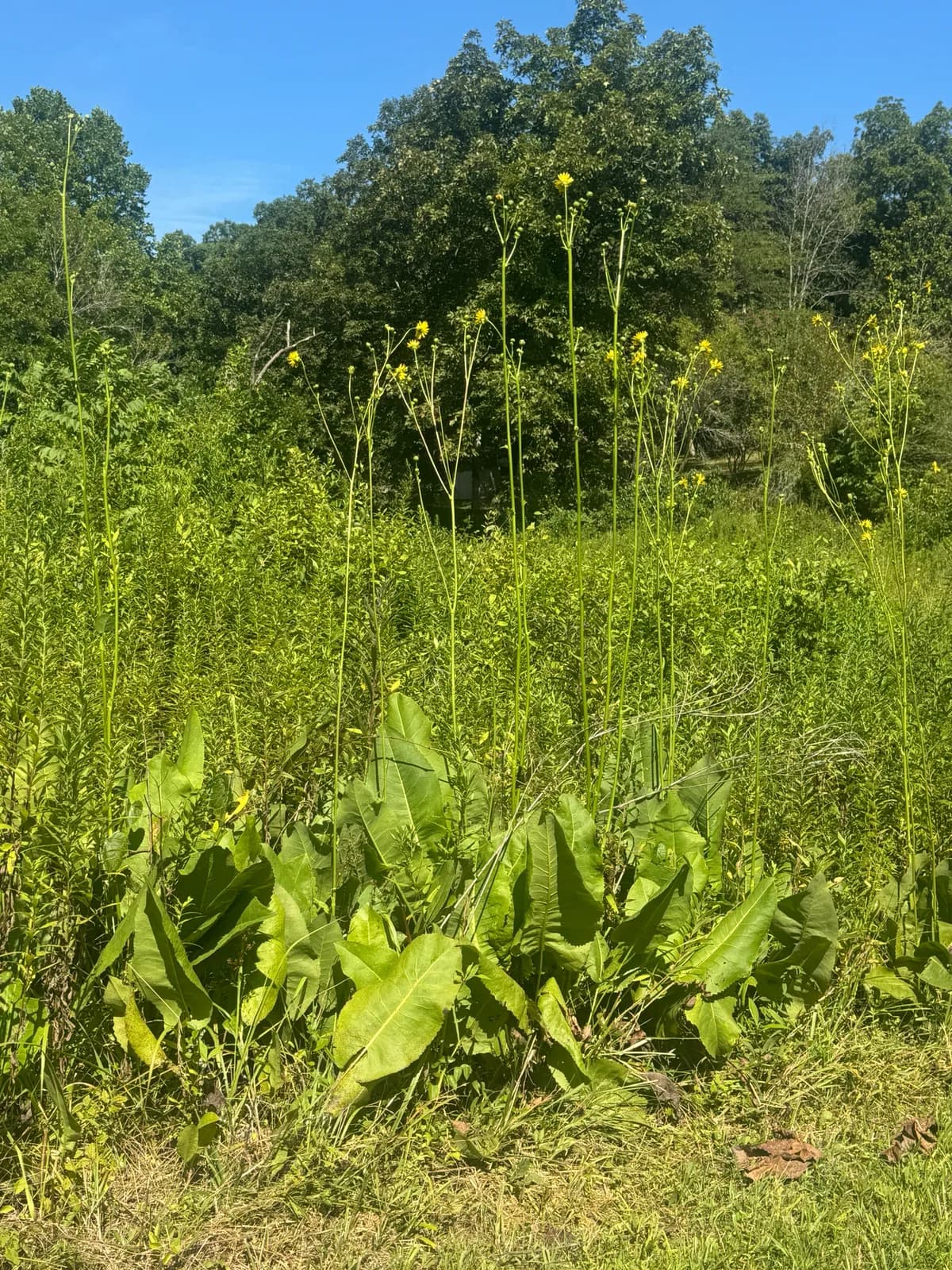
Prairie Dock is a tall, deep-rooted forb with large basal leaves and yellow, daisy-like flowers held on leafless stalks from June through August. It grows best in full sun and adapts to medium or drier soil once established.
Toxicity unknown
Prairie Dock (Silphium terebinthinaceum) is not listed by the ASPCA Animal Poison Control Center (opens in new tab) or the other sources we check, so we have no verdict for it either way. Absence from those lists is not a clearance. If your pet shows symptoms after eating any plant, call the ASPCA at (888) 426-4435.
Light
full sun
Water
medium
Size
24"–60" H × 12"–24" W
Bloom
Jun, Jul, Aug
Native to
AL, AR, GA, IA and 14 more states
Pollinators
bees, butterflies, beetles
Deer
Resistant (per Prairie Moon Nursery)
Before you buy
Your city may pay you to plant this
Cities and water utilities offer rebates for replacing lawn with native and water-wise plants. We track 452 programs across 44 states, each with a link to the provider and the date we last checked it.
Find rebates in your areaBrowse plants for this ecoregion
Basal-leaf rosinweed is a tall native perennial that forms a clump of large leaves at ground level with bright yellow sunflower-like blooms on tall stems in summer. The flowers are showy and long-lasting, making it an excellent choice for the back of perennial borders. It takes a few years to establish but becomes very drought tolerant once mature.
Growing Prairie Dock
Grow Prairie Dock in full sun and medium water. Mature plants reach 24 to 60 inches tall and spread 12 to 24 inches wide. Expect low maintenance to keep it looking intentional in a front yard.
How to care for Prairie Dock, by region
How to care for Prairie Dock where it is actually grown: year-round basics plus what to do each season, region by region, with the sources for each.
Care guidance last updated: July 2026
Erie Drift Plain (includes Cleveland, OH)
Year-round
Prairie rosinweed is a big, tough prairie perennial that grows a low clump of large paddle-shaped leaves at the base, then sends up tall stems, often 4 to 10 feet, topped with yellow sunflower-like blooms from June through August. It wants full sun and average water, and once its deep taproot is down it handles drought and heavy clay just fine, though that taproot takes a couple of years to really settle in. It is a native midwestern prairie plant (USDA PLANTS lists Ohio in its native range) and it earns its keep for wildlife: goldfinches raid the seeds in late summer and it is a larval host for the American lady butterfly. It is not on the ASPCA toxic plant list, so it is a low-worry choice around pets. The main thing to plan for is its size, so give it room at the back of a bed where a tall plant makes sense.
- Full sun, at least 6 hours, is non-negotiable for straight strong stems and good bloom.
- Plant it where the mature height, 4 to 10 feet, works, so the back of a border or against a fence.
- Heavy Cleveland-area clay is fine for this plant once established, so no need to amend the whole bed.
- Be patient the first two years while the taproot builds, the top growth stays modest until then.
- Not on the ASPCA toxic plant list, so a reasonable pick for yards with dogs or cats.
A 4 to 10 foot plant reads as intentional only when it is clearly placed as a back-of-bed or tall-border anchor. Tall species like this can bump up against HOA height expectations, so keep it out of the front-most strip where it can look like an overgrown weed and draw a violation letter.
Fall
As the blooms fade into fall, you have a choice around Cleveland. The seed heads keep feeding goldfinches into autumn, so leaving the stalks standing is genuinely good for the birds and gives some winter structure above the snow. If a front-facing bed needs to look tidier, you can cut the stems back partway now and finish the cleanup in spring. Either way there is nothing urgent to do for the plant itself, its taproot is storing energy for next year no matter what you do up top.
- Leave seed heads standing if you can, goldfinches work them through fall.
- For a tidier front bed, cut stems back partway now and finish in spring.
- No need to mulch heavily, this prairie native handles cold clay on its own.
- Skip fall fertilizing, the plant is winding down for dormancy.
- Clear any stems that have fallen across a path or lawn edge.
In a front-facing bed, a partial fall cutback with the cleanup finished in spring reads as intentional and keeps a very tall plant from looking abandoned over winter, which is the easiest way to avoid an HOA tidiness complaint.
Winter
Winter is easy. This is a true prairie native built for a real Cleveland winter, so the deep taproot sits dormant under the snow and comes back on its own, no protection needed. Lake-effect snow cover is actually a help, it insulates the crown through the cold. There is nothing to do for the plant, and if you left the stalks up they give the sleeping bed some vertical structure and a little more seed for the birds. Come late winter you can knock down any remaining stems if they are looking ragged before the spring rosette starts.
- No winter protection needed, the taproot is fully hardy in zone 6a.
- Snow cover insulates the crown, so a snowy Cleveland winter is a plus.
- Standing stems add structure and a bit of late seed for birds.
- Do nothing to the plant until the ground thaws and dries in spring.
- Clear stems that have blown into a walkway if they become a trip hazard.
If winter stalks start looking ragged in a front bed, knocking them down in late winter keeps the yard reading as tended rather than neglected and heads off a tidiness complaint before spring.
Spring
Around Cleveland, wait until the ground has dried out from the wet spring before you plant or dig, usually sometime from April into May once you can walk on the soil without it sticking to your boots. This is the best window to set out a new plant or divide nothing, since a taproot this deep does not like being moved once it is grown. If you left the old stalks standing over winter, cut them down now before new basal leaves push up. A slow-draining clay spot is workable, just do not plant into a soggy hole while the soil is still saturated from snowmelt and cool damp rains.
- Hold off planting until the clay dries enough that a handful does not squeeze into mud.
- Set out new plants in April or May so the taproot has the full season to dig in.
- Cut last year's dead stems to a few inches before the fresh rosette leaves emerge.
- Do not try to move or divide an established plant, the deep taproot does not transplant well.
- Water a new plant in well, then let spring rain do most of the work.
Clearing last year's dead stalks before the new leaves push up keeps the spot looking tended rather than neglected, which is the simplest way to read as intentional and stay off an HOA's radar in early spring.
Summer
Summer is the show. From June through August the tall stems shoot up and the yellow blooms open across warm humid Cleveland days. An established plant barely needs you, its deep taproot pulls moisture from far down and it shrugs off dry spells better than almost anything in the bed. A first or second year plant is still building that root, so give it a deep soak during a real drought week. If a very tall stem is leaning toward the lawn or walkway, a single stake keeps it upright and tidy.
- Established plants rarely need watering, even in a hot dry July, thanks to the taproot.
- Water new plants deeply once a week only during an actual drought stretch.
- Stake or lightly tie any stem that flops toward a path so it does not sprawl.
- Leave the spent flower heads on, goldfinches feed on the ripening seed.
- No fertilizer needed, rich feeding just makes the tall stems floppier.
Tying up any stem that leans over a walkway or into the lawn keeps this tall plant looking deliberate instead of unruly, which is what keeps a big prairie plant reading as intentional to neighbors and an HOA.
Sources: USDA PLANTS Database, Silphium terebinthinaceum, native range including Ohio, Xerces Society, American lady butterfly host plants, ASPCA Animal Poison Control Center plant database (Silphium not listed as toxic), Xerces Society, leaving stems and seed heads for wildlife over winter, Lady Bird Johnson Wildflower Center, Silphium terebinthinaceum seed value for birds, Ohio State University Extension, planting perennials in spring soils
Want these tasks as reminders timed to your yard? Pollinator Patch turns this guidance into a season-by-season care plan for the plants you actually grow.
In an HOA neighborhood
Prairie Dock takes more care to keep looking intentional in a front yard. Maintenance level: low. Consider it for backyard or mid-zone beds rather than the street edge.
Works well in: backyard only.
- Very tall height may violate typical HOA height restrictions
- Can look sparse or weedy in first year of establishment
- Large basal leaves may appear too informal for front yard settings
Wildlife value
Host plant for American lady butterfly.
The bright yellow flowers attract numerous bees, butterflies, and beetles during the long summer bloom period. Seeds provide food for goldfinches and other birds in fall.
Common questions
- When does Prairie Dock bloom?
- Prairie Dock generally blooms from June through August, sending up tall flower stalks that rise well above its large basal leaves.
- What pollinators visit Prairie Dock?
- The flower heads attract bees, butterflies, and beetles, which feed on the pollen and nectar of the composite blooms.
- How much light and water does Prairie Dock need?
- It performs best in full sun with medium moisture, but tolerates part sun and drier, low-water conditions once its deep roots are established.
- What does Prairie Dock look like when it's not flowering?
- Outside of bloom, it forms a rosette of large, coarse basal leaves close to the ground, then dies back completely in winter as a deciduous perennial.
- Is Prairie Dock HOA-friendly?
- Prairie Dock takes more care to look intentional in a front yard. Consider it for backyard or mid-zone beds rather than the street edge.
These answers were drafted with an AI model from this plant's data. Verify care details with a local expert.
Native range data from the World Checklist of Vascular Plants (Kew). Pollinator and host plant associations compiled from GBIF, iNaturalist, and published ecological literature.
If something looks wrong
Common plant problems, and what to check first
These come up on almost any plant. Each guide lists the likely causes in the order they are worth ruling out, with one thing to check before you act on any of them, and links to the source it came from.
- It is dying right after planting
- Leaves turning yellow
- Wilting even though I watered it
- Brown crispy leaf tips
- Bugs on the plant
Ready to grow Prairie Dock? Add it to your garden in Pollinator Patch to track it and get season-by-season care guidance.
Planning a bed around it? Start a free plan with this plant
Not sure where to start? Take the 2-minute yard quiz