Prairie Lily
Zephyranthes drummondii
Last reviewed: September 2026
Prairie lily is a low-growing forb that produces white, crocus-like flowers from March through August, often after rain. It thrives in full sun with well-drained soil and low supplemental water.
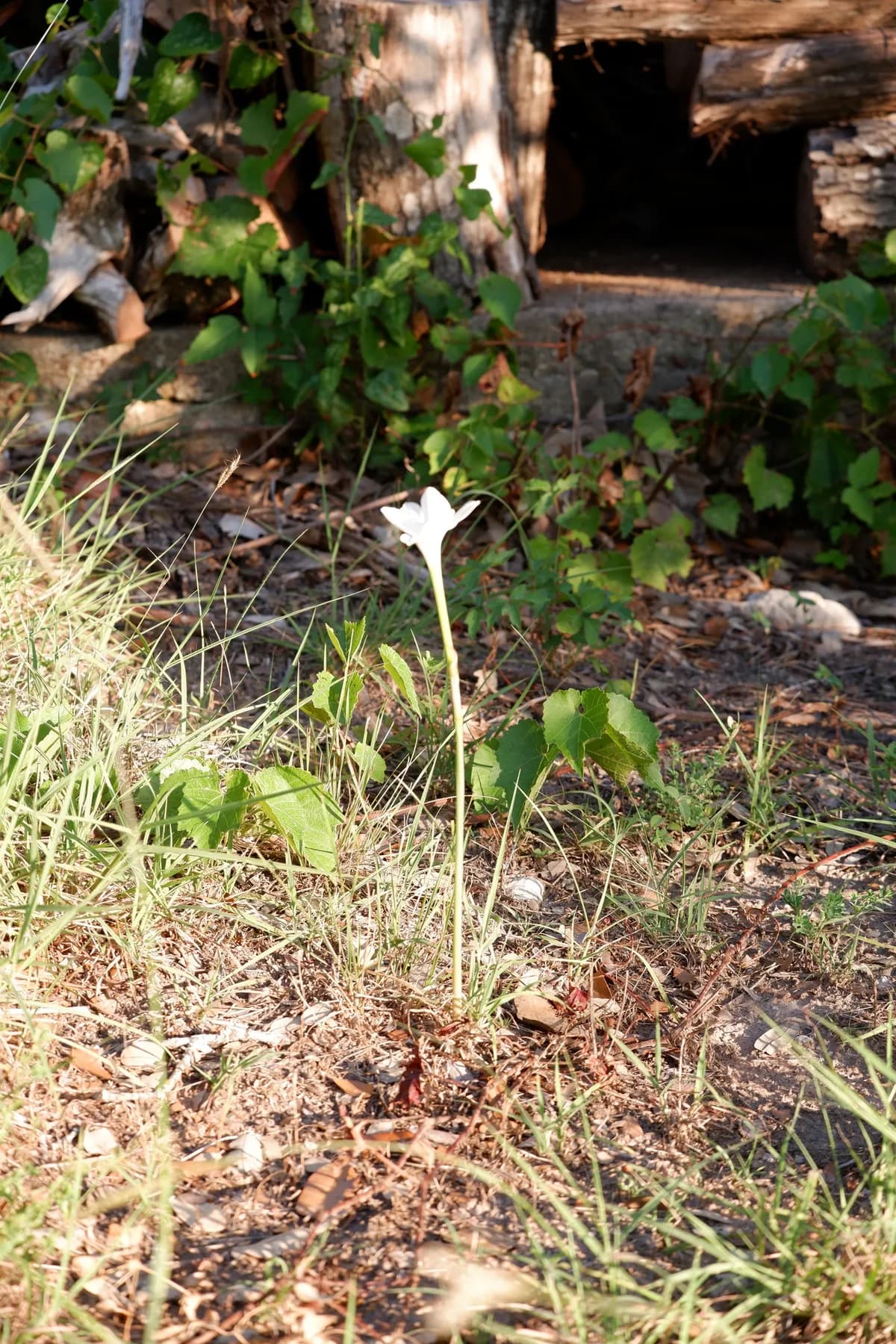
Prairie Lily (Zephyranthes drummondii) is not on the ASPCA Animal Poison Control Center toxic plant list for dogs or cats (aspca.org (opens in new tab), last reviewed 2026-05-21). If your pet shows symptoms after eating any plant, call the ASPCA at (888) 426-4435.
Light
full sun
Water
low
Size
6"–12" H × 1"–3" W
Bloom
Mar, Apr, May, Jun, Jul, Aug
Native to
FL, LA, TX
Pollinators
butterflies, bees
Before you buy
Your city may pay you to plant this
Cities and water utilities offer rebates for replacing lawn with native and water-wise plants. We track 452 programs across 44 states, each with a link to the provider and the date we last checked it.
Find rebates in your areaBrowse plants for this ecoregion
Prairie Lily is a petite bulb that produces charming white or pink funnel-shaped flowers from spring through summer. This compact native forms small clumps and goes dormant in winter, making it perfect for naturalizing in rock gardens or as delicate accents in flower beds.
Growing Prairie Lily
Grow Prairie Lily in full sun and low water. Mature plants reach 6 to 12 inches tall and spread 1 to 3 inches wide. Expect low maintenance to keep it looking intentional in a front yard.
How to care for Prairie Lily, by region
How to care for Prairie Lily where it is actually grown: year-round basics plus what to do each season, region by region, with the sources for each.
Care guidance last updated: August 2026
Cross Timbers (includes Fort Worth, TX)
Year-round
Rain lilies are easygoing in Fort Worth once the bulbs are in the ground, they mostly take care of themselves and reward summer storms with a flush of blooms a day or two later.
- Plant bulbs about 2 to 3 inches deep in well drained soil, slightly deeper than the minimum helps protect them through Fort Worth's occasional hard winter freezes.
- Once established, rain lilies need no regular watering, Fort Worth's rainfall pattern is exactly what triggers their bloom cycle naturally.
- A light mulch layer helps in Fort Worth's heavy clay, mainly to keep soil from crusting over and to moderate summer soil temperature.
- The most common mistake is cutting back the strappy foliage right after flowers fade, let the leaves die back naturally, they are recharging the bulb for next year's bloom.
- This rain lily is not on the ASPCA toxic plant list for dogs or cats, so it is a reasonable choice near pet areas, though as with any bulb it is still smart to discourage digging and chewing.
Rain lilies can be mowed right along with turf grass, which makes them an easy way to add native blooms to an HOA-conscious front lawn without looking out of place.
Fall
Bloom flushes continue into September with any fall rain, tapering as temperatures cool.
- Let foliage keep growing into fall, it is storing energy in the bulb for winter, leave it alone.
- Fall is a good time to plant new bulbs, giving them a full season to establish before next summer's bloom cycle.
- Skip fertilizing or heavy mulching, this bulb prefers a lean, undisturbed bed.
- Watch for a final bloom flush after any good fall rain before the plant heads into dormancy.
Winter
Foliage yellows and dies back as Fort Worth's winter cold sets in, this is normal dormancy, not a problem.
- Bulbs planted at the recommended 2 to 3 inch depth handle Fort Worth's occasional hard freezes without protection.
- Skip watering during dormancy, wet cold soil around dormant bulbs raises the risk of rot.
- Leave the bed undisturbed until new foliage signals spring is back.
- Avoid digging in the bed this time of year, dormant bulbs are easy to accidentally damage when they are out of sight.
Spring
Strappy foliage emerges in late winter to early spring, well before any flowers.
- Established clumps need no special care now beyond normal spring bed cleanup.
- Spring is a fine time to divide and replant crowded clumps, spacing offsets out to fill in more of the bed.
- Skip fertilizer, lean Fort Worth clay usually has enough nutrients for this tough native bulb.
- Let foliage keep growing undisturbed, it is building up energy in the bulb ahead of summer bloom.
Summer
This is peak bloom season, expect flushes of white flowers a day or two after any good summer rain or thunderstorm, right through Fort Worth's hot months.
- No supplemental watering is needed for established plants, the natural rain cycle is the whole point of this bulb.
- Let spent flower stalks and foliage die back on their own rather than mowing or cutting them early.
- Watch bare soil around bulbs for weeds while foliage is thin between bloom flushes.
- Expect flowers to open in the evening and fade within a couple of days, that is normal for this species.
Sources: Lady Bird Johnson Wildflower Center - Zephyranthes drummondii, NC State Extension Plant Toolbox - Zephyranthes drummondii, ASPCA Toxic and Non-Toxic Plants - Prairie Lily
Edwards Plateau (includes San Antonio, TX)
Year-round
San Antonio's warm winters and thin limestone soil suit rain lilies well, they are one of the lowest maintenance bulbs you can grow here.
- Plant bulbs 2 to 3 inches deep in well drained soil, San Antonio's caliche and limestone naturally drain well, which this bulb likes.
- Once established, no regular watering is needed, San Antonio's rain events are what trigger the flower flushes in the first place.
- A light mulch is optional, this bulb is adapted to San Antonio's lean rocky soils and does not need rich amended beds.
- The most common mistake is watering on a schedule expecting continuous bloom, rain lilies bloom in response to actual rainfall, not routine irrigation.
- This rain lily is not on the ASPCA toxic plant list for dogs or cats, making it a reasonable naturalizing choice in yards used by pets.
Because rain lilies tolerate mowing and stay low, they blend into a conventional front lawn look that HOA-conscious homeowners often want, while still supporting pollinators.
Fall
Flushes can continue into October with any fall rain.
- Let foliage keep photosynthesizing into fall, storing energy for next year, resist the urge to tidy it up early.
- Fall is a fine time to plant new bulbs, San Antonio's milder fall and winter give roots time to settle in before next summer.
- Skip extra fertilizing or soil amending, this bulb does not need rich feeding.
- Watch for one more bloom flush after any good fall storm.
Winter
San Antonio winters are mild, and foliage may persist longer here than in colder parts of Texas, sometimes staying green through a mild winter.
- Bulbs handle San Antonio's occasional light freezes without protection at normal planting depth.
- Keep the bed dry during any winter cold snap, avoid watering dormant or semi-dormant bulbs.
- Leave the area undisturbed until spring growth resumes.
- Do not be alarmed if foliage looks a little ragged after a rare hard freeze, it usually bounces back in spring.
Spring
Strappy foliage emerges as San Antonio warms in late winter and early spring.
- Little care is needed for established clumps beyond a light bed cleanup.
- This is a good window to divide and spread offsets if a clump has gotten crowded over the years.
- Skip fertilizer, lean limestone soil is exactly what this plant is built for.
- Leave the emerging foliage alone, it is charging the bulb for the bloom flushes ahead.
Summer
San Antonio's summer storms trigger the classic bloom flush, expect white flowers opening a day or two after rain, right through the hot months.
- No supplemental watering needed for established bulbs, let the natural rain cycle do the work.
- Leave spent blooms and foliage alone rather than mowing them down early.
- Weed lightly around bulbs during any stretch between bloom flushes when foliage is sparse.
- Expect flowers to open in the evening and fade within a couple of days, that is normal for this species.
Sources: Lady Bird Johnson Wildflower Center - Zephyranthes drummondii, NC State Extension Plant Toolbox - Zephyranthes drummondii, ASPCA Toxic and Non-Toxic Plants - Prairie Lily
Texas Blackland Prairies (includes Dallas, TX)
Year-round
Rain lilies handle Dallas's clay soil and up and down winters well, this is a plant that mostly just needs to be left alone between rain triggered bloom flushes.
- Plant bulbs 2 to 3 inches deep, that depth gives some buffer against Dallas's occasional hard freezes and ice events.
- Once established, skip regular watering, Dallas thunderstorms and fall rains are what trigger this bulb's blooms naturally.
- In Dallas's heavy clay, make sure the planting spot drains reasonably well after storms, standing water for days is the main risk to the bulbs, not the clay itself.
- The most common mistake is mowing or cutting back the foliage too soon after bloom, the leaves need to fully die back on their own to recharge the bulb.
- This rain lily is not on the ASPCA toxic plant list for dogs or cats, which makes it a reasonable pick for yards with pets, though as with any bulb it is best to discourage digging.
These bulbs tolerate mowing and disappear into the lawn between bloom flushes, a good option for an HOA-conscious yard that wants native plants without a visibly different bed.
Fall
Bloom can continue into fall with any rain, tapering as nights cool.
- Let foliage keep growing to store energy for the bulb through fall, this is not the time to clean it up.
- Fall planting works well here too, cooler weather reduces transplant stress before next summer.
- Skip fertilizing or heavy soil amendment, this bulb does best left alone.
- Watch for a final bloom flush if a good rain comes through before winter.
Winter
Foliage dies back with Dallas's winter cold, including any hard freezes or ice events, this is normal dormancy.
- Bulbs at proper planting depth ride out typical Dallas winters without extra protection.
- Avoid watering dormant bulbs, wet cold clay raises rot risk more than cold alone does.
- Leave the bed alone until spring foliage signals the bulb is active again.
- Do not dig or disturb the bed this time of year, dormant bulbs are easy to damage when foliage is gone.
Spring
Foliage returns in late winter and early spring as Dallas warms up.
- Established clumps need no special attention now beyond routine bed tidying.
- Spring is a good time to lift and divide an overcrowded clump before summer heat arrives.
- Skip fertilizer, this native bulb does fine in ordinary Blackland Prairie clay.
- Let the strappy leaves grow undisturbed, they are building the bulb's reserves for summer bloom.
Summer
Dallas summer storms trigger bloom flushes, look for white flowers appearing a day or two after rain from May through the hot months.
- No watering is needed beyond what storms provide for established bulbs.
- Leave foliage and spent flowers to die back naturally rather than cutting them for tidiness.
- Weed lightly around bulbs when foliage thins out between flushes.
- Expect flowers to open in the evening and last a couple of days before fading, that is normal.
Sources: Lady Bird Johnson Wildflower Center - Zephyranthes drummondii, NC State Extension Plant Toolbox - Zephyranthes drummondii, ASPCA Toxic and Non-Toxic Plants - Prairie Lily
Western Gulf Coastal Plain (includes Houston, TX)
Year-round
Rain lilies thrive on Houston's frequent storms, the trick here is making sure they are not sitting in soggy gumbo clay between blooms.
- Plant bulbs 2 to 3 inches deep in a spot that drains after heavy rain, Houston's clay soil holds water longer than the bulb prefers if it is not amended or slightly raised.
- Once established, no supplemental watering is needed, Houston gets plenty of rain to trigger bloom flushes on its own through the growing season.
- If your soil is heavy gumbo clay, work in some coarse sand or compost at planting time, or plant in a slightly raised spot, to keep water from pooling around the bulbs.
- The most common mistake in Houston is planting in a low spot that stays wet for days after storms, that is a recipe for bulb rot in this climate more than in drier parts of Texas.
- This rain lily is not on the ASPCA toxic plant list for dogs or cats, a reasonable pick for pet friendly Houston yards, though digging pets should still be discouraged around any bulb bed.
Rain lilies handle mowing and sit low to the ground, so they fit into a standard HOA-conscious lawn look while still flushing with blooms after Houston's frequent rains.
Fall
Bloom flushes often continue well into fall here given Houston's rain patterns, sometimes later than the rest of Texas.
- Let foliage keep growing to recharge the bulb, resist tidying it up early.
- Fall planting works well in Houston's mild autumn weather.
- Skip extra fertilizing, this bulb prefers a lean, undisturbed bed.
- Keep checking drainage after fall rain events, waterlogging is still the main risk this time of year.
Winter
Houston winters are mild and mostly frost free, so foliage may persist longer than in North Texas, sometimes staying green through a mild winter.
- On the rare hard freeze, bulbs at normal planting depth are generally fine without extra protection.
- Keep the bed from staying waterlogged during Houston's wetter winter months, that is a bigger risk to the bulbs here than cold ever is.
- Leave the area undisturbed and let the natural cycle resume with spring rains.
- If a rare hard freeze does damage foliage, leave it be, the bulb underground is almost always fine and will send up new leaves.
Spring
Foliage returns early here since Houston winters are mild, often showing new growth by late winter.
- Established clumps need no special care beyond routine bed tidying.
- Spring is a good time to divide crowded clumps, Houston's humidity and rainfall help new divisions settle in quickly.
- Skip fertilizer, this bulb does not need rich feeding.
- Check drainage in the bed now, before the heavier rains of late spring and summer arrive.
Summer
Houston's frequent summer storms keep this plant blooming through the season, expect flowers a day or two after almost any good rain from May into fall.
- No watering is needed, Houston rarely goes dry enough to require it for this bulb.
- Let foliage and spent blooms die back naturally rather than mowing early.
- Keep an eye on drainage after the heaviest tropical downpours, standing water for more than a day or two stresses the bulbs.
- Expect flowers to open in the evening and last only a couple of days, that is normal for this species.
Sources: Lady Bird Johnson Wildflower Center - Zephyranthes drummondii, NC State Extension Plant Toolbox - Zephyranthes drummondii, ASPCA Toxic and Non-Toxic Plants - Prairie Lily
Want these tasks as reminders timed to your yard? Pollinator Patch turns this guidance into a season-by-season care plan for the plants you actually grow.
In an HOA neighborhood
Prairie Lily is an HOA-friendly choice. Maintenance level: low. Tidiness: 3 out of 5.
Works well in: front yard, foundation, street edge, mid zone.
Wildlife value
The flowers attract butterflies and native bees during its long blooming season from March through August.
Common questions
- When does Prairie Lily bloom?
- Prairie Lily typically flowers from March through August, with bloom flushes often triggered by rainfall during the warmer months.
- What pollinators visit Prairie Lily flowers?
- Bees and butterflies are the main visitors, drawn to the white flowers for nectar during the spring and summer bloom period.
- What growing conditions suit Prairie Lily best?
- It grows best in full sun with well-drained soil and needs only low amounts of water once established, making it suited to open, sunny sites in Gulf Coast climates.
- Is Prairie Lily a shrub or a perennial flower?
- Prairie Lily is a herbaceous forb that grows from a bulb, not a shrub, and dies back to the ground between bloom cycles.
- Is Prairie Lily toxic to dogs?
- Prairie Lily is not on the ASPCA Animal Poison Control Center toxic plant list for dogs (aspca.org).
- Is Prairie Lily toxic to cats?
- Prairie Lily is not on the ASPCA Animal Poison Control Center toxic plant list for cats (aspca.org).
- Is Prairie Lily HOA-friendly?
- Prairie Lily is generally an HOA-friendly choice in the right placement, with low maintenance.
These answers were drafted with an AI model from this plant's data. Verify care details with a local expert.
Native range data from the World Checklist of Vascular Plants (Kew). Pollinator and host plant associations compiled from GBIF, iNaturalist, and published ecological literature.
If something looks wrong
Common plant problems, and what to check first
These come up on almost any plant. Each guide lists the likely causes in the order they are worth ruling out, with one thing to check before you act on any of them, and links to the source it came from.
- It is dying right after planting
- Leaves turning yellow
- Wilting even though I watered it
- Brown crispy leaf tips
- Bugs on the plant
Ready to grow Prairie Lily? Add it to your garden in Pollinator Patch to track it and get season-by-season care guidance.
Planning a bed around it? Start a free plan with this plant
Not sure where to start? Take the 2-minute yard quiz