Splitawn Sedge
Carex tumulicola
Last reviewed: September 2026
Carex tumulicola, or Splitawn sedge, is a low mounding evergreen sedge that blooms from April through June and does well in part sun with medium water, often used as a lawn alternative in mild coastal climates.
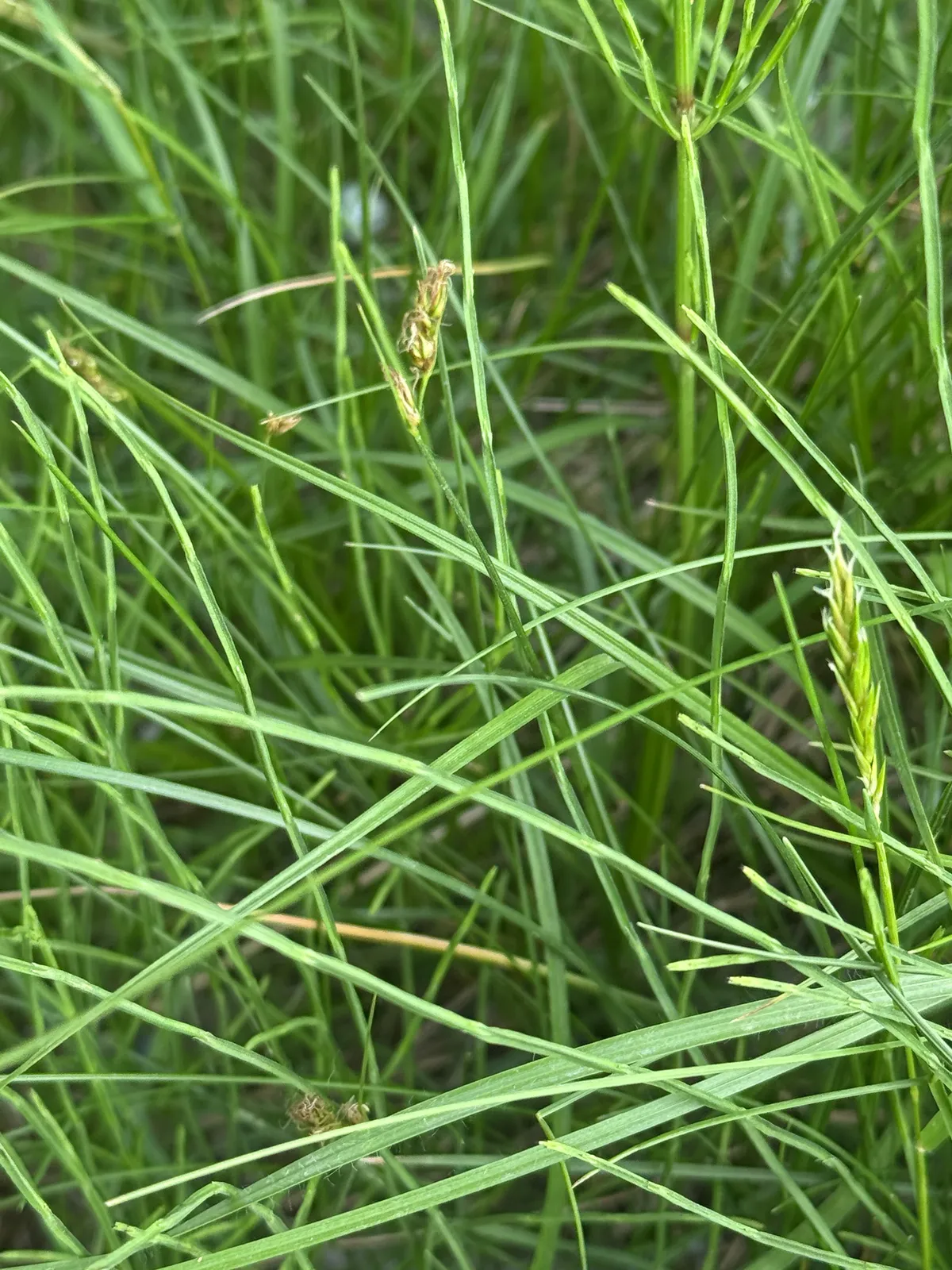
Splitawn Sedge (Carex tumulicola) is not flagged as toxic to dogs or cats by Plants For A Future (PFAF) (opens in new tab) (last reviewed 2026-05-21). This verdict does not come from the ASPCA. If your pet shows symptoms after eating any plant, call the ASPCA at (888) 426-4435.
Light
part sun
Water
medium
Size
8"–24" H × 12"–24" W
Bloom
Apr, May, Jun
Native to
CA, OR, WA
Before you buy
Your city may pay you to plant this
Cities and water utilities offer rebates for replacing lawn with native and water-wise plants. We track 459 programs across 44 states, each with a link to the provider and the date we last checked it.
Find rebates in your areaPicture natives in your own yard
Upload a photo of your yard and Patch Vision shows a rendering of it planted with natives for your region, like Splitawn Sedge.


Browse plants for this ecoregion
Splitawn sedge is a fine-textured, tufted, evergreen sedge with arching leaf blades that form neat mounds. It grows well in partial shade and adapts to various soil types. This native plant makes an excellent ground cover or accent plant in woodland gardens.
Growing Splitawn Sedge
Grow Splitawn Sedge in part sun and medium water. Mature plants reach 8 to 24 inches tall and spread 12 to 24 inches wide. Expect low maintenance to keep it looking intentional in a front yard.
How to care for Splitawn Sedge, by region
How to care for Splitawn Sedge where it is actually grown: year-round basics plus what to do each season, region by region, with the sources for each.
Care guidance last updated: October 2026
Central California Valley (includes Sacramento, CA)
Year-round
Splitawn Sedge is a low evergreen clump grass for pots or borders, but we could not confirm it is native to the Sacramento area, so treat it as a tough garden plant here rather than a local native.
- This sedge does best with some afternoon shade once you leave the cool coast, so give it part shade rather than a full sun spot in Sacramento.
- It is fine in the clay soil common around Sacramento, and it even grows well tucked under an oak tree.
- It stays short, around a foot tall, and spreads slowly into a soft grassy clump about two to three feet wide over time.
- Plan on regular water through the warm months here. It can handle short dry spells once it is established, but Sacramento heat is much stronger than the coastal fog this plant is used to.
- We checked California native plant references and could not confirm this species is naturally native to the Central Valley floor around Sacramento, so we are not calling it a native pick for this area.
Fall
Fall is when Sacramento's rain comes back, making it a good time to plant, divide, and tidy up the bed.
- Once the first fall rain arrives, usually in October or November, you can cut back on hand watering since the sky starts doing the work.
- Fall is a good time to plant a new sedge or divide a crowded clump here. The ground is cooling but not cold, and rain is on the way to help new roots settle in.
- If the clump has spread past where you want it along a path or bed edge, fall is a good time to divide it and trim the edges back into shape.
- Keep an eye out for winter weeds moving into any bare soil around the sedge while it fills back in.
Trimming the bed edges this way keeps the front yard looking tidy and HOA-conscious.
Winter
Winter is mostly hands off. Sacramento's mild, wet winters suit this evergreen sedge, with light frost the main thing to watch.
- Sacramento winters are mild and wet, and this sedge stays evergreen through them, so there is not much active care needed.
- It handles the area's usual light frosts fine. If a harder freeze is forecast, a layer of mulch over the roots gives some extra protection.
- Clay soil holds onto water, so check the spot is not sitting in a puddle after heavy rain. Standing water for too long can rot the roots.
- Hold off on fertilizer in winter. Growth slows down and it does not need the extra push.
Spring
Spring in Sacramento is the window for grooming old foliage and getting a new plant established before the dry season.
- Before new growth picks up in late winter or early spring, comb out or shear off any brown, tired foliage from last year.
- If you are planting a new one, get it in the ground in early spring while Sacramento still gets some rain, so the roots have time to settle in before summer heat arrives.
- Lay down a couple inches of mulch around the base now. It will help hold moisture once the rain tapers off.
- Fresh green blades should start showing through spring. In decent soil, it usually does not need fertilizer.
A quick grooming cut in early spring keeps the clump looking tidy and HOA-friendly from the street.
Summer
Summer is the trickiest season here. Sacramento heat and dryness are much harder on this sedge than its coastal home turf.
- Sacramento summers are hot and dry with little to no rain, so plan on watering this sedge regularly through the season instead of letting it dry out.
- Afternoon shade really matters here. A spot in full sun all day in interior valley heat can scorch the leaf tips.
- If the tips start turning brown and crunchy during a heat wave, that is usually a sign it needs water more often, not less.
- A layer of mulch around the base helps the soil hold moisture and keeps the roots a bit cooler.
Sources: Calscape: Carex tumulicola (Foothill Sedge), California Flora Nursery: Carex tumulicola
Coast Range (includes Eureka, CA)
Year-round
Year-round care for splitawn sedge around Eureka, CA: sun to part shade, adaptable soil, and low to moderate water.
- It grows in full sun or partial shade, and does best with some shade unless it is right along the coast.
- It adapts to many soils, including clay and the ground under oak trees.
- Once established, water about once a week at most. It also tolerates periods of dryness.
- It stays about 6 to 12 inches tall and spreads slowly to roughly 2 feet wide.
- Calscape lists cold tolerance to 15 F.
A low clump along a path or bed edge reads as a soft, deliberate border.
Sources: Calscape: Carex tumulicola (Foothill Sedge), California Flora Nursery: Carex tumulicola
Puget Lowland (includes Seattle, WA)
Year-round
Year-round care for splitawn sedge around Seattle, WA: sun to part shade, adaptable soil, and low to moderate water.
- It grows in full sun or partial shade, and does best with some shade unless it is right along the coast.
- It adapts to many soils, including clay and the ground under oak trees.
- Once established, water about once a week at most. It also tolerates periods of dryness.
- It stays about 6 to 12 inches tall and spreads slowly to roughly 2 feet wide.
- Calscape lists cold tolerance to 15 F.
A low clump along a path or bed edge reads as a soft, deliberate border.
Sources: Calscape: Carex tumulicola (Foothill Sedge), California Flora Nursery: Carex tumulicola
In an HOA neighborhood
Splitawn Sedge is an HOA-friendly choice. Maintenance level: low. Tidiness: 4 out of 5.
Works well in: front yard, foundation, street edge, mid zone.
- May need occasional trimming to maintain tidy appearance
Wildlife value
Provides habitat and cover for small wildlife and beneficial insects. The seeds offer food for birds and small mammals.
Common questions
- How much light does Splitawn sedge need?
- Carex tumulicola grows best in part sun. It tolerates a range from fuller sun to shadier spots, but foliage tends to look best with some relief from the hottest afternoon light.
- How much water does Carex tumulicola require?
- This sedge prefers medium, fairly consistent moisture but can get by with less once it is established, making it a flexible choice for gardens that get moderate summer irrigation.
- When does Splitawn sedge bloom?
- Splitawn sedge produces its inconspicuous grasslike flowers from April through June. The blooms are subtle compared to the fine-textured foliage that makes this sedge popular in gardens.
- Is Carex tumulicola evergreen or deciduous?
- Carex tumulicola is evergreen, holding its narrow arching leaves year round in mild climates, which is one reason it is often planted as a low-maintenance lawn substitute.
- How is Splitawn sedge typically used in landscaping?
- Gardeners often use Carex tumulicola as a fine-textured groundcover or turf alternative in part-sun beds, since its clumping habit and moderate water needs suit low-mow or no-mow designs.
- Is Splitawn Sedge toxic to dogs?
- Splitawn Sedge is not flagged as toxic to dogs by Plants For A Future (PFAF). This verdict does not come from the ASPCA.
- Is Splitawn Sedge toxic to cats?
- Splitawn Sedge is not flagged as toxic to cats by Plants For A Future (PFAF). This verdict does not come from the ASPCA.
- Is Splitawn Sedge HOA-friendly?
- Splitawn Sedge is generally an HOA-friendly choice in the right placement, with low maintenance.
These answers were drafted with an AI model from this plant's data. Verify care details with a local expert.
Native range data from vouchered herbarium specimen records and regional native plant society lists. Pollinator and host plant associations compiled from GBIF, iNaturalist, and published ecological literature.
If something looks wrong
Common plant problems, and what to check first
These come up on almost any plant. Each guide lists the likely causes in the order they are worth ruling out, with one thing to check before you act on any of them, and links to the source it came from.
- It is dying right after planting
- Leaves turning yellow
- Wilting even though I watered it
- Brown crispy leaf tips
- Bugs on the plant
Ready to grow Splitawn Sedge? Add it to your garden in Pollinator Patch to track it and get season-by-season care guidance.