Sweetbay Magnolia
Magnolia virginiana
Last reviewed: September 2026
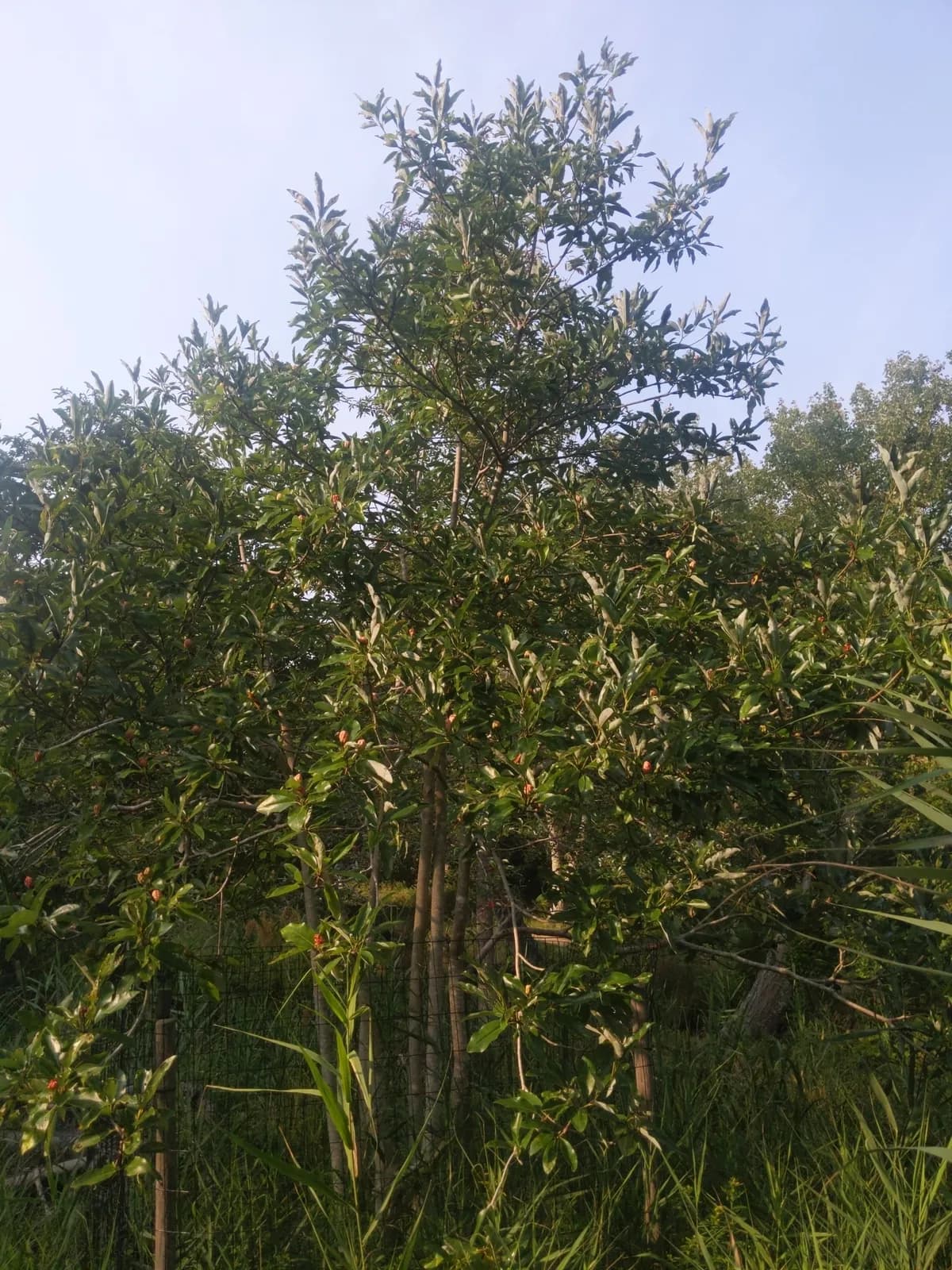
Sweetbay magnolia is a slender tree that favors wet, boggy soils and produces fragrant creamy white flowers from spring through late summer, drawing bees, moths and butterflies.
Toxicity unknown
Sweetbay Magnolia (Magnolia virginiana) is not listed by the ASPCA Animal Poison Control Center (opens in new tab) or the other sources we check, so we have no verdict for it either way. Absence from those lists is not a clearance. If your pet shows symptoms after eating any plant, call the ASPCA at (888) 426-4435.
The USDA PLANTS Database (opens in new tab) does not flag Sweetbay Magnolia as toxic to livestock.
Light
full sun
Water
medium
Size
120"–240" H × 120"–180" W
Bloom
Mar, Apr, May, Jun, Jul, Aug
Native to
AL, AR, DE, FL and 13 more states
Pollinators
butterflies, bees, moths
Before you buy
Your city may pay you to plant this
Cities and water utilities offer rebates for replacing lawn with native and water-wise plants. We track 452 programs across 44 states, each with a link to the provider and the date we last checked it.
Find rebates in your areaBrowse plants for this ecoregion
Sweetbay Magnolia is an elegant native tree with glossy green leaves that have silvery undersides, creating a shimmering effect in the breeze. It produces fragrant, creamy white flowers from spring through summer and develops into a graceful, pyramidal specimen tree. The semi-evergreen foliage provides year-round interest while tolerating both wet and moderately dry conditions.
Growing Sweetbay Magnolia
Grow Sweetbay Magnolia in full sun and medium water. Mature plants reach 120 to 240 inches tall and spread 120 to 180 inches wide. Expect moderate maintenance to keep it looking intentional in a front yard.
How to care for Sweetbay Magnolia, by region
How to care for Sweetbay Magnolia where it is actually grown: year-round basics plus what to do each season, region by region, with the sources for each.
Care guidance last updated: August 2026
Middle Atlantic Coastal Plain (includes Philadelphia, PA)
Year-round
Sweetbay magnolia is native to the Atlantic Coastal Plain, a strip of low, wet ground that reaches into southeastern Pennsylvania near Philadelphia, though it is uncommon and state-listed as threatened here.
- In the wild it grows in acidic swamps, bogs, and other consistently moist, low-lying ground, which is the same soil and moisture profile a garden planting does best in: rich, damp, acidic soil in part shade to full sun rather than a typical dry front-yard bed.
- It is state-listed as threatened in Pennsylvania, since the Philadelphia area sits near the northern part of its range and much of its wetland habitat has been lost, so a garden planting is genuinely helping a locally rare species rather than a common one.
- It is not on the ASPCA's toxic plant list for dogs, cats, or horses.
Fall
Fall is when sweetbay magnolia's bright red seeds ripen and become a real food source for migrating and resident birds.
- The cone-like seed pods split open to reveal bright red seeds that birds such as cardinals and robins eat, and that some migratory songbirds use as a fat-rich fuel source in fall.
- Depending on the individual tree and how sheltered the site is, sweetbay can be deciduous or semi-evergreen this far north, since Philadelphia sits toward the colder end of a range where the species is fully evergreen further south. A tree that keeps some leaves into winter is not unusual or unhealthy.
- No fall pruning is needed on a healthy tree. If shaping is wanted, winter dormancy is generally the better time.
A sweetbay magnolia that keeps some leaves into winter, rather than dropping them cleanly like a typical deciduous tree, can look unusual to a neighbor or HOA used to bare winter trees. It is a normal trait of the species at this edge of its range, not a sign of disease.
Winter
Sweetbay magnolia is a slow-growing, low-maintenance tree through a Philadelphia winter, with little active care needed once it is established.
- Philadelphia's USDA zone 7b winters sit within this species' range, though it is worth siting the tree somewhere sheltered from harsh, drying winter wind, since it is naturally a wetland-edge tree rather than an open-field one.
- If any structural pruning is needed, winter dormancy is a reasonable time to do it, since the tree is not actively pushing new growth or flower buds the way a shrub like hydrangea is.
- Established trees in consistently moist soil generally do not need supplemental winter watering, but a newly planted tree in its first year or two benefits from a check that the root zone has not dried out during an unusually dry winter.
Spring
Sweetbay magnolia leafs out and gets going later in spring than many other trees, and its late, extended bloom period is part of what makes it valuable to pollinators.
- Flowering typically runs from late spring into summer, later than most other magnolias, so do not expect the big early-spring show of a saucer or star magnolia from this species.
- This is a good season to water a new planting in deeply and keep the root zone consistently moist. Sweetbay is a wetland species by nature and does not tolerate a dry spell the way an upland tree would.
- Keep a few inches of mulch over the root zone but off the trunk itself. It helps hold the moisture this species needs and keeps a mower or trimmer away from the bark.
Summer
Summer is when sweetbay magnolia's fragrant, creamy white flowers open, later and over a longer stretch than most other flowering trees in the area.
- The flowers are pollinated mostly by beetles, an old pollination strategy that predates bees in flowering-plant history, along with visits from some native bees and flies looking for nectar and pollen.
- Because it blooms from late spring through summer, sweetbay is filling a nectar and pollen gap in the season after most spring-blooming trees and shrubs have already finished.
- Keep an eye on soil moisture through hot, dry stretches. This is a wetland tree by origin, and a Philadelphia summer dry spell is more likely to stress it than most other yard trees.
Sources: Lady Bird Johnson Wildflower Center: Magnolia virginiana, USDA Forest Service FEIS: Magnolia virginiana, Pennsylvania Natural Heritage Program: Sweetbay Magnolia factsheet, ASPCA: Magnolia Bush (toxic and non-toxic plants), NC State Extension Gardener Plant Toolbox: Magnolia virginiana
Want these tasks as reminders timed to your yard? Pollinator Patch turns this guidance into a season-by-season care plan for the plants you actually grow.
In an HOA neighborhood
Sweetbay Magnolia is an HOA-friendly choice in the right placement. Maintenance level: moderate. Tidiness: 4 out of 5.
Works well in: front yard, mid zone.
- Trees often require HOA/ARC approval even when allowed.
- Verify setbacks from sidewalks, driveways, utilities, and structures.
- Confirm mature height/canopy limits and sightline rules for corners.
Wildlife value
The long blooming season attracts butterflies, bees, and moths with fragrant flowers rich in nectar and pollen. Birds enjoy the red seeds that follow the blooms, and the tree provides nesting sites for various species.
Common questions
- When does sweetbay magnolia bloom?
- Sweetbay magnolia typically flowers from March through August, with fragrant creamy white blooms opening in succession rather than all at once.
- What pollinators visit sweetbay magnolia?
- Bees, moths and butterflies commonly visit the flowers, drawn to their sweet fragrance and open, cup-shaped blossoms.
- How much water does sweetbay magnolia need?
- It grows best in consistently moist to wet soil and is often found along swamp edges, bogs and stream margins, tolerating occasional standing water.
- How much light does sweetbay magnolia need?
- It performs well in full sun to part shade, though flowering tends to be heaviest with more direct sunlight.
- Does sweetbay magnolia keep its leaves in winter?
- Leaf retention varies with climate. In warmer, humid regions the foliage often stays green through winter, while in colder areas it drops and behaves more like a deciduous tree.
- Is Sweetbay Magnolia toxic to livestock?
- The USDA PLANTS Database does not flag Sweetbay Magnolia as toxic to livestock.
- Is Sweetbay Magnolia HOA-friendly?
- Sweetbay Magnolia is generally an HOA-friendly choice in the right placement, with moderate maintenance.
These answers were drafted with an AI model from this plant's data. Verify care details with a local expert.
Native range data from the World Checklist of Vascular Plants (Kew). Pollinator and host plant associations compiled from GBIF, iNaturalist, and published ecological literature.
If something looks wrong
Common plant problems, and what to check first
These come up on almost any plant. Each guide lists the likely causes in the order they are worth ruling out, with one thing to check before you act on any of them, and links to the source it came from.
- It is dying right after planting
- Leaves turning yellow
- Wilting even though I watered it
- Brown crispy leaf tips
- Bugs on the plant
Ready to grow Sweetbay Magnolia? Add it to your garden in Pollinator Patch to track it and get season-by-season care guidance.
Planning a bed around it? Start a free plan with this plant
Not sure where to start? Take the 2-minute yard quiz