Texas Mountain Laurel
Dermatophyllum secundiflorum
Last reviewed: October 2026
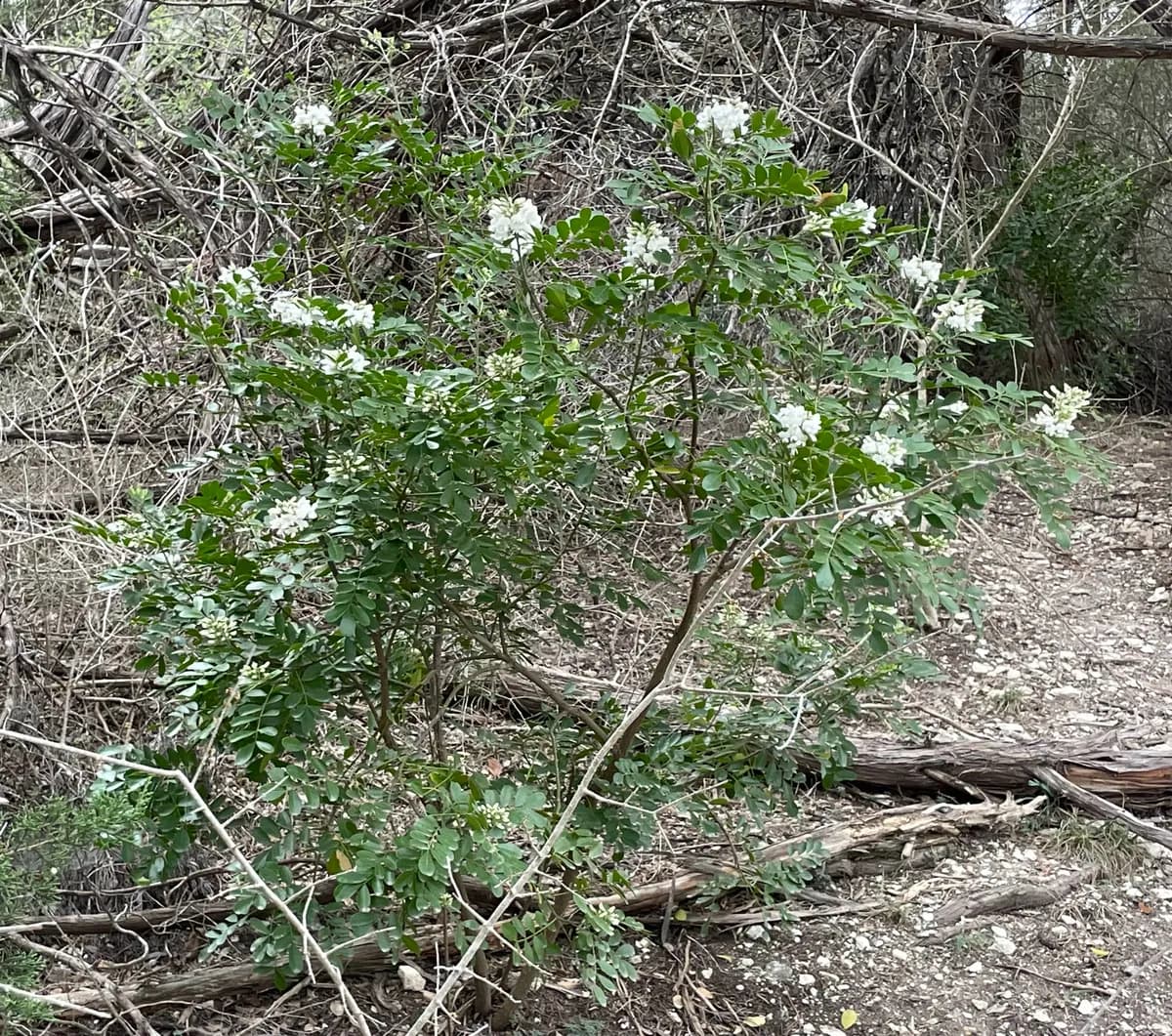
Texas Mountain Laurel is an evergreen shrub with fragrant purple flower clusters that bloom in March, April and May. It prefers full sun and low water once established, doing well in the warm, dry climates of New Mexico and Texas.
Toxicity unknown
Texas Mountain Laurel (Dermatophyllum secundiflorum) is not listed by the ASPCA Animal Poison Control Center (opens in new tab) or the other sources we check, so we have no verdict for it either way. Absence from those lists is not a clearance. If your pet shows symptoms after eating any plant, call the ASPCA at (888) 426-4435.
Light
full sun
Water
low
Size
144"–240" H × 96"–144" W
Bloom
Mar, Apr, May
Native to
NM, TX
Pollinators
butterflies, moths, hummingbirds, nectar insects
Before you buy
Your city may pay you to plant this
Cities and water utilities offer rebates for replacing lawn with native and water-wise plants. We track 459 programs across 44 states, each with a link to the provider and the date we last checked it.
Find rebates in your areaPicture natives in your own yard
Upload a photo of your yard and Patch Vision shows a rendering of it planted with natives for your region, like Texas Mountain Laurel.


Browse plants for this ecoregion
Texas Mountain Laurel is a stunning native shrub or small tree known for its spectacular spring display of fragrant purple flower clusters that smell like grape Kool-Aid. The silvery-green compound leaves provide year-round structure, and the plant develops an attractive sculptural form with age. It's extremely drought tolerant once established and requires minimal care.
Growing Texas Mountain Laurel
Grow Texas Mountain Laurel in full sun and low water. Mature plants reach 144 to 240 inches tall and spread 96 to 144 inches wide. Expect low maintenance to keep it looking intentional in a front yard.
How to care for Texas Mountain Laurel, by region
How to care for Texas Mountain Laurel where it is actually grown: year-round basics plus what to do each season, region by region, with the sources for each.
Care guidance last updated: August 2026
Cross Timbers (includes Fort Worth, TX)
Year-round
Texas mountain laurel is a slow, tough evergreen shrub or small tree that wants sharp drainage and very little fuss once it is settled in. Around Fort Worth the two things that matter most are not overwatering it and going easy on the pruning shears, because it heals very slowly.
- Establishment: water deeply about once a week the first summer so roots go down, then back off. Plant in a spot with good drainage, since it hates sitting in wet clay.
- Watering once established: it is very drought tolerant. Water deeply only during long dry spells, and let the top few inches of soil dry out between waterings to avoid root rot.
- Pruning: it recovers slowly, so never take more than a third in one year. Prune to shape right after the spring bloom fades so you do not cut off next year's flower buds.
- Common mistake: the bright red seeds are toxic if chewed. If small kids or pets use the yard, rake up and toss dropped seed pods rather than leaving them on the ground.
Fall
Fall is a quiet, cleanup season for this evergreen. It holds its leaves year round, so the main task is tidying up the woody seed pods and the seeds inside them.
- Rake up fallen seed pods and the bright red seeds inside. The seeds are toxic if chewed, so clear them from areas kids and pets use.
- Ease off watering as temperatures drop. The plant needs very little water heading into the cooler months.
- Fall is a fine time to plant a new one, giving roots the cool season to settle before next summer's heat.
A quick fall pass to clear dropped seed pods keeps the bed reading as intentional and cared for from the curb, which is the look HOA-conscious neighbors notice. The seeds are toxic if chewed, per the Colorado State University Guide to Poisonous Plants.
Winter
This is an evergreen, so it stays green and tidy through Fort Worth winters and needs almost nothing from you. Flower buds are forming now for the early spring show.
- Leave it alone. Do not prune in winter, since cutting now removes the buds that will bloom in early spring.
- It is hardy through Fort Worth winters. Water only if there is a long, warm, bone-dry stretch with no rain.
- Its dense evergreen shape holds a clean silhouette all winter, so no cutback or wrapping is needed.
Because it stays green and full through winter, this shrub keeps a neat, intentional silhouette out front with no cutback, which reads as tidy to HOA-conscious neighbors during the bare months.
Spring
Spring is bloom time and also caterpillar time in the Fort Worth area. Enjoy the grape-scented purple flowers, and watch the fresh new growth for genista caterpillars that can strip a plant fast.
- Watch new spring growth for genista broom moth caterpillars, which show up around bloom time in mid April. Treat with Bt spray while they are small and coat the leaves well.
- Do any light shaping right after the flowers fade, not before, so you keep next year's buds.
- Skip spring feeding. This plant does not need fertilizer and pushes growth on its own once the soil warms.
Summer
Fort Worth summers are hot and dry, which suits this plant fine. The main job is to resist the urge to water it like everything else in the bed.
- Water deeply but rarely, only during long rainless stretches. Let the top few inches dry between soakings so the roots do not stay wet in the heat.
- Keep a few inches of mulch over the root zone to hold moisture and keep the soil cooler, but pull it back a couple inches from the trunk.
- Common mistake: summer overwatering. Yellowing leaves in July are more often too much water and poor drainage than drought.
Sources: Lady Bird Johnson Wildflower Center plant record for Sophora secundiflora, Colorado State University Guide to Poisonous Plants entry on mescal bean, Lady Bird Johnson Wildflower Center expert answer on pruning Texas mountain laurel, Texas A and M Landscape IPM on genista caterpillar on Texas mountain laurel
Edwards Plateau (includes San Antonio, TX)
Year-round
Texas Mountain Laurel is a slow growing, extremely drought tolerant evergreen shrub or small tree that is a strong, low maintenance fit for San Antonio's hot climate and rocky limestone soils.
- Native to central and south Texas, including the San Antonio area, per the Lady Bird Johnson Wildflower Center's native plant database.
- Full sun brings the most flowers, though part shade is tolerated.
- Once established it is very drought tolerant thanks to a long taproot. Overwatering causes more problems than underwatering.
- Locally it handles San Antonio's rocky, alkaline limestone soils well and resists cotton root rot, a soil fungus that kills many other Texas landscape plants, per Bexar County Texas A&M AgriLife Extension.
- All parts of the plant contain the alkaloid cytisine, and the bright red seeds inside the woody pods are the most concentrated and most toxic part. Keep fallen pods away from kids and pets, per the National Capital Poison Center and the Wildflower Center.
Its neat evergreen form and fragrant spring flowers read as a tidy, HOA-friendly foundation or specimen planting.
Fall
Fall's cooling temperatures make it a good planting window for new Texas Mountain Laurels in San Antonio, and established plants need less water as growth slows.
- Cut back watering to about every 2 to 3 weeks as fall temperatures drop, tapering toward monthly by late fall.
- Fall through early spring is a good time to plant new container grown Texas Mountain Laurels in San Antonio's limestone soils, letting roots establish before summer heat returns.
- Woody seed pods holding the toxic red seeds mature and can split open in fall. Rake up and dispose of dropped pods where kids or pets could reach them, since the seeds contain the toxic alkaloid cytisine.
- No fertilizing or pruning is needed this time of year.
Tidy fall pod cleanup keeps the planting looking maintained without any extra shaping work.
Winter
San Antonio winters are usually mild for this plant, but an occasional hard freeze can damage flower buds or young growth.
- San Antonio sits in roughly USDA hardiness zone 8b to 9a, with an average last frost near late February and first frost in mid to late November, so frost risk mainly runs November through February.
- Established Texas Mountain Laurels tolerate cold into the upper teens Fahrenheit without dying, though hard freezes below 20 degrees Fahrenheit typically kill that year's flower buds rather than the plant itself, per Bexar County Texas A&M AgriLife Extension.
- Cut watering back to about once a month during winter dormancy.
- Newly planted or young trees are more cold tender than established ones. Cover with frost cloth ahead of a hard freeze warning.
- If leaves brown or drop after a freeze but stems stay green when scratched, the plant is alive and should push new growth in spring.
Evergreen foliage keeps this planting looking maintained through winter even without flowers.
Spring
Spring is Texas Mountain Laurel's showcase season in San Antonio, with fragrant purple flower clusters opening as early as late February and continuing into April.
- Flower clusters have a sweet fragrance often compared to grape soda, and this is one of the earliest big native blooms in the San Antonio area.
- Water established plants every 2 to 3 weeks if spring rain is light.
- Hold off on pruning until after flowering finishes so this year's flower buds are not cut off.
- Watch new leaf flushes for genista caterpillars (Uresiphita reversalis), a common San Antonio area pest that webs and chews new growth. Damage is usually just cosmetic, per Texas A&M AgriLife IPM.
The fragrant, showy spring bloom is a strong HOA-friendly focal point, and its light petal drop makes far less cleanup than many flowering trees.
Summer
Summer in San Antonio brings intense heat and often drought, the season where an established Texas Mountain Laurel's toughness really shows.
- Deep water established plants roughly once a week during hot, dry stretches. Newly planted trees need water every 4 to 7 days through their first summer.
- This is the recommended window for any shaping or size control pruning, since next spring's flower buds form on new growth put out after bloom.
- Genista caterpillar populations build through the warm months with overlapping generations. Heavy webbing or leaf loss can be treated with Bt (Bacillus thuringiensis), which targets caterpillars without harming pollinators, per Texas A&M AgriLife IPM.
- Avoid frequent shallow watering. It encourages shallow roots and does not suit this plant's long taproot.
Sources: Dermatophyllum secundiflorum, Native Plant Information Network (Lady Bird Johnson Wildflower Center), Texas Mountain Laurel, Bexar County Texas A&M AgriLife Extension, Mescal Bean Toxicity, National Capital Poison Center, Toxicity of Texas Mountain Laurel seeds, Wildflower Center Expert Answer, Texas Mountain Laurel: How to Grow this Desert Favorite (community tip), Pruning Texas Mountain Laurel, Wildflower Center Expert Answer
Texas Blackland Prairies (includes Dallas, TX)
Year-round
Texas mountain laurel is a slow growing evergreen shrub whose bright red-orange seeds contain a toxic alkaloid called cytisine, so keep fallen pods and seeds away from small children and curious pets. Once established it is a tough, low water, HOA-friendly evergreen for a sunny front yard.
- Plant in full sun in a spot with excellent drainage, this shrub does poorly anywhere soil stays wet.
- In heavy black clay, plant high on a slight mound or amend the planting hole for drainage; in the sandier soils west of the metro it drains more easily but will need water more often through the first summer or two while roots establish.
- Water deeply every 2 to 4 weeks during the first year, then cut back to occasional deep watering during extended dry spells once established.
- Pick up and dispose of fallen seed pods and loose seeds, especially where young children or dogs spend time, since the hard red-orange seeds carry the cytisine risk if chewed or swallowed.
- Expect slow growth of just a few inches a year while it builds its root system; skip heavy fertilizing to try to speed it up.
Its dense evergreen form and neat, slow growth habit read as an intentional structural planting rather than an overgrown shrub, which fits most HOA front-yard guidelines.
Fall
Fall is when the seed pods mature and split open, revealing the hard red-orange seeds that make this plant one to watch for pets and small children; it is also the better season to plant or transplant it.
- Rake up and remove fallen pods and loose seeds through October and November, especially in a yard used by kids or dogs.
- Fall is a better time to plant or transplant this shrub than spring, since cooler weather lets roots establish before next summer's heat.
- No fall pruning is needed for shape; if you do trim, do it right after the pods drop rather than waiting into winter.
- Give it one deep watering going into the cooler months if fall rain has been light.
Pods split and drop seed onto the ground below the canopy; a quick fall cleanup keeps the bed looking tended rather than littered.
Winter
Texas mountain laurel stays evergreen through North Texas winters and needs little attention. Established plants tolerate the area's typical freezes without protection.
- No regular watering is needed in winter unless the ground has been dry for several weeks with no rain.
- Established plants handle the area's short hard freezes without cover; only a newly planted (first winter) shrub benefits from a layer of mulch over the root zone.
- During a severe Arctic outbreak (well below freezing for more than a day), water the soil beforehand if it is dry, since moist soil insulates roots better than dry soil.
- Skip pruning in winter; wait until right after spring bloom if shaping is needed.
Because it holds its dark green leaves all winter, it keeps the front yard looking green and finished when deciduous neighbors are bare.
Spring
Spring is when Texas mountain laurel puts on its show, with dense clusters of purple, grape soda scented flowers opening in March and April before this year's seed pods begin forming.
- Expect fragrant purple flower clusters, often compared to a grape soda smell, anytime from March into April.
- Spring is a fine window to plant a new shrub, giving it the whole growing season to root in before next summer's heat.
- Do not prune while it is flowering or you will cut off the current year's bloom.
- As flowers fade, small green seed pods begin forming; these mature and split open in fall to reveal the red-orange seeds.
The spring bloom is a strong curb-appeal moment, so place it where the purple clusters and fragrance are visible from the sidewalk or street.
Summer
Summer is the hardest season for a young Texas mountain laurel. Established plants shrug off North Texas heat and drought once their roots are deep, but first year plantings need supplemental water.
- Water new plantings (in the ground fewer than 12 months) about once a week during 100F stretches with no rain; established plants of 2 or more years usually need none.
- By midsummer the spring's seed pods are still green and fully formed; leave them on the plant, there is no summer task for them.
- Skip fertilizer during July and August heat, feeding heat stressed roots can do more harm than good.
- Watch for yellowing leaves (chlorosis); in this plant it is more often a sign of overwatering than a nutrient problem.
Its evergreen canopy holds a tidy, consistent shape through summer heat, when many perennials nearby go dormant or look ragged.
Sources: Poison Control: Mescal Bean Toxicity, Lady Bird Johnson Wildflower Center: Sophora secundiflora, NC State Extension Plant Toolbox: Texas Mountain Laurel
In an HOA neighborhood
Texas Mountain Laurel takes more care to keep looking intentional in a front yard. Maintenance level: low. Consider it for backyard or mid-zone beds rather than the street edge.
Works well in: backyard only.
- Height exceeds typical HOA-friendly range
Wildlife value
The fragrant flowers attract butterflies, moths, hummingbirds, and various nectar-feeding insects during spring blooms. The dense evergreen foliage also provides year-round shelter for birds.
Common questions
- When does Texas Mountain Laurel bloom?
- It blooms in March, April and May, producing dense clusters of fragrant purple flowers often compared to wisteria.
- What pollinators visit Texas Mountain Laurel flowers?
- The flowers draw butterflies, moths, hummingbirds and other nectar-seeking insects during the spring bloom period.
- How much sun and water does this shrub need?
- It grows best in full sun and needs little supplemental water once established, tolerating some part sun and occasional extra moisture.
- Is Texas Mountain Laurel deciduous or evergreen?
- It is evergreen, keeping its glossy, dark green leaves year round.
- Is Texas Mountain Laurel HOA-friendly?
- Texas Mountain Laurel takes more care to look intentional in a front yard. Consider it for backyard or mid-zone beds rather than the street edge.
These answers were drafted with an AI model from this plant's data. Verify care details with a local expert.
Native range data from vouchered herbarium specimen records and regional native plant society lists. Pollinator and host plant associations compiled from GBIF, iNaturalist, and published ecological literature.
If something looks wrong
Common plant problems, and what to check first
These come up on almost any plant. Each guide lists the likely causes in the order they are worth ruling out, with one thing to check before you act on any of them, and links to the source it came from.
- It is dying right after planting
- Leaves turning yellow
- Wilting even though I watered it
- Brown crispy leaf tips
- Bugs on the plant
Ready to grow Texas Mountain Laurel? Add it to your garden in Pollinator Patch to track it and get season-by-season care guidance.