Trumpet Creeper Vine
Campsis radicans
Last reviewed: October 2026
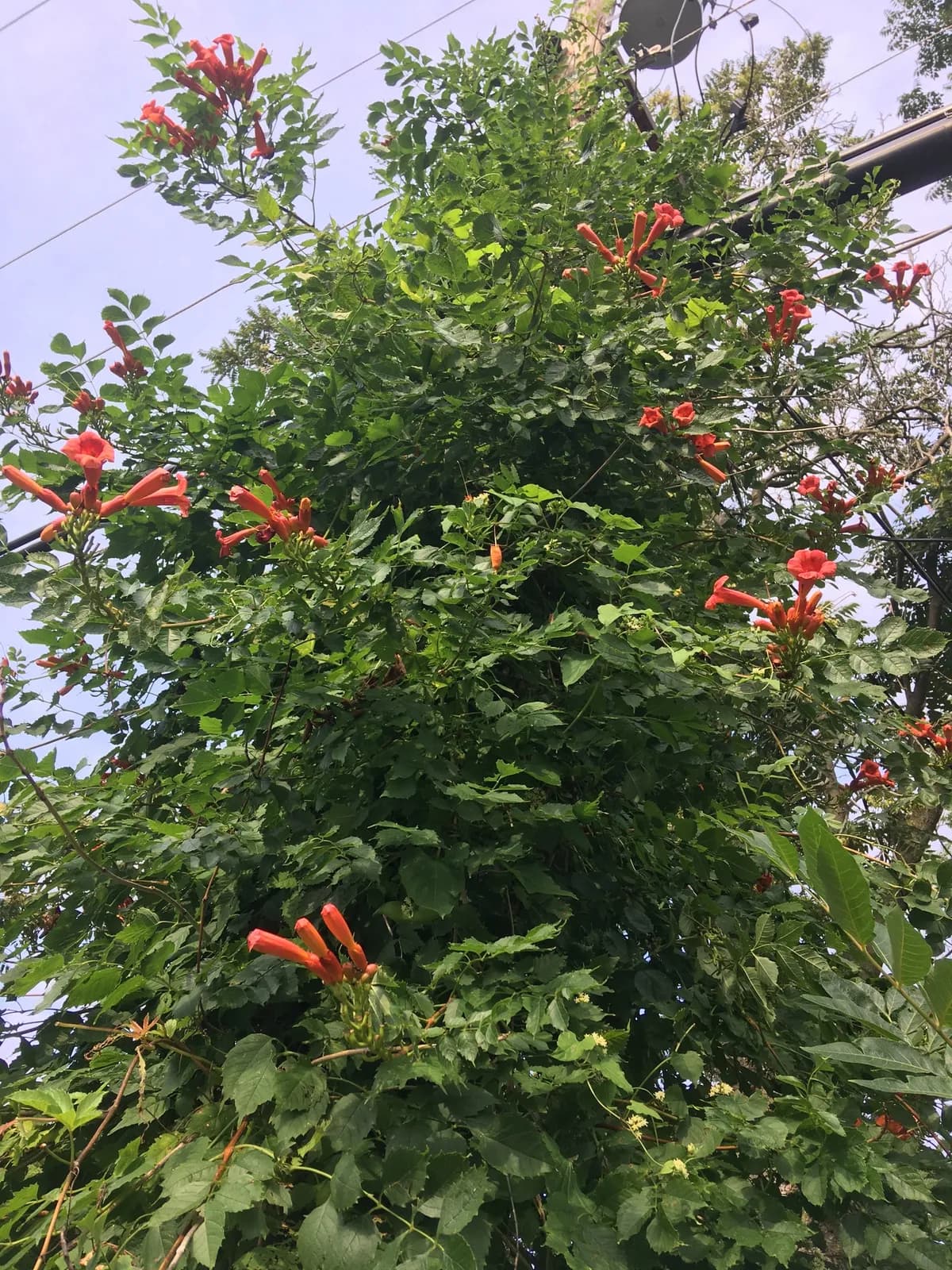
Campsis radicans is a vigorous deciduous vine that produces trumpet-shaped orange-red flowers from June through August, drawing hummingbirds and bees. It grows best in full sun and adapts to both moist and drier soils.
Toxicity unknown
Trumpet Creeper Vine (Campsis radicans) is not listed by the ASPCA Animal Poison Control Center (opens in new tab) or the other sources we check, so we have no verdict for it either way. Absence from those lists is not a clearance. If your pet shows symptoms after eating any plant, call the ASPCA at (888) 426-4435.
The USDA PLANTS Database (opens in new tab) does not flag Trumpet Creeper Vine as toxic to livestock.
Light
full sun
Water
low
Size
120"–420" H × 12"–24" W
Bloom
Jun, Jul, Aug
Native to
AL, AR, DE, GA and 26 more states
Pollinators
hummingbirds, bees, moths
Before you buy
Your city may pay you to plant this
Cities and water utilities offer rebates for replacing lawn with native and water-wise plants. We track 459 programs across 44 states, each with a link to the provider and the date we last checked it.
Find rebates in your areaPicture natives in your own yard
Upload a photo of your yard and Patch Vision shows a rendering of it planted with natives for your region, like Trumpet Creeper Vine.


Browse plants for this ecoregion
Trumpet creeper is a vigorous deciduous vine that produces clusters of orange-red trumpet-shaped flowers from June through August. This native climber can quickly cover fences, arbors, or walls but requires regular pruning to keep it contained.
Growing Trumpet Creeper Vine
Grow Trumpet Creeper Vine in full sun and low water. Mature plants reach 120 to 420 inches tall and spread 12 to 24 inches wide. Expect high maintenance to keep it looking intentional in a front yard.
How to care for Trumpet Creeper Vine, by region
How to care for Trumpet Creeper Vine where it is actually grown: year-round basics plus what to do each season, region by region, with the sources for each.
Care guidance last updated: October 2026
Eastern Corn Belt Plains (includes Columbus, OH)
Year-round
Trumpet creeper is a fast growing, very vigorous vine that needs a sturdy structure and regular control to keep it from taking over a yard or fence line.
- Give it full sun for the best show of orange-red blooms. It grows in partial shade too but flowers less there.
- This vine is a heavy grower. Train it onto a sturdy arbor, freestanding trellis, or metal fence rather than directly onto wood siding, gutters, or a wood privacy fence, since its aerial rootlets grip tightly and its weight adds up fast as it matures.
- It spreads on its own through underground root suckers and self seeding, so plan on pulling or mowing down new shoots regularly if you want it to stay in one spot.
- It is not on the ASPCA's toxic or non-toxic plant list for dogs or cats. The USDA notes that contact with the sap and leaves can cause mild skin redness and swelling, and that the plant carries slight toxicity if eaten, so wear gloves when handling it and keep pets from chewing on cut stems.
- It tolerates clay, sandy, or loamy soil and both wet and dry spots once established, which makes it forgiving if your yard has uneven drainage.
- The tubular flowers are a strong hummingbird draw through the growing season.
Fall
Fall is when the seed pods mature and a good time to get ahead of next year's seedlings if you do not want more vines popping up.
- The flat, cigar shaped seed pods mature in fall and split open to release large numbers of winged seeds if left in place.
- If you want to limit self seeding, cut and remove the pods before they split rather than letting them scatter into beds or the lawn.
- This is also a good time to dig out unwanted root suckers around the base, since the plant is slowing down for the season.
- For extra control, some extension programs recommend digging out roots and cutting back foliage before seed pods mature, which limits how far the vine spreads from seed.
- If you like their look, a few pods on an upper section can be left in place. The USDA guide notes the cigar-like fruit can be considered decorative through winter.
Clearing spent seed pods before they split gives the vine a neater fall look and helps stop next year's seedlings from popping up in mulch beds or the lawn.
Winter
Winter is dormant season and the best time for a hard structural cutback, since the bare vine makes it easy to see where growth has gotten out of bounds.
- With the leaves off, winter is the clearest time to see where stems have grown past their support and cut them back hard. The USDA guide specifically recommends a winter cutback to keep this fast growing vine in check.
- Inspect the fence, arbor, or trellis for any strain from the vine's weight and reinforce or repair it now while the plant is dormant and lighter.
- Wear gloves for winter pruning too. Dried sap and stem contact can still cause mild skin irritation.
- If any seed pods remain, this is your last chance to remove them before they split and scatter seed on the winter wind.
- No watering or feeding is needed during dormancy in a Columbus winter.
A winter cutback leaves a clean, controlled framework on the fence or arbor instead of a tangle of bare stems, which reads as tidy and intentional from the street even with nothing in bloom.
Spring
Spring is pruning and control season. Cut it back before new growth takes off since it blooms on new wood, so an early trim will not cost you flowers.
- Prune anytime from late winter into early spring. Because trumpet creeper flowers on new growth, a hard cutback now will not reduce summer blooms.
- Cut any winter dieback back to live wood and thin out crowded stems so the support structure can carry the new growth.
- Walk the base and any nearby lawn or beds for new root suckers coming up and pull or mow them now, before they get woody and harder to remove.
- Wear gloves for this job. Contact with the sap or leaves can cause mild skin redness and irritation on bare skin.
- Check that the trellis, arbor, or fence panel it is trained on is still sturdy enough to carry another season of heavy growth.
A spring cutback keeps this fast growing vine looking tidy and controlled along a fence line rather than shaggy, which reads as intentional and well kept from the street.
Summer
Summer is peak bloom season, so focus on watering during dry stretches and keeping new runners from wandering onto structures.
- Flowers open from early summer into fall, drawing hummingbirds in steady numbers to the tubular orange-red blooms.
- It is drought tolerant once established, but a young or newly planted vine benefits from a deep watering during a stretch with no rain.
- Check every week or two for new stems reaching toward siding, gutters, or a neighbor's fence and redirect or trim them back to the support structure.
- No deadheading is needed. Unlike many perennials, it does not rebloom from spent flowers.
- A light dusting of white powdery mildew can show up on the leaves in humid weather. It is usually cosmetic and does not need treatment.
Redirecting summer runners away from a fence top or siding before they get established keeps the vine from looking like it has taken over, an easy periodic check that helps the front yard stay tidy.
Sources: USDA NRCS Plant Guide: Trumpet Creeper (Campsis radicans), NC State Extension Gardener Plant Toolbox: Campsis radicans, ASPCA Toxic and Non-Toxic Plant List, Dogs (no Campsis radicans / trumpet vine entry found), Lady Bird Johnson Wildflower Center Native Plant Database: Campsis radicans, Ohio State University CFAES Weedguide: Trumpetcreeper (Campsis radicans)
Ridge and Valley (includes Harrisburg, PA)
Year-round
Trumpet vine grows fast in Harrisburg and needs a strong support and a firm hand.
- Give it full sun to part shade. It flowers best with lots of sun.
- Water regularly while young. Older plants handle some dry spells.
- Cut back or mow suckers to keep it from spreading.
Trim it to a tidy shape and keep suckers out of lawn and beds to stay HOA-friendly.
Fall
In fall, tidy up and keep suckers in check.
- Cut off suckers that popped up around the base.
- Leave the main vine in place once it is established.
- Skip heavy feeding. It likes lean to average soil.
Winter
Harrisburg winters are fine for this tough vine.
- It is hardy in USDA zones 4 to 10, so Harrisburg is well inside its range.
- No special protection is needed.
- Late winter is a good time to plan your spring prune.
Spring
Prune in early spring before new growth starts.
- It blooms on new growth, so spring pruning will not cost you flowers.
- Cut back to a few buds on each main stem.
- Check that the support is still sturdy, since mature vines get heavy.
Summer
Summer is bloom time, so mostly watch moisture and runaway shoots.
- Water during long dry spells, especially for young plants.
- Flowers show from about June to September.
- Pull or mow new suckers as they pop up.
Southern Coastal Plain (includes Orlando, FL)
Year-round
Trumpet vine loves Orlando's long, warm growing season and asks for very little once it settles in, but it grows fast and its clinging roots can damage siding if it does not have its own support to climb.
- Give it full sun to light shade and a sturdy, freestanding arbor or trellis set away from the house, since the clinging aerial rootlets can damage wood siding, stucco, and mortar over time.
- Central Florida's sandy soil works fine as is, just make sure the spot drains and does not stay soggy after heavy summer rain.
- Water new plantings regularly for the first few months, then taper off once established, since this vine handles Florida's dry spells well.
- Wear gloves when pruning or handling cut stems, contact with the sap can leave skin red and itchy.
- Prune hard while the vine is dormant or nearly so, since flowers form only on new growth made that season.
Fall
Fall in Orlando stays warm enough for trumpet vine to keep blooming into October, so there is little to do beyond light shaping and a bit of tidying as flowers and pods drop.
- Expect blooming to continue into early fall since Central Florida's warmth extends the flowering window past summer.
- Cut back any growth that has reached toward gutters, screens, or siding, since the aerial rootlets can grip and damage these surfaces over a season.
- Rake up fallen flowers and seed pods near patios and walkways so the planting does not look untended.
- Hold off on hard pruning until winter, cutting now removes wood that could still flower later this season.
Raking up dropped seed pods and spent flowers near the front walk keeps the planting looking tended, exactly the kind of upkeep that heads off an HOA note about a messy yard.
Winter
Winter is mild in Orlando, but this is still the best time to do trumpet vine's one big yearly pruning while growth has slowed, and to watch for the rare hard freeze.
- Do the year's hard structural prune in December or January while growth has slowed, cutting back to a framework of main stems on the trellis or arbor.
- Remove any stems that have crept onto siding, fascia, or the roofline, the clinging aerial rootlets can damage these surfaces if left in place.
- On the rare night Orlando dips into the upper 20s or low 30s, an established vine usually comes through fine, but a young or newly planted one benefits from a frost cloth overnight.
- Clear fallen leaves and old seed pods from around the base so the planting still reads as tended through the slow season.
Doing the big yearly cutback now, while the vine is bare, keeps it from turning into a visibly hacked back eyesore later, so the pruning reads as deliberate maintenance rather than storm damage.
Spring
Spring is when trumpet vine wakes up fast in Orlando, pushing out the new growth that carries this year's flowers, so it is the time to train shoots onto their support and get ahead of suckers.
- Train new shoots onto the trellis or arbor as they emerge so growth heads toward the support instead of nearby siding, screens, or a fence line.
- Pull or cut any suckers coming up in the lawn or nearby beds, this vine spreads by underground runners and spring is when they show up fastest.
- Resume regular watering as new leaves flush out, then ease back once the vine is growing steadily through the rest of spring.
- A light shaping pass now is fine, but save any hard cutback for next winter, since this season's flowers form on the new growth coming in now.
Summer
Summer is peak bloom and peak growth for trumpet vine in Orlando, with the heat and humidity also bringing the leaf spot and mildew this vine can pick up, plus tropical storms it needs to be secured against.
- Expect the heaviest flush of orange, trumpet shaped flowers from early to late summer, drawing hummingbirds and long tongued bees to the yard.
- Check for leaf spot or powdery mildew during humid stretches and thin dense growth so air can move through the foliage.
- Before hurricane season winds pick up, confirm ties to the trellis or arbor are secure and cut back any growth that has reached the roofline or gutters.
- Handle cut stems with gloves, contact with the sap can leave skin red and itchy.
- Deadhead or shape lightly if the vine looks ragged after its first bloom flush, but hold off on any hard cutback until winter.
Sources: UF/IFAS EDIS FP099: Campsis radicans (Trumpet Creeper, Trumpet Vine), ASPCA Toxic and Non-Toxic Plants, Trumpet Vine, NC State Extension Gardener Plant Toolbox: Campsis radicans, Lady Bird Johnson Wildflower Center (NPIN): Campsis radicans
In an HOA neighborhood
Trumpet Creeper Vine takes more care to keep looking intentional in a front yard. Maintenance level: high. Consider it for backyard or mid-zone beds rather than the street edge.
Works well in: backyard only.
- Extremely aggressive spreader that can damage structures
- Can look messy without constant pruning
- May be considered invasive or weedy by neighbors
Wildlife value
The tubular flowers are specifically adapted to attract hummingbirds and also provide nectar for bees. The dense foliage offers nesting sites for birds.
Common questions
- How fast does trumpet creeper grow?
- Campsis radicans is a fast-growing vine that can reach 20 to 40 feet and spreads readily by root suckers if not contained.
- What pollinators does trumpet creeper attract?
- The tubular orange-red flowers of Campsis radicans are especially attractive to hummingbirds, with bees also visiting for nectar.
- When does trumpet creeper bloom?
- Campsis radicans typically flowers from June through August, with blooms forming on new growth throughout the summer.
- Does trumpet creeper need a trellis or support?
- It climbs using clinging aerial rootlets and does well on a sturdy fence, arbor, or wall, since its dense growth can be heavy for weak structures.
- What soil and moisture conditions suit trumpet creeper?
- This vine tolerates a wide range of soils and moisture levels, growing well in both consistently moist sites and periods of drier weather once established.
- Is Trumpet Creeper Vine toxic to livestock?
- The USDA PLANTS Database does not flag Trumpet Creeper Vine as toxic to livestock.
- Is Trumpet Creeper Vine HOA-friendly?
- Trumpet Creeper Vine takes more care to look intentional in a front yard. Consider it for backyard or mid-zone beds rather than the street edge.
These answers were drafted with an AI model from this plant's data. Verify care details with a local expert.
Native range data from the World Checklist of Vascular Plants (Kew). Pollinator and host plant associations compiled from GBIF, iNaturalist, and published ecological literature.
If something looks wrong
Common plant problems, and what to check first
These come up on almost any plant. Each guide lists the likely causes in the order they are worth ruling out, with one thing to check before you act on any of them, and links to the source it came from.
- It is dying right after planting
- Leaves turning yellow
- Wilting even though I watered it
- Brown crispy leaf tips
- Bugs on the plant
Ready to grow Trumpet Creeper Vine? Add it to your garden in Pollinator Patch to track it and get season-by-season care guidance.