Utah Ash
Fraxinus anomala
Last reviewed: October 2026
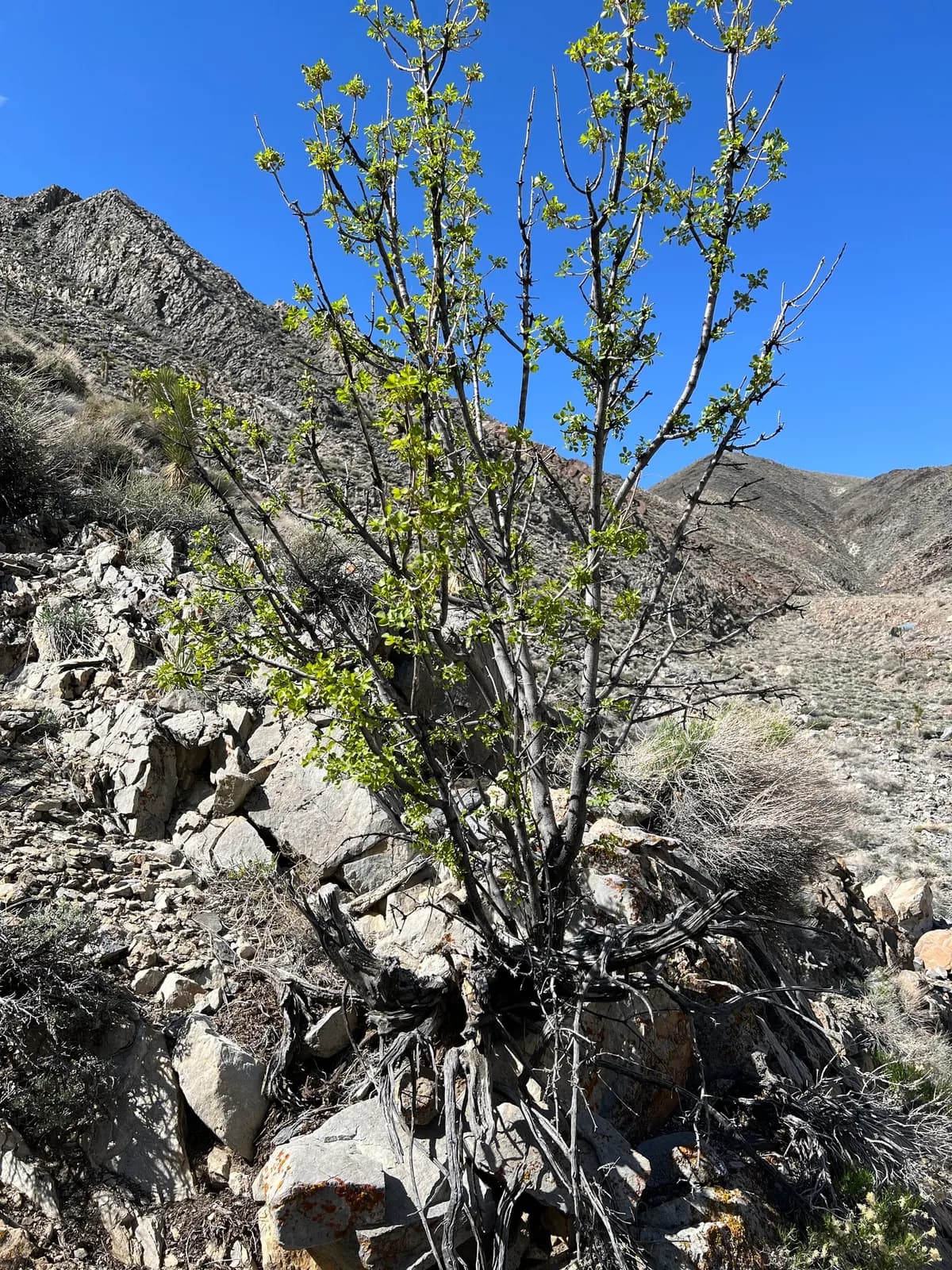
Fraxinus anomala, or Utah ash, is a small drought tolerant tree found on rocky slopes and canyon washes in the Southwest. It blooms in April and May with small greenish flowers visited by bees and beetles.
Toxicity unknown
Utah Ash (Fraxinus anomala) is not listed by the ASPCA Animal Poison Control Center (opens in new tab) or the other sources we check, so we have no verdict for it either way. Absence from those lists is not a clearance. If your pet shows symptoms after eating any plant, call the ASPCA at (888) 426-4435.
The USDA PLANTS Database (opens in new tab) does not flag Utah Ash as toxic to livestock.
Light
full sun
Water
low
Size
180"–360" H × 120"–240" W
Bloom
Apr, May
Native to
AZ, CA, CO, NM and 3 more states
Pollinators
bees, beetles
Before you buy
Your city may pay you to plant this
Cities and water utilities offer rebates for replacing lawn with native and water-wise plants. We track 459 programs across 44 states, each with a link to the provider and the date we last checked it.
Find rebates in your areaPicture natives in your own yard
Upload a photo of your yard and Patch Vision shows a rendering of it planted with natives for your region, like Utah Ash.


Browse plants for this ecoregion
A small to medium-sized deciduous tree that produces clusters of small flowers in spring before leafing out and develops attractive fall color. It is drought-tolerant once established.
Growing Utah Ash
Grow Utah Ash in full sun and low water. Mature plants reach 180 to 360 inches tall and spread 120 to 240 inches wide. Expect low maintenance to keep it looking intentional in a front yard.
How to care for Utah Ash, by region
How to care for Utah Ash where it is actually grown: year-round basics plus what to do each season, region by region, with the sources for each.
Care guidance last updated: August 2026
Sonoran Basin and Range (includes Palm Springs, CA)
Year-round
Utah ash (Fraxinus anomala) is a slow growing, deep rooted small tree built for hot dry canyons and washes, and it needs very little care once it is established in your yard.
- This tree evolved in dry rocky canyons and washes with as little as about 5 to 19 inches of rain a year, so once roots are established it needs very little supplemental water.
- Give it full sun and well drained soil. It tolerates sandy, gravelly, and even clay soils, which is unusual for a desert tree.
- Growth is slow. Expect a compact, rounded tree around 15 to 20 feet tall over time, good for a smaller yard.
- Unlike most ash trees, this species usually grows simple, single leaflets instead of the typical compound ash leaf. That is where the names Utah ash and singleleaf ash come from.
- We could not confirm this tree's toxicity to pets. It has no entry on the ASPCA's toxic and non toxic plant list, so its status is undetermined rather than confirmed one way or the other. Keep an eye on pets around any tree you are unsure about.
- Prune only while the tree is dormant in late fall or winter, and trim off any root suckers at the base to keep a single clean trunk.
Fall
Fall is this tree's best season to look at. The leaves turn a bright, clear yellow before dropping, and it is also the right time to start easing off on water.
- Foliage turns a bright, clear yellow in fall, one of this tree's best ornamental features.
- Cut back on watering as temperatures drop and the tree heads into dormancy.
- Rake and clear fallen leaves from around the base to keep the area tidy and reduce spots where pests can hide over winter.
- Late fall, once the tree is bare, is a good time to start structural pruning since you can finally see the branch shape clearly.
- This is a slow grower, so do not expect dramatic size change year to year. Fall color is the main show.
Raking fallen leaves and starting cleanup pruning once the tree is bare keeps a front yard planting looking tidy for HOA-conscious curb appeal.
Winter
This is a fully deciduous tree, so expect bare branches all winter. It needs almost no water, and this is the best time to prune.
- Utah ash drops all its leaves and goes fully dormant in winter. Bare branches are normal, not a problem.
- Established trees need little to no supplemental water during winter in most climates.
- Dormant season is the best time to do any shaping or dead wood pruning, since the branch structure is easy to see without leaves in the way.
- This species naturally grows at elevations up to about 11,000 feet in canyon country, so mature trees handle cold well. A young, newly planted tree can still use basic trunk protection if a hard freeze is expected.
A clean, intentionally shaped winter silhouette from dormant season pruning reads as cared for rather than neglected, good for HOA-conscious curb appeal.
Spring
Spring is leaf out and bloom time. New foliage appears along with small, easy to miss flowers, and root suckers start showing up at the base.
- New leaves emerge in spring. Watch for the tree's simple, single leaflet look, its most distinctive trait among ash trees.
- Flowers are small, greenish, and wind pollinated, with no petals or scent, so do not expect a showy bloom.
- If your tree is young or was recently planted, give it a deep, slow soak every few weeks through spring to help the roots settle in. Established trees can go much longer between waterings.
- Check the base of the trunk for root suckers and clip them off while they are small, before they turn into a thicket of extra stems.
- Once leaves are fully out, take a look for any branches that did not survive winter and prune those out.
Clearing root suckers and any winter killed branches keeps a front yard tree looking tidy and intentional, good for HOA-conscious curb appeal.
Summer
Summer heat and dry spells are exactly what this tree evolved for, so summer care is mostly about resisting the urge to overwater.
- This species is documented tolerating as little as about 5 inches of annual rainfall in parts of its native range, so it is built to handle a hot, dry summer without regular irrigation.
- Once established, skip a regular watering schedule. An occasional deep soak during a long heat wave is enough, especially for a tree still under 3 to 5 years old.
- Full sun all summer is normal and expected for this canyon and wash growing species.
- Watch newly planted or younger trees for leaf scorch or early leaf drop during extreme heat spikes. That is a sign they need a deeper soak.
- Palm Springs area yards sit lower and hotter than the rocky canyons this tree usually grows in, so a young tree here may appreciate a little afternoon shade or extra water until its roots go deep.
Sources: USDA Forest Service, Fire Effects Information System: Fraxinus anomala species review, Utah State University Extension: Utah Native Plants for the Landscape, Single-leaf Ash, ASPCA Toxic and Non-Toxic Plants list (no Fraxinus anomala / ash entry found), USDA PLANTS Database profile for Fraxinus anomala (FRAN2)
In an HOA neighborhood
Utah Ash is an HOA-friendly choice. Maintenance level: low. Tidiness: 4 out of 5.
Works well in: front yard, street edge, mid zone.
Wildlife value
The spring blooms attract bees and beetles for pollination. As a native ash species, it provides habitat and food sources for local wildlife throughout the growing season.
Common questions
- When does Utah ash bloom?
- Fraxinus anomala generally blooms in April and May, producing small clusters of inconspicuous flowers as new leaves emerge.
- What pollinators visit Utah ash flowers?
- Bees and beetles are the most commonly observed visitors to Fraxinus anomala flowers, gathering pollen and nectar in early spring.
- How much water does Utah ash need?
- Once established, this tree handles low water conditions well and is a good fit for xeric or rock garden plantings in dry climates.
- What kind of habitat does Utah ash grow in?
- Fraxinus anomala is often found on rocky canyon walls, slickrock benches, and the margins of desert washes, usually in full sun with sharply drained soil.
- Does Utah ash keep its leaves year round?
- No. Fraxinus anomala is deciduous, dropping its leaves in fall and leafing out again the following spring.
- Is Utah Ash toxic to livestock?
- The USDA PLANTS Database does not flag Utah Ash as toxic to livestock.
- Is Utah Ash HOA-friendly?
- Utah Ash is generally an HOA-friendly choice in the right placement, with low maintenance.
These answers were drafted with an AI model from this plant's data. Verify care details with a local expert.
Native range data from vouchered herbarium specimen records and regional native plant society lists. Pollinator and host plant associations compiled from GBIF, iNaturalist, and published ecological literature.
If something looks wrong
Common plant problems, and what to check first
These come up on almost any plant. Each guide lists the likely causes in the order they are worth ruling out, with one thing to check before you act on any of them, and links to the source it came from.
- It is dying right after planting
- Leaves turning yellow
- Wilting even though I watered it
- Brown crispy leaf tips
- Bugs on the plant
Ready to grow Utah Ash? Add it to your garden in Pollinator Patch to track it and get season-by-season care guidance.