Quick answer: A dog-friendly ground cover is a plant that is not on the ASPCA Animal Poison Control Center's toxic plant list, that fills back in where a dog wears it thin, and that is native where you live. Below are fifteen, three each for five regions (Orlando, Denver, Phoenix, Washington and Seattle). Every one was checked against the ASPCA list by scientific name, and every native range was read on the Lady Bird Johnson Wildflower Center and Kew's World Checklist of Vascular Plants. None of them is a lawn. All of them will cover ground a dog uses.
Most pages about ground covers for dogs either give no source for the pet claim or list plants for a climate that is not yours. This one checks the toxicity claim plant by plant and groups the plants by the ecoregion they grow in, with an anchor city, so you can tell at a glance whether a list is yours.
It is not a promise. The ASPCA keeps a database of plants toxic and non-toxic to dogs, cats and horses, and a plant that is absent from it has not been reported as a problem. That is a different claim from a guarantee. Any plant eaten by the mouthful can upset a stomach, and a bed can carry things that are not the plant at all, like slug bait or dyed mulch. So the phrasing throughout is "not on the ASPCA toxic plant list", and a few plants get a stronger line because the ASPCA lists them by name as non-toxic. If your dog eats something and seems off, call the ASPCA Animal Poison Control Center at (888) 426-4435.
The other half of the question is whether the plant survives the dog. Three things kill ground covers in a dog yard: the running line along the fence, the spot where the dog pees, and digging. No plant takes the running line. Put a path there, mulch, decomposed granite or flagstone, and plant the rest. For the pee spot, rinse it with a bucket of water when you see it, and expect to replace that square foot a couple of times a year. For the rest of the yard, pick plants that root along their stems or send out runners, so a worn patch fills back in from the sides, and give them a season to establish before the dog has the run of it. Planting two kinds means one failure does not strip the whole yard.
Southern Coastal Plain (Orlando area): three for sand and summer rain
Central Florida yards sit on sand with a wet summer and a dry spring, and St. Augustine grass dies in a stripe wherever the dog runs. UF/IFAS lists two of the three below as alternatives to turfgrass, the third covers a sunny bank, and all three are listed native to Florida by the Wildflower Center and Kew.
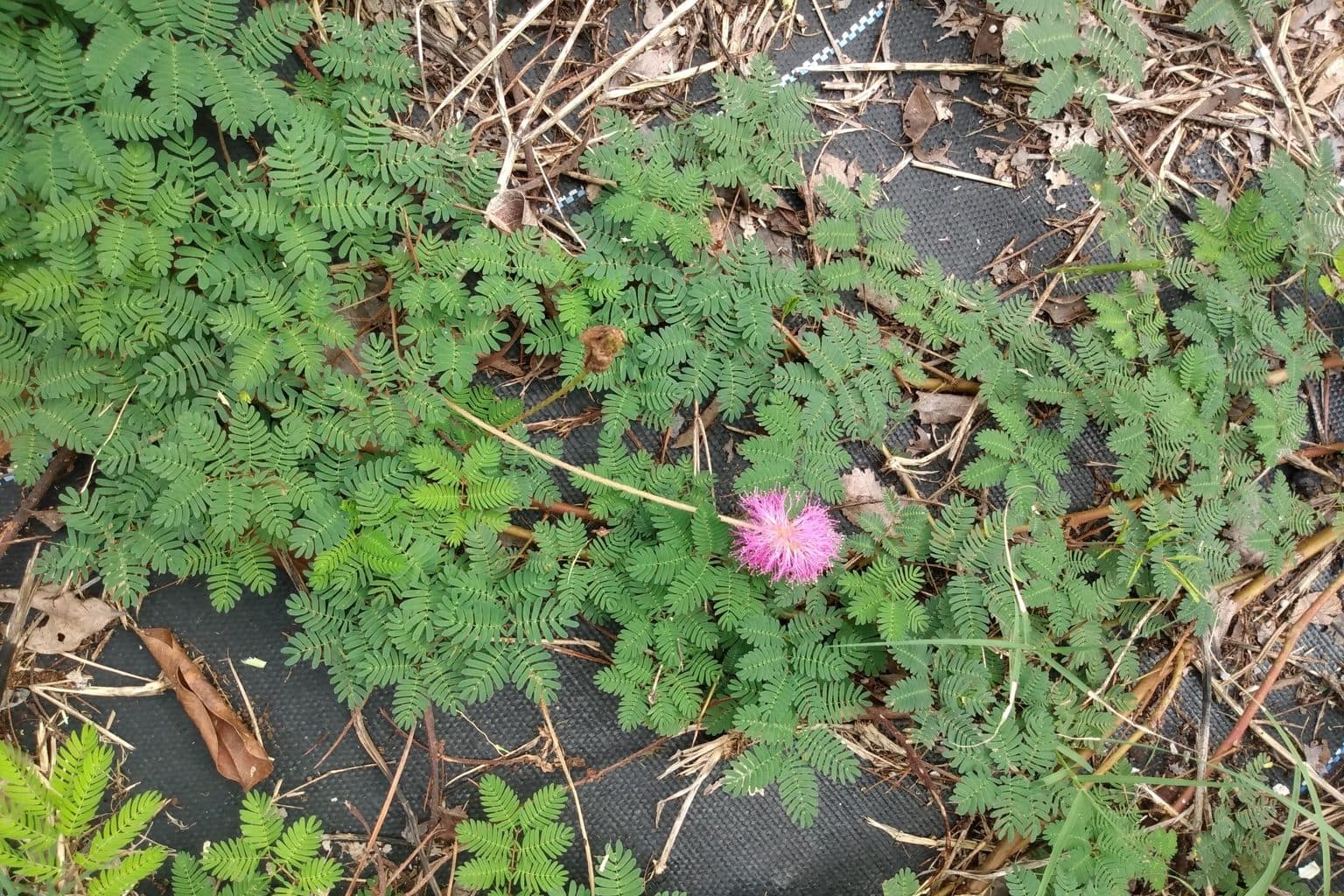
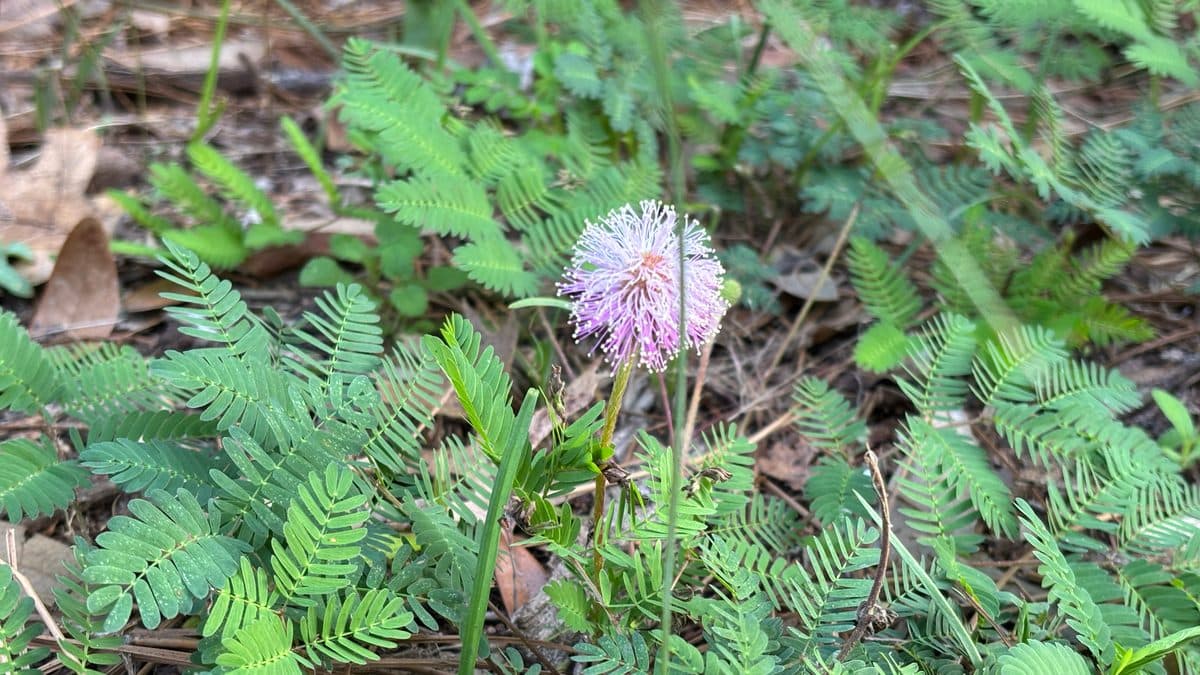
Sunshine mimosa (Mimosa strigillosa)
Neither sunshine mimosa nor any other plant in the genus Mimosa is on the ASPCA toxic plant list. The Wildflower Center lists it native to Florida: up to about a foot tall in flower, with sprawling stems that root at the nodes and can run 100 feet over time, which is what makes it a ground cover rather than a clump. It flowers from March through July, pink powder puffs an inch across, and the ferny leaflets fold up when a paw brushes them. UF/IFAS Gardening Solutions says the foliage looks fragile but withstands some light traffic, and that it can be mown.
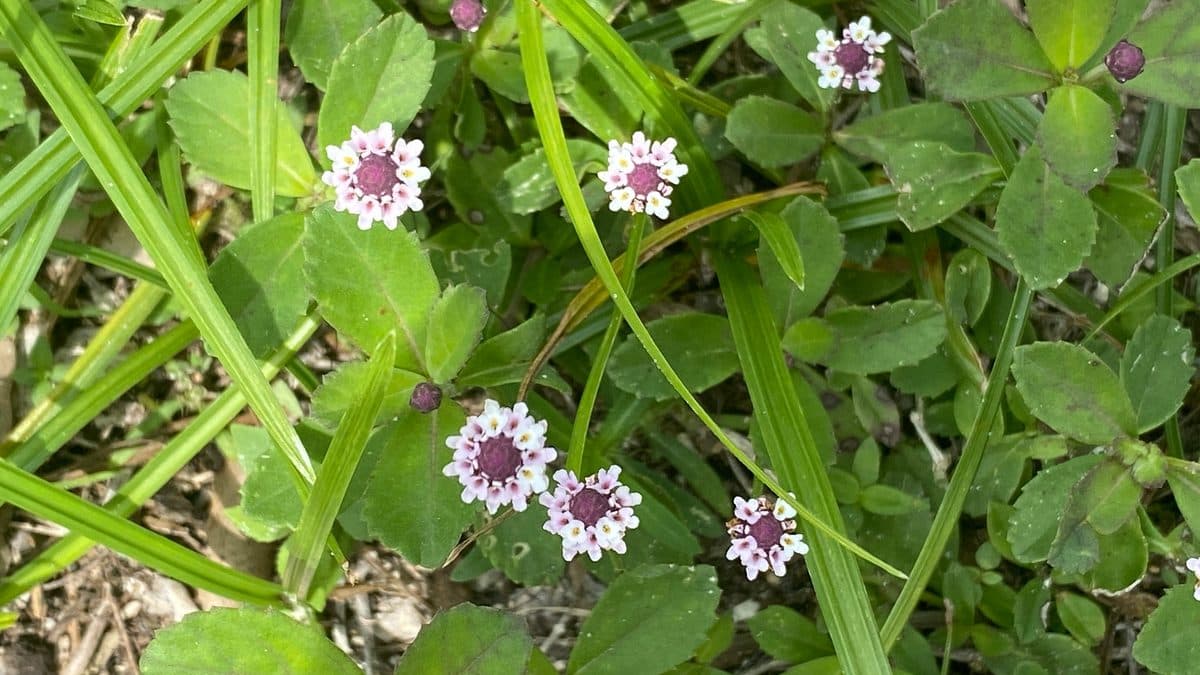
Frogfruit (Phyla nodiflora)
Frogfruit is not on the ASPCA toxic plant list (we checked it on its own page: is frogfruit toxic to dogs). The Wildflower Center lists it native to Florida, about six inches tall, full sun, low water, growing anywhere from ditches to beaches. It carries small white flowers from May to October and is a larval host for the phaon crescent, buckeye and white peacock butterflies (Wildflower Center). UF/IFAS Gardening Solutions says it persists under frequent traffic, spreads quickly from plugs to fill bare patches, and takes an occasional mowing at four inches or higher, which is why it shows up in Florida lawns on its own and why people leave it.
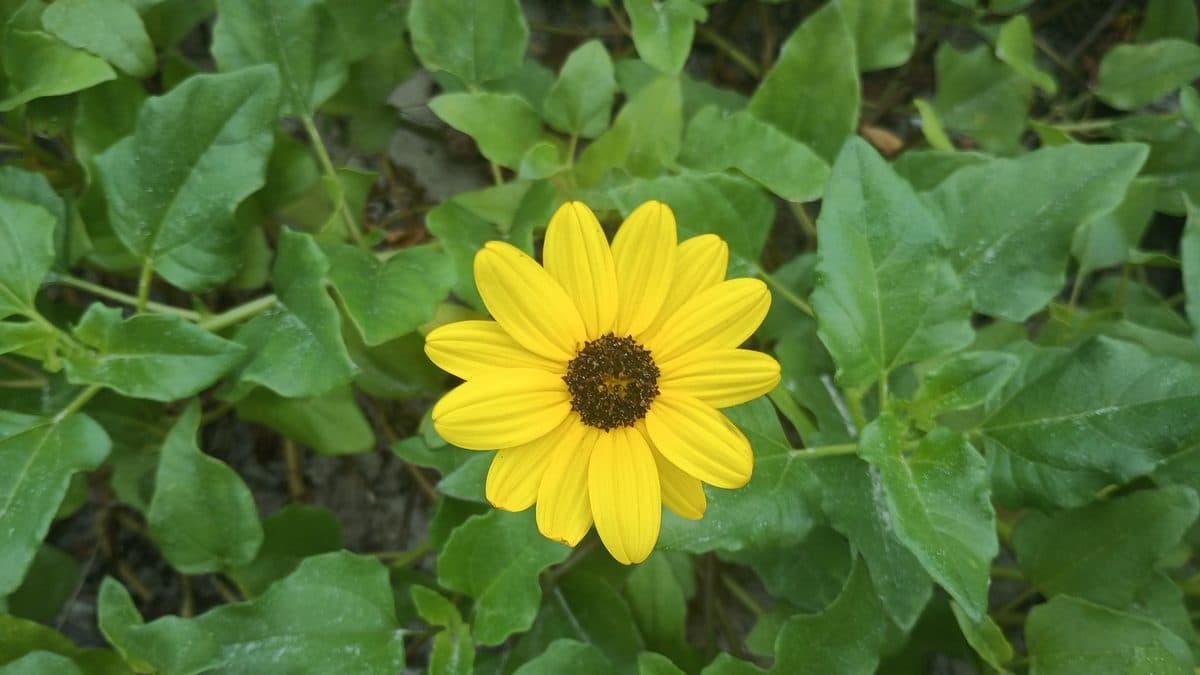
Beach sunflower (Helianthus debilis)
Beach sunflower is not on the ASPCA toxic plant list. The one sunflower the ASPCA does list, swamp sunflower (Helianthus angustifolius), it lists as non-toxic to dogs. Kew's World Checklist lists beach sunflower native to Florida, and the Wildflower Center describes stems that lie along the ground up to about six feet long, with yellow daisies in nearly every month of the year. UF/IFAS Gardening Solutions calls it a spreading perennial that also reseeds, blooming almost year-round, with butterflies on the flowers and birds on the seed, and notes that where it freezes it lives as an annual and reseeds itself. It wants full sun and sandy ground. It will not take the running line, but it covers a sunny bank fast.
High Plains (Denver area): three for clay, hail and dry air
Front Range yards sit on clay under a sky that throws hail in June and no rain in August, and a Kentucky bluegrass lawn there is a water bill. The three below are shortgrass prairie plants, which is what Denver was before it was Denver, and all three are listed native to Colorado by the Wildflower Center and Kew.
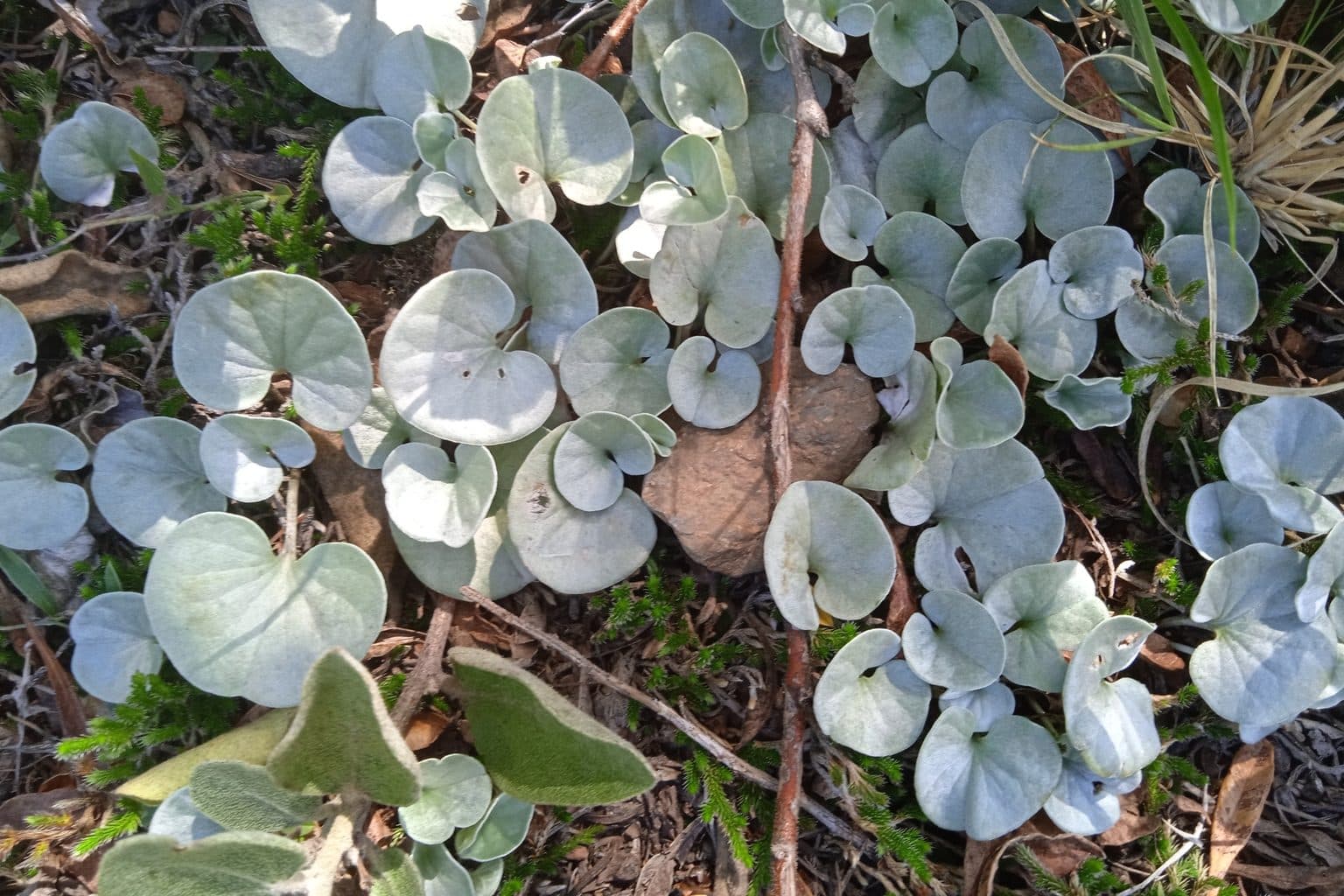
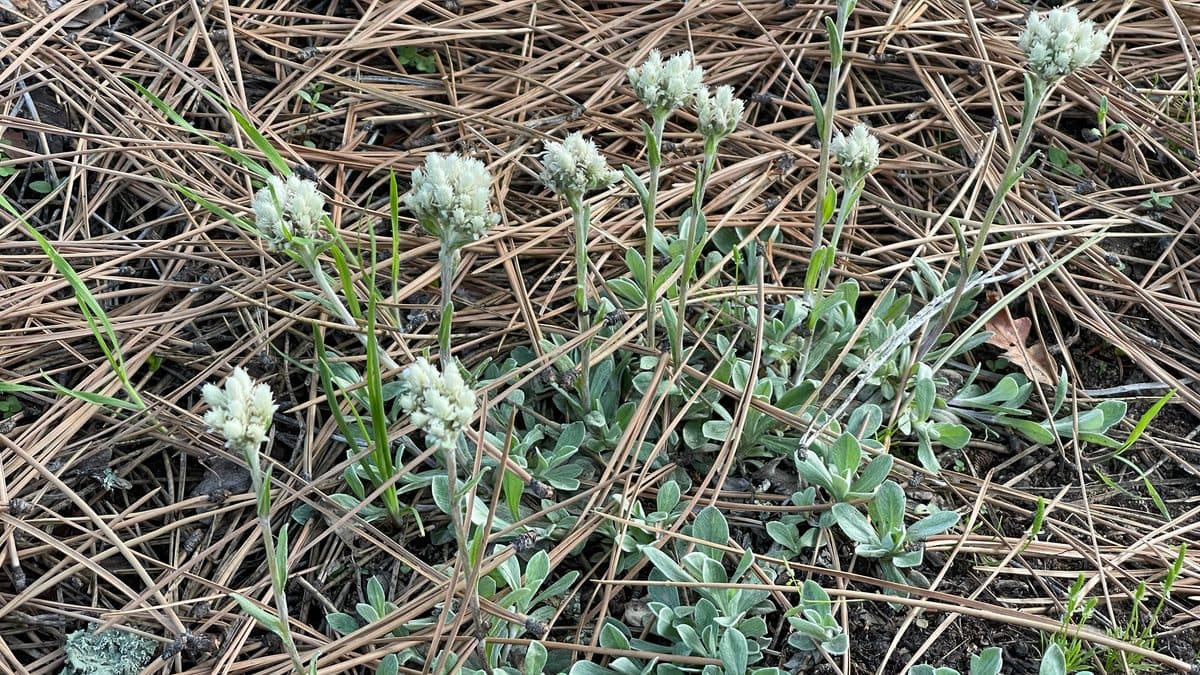
Pussytoes (Antennaria parvifolia)
Pussytoes is not on the ASPCA toxic plant list. The Wildflower Center lists it native to Colorado: up to about six inches tall, a mat of small silver-gray leaves from dry forest openings and the plains, full sun to part shade, low water, and it brings butterflies. The flowers are the soft white tufts the name comes from, on short stems above the mat. Plant it in the hell strip or along the sunny edge of a bed. It spreads sideways rather than up.
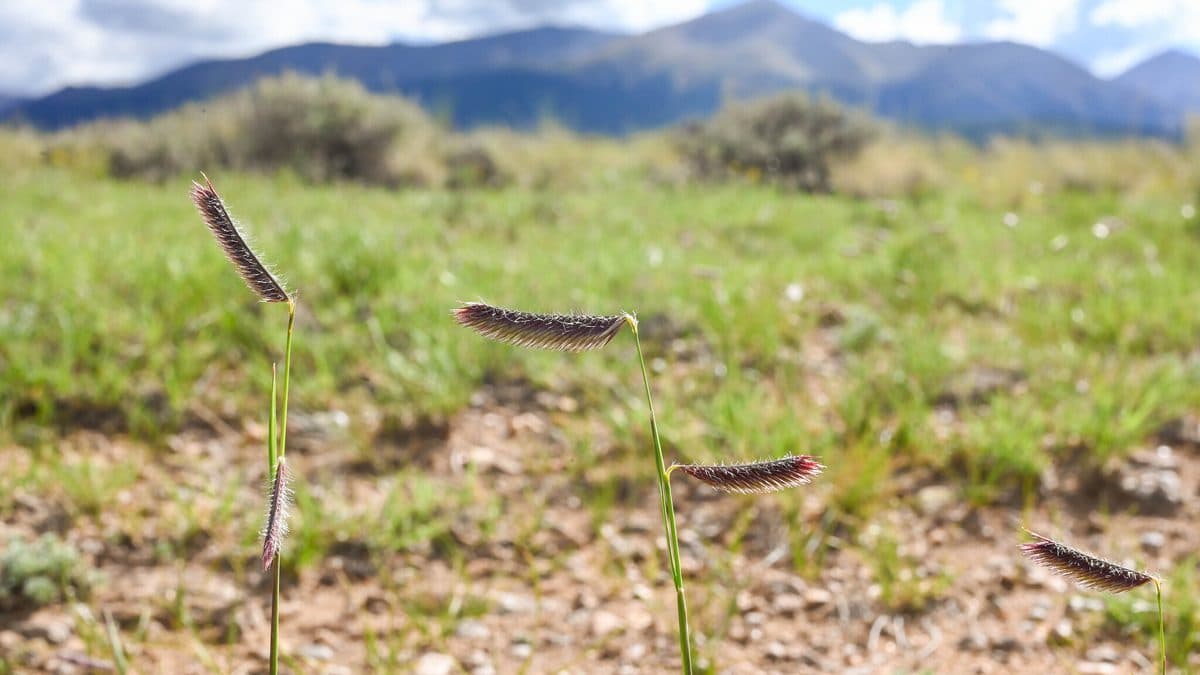
Blue grama (Bouteloua gracilis)
Blue grama is not on the ASPCA toxic plant list. The Wildflower Center lists it native to Colorado and calls it a dominant grass of the dry shortgrass prairie: foliage normally no more than four inches high, seedheads one to two feet, full sun, low water, and the seed brings birds. The seedheads are the eyelash-shaped ones. You can mow it like a lawn or leave it, and as a grass it takes a dog's traffic better than the broadleaf plants on this list. It is a warm-season grass, brown from October to May, and a dog yard shows that.
Prairie zinnia (Zinnia grandiflora)
The ASPCA lists Zinnia species as non-toxic to dogs, and prairie zinnia is in that genus. The Wildflower Center lists it native to Colorado: up to about eight inches tall, from dry calcareous slopes and mesas, low water, yellow flowers from May through September, and it carries the Xerces Society's note of special value to native bees. It is slow for a year and then it is a mat. Give it the hottest, driest bed you have and do not water it once it is in.
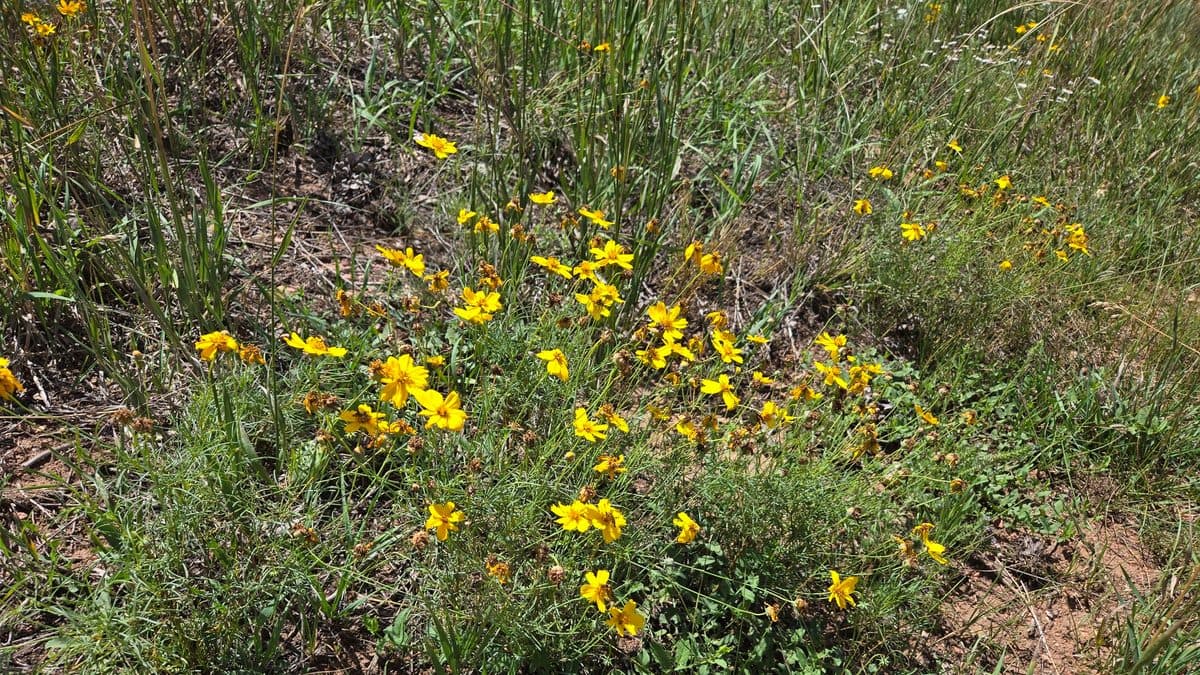
Sonoran Basin and Range (Phoenix area): three for gravel and reflected heat
Phoenix yards are decomposed granite and block walls, and a dog there goes out at dawn and dusk because the gravel burns at noon. None of these three is a lawn. They are planted in the gravel, a foot or two apart, and they knit into cover over a couple of years. All three are listed native to Arizona by the Wildflower Center and Kew.
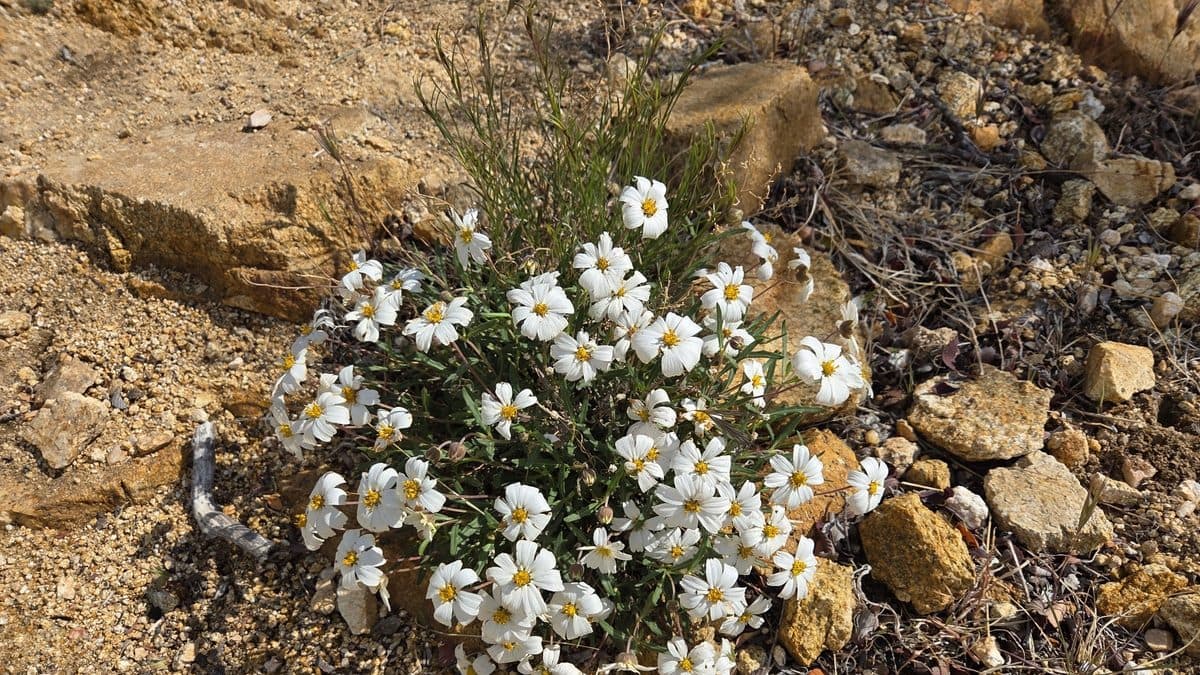
Blackfoot daisy (Melampodium leucanthum)
Blackfoot daisy is not on the ASPCA toxic plant list (we checked it on its own page: is blackfoot daisy toxic to dogs). The Wildflower Center lists it native to Arizona: seldom over six inches high, a clump one to two feet across, from dry calcareous ground, full sun, low water, white daisies from March through October. It is the one that does not stop blooming. Give it the low water the Wildflower Center lists and nothing more.
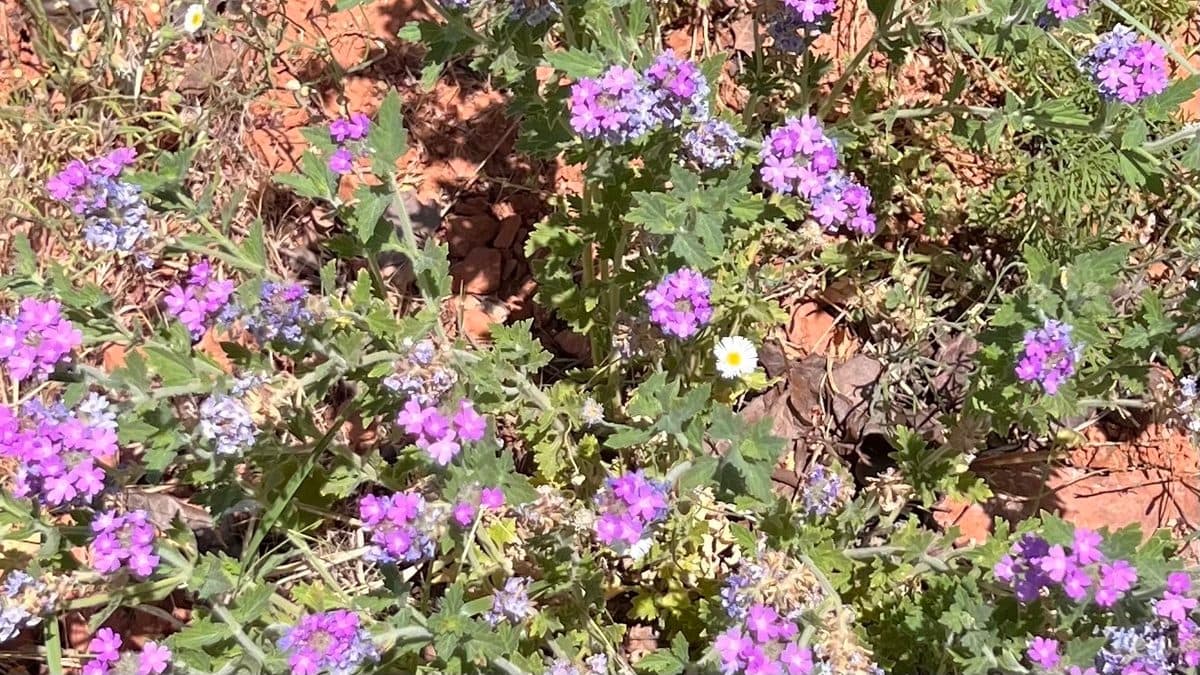
Goodding's verbena (Glandularia gooddingii)
Goodding's verbena is not on the ASPCA toxic plant list. The verbena the ASPCA lists as toxic, lemon verbena, is Aloysia triphylla, a different plant in a different genus. The Wildflower Center lists Goodding's verbena native to Arizona: up to about 18 inches tall, from washes, dry slopes and mesas, full sun, with purple flower clusters in April and May. Plant it where the gravel drains.
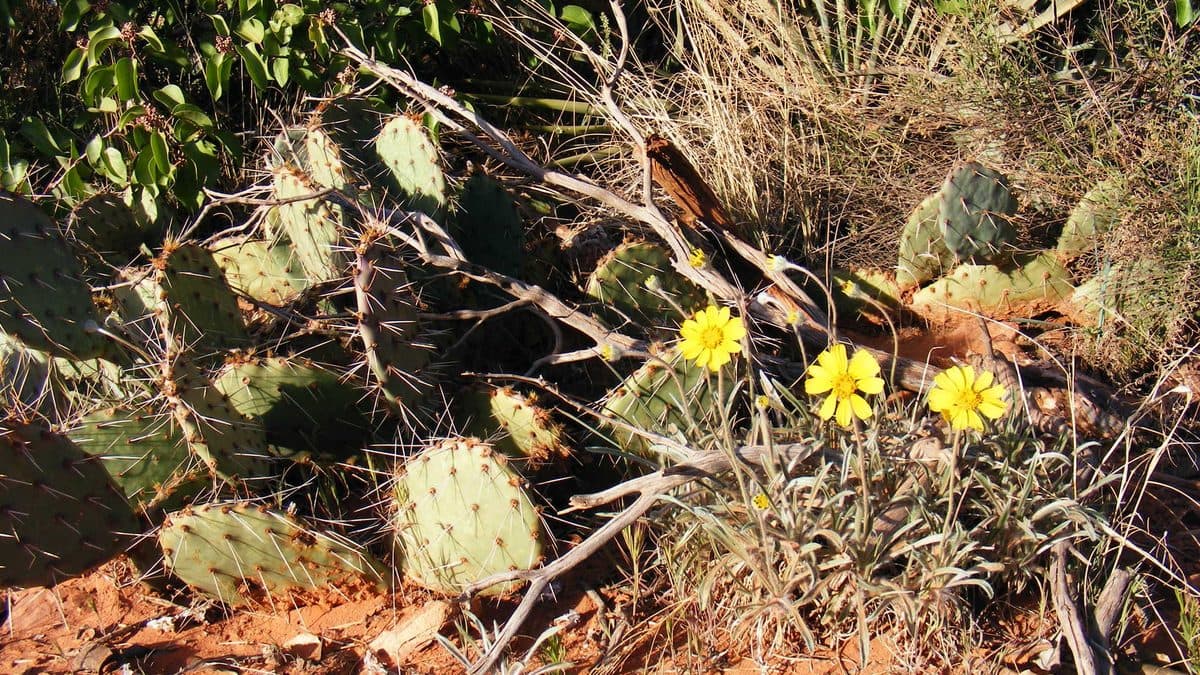
Angelita daisy (Tetraneuris acaulis)
Angelita daisy is not on the ASPCA toxic plant list. The Wildflower Center lists it native to Arizona, up to about a foot tall, with yellow daisies on bare stems over a tuft of narrow leaves, flowering in summer. Phoenix nurseries sell it as a gravel-bed filler because it holds its shape. It does not spread, so plant it close.
Northern Piedmont (Washington area): three for clay and oak shade
Northern Virginia and Maryland yards sit on red clay under big oaks, and the back of the lot is often too shaded for grass. The three below cover the shade, the sunny slope and the strip between. All three are listed native to the District, Maryland or Virginia by the Wildflower Center and Kew.
Green and gold (Chrysogonum virginianum)
Green and gold is not on the ASPCA toxic plant list. The Wildflower Center lists it native to the District, Maryland and Virginia: a woodland plant with stems that lie flat or rise to about 20 inches, part shade, with yellow five-petaled flowers from April into September. It spreads by runners into a loose mat. Under the oaks, where the dog walks but does not run, this is the one.
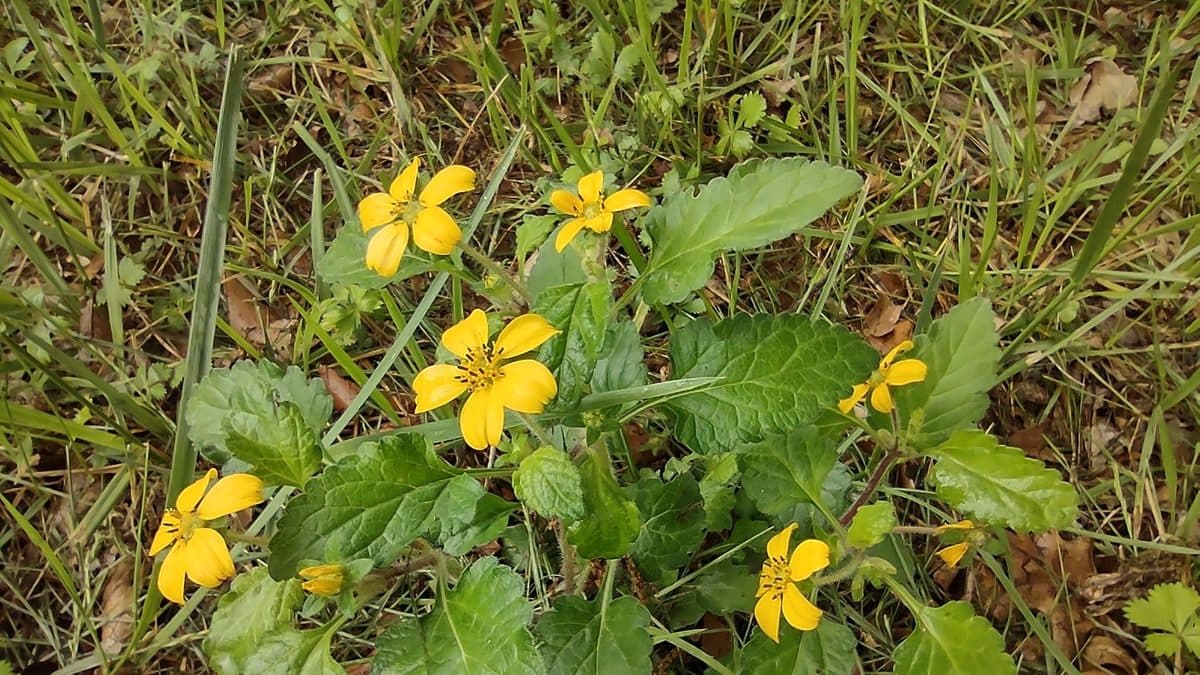
Moss phlox (Phlox subulata)
The ASPCA lists moss phlox by name as non-toxic to dogs, cats and horses (we checked it on its own page: is moss phlox toxic to dogs). The Wildflower Center lists it native to Maryland and Virginia: up to about eight inches tall, evergreen, from rocky ledges and slopes, full sun, with pink, white or lavender flowers from March to May. It belongs on the sunny front slope, not under the oaks, and like partridgeberry below it stays green in January.
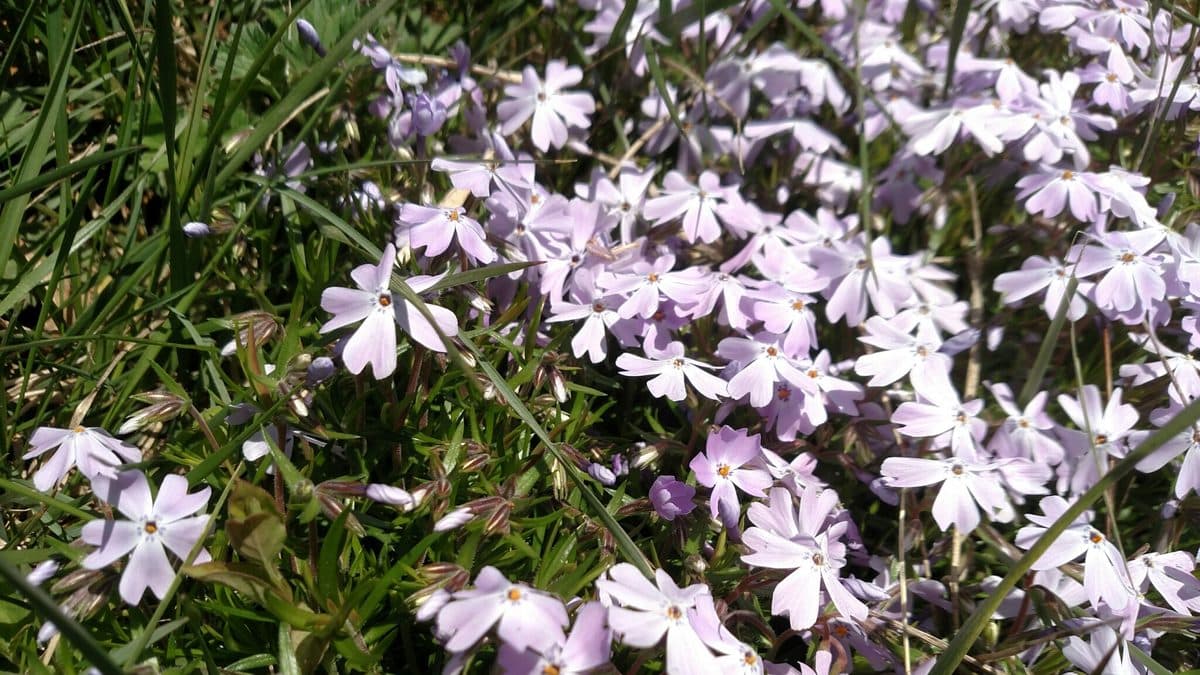
Partridgeberry (Mitchella repens)
Partridgeberry is not on the ASPCA toxic plant list. The Wildflower Center lists it native to the District, Maryland and Virginia: one to two inches high, evergreen, from dry or moist woods, part shade, low water, small white flowers from May to September and red berries that bring birds. It is slow. Use it in the shaded strip beside the fence where nothing else takes, not on the running line.
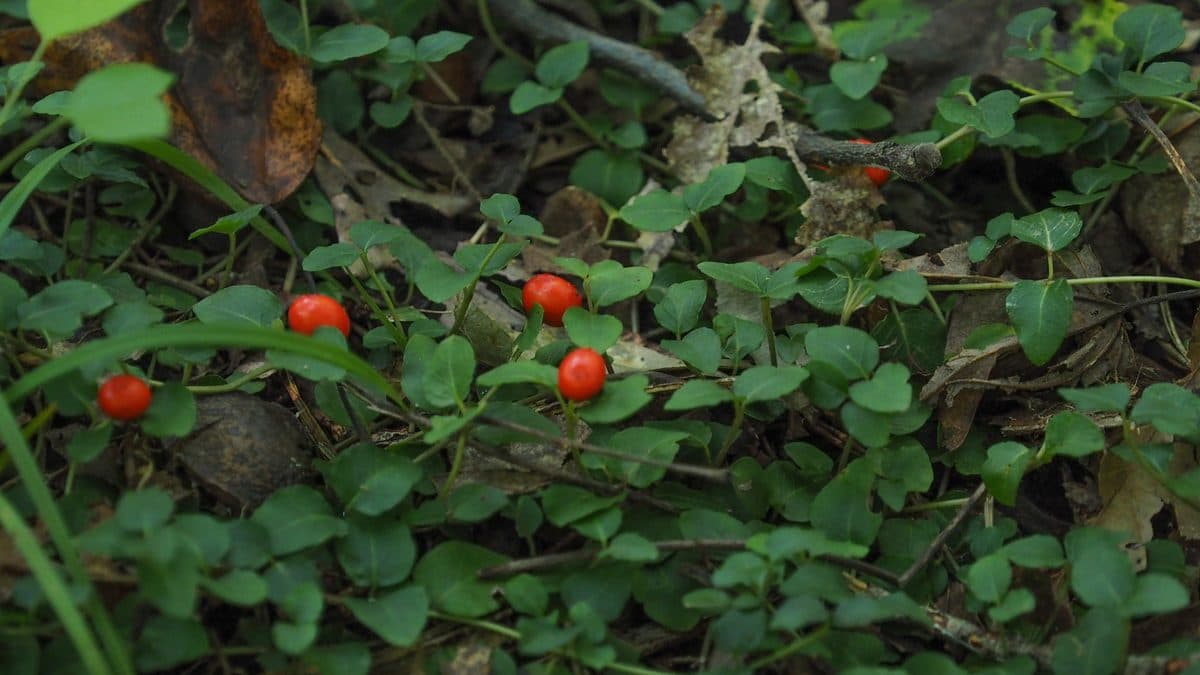
Puget Lowland (Seattle area): three for wet winters and a dry August
Seattle yards get rain from October to May and nothing in August, and the lawn becomes moss on the north side. The three below are the plants the hills around the city already grow, and all three are listed native to Washington by Kew's World Checklist, with the first two also listed there by the Wildflower Center.
Kinnikinnick (Arctostaphylos uva-ursi)
Kinnikinnick is not on the ASPCA toxic plant list. The Wildflower Center lists it native to Washington: six to twelve inches tall with a spread of up to fifteen feet, evergreen, from rocky open woods and dry sandy hills, sun to part shade, low water, with small pink flowers from March to May, red berries after, and butterflies on it. Put it on the sunny bank or the slope that will not hold mulch. It is slow to start, and then it does not stop.
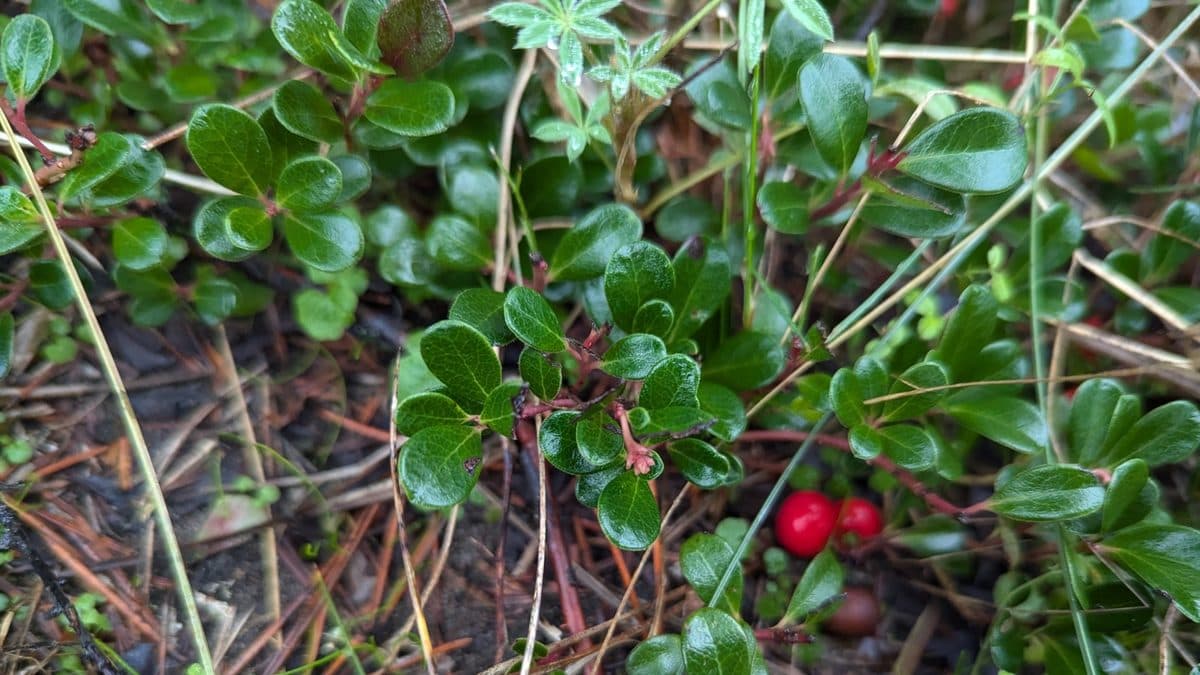
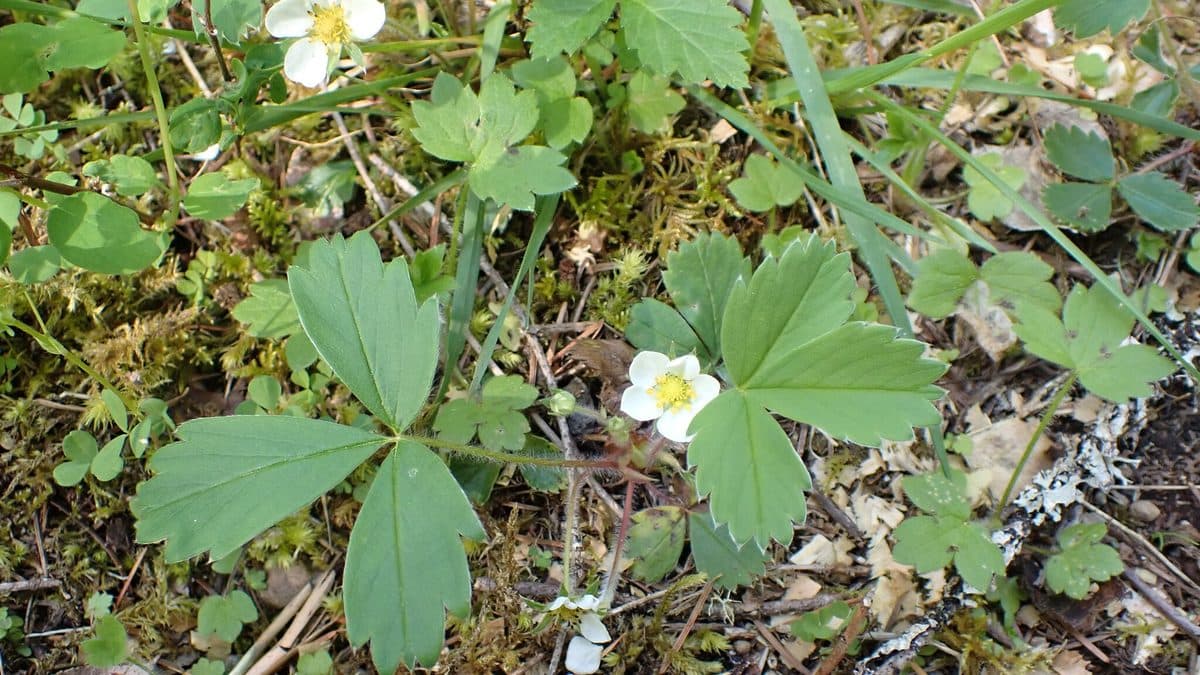
Wild strawberry (Fragaria virginiana)
The ASPCA lists wild strawberry (Fragaria) as non-toxic to dogs. The Wildflower Center lists it native to Washington: up to about four inches tall, from fields, prairies and woodland edges, full sun, white flowers in April and May, and butterflies on it. It spreads by runners, which is the habit you want under a dog, because a worn patch fills from the sides within a season. The fruit is small and the birds take it.
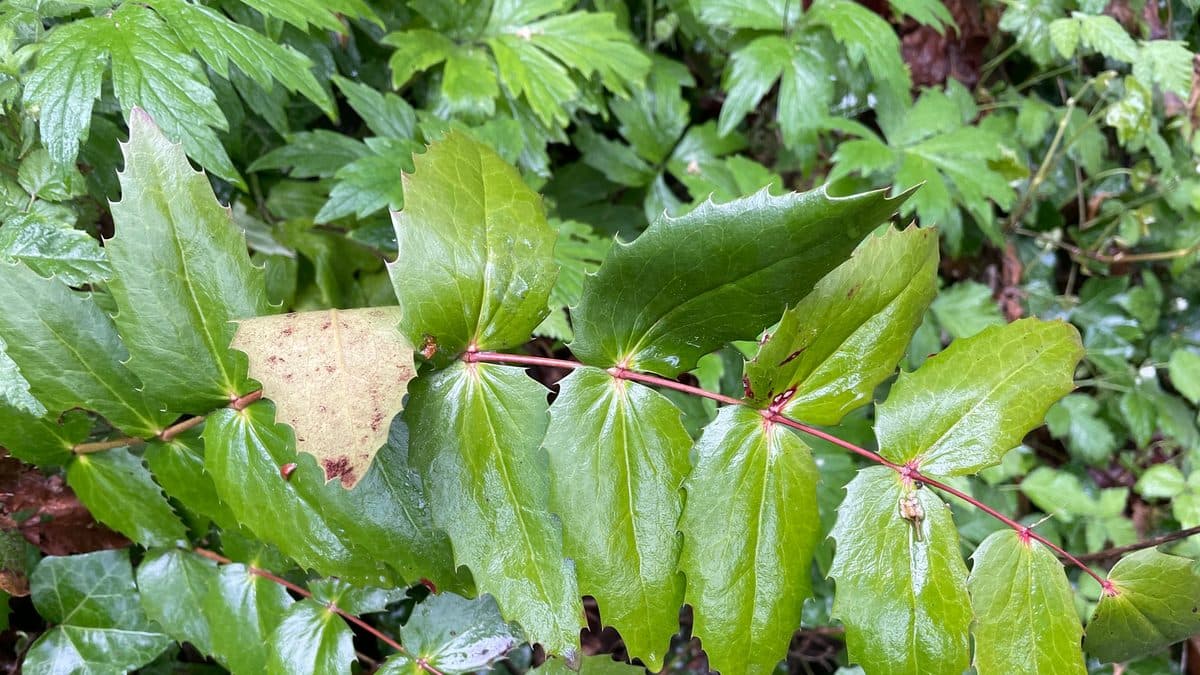
Dwarf Oregon grape (Mahonia nervosa, sold as Berberis nervosa)
Dwarf Oregon grape is not on the ASPCA toxic plant list, and the ASPCA lists its taller relative, Oregon grape (Mahonia aquifolium), as non-toxic to dogs. Kew's World Checklist lists it native to Washington, and the Wildflower Center describes it as evergreen, from wooded slopes, sun to part shade, low water, with yellow flowers in April and May, and usually much shorter than its six-foot maximum. Put it under the firs at the back of the lot, where the dog does not go. It is the only one of the fifteen with a leaf sharp enough to steer a dog around it.
If your region is not one of the five
The method travels even when the plants do not. Start with the ASPCA plant list and search the scientific name, not the common one, because common names cross genera and the ASPCA lists lemon verbena and sand verbena on opposite sides. Then check the plant's range for your own state on the Lady Bird Johnson Wildflower Center or USDA PLANTS, because a nursery tag that says native can mean native to the continent. Then look for the habit: stems that root as they go, or runners, or a grass. That is the plant that survives a dog.
For Texas, our pet-friendly native ground cover guide for Texas dogs covers frogfruit, horseherb and silver ponyfoot for the state's own ecoregions. For a whole front yard rather than the ground layer, our pet-friendly native plants for a front yard post is the longer list, and the full list of plants toxic to dogs and cats, with native alternatives covers every plant on the ASPCA list. Pollinator Patch does the range check for you: enter a ZIP and the plant list is already filtered to your ecoregion.
People also ask
Is there a ground cover that is completely safe for dogs?
No plant can honestly be called that. The reference is the ASPCA Animal Poison Control Center's plant list: a plant that is not on it has not been reported as toxic, and a few, like moss phlox, wild strawberry and zinnia, the ASPCA lists by name as non-toxic to dogs. Any plant eaten in quantity can upset a stomach. If your dog eats something and seems off, call the ASPCA Animal Poison Control Center at (888) 426-4435.
Which of these can a dog actually run on?
Blue grama, because it is a grass, and then frogfruit, sunshine mimosa and wild strawberry, which stay low and fill back in from the sides. The desert daisies, moss phlox, kinnikinnick and the Oregon grape take a dog walking through them, not a daily running line. No ground cover takes the running line along a fence, so give the dog a path there and plant the rest.
Will any ground cover survive where my dog pees?
Not a daily spot. Rinse it with a bucket of water when you see it, and expect to replace that square foot a couple of times a year, or give the dog a gravel or mulch corner and train to it. The plants above handle the rest of the yard.
Are these plants native everywhere in the United States?
No. Each group of three is native to one ecoregion, named with its anchor city. Beach sunflower is native to Florida and not to Colorado. Check the range for your own state on the Lady Bird Johnson Wildflower Center or USDA PLANTS before you buy.
Want the ground-cover list for your own ZIP?
Pollinator Patch matches native plants to your ZIP and ecoregion, flags the ones on the ASPCA toxic plant list, and builds a front-yard plan with the right five to ten species, a layout, and a maintenance schedule you can hand to an HOA.