Viceroy
Limenitis archippus
Last reviewed: June 2026
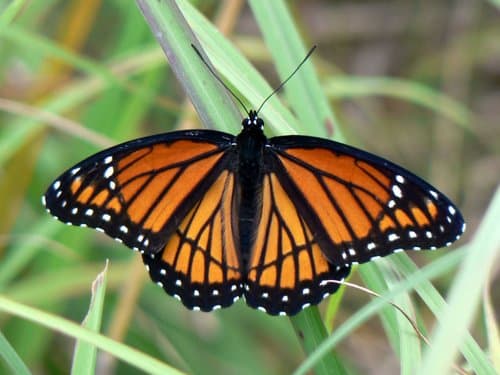
Viceroy is known for its orange and black wings with a distinctive black line across hindwings.
Host plants
Viceroy caterpillars can only develop on their larval host plants. Plant one of these natives and you can host the full life cycle in your own yard (host plant associations per the Xerces Society (opens in new tab)).
- Pussy Willow (Salix discolor)
- American Aspen (Populus tremuloides)
- Black Willow (Salix nigra)
- Eastern Cottonwood (Populus deltoides)
- Rum Cherry (Prunus serotina)
- Canoe Birch (Betula papyrifera)
- Prairie Willow (Salix humilis)
- Goose Plum (Prunus americana)
- Bebb Willow (Salix bebbiana)
Want Viceroy in your yard? Open Pussy Willow in Pollinator Patch and plan an HOA-friendly garden around it for your region.
Family
Nymphalidae
Wingspan
57–80 mm
Active
June through September
Range
WI, AR, CO, DC and 44 more states
How to identify it
Look for black veins crossing orange wings and a distinctive black line across the hindwing that differentiates it from Monarchs.
Good to know
- Viceroy butterflies mimic the appearance of toxic Monarch butterflies as a defense mechanism
- Larvae create protective leaf shelters by folding willow leaves
- Males are territorial and often perch on low vegetation to watch for females
Common questions
- What do Viceroy caterpillars eat?
- Viceroy caterpillars feed on Salix discolor, Populus tremuloides, Salix nigra, Populus deltoides, Prunus serotina, Betula papyrifera, Salix humilis, Prunus americana, and Salix bebbiana. These are the larval host plants the caterpillars must have to develop, per the Xerces Society and host plant records compiled from GBIF and iNaturalist.
- Where do Viceroy live?
- Viceroy is found across WI, AR, CO, DC and 44 more states.
- When are Viceroy active?
- Adult Viceroy are typically on the wing from June through September.
Range and life-history data compiled from iNaturalist, GBIF, and the Xerces Society. Photo licensed cc-by.