Carolina-allspice
Calycanthus floridus
Last reviewed: October 2026
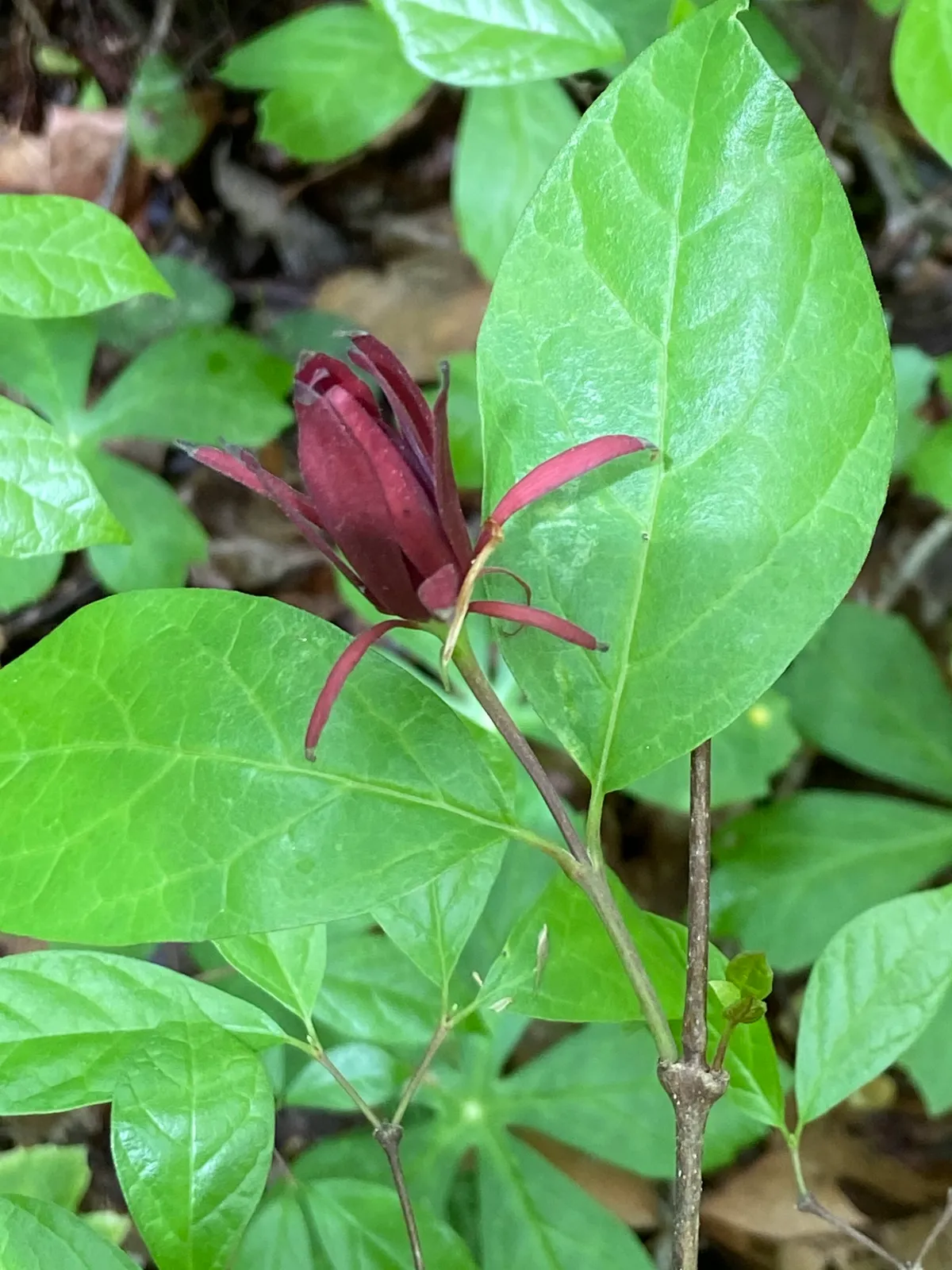
Carolina allspice is a deciduous shrub with spicy scented maroon flowers that bloom from May through July. It grows well in part sun with medium moisture, often found along woodland edges and stream banks in the southeastern and mid-Atlantic United States.
Toxicity unknown
Carolina-allspice (Calycanthus floridus) is not listed by the ASPCA Animal Poison Control Center (opens in new tab) or the other sources we check, so we have no verdict for it either way. Absence from those lists is not a clearance. If your pet shows symptoms after eating any plant, call the ASPCA at (888) 426-4435.
Light
part sun
Water
medium
Size
72"–120" H × 72"–120" W
Bloom
May, Jun, Jul
Native to
AL, FL, GA, KY and 7 more states
Pollinators
beetles, flies
Before you buy
Your city may pay you to plant this
Cities and water utilities offer rebates for replacing lawn with native and water-wise plants. We track 459 programs across 44 states, each with a link to the provider and the date we last checked it.
Find rebates in your areaPicture natives in your own yard
Upload a photo of your yard and Patch Vision shows a rendering of it planted with natives for your region, like Carolina-allspice.


Browse plants for this ecoregion
Carolina-allspice is a rounded deciduous shrub that produces fragrant, dark red flowers in late spring and summer. The aromatic blooms and foliage give off a sweet, spicy scent when crushed, making it a pleasant addition to garden borders and foundation plantings.
Growing Carolina-allspice
Grow Carolina-allspice in part sun and medium water. Mature plants reach 72 to 120 inches tall and spread 72 to 120 inches wide. Expect low maintenance to keep it looking intentional in a front yard.
How to care for Carolina-allspice, by region
How to care for Carolina-allspice where it is actually grown: year-round basics plus what to do each season, region by region, with the sources for each.
Care guidance last updated: October 2026
Piedmont (includes Atlanta, GA)
Year-round
Carolina allspice is a tough deciduous shrub that grows 6 to 12 feet tall and wide and does well in Atlanta's climate.
- Give it full sun to part shade, with some afternoon shade in hot summers.
- It likes average to rich, well-drained soil and handles many soil types.
- It spreads by suckers, so pull unwanted shoots or let it form a clump.
- Space plants at least 6 feet apart.
Its tidy rounded shape and spring flowers suit a foundation or side-yard planting.
Fall
Fall brings soft golden-yellow leaves and is a good planting window in Atlanta.
- Plant in fall so roots grow while the soil is still warm.
- Water new plants weekly until the ground cools.
- Skip heavy pruning now, since it can trim off next spring's flower buds.
Winter
Winter needs almost no care, since this shrub is hardy well beyond Atlanta's cold.
- It is hardy in USDA zones 4 to 9, so no winter protection is needed in Atlanta.
- Leave pruning until after spring flowering.
- Refresh the mulch layer to keep roots evenly moist.
Spring
Spring is bloom time, with maroon flowers opening before the leaves fully fill in.
- Flowers open in early spring and some may keep appearing into July.
- Prune right after flowering, not later, to keep the shape without losing blooms.
- Spring is a good time to plant, so roots settle before Atlanta's summer heat.
Summer
Summer in Atlanta is hot, so water young plants and give older ones a little afternoon shade.
- Water new plants deeply during dry spells. Established shrubs struggle in long droughts.
- Sandy soil dries fast, so add mulch to hold moisture.
- Pull unwanted suckers now to keep the clump the size you want.
Sources: NC State Extension Gardener Plant Toolbox - Calycanthus floridus
In an HOA neighborhood
Carolina-allspice is an HOA-friendly choice. Maintenance level: low. Tidiness: 4 out of 5.
Works well in: front yard, foundation, mid zone.
- Large mature size requires adequate spacing
Wildlife value
This shrub attracts beetles and flies with its unique fragrant flowers. The dense branching structure also provides nesting sites and cover for small birds.
Common questions
- When does Carolina allspice bloom?
- Carolina allspice flowers from May through July, producing reddish brown maroon blooms with a fruity, spicy fragrance.
- What pollinates Carolina allspice flowers?
- Beetles and flies are the main pollinators, attracted by the fermented, fruity scent of the flowers rather than nectar.
- How much light and water does Carolina allspice need?
- It grows best in part sun with medium, consistent moisture, but tolerates deeper shade and short periods of wetter or drier soil once established.
- Is Carolina allspice evergreen or deciduous?
- It is deciduous, dropping its leaves in fall and producing fresh aromatic foliage each spring.
- Is Carolina-allspice HOA-friendly?
- Carolina-allspice is generally an HOA-friendly choice in the right placement, with low maintenance.
These answers were drafted with an AI model from this plant's data. Verify care details with a local expert.
Native range data from vouchered herbarium specimen records and regional native plant society lists. Pollinator and host plant associations compiled from GBIF, iNaturalist, and published ecological literature.
If something looks wrong
Common plant problems, and what to check first
These come up on almost any plant. Each guide lists the likely causes in the order they are worth ruling out, with one thing to check before you act on any of them, and links to the source it came from.
- It is dying right after planting
- Leaves turning yellow
- Wilting even though I watered it
- Brown crispy leaf tips
- Bugs on the plant
Ready to grow Carolina-allspice? Add it to your garden in Pollinator Patch to track it and get season-by-season care guidance.