Prairie Larkspur
Delphinium carolinianum
Last reviewed: October 2026
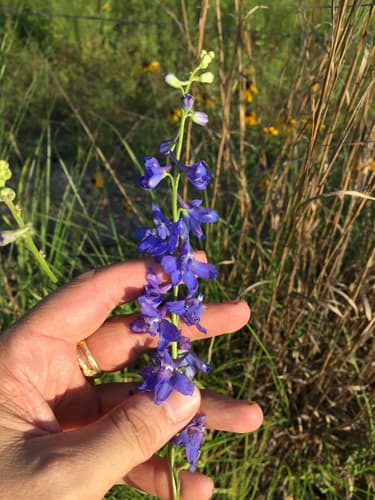
Carolina larkspur is a slender prairie and glade forb that blooms May through July with spikes of blue flowers. It thrives in full sun and well drained soil with low water needs.
Prairie Larkspur is toxic to dogs and cats.
Listed as toxic by the ASPCA Animal Poison Control Center (opens in new tab) (last reviewed 2026-05-21). If your pet has been exposed, call the ASPCA Animal Poison Control Center at (888) 426-4435 and your veterinarian's emergency line.
Pollinator Patch flags toxic plants so you can choose a pet-safe native alternative for your yard.
Native swaps for a yard with pets
Prairie Larkspur is listed as toxic to dogs by the ASPCA Animal Poison Control Center. These natives fill a similar role in a planting and are not on the ASPCA toxic plant list for dogs or cats. Each plant's page carries its dated record.
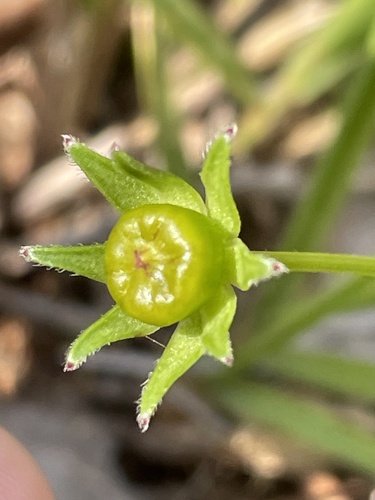
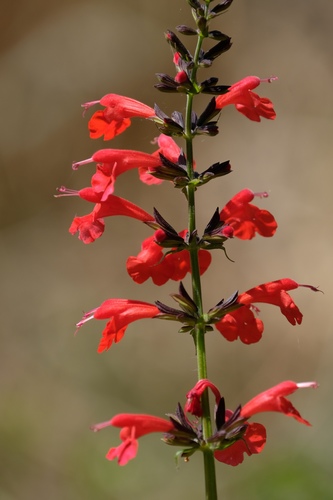
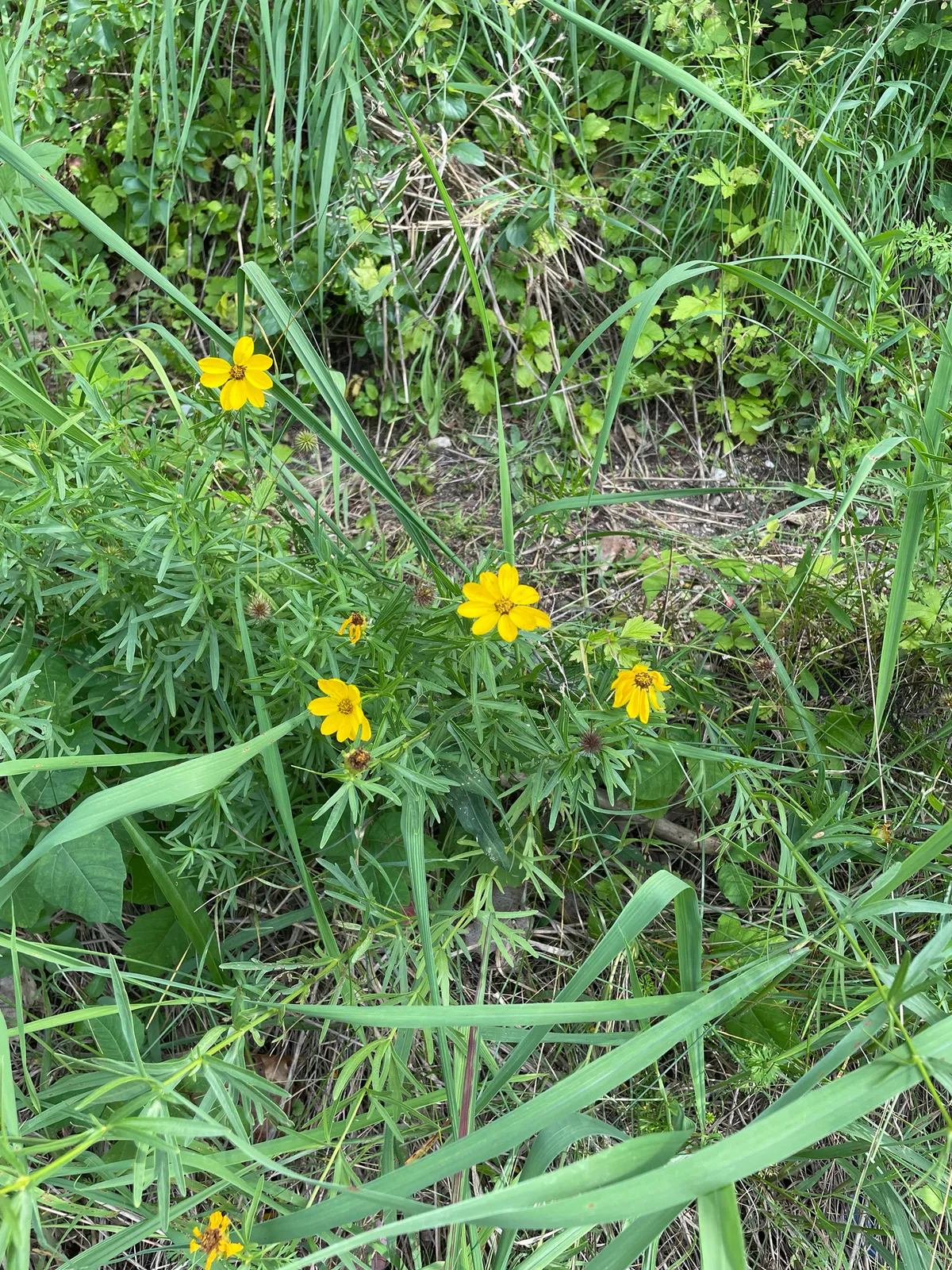
Light
full sun
Water
low
Size
12"–36" H × 3"–6" W
Bloom
May, Jun, Jul
Native to
AL, AR, CO, FL and 18 more states
Pollinators
bees, butterflies, moths, nectar insects
Before you buy
Your city may pay you to plant this
Cities and water utilities offer rebates for replacing lawn with native and water-wise plants. We track 459 programs across 44 states, each with a link to the provider and the date we last checked it.
Find rebates in your areaPicture natives in your own yard
Upload a photo of your yard and Patch Vision shows a rendering of it planted with natives for your region, like Prairie Larkspur.


Browse plants for this ecoregion
Carolina larkspur is a native wildflower that produces tall spikes of blue to purple flowers from May through July. This drought-tolerant perennial grows 1-3 feet tall and dies back to the ground each winter, returning reliably each spring.
Growing Prairie Larkspur
Grow Prairie Larkspur in full sun and low water. Mature plants reach 12 to 36 inches tall and spread 3 to 6 inches wide. Expect low maintenance to keep it looking intentional in a front yard.
How to care for Prairie Larkspur, by region
How to care for Prairie Larkspur where it is actually grown: year-round basics plus what to do each season, region by region, with the sources for each.
Care guidance last updated: September 2026
High Plains (includes Lubbock, TX)
Year-round
Carolina larkspur is a native Texas wildflower that grows right here in the High Plains around Lubbock. It wants full sun, soil that drains well, and very little water once it's established.
- Give it full sun and soil that drains well. It does fine in dry, sandy, or calcareous (chalky or rocky) ground and does not want a rich, wet bed.
- Water is low. Once the roots are established it gets by on rainfall most years, so don't let it sit in soggy soil.
- It's a slender, upright plant, usually 1 to 3 feet tall, so give it a little room instead of crowding it against taller shrubs.
- This is a spring bloomer that dies back and disappears completely by summer. That dormancy is normal, not a dead plant, so leave the spot alone.
- Every part of the plant is toxic if eaten. That's mainly a concern for pets, livestock, or grazing animals, not for people just handling it while gardening.
- Carolina larkspur is native to this part of Texas, including the High Plains region around Lubbock, so it's a genuinely local wildflower rather than an import.
Fall
Fall is quiet above ground for Carolina larkspur in Lubbock, as it stays dormant or just starts forming its winter rosette of leaves.
- There's little to no top growth to see right now. The plant is either still dormant or just beginning to form a low rosette of basal leaves for winter.
- Skip fertilizer and heavy watering this time of year. An established plant doesn't need extra feeding while it's mostly resting.
- If you're putting in new larkspur transplants this fall, water them in well so the roots can settle before the first hard freeze.
- There isn't much to prune on an established plant yet, since it hasn't sent up new top growth.
Winter
In winter, Carolina larkspur usually shows up as a low rosette of leaves hugging the ground rather than a full-size plant. That rosette is how it gets ready for spring.
- Look for a small cluster of basal leaves close to the soil. That winter rosette is normal and is how the plant stores up energy for spring growth.
- It needs no winter protection. As a High Plains Texas native, it's built for Lubbock's winter freezes and cold snaps without covering or extra mulch piled on top.
- Keep watering minimal. Only water during an extended dry, snowless stretch and let normal winter moisture handle the rest.
- The rosette leaves fade and wither before the flower stalks come up in spring, so leaves looking rough in late winter is expected, not a problem.
Spring
Spring is when Carolina larkspur does almost all its growing and blooming in Lubbock, from around March into early summer.
- This is peak season. Expect blue to white spurred flower spikes anytime from March through early summer.
- Skip the fertilizer. It's adapted to lean native soil and extra feeding just makes the stems floppy.
- You can trim off spent flower spikes if you want a tidier look, but it isn't required for the plant to keep doing well.
- Keep pets and grazing animals from snacking on it while it's actively growing, since the whole plant is toxic if eaten.
Summer
By early summer, Carolina larkspur finishes blooming and dies back completely. That disappearance is the plant's normal life cycle, not a sign of a problem.
- After flowering, the whole top of the plant turns brown and dries up. It's going dormant, not dying, and it may not show above ground again until next spring.
- Ease off watering during this stretch. A dormant plant doesn't need extra water, and too much in that empty spot can encourage root rot.
- Mark the spot with a small stake or plant tag so nobody accidentally digs into the dormant roots or plants something else right on top of it.
Cutting back the dried, browned flower stalks once they've fully died down keeps the bed looking tended instead of leaving dead stems standing in a front yard.
Sources: Lady Bird Johnson Wildflower Center: Delphinium carolinianum (Prairie Larkspur), Native Plant Society of Texas: Delphinium carolinianum, ASPCA: Toxic and Non-Toxic Plants, Larkspur
In an HOA neighborhood
Prairie Larkspur takes more care to keep looking intentional in a front yard. Maintenance level: low. Consider it for backyard or mid-zone beds rather than the street edge.
Works well in: backyard only.
- Looks weedy when dormant
- Wild appearance may not meet formal standards
- All parts of plant are toxic
Wildlife value
The tubular flowers are especially attractive to bees and butterflies during the late spring and early summer blooming period.
Common questions
- When does Carolina larkspur bloom?
- Carolina larkspur typically flowers from May through July, producing tall spikes of blue to purplish flowers above finely divided foliage.
- What pollinators visit Carolina larkspur?
- Bees and butterflies are the main visitors, drawn to the nectar in its spurred blue flowers during the spring and early summer bloom period.
- What growing conditions does Carolina larkspur prefer?
- It grows best in full sun with dry to moderately moist, well drained soil, often found in prairies, glades, and open rocky ground.
- Does Carolina larkspur come back every year?
- Yes, it is a perennial forb that dies back after seed set and regrows from its root each spring.
- Is Prairie Larkspur toxic to dogs?
- Yes. Prairie Larkspur is listed as toxic to dogs by the ASPCA Animal Poison Control Center (aspca.org). If your pet has been exposed, call the ASPCA Animal Poison Control Center at (888) 426-4435.
- Is Prairie Larkspur toxic to cats?
- Yes. Prairie Larkspur is listed as toxic to cats by the ASPCA Animal Poison Control Center (aspca.org). If your cat has been exposed, call the ASPCA Animal Poison Control Center at (888) 426-4435.
- Is Prairie Larkspur HOA-friendly?
- Prairie Larkspur takes more care to look intentional in a front yard. Consider it for backyard or mid-zone beds rather than the street edge.
These answers were drafted with an AI model from this plant's data. Verify care details with a local expert.
Native range data from vouchered herbarium specimen records and regional native plant society lists. Pollinator and host plant associations compiled from GBIF, iNaturalist, and published ecological literature.
If something looks wrong
Common plant problems, and what to check first
These come up on almost any plant. Each guide lists the likely causes in the order they are worth ruling out, with one thing to check before you act on any of them, and links to the source it came from.
- It is dying right after planting
- Leaves turning yellow
- Wilting even though I watered it
- Brown crispy leaf tips
- Bugs on the plant
Pollinator Patch flags toxic plants like Prairie Larkspur and shows pet-safe natives for your ecoregion instead.