Compact Prairie Clover
Dalea compacta
Last reviewed: August 2026
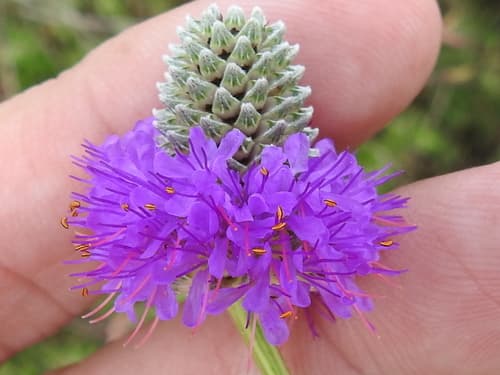
Dalea compacta, or compact prairie clover, is a low water forb that blooms from March through August with dense purple flower spikes. It thrives in full sun on dry prairies and open grasslands across the south-central United States.
Toxicity unknown
Compact Prairie Clover (Dalea compacta) is not listed by the ASPCA Animal Poison Control Center (opens in new tab) or the other sources we check, so we have no verdict for it either way. Absence from those lists is not a clearance. If your pet shows symptoms after eating any plant, call the ASPCA at (888) 426-4435.
Light
full sun
Water
low
Size
12"–24" H × 3"–6" W
Bloom
Mar, Apr, May, Jun, Jul, Aug
Native to
AR, LA, OK, TX
Pollinators
butterflies, bees, nectar insects
Before you buy
Your city may pay you to plant this
Cities and water utilities offer rebates for replacing lawn with native and water-wise plants. We track 452 programs across 44 states, each with a link to the provider and the date we last checked it.
Find rebates in your areaBrowse plants for this ecoregion
Compact Prairie Clover is a low-growing native perennial that forms neat, upright clumps with delicate fernlike foliage. It produces small cylindrical purple flower spikes from spring through summer, creating a tidy and colorful display in sunny, dry locations.
Growing Compact Prairie Clover
Grow Compact Prairie Clover in full sun and low water. Mature plants reach 12 to 24 inches tall and spread 3 to 6 inches wide. Expect low maintenance to keep it looking intentional in a front yard.
How to care for Compact Prairie Clover, by region
How to care for Compact Prairie Clover where it is actually grown: year-round basics plus what to do each season, region by region, with the sources for each.
Care guidance last updated: September 2026
Western Gulf Coastal Plain (includes Houston, TX)
Year-round
Compact Prairie Clover is a tough little perennial that loves full sun and shrugs off Houston heat once it settles in. It is documented as native to Texas at the state level, but the actual recorded sightings are from Central and North Texas prairies rather than the Houston coast, so we treat it here as a great garden plant rather than a locally native one.
- Plant in full sun in well drained soil, it does not want to sit in soggy clay after a heavy Houston rain
- Water deeply but rarely once it is established, it is bred for drought and too much water can rot the roots
- Skip heavy fertilizer, it is a legume that pulls its own nitrogen out of the air and soil
- It is not on the ASPCA toxic plant list for dogs or cats, based on a direct check of their current list
- It is documented as native to Texas at the state level, though its confirmed range sits more in Central and North Texas prairies than the immediate Houston area
Fall
By fall the main bloom show is over for Compact Prairie Clover, and Houston's mild autumn is actually one of the best times to plant new ones or clean up the bed before winter.
- Main flowering wraps up by late summer, so do not expect many new blooms in fall
- Fall is a great time to plant or transplant it, Houston stays warm enough for roots to settle in before any hard freeze
- Cut spent flower stalks back partway for a neater look, or leave a few standing for seed and for insects that overwinter in the stems
- Reduce watering as days get shorter and cooler, this plant does not want wet feet heading into winter
- Watch the forecast for Houston's average first freeze in early December and hold off on any new fertilizing after that
Winter
Houston winters are short and mild, so Compact Prairie Clover usually just dies back partway instead of disappearing completely, and it should bounce back once it warms up.
- Expect the top growth to brown and go dormant after the first real cold snap, that is normal and not the plant dying
- Leave the dead stems standing through most of winter, they help protect the crown during Houston's occasional hard freezes
- If a hard freeze is forecast, like the kind Houston sees every few years, add a light layer of mulch over the base for extra protection
- Hold off on cutting the old stems all the way back until you see new growth starting, usually near Houston's average last freeze date in mid February
- Skip fertilizer entirely while the plant is dormant
Standing brown stems in a front bed can look neglected to an HOA inspector, so a fresh line of mulch or edging around the base signals it is dormant on purpose, not abandoned.
Spring
Spring is when Compact Prairie Clover wakes up and heads into its main bloom season in Houston, so this is the best time to tidy it up and let fresh growth take over.
- Cut back any dead or ragged stems from winter in late February or early March, right around Houston's average last freeze date
- Do not shear it hard, this plant blooms best when left in its natural rounded shape
- Watch for fresh green growth at the base as nights warm up
- A light topdress of compost is plenty, it makes its own nitrogen so it does not need regular fertilizer
- Expect the first purple flower spikes to open by April
A clean late winter cutback reads as an intentional, cared for bed on a drive by, instead of a patch of dead brown stems that can trigger a letter.
Summer
Summer in Houston is hot, humid, and rainy, and this plant handles the heat just fine as long as its roots are not sitting wet.
- Keep it in full sun, at least 6 hours a day, for the best bloom and sturdiest stems
- Water only when the soil is dry a couple inches down, Houston's summer downpours often mean you do not need to water at all
- Make sure the spot drains well, humid heat plus wet roots invites root rot
- Snip spent flower spikes to keep new blooms coming through the summer
- Check the base of the plant for fungal spotting after long stretches of wet weather
Sources: Lady Bird Johnson Wildflower Center, Native Plant Database: Dalea compacta, ASPCA Toxic and Non-Toxic Plant List, Dogs, Native Plant Society of Texas, Dalea compacta profile (community tip), National Weather Service Houston, IAH Climate Normals
Want these tasks as reminders timed to your yard? Pollinator Patch turns this guidance into a season-by-season care plan for the plants you actually grow.
In an HOA neighborhood
Compact Prairie Clover is an HOA-friendly choice. Maintenance level: low. Tidiness: 4 out of 5.
Works well in: front yard, foundation, street edge, mid zone.
Wildlife value
The long blooming period provides nectar for butterflies, native bees, and other beneficial insects from spring through late summer. This plant is particularly valuable for supporting small native pollinators.
Common questions
- When does compact prairie clover bloom?
- Dalea compacta typically flowers from March through August, producing tight spikes of purple blooms that attract a range of pollinators through the growing season.
- What pollinators visit Dalea compacta?
- Butterflies, bees, and other nectar-seeking insects regularly visit the flower spikes of compact prairie clover during its bloom period.
- How much water does compact prairie clover need?
- This forb is adapted to low water conditions and does best in well-drained soil without regular supplemental irrigation once established.
- What light conditions does Dalea compacta prefer?
- Compact prairie clover grows best in full sun and flowers more heavily when it receives direct sunlight for most of the day.
- Is Compact Prairie Clover HOA-friendly?
- Compact Prairie Clover is generally an HOA-friendly choice in the right placement, with low maintenance.
These answers were drafted with an AI model from this plant's data. Verify care details with a local expert.
Native range data from vouchered herbarium specimen records and regional native plant society lists. Pollinator and host plant associations compiled from GBIF, iNaturalist, and published ecological literature.
If something looks wrong
Common plant problems, and what to check first
These come up on almost any plant. Each guide lists the likely causes in the order they are worth ruling out, with one thing to check before you act on any of them, and links to the source it came from.
- It is dying right after planting
- Leaves turning yellow
- Wilting even though I watered it
- Brown crispy leaf tips
- Bugs on the plant
Ready to grow Compact Prairie Clover? Add it to your garden in Pollinator Patch to track it and get season-by-season care guidance.
Planning a bed around it? Start a free plan with this plant
Not sure where to start? Take the 2-minute yard quiz