Cushion Buckwheat
Eriogonum ovalifolium
Last reviewed: September 2026
Eriogonum ovalifolium is a low, cushion-forming forb that blooms from June through August and thrives in full sun with low water, often on rocky slopes and dry mountain soils across the Intermountain West.
Toxicity unknown
Cushion Buckwheat (Eriogonum ovalifolium) is not listed by the ASPCA Animal Poison Control Center (opens in new tab) or the other sources we check, so we have no verdict for it either way. Absence from those lists is not a clearance. If your pet shows symptoms after eating any plant, call the ASPCA at (888) 426-4435.
Light
full sun
Water
low
Size
2"–8" H × 4"–12" W
Bloom
Jun, Jul, Aug
Native to
AZ, CA, CO, ID and 8 more states
Pollinators
bees, beetles, flies
Before you buy
Your city may pay you to plant this
Cities and water utilities offer rebates for replacing lawn with native and water-wise plants. We track 459 programs across 44 states, each with a link to the provider and the date we last checked it.
Find rebates in your areaPicture natives in your own yard
Upload a photo of your yard and Patch Vision shows a rendering of it planted with natives for your region, like Cushion Buckwheat.


Browse plants for this ecoregion
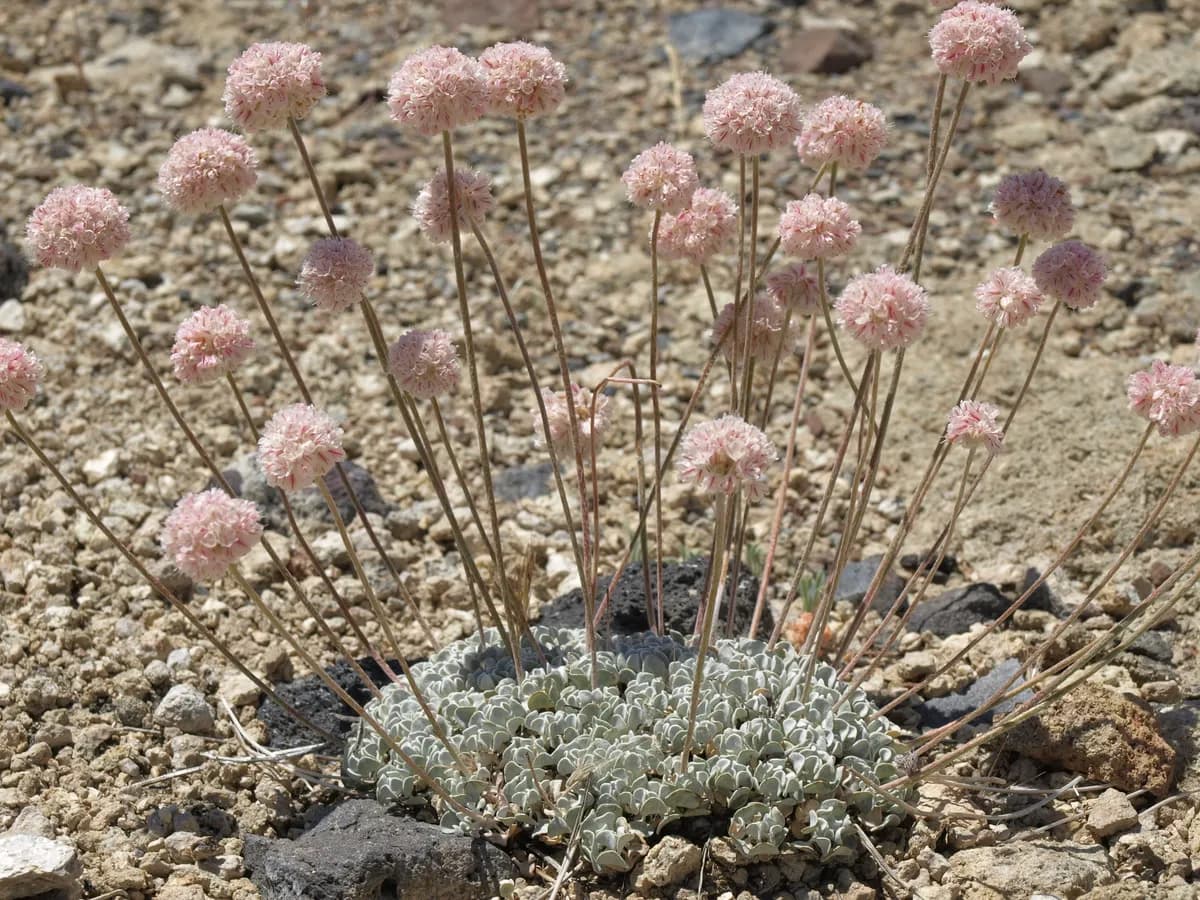
Cushion buckwheat forms tight, low mounds of small oval leaves that stay green year-round. In summer, it produces clusters of small white to pink flowers that create a neat, compact appearance.
Growing Cushion Buckwheat
Grow Cushion Buckwheat in full sun and low water. Mature plants reach 2 to 8 inches tall and spread 4 to 12 inches wide. Expect low maintenance to keep it looking intentional in a front yard.
How to care for Cushion Buckwheat, by region
How to care for Cushion Buckwheat where it is actually grown: year-round basics plus what to do each season, region by region, with the sources for each.
Care guidance last updated: October 2026
Blue Mountains (includes La Grande, OR)
Year-round
Year-round care for cushion buckwheat around La Grande, OR: full sun, lean soil that drains fast, and almost no extra water once it is established.
- Plant it in full sun.
- Fast drainage matters most. It does best in shallow, lean, gravelly or rocky soil that is neutral to alkaline, so skip compost and rich garden soil.
- Give it little or no extra water once it is established. It is built for dry ground.
- It stays small: a silver mat about 4 inches tall and up to a foot wide, which suits a rock garden or the front edge of a bed with other small plants.
- Pom-pom flowers open on short stems in late spring and early summer, starting white, buff, or yellow and often aging to pink, red, or purple.
- Upkeep is light. Snip off the dead flower stems to tidy it, and add little or no fertilizer.
Its low silver mat looks neat at the edge of a gravel bed or along a walk.
Sources: Western Native Plants (Utah State University): Eriogonum ovalifolium in the Landscape, Calscape (CNPS): Cushion Buckwheat (Eriogonum ovalifolium), Lady Bird Johnson Wildflower Center: Eriogonum ovalifolium
Central California Foothills and Coastal Mountains (includes San Francisco, CA)
Year-round
Give cushion buckwheat your sunniest, fastest draining spot: a raised bed, a rock garden pocket, or a mound of gritty soil cut with pumice or coarse sand. This species comes from high, dry mountain slopes, not our fog belt, so San Francisco is a real stretch for it and drainage matters more here than almost anywhere else it's grown. Skip rich, amended garden soil and skip a regular watering schedule once it's established. It stays a low mat of silvery leaves just a couple inches tall, with flower stalks rising to about a foot when it blooms, spreading to roughly 10 inches wide.
- Full sun, at least 6 hours a day
- Fast draining, gritty or rocky soil, mix pumice or coarse sand into typical SF clay or loam
- Little to no water once established, and never let it sit wet
- Stays low: a couple inches of foliage, foot-tall bloom stalks, about 10 inches wide
Fall
October and November bring San Francisco's first real rain back after the dry season. Fall is a common time to plant California natives here, but for cushion buckwheat only plant into a spot with drainage already built in, a raised mound, a rock garden pocket, or soil heavily cut with grit, since an ordinary garden bed holds too much moisture for this species once the rain starts. If you're adding a new plant, get it in early in the season so roots can settle before the heaviest rain arrives.
- If planting new, do it early in fall before heavy rain arrives
- Only plant into a raised or well-draining spot, never a low or heavy-soil bed
- Watch for soggy soil around the crown as the rains return
- Hold off on compost or soil amendment right against the crown
Winter
December through February is San Francisco's wettest stretch, and it's the riskiest time of year for this plant here. In its home range it spends winter under dry snow, not sitting in saturated soil, so root rot from wet soil is the main threat during our rainy months, not frost, which is rarely severe this close to the coast. Check drainage after storms, route any gutter or path runoff away from the plant, and keep mulch or compost off the crown itself since that traps moisture right where it does the most damage.
- Root rot from wet soil is the main winter risk here, not frost
- Route gutter or path runoff away from the plant
- Keep mulch and compost off the crown itself
- A raised or rocky planting spot matters most during this wettest stretch
Spring
March through May is when San Francisco's rain finally lets up. Check whether winter left the crown sitting in damp soil, this plant is built for scree that dries out fast, not slow-draining garden beds. If any foliage looks mushy or rotted, trim it out and fix the drainage before pushing for new growth. Skip fertilizer entirely, and hold off on transplanting or dividing until the soil has actually dried.
- Check for winter rot and trim out any mushy or blackened foliage
- Improve drainage now if water pooled anywhere over winter
- Skip fertilizer, this plant does better in lean soil
- Wait until soil is dry before transplanting or dividing
Summer
June through September is San Francisco's dry season, cool and foggy rather than hot, and it's the closest match to this plant's natural dry mountain summers. An established plant should need little to no supplemental water. Let the soil dry out completely between any waterings, and only water deeply if a rare heat spike hits. This tends to be the tidiest the plant looks all year, a low silvery mound that holds its shape without any deadheading or shaping.
- Little to no supplemental water once established
- Let soil dry fully between waterings if you water at all
- Deep, infrequent water only during an actual heat spike, not routine
- Foliage stays low and tidy on its own, no pruning needed
Its low, tidy silver mound holds its shape through the dry season without mowing or trimming, which reads as neat from the curb.
Sources: High Country Gardens: Cushion Buckwheat, Las Pilitas Nursery: Eriogonum ovalifolium, Calscape: Cushion Buckwheat plant communities
Columbia Plateau (includes Yakima, WA)
Year-round
Cushion buckwheat is a documented native of the Yakima area. The Burke Herbarium lists it growing east of the Cascades in eastern Washington's sagebrush desert and dry forest openings, and herbarium specimen records show multiple confirmed collections from Yakima County itself. It forms small silvery mounds topped with pom-pom flower clusters and is valued as forage for native bees. It is not on the ASPCA's toxic plant lists for dogs or cats. Note that the ASPCA does list a plant called "buckwheat" as toxic, but that entry is for Fagopyrum, the cultivated grain buckwheat, a different, unrelated plant from this native wild buckwheat.
- Plant in full sun and gritty, fast-draining soil. This matches the sagebrush steppe soils around Yakima closely, so little to no soil amending is usually needed.
- Once established, it needs very little supplemental water and actually prefers to stay dry, which fits the Columbia Plateau's low natural rainfall well.
- It stays small, typically around 4 inches tall and up to 10 inches wide, so it works well along a rock garden edge, walkway border, or other low-water front yard planting.
- Flower clusters bloom from around May through August in shades of white, yellow, or pink, and the plant is noted for supporting native bees.
A tidy mounding native like this reads as an intentional, HOA-friendly rock garden or border choice rather than an unkempt patch of wild growth.
Fall
Fall brings cooler, more comfortable conditions for cushion buckwheat in the Yakima area, and it is a second reasonable window for planting as the season's bloom winds down.
- Plant in early fall if you missed spring, giving roots time to settle before winter while soil is still workable.
- Continue to keep watering minimal. This plant's drought tolerance carries it through fall with little to no supplemental water in most years.
- Leave dried flower heads in place into fall if you like the texture, or trim them back for a cleaner look ahead of winter.
- Established mounds generally need no fall fertilizing or soil amending. Rich soil tends to work against this plant's preference for lean, gritty conditions.
Winter
Cushion buckwheat is well suited to Yakima's cold winters. Its native range includes exposed sagebrush plains and alpine ridges, so it is built to handle far harsher winter conditions than the Columbia Plateau typically sees.
- No winter protection is needed for established plants. This species naturally grows in some of the most exposed, cold-swept terrain in its range.
- The low, mounding foliage stays in place through winter, though growth is dormant until spring.
- The main thing to watch is drainage. Winter snowmelt or rain sitting around the crown in poorly drained soil is more likely to harm this plant than cold temperatures are.
- Avoid winter watering. This plant's dormant winter state does not call for supplemental irrigation in a Columbia Plateau climate.
Spring
Spring is a good planting window for cushion buckwheat around Yakima, while soil is workable and before summer heat sets in. Bloom season is also getting underway.
- Plant in early to mid spring once the ground has warmed, into gritty, well-drained soil in full sun.
- Water new plantings occasionally to help roots establish, but do not keep the soil constantly wet. This plant dislikes soggy conditions even as a young plant.
- Flower buds begin forming in spring ahead of the May-through-August bloom window.
- If you are working with heavier native clay soil, mix in coarse sand or gravel at planting time to improve drainage before the wetter part of spring.
Summer
Summer is when cushion buckwheat is most at home in the Yakima area. Its natural sagebrush desert habitat is a close match for the Columbia Plateau's hot, dry summers, so this is one of the lowest-maintenance seasons for this plant here.
- Once established, this plant typically needs no supplemental water through summer and prefers to stay dry.
- Pom-pom flower clusters continue blooming through summer, drawing native bees to the yard.
- Avoid summer irrigation schedules meant for thirstier plants nearby. Shared sprinkler zones with lawn or annuals can overwater cushion buckwheat and shorten its life.
- Once blooms fade, spent flower stems can be left standing for texture or trimmed back for a tidier look.
Grouping it with other low-water natives away from lawn irrigation keeps the bed looking deliberate and well-kept through the driest part of the year.
Sources: Burke Herbarium Image Collection (University of Washington), Eriogonum ovalifolium var. ovalifolium taxon page (Washington range and habitat), Consortium of Pacific Northwest Herbaria, specimen search for Eriogonum ovalifolium in Yakima County, WA (14 documented records), Lady Bird Johnson Wildflower Center, Eriogonum ovalifolium plant profile (bloom time, habit, special value to native bees per Xerces Society data), ASPCA, Toxic and Non-Toxic Plants: Buckwheat (this listing is for Fagopyrum spp., not Eriogonum), ASPCA, Toxic and Non-Toxic Plant List, Dogs (Eriogonum not listed)
Idaho Batholith (includes McCall, ID)
Year-round
Year-round care for cushion buckwheat around McCall, ID: full sun, lean soil that drains fast, and almost no extra water once it is established.
- Plant it in full sun.
- Fast drainage matters most. It does best in shallow, lean, gravelly or rocky soil that is neutral to alkaline, so skip compost and rich garden soil.
- Give it little or no extra water once it is established. It is built for dry ground.
- It stays small: a silver mat about 4 inches tall and up to a foot wide, which suits a rock garden or the front edge of a bed with other small plants.
- Pom-pom flowers open on short stems in late spring and early summer, starting white, buff, or yellow and often aging to pink, red, or purple.
- Upkeep is light. Snip off the dead flower stems to tidy it, and add little or no fertilizer.
Its low silver mat looks neat at the edge of a gravel bed or along a walk.
Sources: Western Native Plants (Utah State University): Eriogonum ovalifolium in the Landscape, Calscape (CNPS): Cushion Buckwheat (Eriogonum ovalifolium), Lady Bird Johnson Wildflower Center: Eriogonum ovalifolium
Middle Rockies (includes Missoula, MT)
Year-round
Year-round care for cushion buckwheat around Missoula, MT: full sun, lean soil that drains fast, and almost no extra water once it is established.
- Plant it in full sun.
- Fast drainage matters most. It does best in shallow, lean, gravelly or rocky soil that is neutral to alkaline, so skip compost and rich garden soil.
- Give it little or no extra water once it is established. It is built for dry ground.
- It stays small: a silver mat about 4 inches tall and up to a foot wide, which suits a rock garden or the front edge of a bed with other small plants.
- Pom-pom flowers open on short stems in late spring and early summer, starting white, buff, or yellow and often aging to pink, red, or purple.
- Upkeep is light. Snip off the dead flower stems to tidy it, and add little or no fertilizer.
Its low silver mat looks neat at the edge of a gravel bed or along a walk.
Sources: Western Native Plants (Utah State University): Eriogonum ovalifolium in the Landscape, Calscape (CNPS): Cushion Buckwheat (Eriogonum ovalifolium), Lady Bird Johnson Wildflower Center: Eriogonum ovalifolium
Mojave Basin and Range (includes Las Vegas, NV)
Year-round
Cushion buckwheat is a tight woolly mat only an inch or two tall that sends up short flower stalks to roughly a foot when it blooms. Botanical sources put its habitat on gravelly flats, slopes and ridges in sagebrush, pinyon and juniper, and montane conifer country, somewhere between about 2,000 and 10,000 feet. Near Las Vegas that kind of country is up in the mountains west and north of town, not down on the valley floor, so a yard at 2,700 to 3,000 feet sits at the hot, low edge of what this plant tolerates. It will not behave like an easy valley shrub, and it is not a plant you can install and forget. Give it the coolest, sharpest draining, most open spot you have, build the drainage before you plant, and use mineral grit rather than bark. Expect the thing that kills it to be moisture at the crown in hot weather, not drought.
- Plant it on a raised mound or berm of coarse mineral soil, decomposed granite or sandy loam, sitting at least 8 inches above the surrounding grade.
- Test drainage first by filling the empty hole with water. If it has not drained overnight, build up instead of digging down, since the hard caliche layer common under Las Vegas yards will hold water against the crown.
- Top-dress with 1 to 2 inches of pea gravel or crushed rock, pulled back an inch from the crown. Skip bark, compost, and every other organic mulch.
- Choose an open, breezy spot with full light, and keep it well away from west or south facing walls and paving that throw reflected heat at it.
- Use drip only, a single emitter set out at the edge of the mat, never a spray head passing over the top of it.
- Plan for the realistic failure mode here. If you lose it, it will most likely be in July or August after a warm humid stretch, not in a dry spell.
It reads as a low, tidy grey cushion rather than a loose meadow plant, which makes it an easy fit for HOA-friendly front-yard edges and gravel beds.
Fall
Fall is the best window to plant, move, or replace cushion buckwheat here. Growers plant it in fall so the roots settle in through cool weather before it has to face a low desert summer. It is also cleanup season: once the flower stalks are dry and brittle, clip them back to the mat. Keep any watering light and infrequent even as temperatures drop, because cooling soil holds moisture far longer than you would guess. If you are siting a new plant, this is when you build the mound and lay the gravel.
- Plant in October or November on a raised mineral mound, with the crown set slightly high so it never sits in a dish that collects water.
- Clip dry flower stalks down to the cushion and hand-pull any leaf litter out of the mat.
- Water a new plant lightly about once a week for its first six to eight weeks, then taper off and stop.
- Refresh the gravel top-dressing to a clean 1 to 2 inches, still held back from the crown.
- If a plant died over the summer, dig the spot open and look. Damp soil or a hard cemented layer a foot down tells you to build higher next time.
- Sowing seed outdoors now works well, since winter cold supplies the chilling the seed wants.
Cutting the spent stalks now is what keeps the planting looking deliberate through winter instead of shaggy.
Winter
The cushion is evergreen, so it holds a silver grey woolly mat all winter rather than disappearing on you. Growers rate it hardy from roughly zone 5 to zone 10, which means a Las Vegas winter is nowhere near cold enough to be a problem. Winter here is a moisture problem instead. Cold soil, low sun angle, and a few inches of winter rain can keep the crown damp for weeks, and that is the second most common way people lose this plant after summer rot. Leave it dry and leave it alone.
- Turn the emitter off from about December through February and let winter rain be the only water it gets.
- After a wet stretch, look at the gravel under the mat. If it stays dark and damp for days, plan to open up the drainage next fall.
- Do not cover the mat with frost cloth or piled leaves. Trapped moisture does far more damage here than the cold does.
- Sweep fallen leaves and needles off the cushion so it can dry out between storms.
- Skip winter pruning. There is nothing on the mat itself that needs cutting.
- Watch for the center of the cushion lifting, browning, or going mushy, which points to crown rot rather than cold damage.
The grey mat stays put through the off season, so the bed keeps a finished look in winter without needing any cover-up.
Spring
Spring is when this plant earns its keep. Short stalks lift ball shaped flower heads above the mat, opening cream to yellow and aging toward pink and rust, and they hold that color for weeks. Botanical sources give a range wide bloom window of April through August, and at a low, warm elevation like the Las Vegas valley you should expect the early end of it, roughly April into early June. Oval-leafed buckwheat is a documented larval host plant for Bauer's dotted-blue butterfly, which Xerces places in eastern California, central Nevada and northwest Arizona, so that particular butterfly may or may not reach your yard. The flower heads are still rated as having special value to native bees, so leave them standing while they are open. Spring here is about turning water off, not on.
- Cut irrigation back hard as soon as afternoons pass 85F. A running emitter plus warm soil is the first step toward a rotted crown.
- Leave the flower heads up while they are open so bees can work them.
- Hand-pull weeds out of the gravel instead of hoeing, because the crown sits right at grade and is easy to nick.
- Do not fertilize. Lean mineral soil is what keeps the cushion tight and low.
- Top up the gravel top-dressing if winter rain washed it thin, keeping it an inch clear of the crown.
- Walk the zone and confirm no lawn or shrub spray head throws water across the mat. If one does, move it now rather than in July.
The bloom stalks are short and upright, so the planting still reads as intentional and low from the street while it is flowering.
Summer
Summer decides whether you keep this plant. At 105 to 115F on a northwest Las Vegas afternoon you are well past the conditions of the sagebrush, pinyon and juniper, and conifer country where authorities describe it growing. The mat will often go flat, dull and half dormant by July, and that by itself is normal, not a sign to water more. What actually kills it is heat combined with moisture sitting at the crown, which makes a humid monsoon week the real danger rather than a dry one. Your whole job in summer is restraint.
- Water almost never. If the mat is visibly shrinking, give one slow soak at the outer edge before sunrise, then leave it alone for three or four weeks.
- Shut the emitter off completely during a humid monsoon stretch and for about a week after the last storm.
- Check that downspouts, roof runoff, and yard drainage do not sheet across the planting when it does rain.
- Never let overhead spray or a sprinkler cross the mat, in this season or any other.
- Do not add compost or bark to try to cool the root zone. Coarse rock top-dressing is what this plant is built for.
- Leave the browning flower stalks alone until fall, since working around the crown in extreme heat sets the plant back.
A flat grey half dormant cushion can read as bare in midsummer, so pair it with an evergreen structure plant nearby to keep the bed looking maintained.
Sources: Calscape (CNPS) - Eriogonum ovalifolium, Cushion Buckwheat, SEINet / Flora of North America - Eriogonum ovalifolium var. purpureum (habitat and 700 to 3100 m elevation), Lady Bird Johnson Wildflower Center - Eriogonum ovalifolium, University of Nevada, Reno Extension - Mulches for Nevada Landscapes, University of Nevada, Reno Extension - Nevada's Soils, Worth the Toil, Las Pilitas Nursery - Eriogonum ovalifolium (loose mineral soil, decomposed granite)
Northern Basin and Range (includes Burns, OR)
Year-round
Year-round care for cushion buckwheat around Burns, OR: full sun, lean soil that drains fast, and almost no extra water once it is established.
- Plant it in full sun.
- Fast drainage matters most. It does best in shallow, lean, gravelly or rocky soil that is neutral to alkaline, so skip compost and rich garden soil.
- Give it little or no extra water once it is established. It is built for dry ground.
- It stays small: a silver mat about 4 inches tall and up to a foot wide, which suits a rock garden or the front edge of a bed with other small plants.
- Pom-pom flowers open on short stems in late spring and early summer, starting white, buff, or yellow and often aging to pink, red, or purple.
- Upkeep is light. Snip off the dead flower stems to tidy it, and add little or no fertilizer.
Its low silver mat looks neat at the edge of a gravel bed or along a walk.
Sources: Western Native Plants (Utah State University): Eriogonum ovalifolium in the Landscape, Calscape (CNPS): Cushion Buckwheat (Eriogonum ovalifolium), Lady Bird Johnson Wildflower Center: Eriogonum ovalifolium
Northern Rockies (includes Coeur d'Alene, ID)
Year-round
Year-round care for cushion buckwheat around Coeur d'Alene, ID: full sun, lean soil that drains fast, and almost no extra water once it is established.
- Plant it in full sun.
- Fast drainage matters most. It does best in shallow, lean, gravelly or rocky soil that is neutral to alkaline, so skip compost and rich garden soil.
- Give it little or no extra water once it is established. It is built for dry ground.
- It stays small: a silver mat about 4 inches tall and up to a foot wide, which suits a rock garden or the front edge of a bed with other small plants.
- Pom-pom flowers open on short stems in late spring and early summer, starting white, buff, or yellow and often aging to pink, red, or purple.
- Upkeep is light. Snip off the dead flower stems to tidy it, and add little or no fertilizer.
Its low silver mat looks neat at the edge of a gravel bed or along a walk.
Sources: Western Native Plants (Utah State University): Eriogonum ovalifolium in the Landscape, Calscape (CNPS): Cushion Buckwheat (Eriogonum ovalifolium), Lady Bird Johnson Wildflower Center: Eriogonum ovalifolium
Snake River Plain (includes Boise, ID)
Year-round
Year-round care for cushion buckwheat around Boise, ID: full sun, lean soil that drains fast, and almost no extra water once it is established.
- Plant it in full sun.
- Fast drainage matters most. It does best in shallow, lean, gravelly or rocky soil that is neutral to alkaline, so skip compost and rich garden soil.
- Give it little or no extra water once it is established. It is built for dry ground.
- It stays small: a silver mat about 4 inches tall and up to a foot wide, which suits a rock garden or the front edge of a bed with other small plants.
- Pom-pom flowers open on short stems in late spring and early summer, starting white, buff, or yellow and often aging to pink, red, or purple.
- Upkeep is light. Snip off the dead flower stems to tidy it, and add little or no fertilizer.
Its low silver mat looks neat at the edge of a gravel bed or along a walk.
Sources: Western Native Plants (Utah State University): Eriogonum ovalifolium in the Landscape, Calscape (CNPS): Cushion Buckwheat (Eriogonum ovalifolium), Lady Bird Johnson Wildflower Center: Eriogonum ovalifolium
Southern California/Northern Baja Coast (includes Los Angeles, CA)
Year-round
Cushion buckwheat is a high elevation alpine plant, and growing it in the mild, low elevation Los Angeles basin is a real challenge that asks for gritty soil and a light hand with water.
- This is a low, mat forming cushion plant, usually under a foot and a half wide, that comes from cold, high mountain gravel and scree far above the LA basin's elevation.
- Give it the sharpest drainage possible, a raised bed or rock garden pocket with gravel mulch mimics its native conditions better than a regular garden bed.
- Keep water minimal, this plant is adapted to short, dry mountain summers, not the LA basin's longer warm season.
- Afternoon shade helps in hot inland yards, its native summers are much cooler than the LA basin's.
- Treat it as an experimental specialty plant rather than a dependable landscape anchor at this elevation and climate.
- Not on the ASPCA toxic plant list for dogs or cats, it is listed under wild buckwheat, which covers this genus.
Fall
Cooler fall weather is another reasonable window to plant or move cushion buckwheat, with less heat stress than summer.
- Plant or transplant now while temperatures are milder.
- Keep the soil lean and well drained, do not add rich compost.
- Reduce watering further as temperatures drop.
- This is a reasonable time to trial a small planting before committing a larger bed to this species.
Winter
The Los Angeles basin's wet, mild winter is a bigger risk to cushion buckwheat than cold, since this plant is used to dry snow cover rather than soggy rain.
- The single biggest risk in an LA winter is soggy soil, not cold, so make sure drainage is excellent before the rainy season.
- Avoid low spots or areas where water pools after rain.
- No frost protection is needed here, drainage is the priority.
- A top dressing of coarse gravel around the crown helps shed rain away from the plant's base.
Spring
Spring, while temperatures are still mild, is the best window to plant cushion buckwheat in a Los Angeles garden.
- Plant into a gritty, fast draining mix, ideally a raised bed or rock garden pocket.
- Skip soil amendments and fertilizer, lean conditions are closer to what this plant expects.
- Watch closely for how it handles the transition, this species is well outside its natural elevation here.
- Space plants at least a foot apart, crowding raises the risk of rot in humid pockets.
Summer
Summer in the Los Angeles basin is warmer and longer than this plant's native alpine summer, so water sparingly and watch the crown for rot.
- Water only sparingly, err on the side of underwatering rather than overwatering.
- Afternoon shade can help it cope with basin heat that its native range never sees.
- Check the crown and base of the plant for signs of rot after any humid or muggy stretch.
- Keep any nearby sprinklers or drip lines away from the base of the plant.
Sources: Calscape: Cushion Buckwheat (Eriogonum ovalifolium), ASPCA Toxic and Non-Toxic Plants: Wild Buckwheat
In an HOA neighborhood
Cushion Buckwheat is an HOA-friendly choice. Maintenance level: low. Tidiness: 4 out of 5.
Works well in: front yard, foundation, street edge, mid zone.
Wildlife value
The summer flowers attract various pollinators including native bees, beetles, and flies. Its dense, low growth provides shelter for beneficial insects.
Common questions
- When does cushion buckwheat bloom?
- Eriogonum ovalifolium typically flowers from June through August, producing dense round clusters of small blooms on short stalks above a mat of silvery leaves.
- How much water does cushion buckwheat need?
- This plant is adapted to low water conditions and does best in well-drained, dry soil. Overwatering or heavy, wet soils can cause the roots to rot.
- What kind of light does cushion buckwheat require?
- Eriogonum ovalifolium needs full sun to develop its compact cushion form and bloom well. It does not perform reliably in shaded or partly shaded sites.
- What pollinators visit cushion buckwheat flowers?
- Bees, beetles, and flies are the main visitors to Eriogonum ovalifolium flowers, drawn to the clustered blooms during the summer flowering period.
- What habitat does cushion buckwheat grow in?
- It grows in rocky, open, well-drained sites such as ridges, slopes, and high desert flats, typically at elevations found across mountain and basin terrain in the western United States.
- Is Cushion Buckwheat HOA-friendly?
- Cushion Buckwheat is generally an HOA-friendly choice in the right placement, with low maintenance.
These answers were drafted with an AI model from this plant's data. Verify care details with a local expert.
Native range data from vouchered herbarium specimen records and regional native plant society lists. Pollinator and host plant associations compiled from GBIF, iNaturalist, and published ecological literature.
If something looks wrong
Common plant problems, and what to check first
These come up on almost any plant. Each guide lists the likely causes in the order they are worth ruling out, with one thing to check before you act on any of them, and links to the source it came from.
- It is dying right after planting
- Leaves turning yellow
- Wilting even though I watered it
- Brown crispy leaf tips
- Bugs on the plant
Ready to grow Cushion Buckwheat? Add it to your garden in Pollinator Patch to track it and get season-by-season care guidance.