Deer Grass
Muhlenbergia rigens
Last reviewed: September 2026
Muhlenberging rigens, commonly called deer grass, is a bunchgrass of dry washes, slopes and grasslands in the southwestern United States. It sends up tall, narrow flowering stalks from July through September.
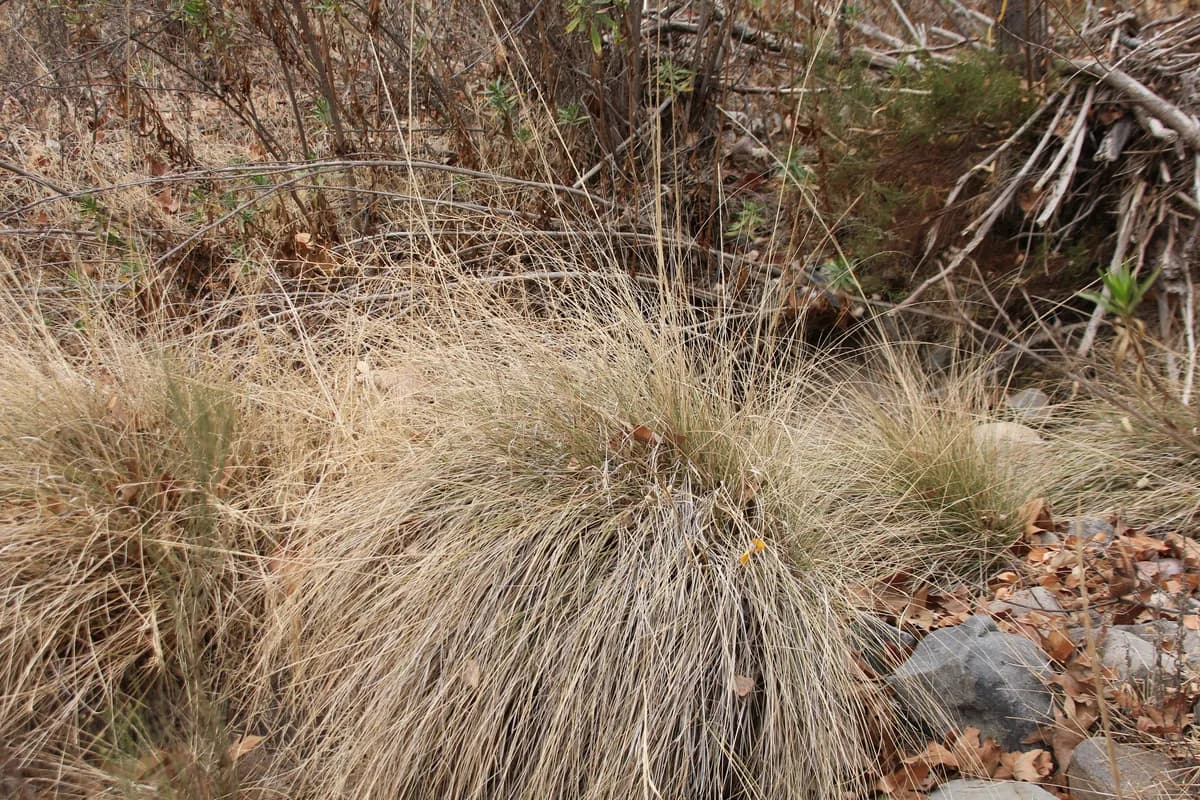
Deer Grass (Muhlenbergia rigens) is not flagged as toxic to dogs or cats by Plants For A Future (PFAF) (opens in new tab) (last reviewed 2026-05-21). This verdict does not come from the ASPCA. If your pet shows symptoms after eating any plant, call the ASPCA at (888) 426-4435.
The USDA PLANTS Database (opens in new tab) does not flag Deer Grass as toxic to livestock.
Light
full sun
Water
low
Size
24"–48" H × 24"–36" W
Bloom
Jul, Aug, Sep
Native to
AZ, CA, NM, NV and 1 more states
Pollinators
bees
Before you buy
Your city may pay you to plant this
Cities and water utilities offer rebates for replacing lawn with native and water-wise plants. We track 459 programs across 44 states, each with a link to the provider and the date we last checked it.
Find rebates in your areaPicture natives in your own yard
Upload a photo of your yard and Patch Vision shows a rendering of it planted with natives for your region, like Deer Grass.


Browse plants for this ecoregion
Deer grass is a graceful native perennial grass forming rounded clumps of fine, arching blades. It produces tall, slender flower stalks that rise above the foliage in summer, creating an elegant silhouette in the landscape. This drought-tolerant grass maintains its structure year-round with minimal care.
Growing Deer Grass
Grow Deer Grass in full sun and low water. Mature plants reach 24 to 48 inches tall and spread 24 to 36 inches wide. Expect low maintenance to keep it looking intentional in a front yard.
How to care for Deer Grass, by region
How to care for Deer Grass where it is actually grown: year-round basics plus what to do each season, region by region, with the sources for each.
Care guidance last updated: October 2026
Arizona/New Mexico Mountains (includes Prescott, AZ)
Year-round
Deer grass is native to the mountain region around Prescott and settles into a low-care, drought-tolerant clump once it has a season or two to establish.
- This grass is native to the Arizona and New Mexico mountain region that includes Prescott. In the wild it typically grows in sandy, fast draining washes in the oak and juniper belt, the same kind of terrain found around Prescott's elevation.
- Deer grass is drought tolerant once it settles in, usually after the first year or two, though a bit of extra water during hot, dry stretches keeps the clump fuller and greener.
- It grows as a tufted, fountain shaped clump that can spread several feet wide, staying green through most of the year with tall, slender flower stalks that add movement to the yard.
- USDA's national plant database rates deer grass with no general toxicity concern in its plant characteristics data. That is an agronomic rating meant for land management use, not a species specific animal review, so treat it as background information rather than a pet specific claim.
Fall
Fall is bloom season for Arizona deer grass and a good window for new plantings, with watering tapering off as Prescott heads toward its first frost.
- Unlike the spring bloom typical of coastal California plantings, Arizona deer grass usually flowers in late summer into fall, sending up tall seed stalks well above the foliage. This is the plant's showiest stretch of the year.
- Let the flower stalks stand through fall instead of cutting them early. Songbirds use the seed, and the stalks make up most of the plant's fall interest.
- Fall is also a good time to plant new deer grass from containers, since cooler weather gives roots a chance to establish before next summer's heat.
- Watering can taper off as days cool and Prescott moves toward its first frost, typically by mid to late October at this elevation.
Winter
Prescott winters bring real freezes, so expect some tip dieback, leave the old growth up for insulation, and save the yearly cutback for late winter.
- Deer grass has only fair to poor tolerance for hard freezes, so some browning or tip dieback after a cold Prescott winter is normal and not a sign the plant is dying.
- Leave the dead top growth in place through the coldest weeks. It helps insulate the crown, and the yearly cutback is best saved for late winter or very early spring, right before new growth starts.
- Cut the whole clump down to a few inches above the ground in a single pass, rather than shaping it through the year. Repeated shearing weakens the plant instead of keeping it neat.
A yearly cutback keeps deer grass looking tidy and low along a front walk or foundation bed instead of brushy and overgrown, which is usually the main thing an HOA review will notice.
Spring
Spring is regrowth season. Finish any leftover cutback early, hold off on fertilizer, and keep new plantings watered through Prescott's dry, windy spring.
- New basal leaves fill back in through spring. Established clumps do not need fertilizer, since extra nutrients tend to help nearby weeds compete against the grass more than they help the grass itself.
- If the yearly cutback was not finished in late winter, get it done as early in spring as possible, before new blades get more than a couple inches tall, so fresh growth does not get sheared off by accident.
- Prescott's spring is typically dry and windy. First year plants benefit from steady watering through this stretch, since deer grass is only reliably drought tolerant after it is fully established.
Summer
Water deeply through the hot, dry stretch before monsoon rains arrive, then let established plants ride out the summer with little help.
- Prescott's early summer, roughly May and June, runs hot and dry before the monsoon arrives. Deep, infrequent watering during this stretch helps keep the clump from browning at the tips, especially in a plant's first couple of summers.
- Once monsoon rain starts in July, established deer grass usually gets enough moisture from rainfall alone. The species can also handle brief flooding, so extra monsoon water is not a problem.
- Some brown tips after an extra dry stretch are normal and usually grow out on their own. Avoid heavy pruning to fix summer browning, since repeated shearing stresses the plant more than it helps.
Sources: USDA PLANTS Database, Deergrass (MURI2) plant profile, Arizona Native Plant Society, Deer Grass, Calscape, Deergrass (Muhlenbergia rigens), USDA NRCS Plant Guide, Deergrass, ASU Landscape Plants (CAM Martin), Muhlenbergia rigens
Central California Foothills and Coastal Mountains (includes San Francisco, CA)
Year-round
Deer grass is a big, easygoing native bunchgrass that is genuinely native to the greater San Francisco Bay Area and needs very little care once it settles in.
- Plant it in full sun for the fullest, most upright clumps. It also grows in part shade but stays smaller with fewer flower stalks.
- It tolerates nearly any Bay Area soil, from sandy to clay, as long as drainage is reasonable.
- Water new plants regularly for the first eight to twelve weeks after planting, then taper off as the roots establish.
- Once established, winter rain is usually enough and it needs little to no supplemental water in summer.
- Deer grass is native to California including the greater San Francisco Bay Area, with Calflora observation records across San Francisco, Alameda, Contra Costa, Marin, San Mateo, Santa Clara, Sonoma, and Napa counties.
- It is not on the ASPCA toxic plant list for dogs or for cats.
- It is a documented caterpillar host plant for the Umber Skipper butterfly.
Fall
Fall is when deer grass looks its showiest, with mature seed plumes and a golden cast to the foliage.
- The summer's flower stalks mature into feathery, tawny seed plumes that catch afternoon light and hold their shape into winter.
- Foliage often takes on a golden or tawny cast as the weather cools.
- Seed heads are worth leaving standing through fall rather than cutting back early, since songbirds use them.
- Hold off on the hard cutback until winter dormancy.
Winter
Winter is the time to cut deer grass back before spring growth starts.
- Cut the whole clump down to about three to six inches above the crown, done once a year or once every two to three years if you prefer a lower-maintenance look.
- Do not cut it shorter than that. Cutting into the crown itself can kill the plant.
- Do this while the plant is dormant and before new green shoots appear, typically in late winter.
- Raking out dead stalks and stems by hand is a gentler option if you want to skip a hard cutback for a year.
- Winter rain is normally enough water for established plants, so hold off on extra irrigation unless the season is unusually dry.
A late-winter cutback removes the dry, tan thatch and tidies the clump before spring growth, which helps front-yard curb appeal.
Spring
Spring is when deer grass sends up fresh green shoots after its winter cutback.
- New growth comes in quickly once temperatures warm, filling back in from a hard cutback within a few weeks.
- If you did not cut it back in winter, spring is your last easy window before new blades make cutting messy.
- Keep watering lightly for young or newly planted clumps as the Bay Area's spring rain tapers off.
- Established plants generally do not need supplemental water yet this early in the season.
Summer
Summer is bloom season, when deer grass sends up its tall, feathery flower stalks.
- Thin flower stalks rise three to four feet above the foliage clump, tipped with narrow, tawny flower heads.
- Established deer grass in the Bay Area typically does not need summer irrigation, even through the dry season.
- If foliage looks pale or stressed during a long dry stretch, an occasional deep watering keeps it looking greener.
- Avoid frequent shallow watering. Overwatering and heavy, soggy soil are the top reasons deer grass struggles.
Sources: Calflora, Muhlenbergia rigens taxon and distribution records, ASPCA, Toxic and Non-Toxic Plant List (Dogs), ASPCA, Toxic and Non-Toxic Plant List (Cats), Calscape, Muhlenbergia rigens Lepidoptera host records, UC ANR Sonoma County Master Gardeners, Muhlenbergia rigens (Deer Grass), California Flora Nursery, Muhlenbergia rigens plant profile
Central California Valley (includes Sacramento, CA)
Year-round
Deer grass is a tough California bunchgrass that gives you a big green fountain of a plant all year in the Sacramento area. It is the reliable evergreen anchor that holds your bed together while the wildflowers rest in summer.
- Plant it in fall, October or November, so the winter rains grow its roots before the first hot dry summer.
- Give it full sun and set it on a slight mound in our heavy valley clay so water drains away from the crown.
- Water deep and infrequent only through its first summer, then it needs little to no water once it is established.
- Unlike most valley natives, a little summer water keeps it green and lush, so it can take an occasional deep soak in July and August without rotting.
A single deer grass reads as an intentional, tended plant to an HOA even in high summer, because it stays green and fountain-shaped when the rest of a native bed goes dormant. Keep a clean mulched edge around it and it looks like a design choice, not a weed, which helps avoid a violation letter.
Fall
Fall is the best time to plant deer grass in the Central Valley, timed to the first rains so its roots settle in before next summer. If it is already in the ground, fall is a quiet season of light care.
- Plant new deer grass in October or November as the first rains arrive, so winter moisture does the establishing for you.
- Set each plant on a slight mound in heavy valley clay for sharp drainage, and space clumps about three to four feet apart to give the fountain room.
- The old plumes fade to a soft tan now, leave them for winter interest or clip them off if you prefer a cleaner look.
- Ease off any watering as the cool wet season begins, the coming rains will take over.
Spacing new clumps three to four feet apart and leaving a defined mulched bed edge keeps the planting looking deliberate and open rather than crowded, which reads as intentional to an HOA reviewer.
Winter
Winter is the cool, foggy, rainy growing season in Sacramento, and deer grass mostly takes care of itself. The rain waters it and it holds its green form through the mild frosts.
- Let winter rain do the watering, an established clump needs no supplemental water from December through February.
- It shrugs off the light freezes and Tule fog of the valley winter and stays evergreen, so no frost protection is needed.
- Make sure water drains away from the crown after big storms, standing water in clay is the main winter risk.
- Hold off on any hard cut-back until late winter or early spring, then you can shear it to refresh the clump.
Because deer grass stays green and upright through winter, it keeps a front bed looking cared-for during the gray, dormant months when many yards look bare, which reads as an intentional, tended landscape.
Spring
Spring is when your deer grass wakes up and pushes fresh green blades using the moisture still left in the soil from winter rain. This is the season to tidy it once and let it fill out.
- If it looks ragged from winter, cut the whole clump back by about one third to a half in early spring to spur clean new growth, then let it regrow.
- Lean on leftover winter-rain moisture in March and April, no supplemental water is needed yet in the Sacramento Valley.
- As the weather warms into May, start tapering off any hand watering so the plant is not sitting wet as summer heat arrives.
- Pull any weeds crowding the base now while the soil is still soft from the wet season.
A single clean spring cut-back keeps the clump dense and rounded instead of flopping open, so it reads as a tended ornamental grass and looks intentional from the curb.
Summer
Summer in Sacramento is hot and bone dry, and this is deer grass's moment to shine because it sends up its tan plumes from July into September. It is one of the few valley natives that actually likes a little summer water to stay green.
- Let the tan flower plumes come up and stand, July through September, they are the plant's main show and give it cover value for small wildlife.
- Give an established clump one deep soak every week or two if you want it to stay lush and green through the heat, or skip water entirely and it will just look a bit drier.
- Water at the soil, not overhead, and make sure our clay drains between soaks so the crown never stays soggy in the heat.
- Do not cut it back in summer, the plumes are the point and hard pruning in high heat stresses the plant.
Sources: Calscape, California Native Plant Society, Muhlenbergia rigens Deergrass, ASPCA Animal Poison Control Center toxic plant database, Muhlenbergia not listed as toxic to dogs, cats, or horses, Las Pilitas Nursery, Muhlenbergia rigens Deer Grass horticultural notes, Waterwise Garden Planner, Muhlenbergia rigens Deer grass, UC Davis Arboretum and Public Garden, California native grasses planting guidance
Cross Timbers (includes Fort Worth, TX)
Year-round
Deer grass is a tough, low-maintenance bunchgrass that holds a neat, mounded shape year round and needs almost no watering once it settles in.
- Plant in full sun, spacing clumps 3 to 4 feet apart so the arching foliage and seed plumes have room without flopping into a walkway.
- In the heavy black clay soils on the prairie side of North Texas, plant it slightly high on a mound or work a few inches of coarse compost into the hole so water drains away from the crown; in the sandier soils west of the metro it drains faster on its own but will need water more often through the first summer.
- Skip fertilizer entirely. Feeding pushes floppy growth that loses the tidy, mounded shape.
- Spread about 2 inches of mulch around the base without piling it against the crown, to hold moisture the first year.
- Water deeply once a week through the first growing season, then cut back to rain only once the plant is established, usually by its second year.
Fall
Fall is when the seed plumes are at their fullest, and it works as a second planting window if you missed spring.
- September through November is a good second planting window for deer grass, since it is an herbaceous perennial rather than a woody plant that needs a full season to root in.
- Leave the seed heads standing through fall. They provide seed for birds and small mammals, and nesting material later on.
- Reduce watering frequency after the first cool snap in October as growth slows.
- If a clump has outgrown its space, divide it in fall, replant divisions promptly, and water them in well.
Winter
Deer grass holds its dried tan foliage through winter for structure and bird cover, then gets one hard cutback before spring growth starts.
- Leave the dried winter foliage standing through the cold months. It gives the planting structure and cover for birds.
- Cut the whole clump back to about 4 to 6 inches sometime between late January and late February, before new blades emerge.
- A hard freeze or an occasional severe Arctic outbreak will brown the leaf tips; this is normal for North Texas winters and does not usually harm the crown.
- No water is needed during dormancy except during an extended dry stretch with no rain for several weeks.
A late-winter cutback removes the season's dried, uneven look right before spring inspections, and resets the clump to a clean, deliberate shape.
Spring
Spring is the best time to plant deer grass and the point when fresh blades push up from the base after the winter cutback.
- Plant new deer grass in March or April, after the last frost in mid March, so roots have time to establish before summer heat arrives.
- If you have not already cut it back, trim the dried winter foliage down to 4 to 6 inches in late February, before the new blades emerge.
- Water new plantings twice a week for the first six weeks after planting, then taper to once a week.
- Deer grass is rarely bothered by browsing deer or major pests, so spring watch-outs are mostly about keeping new plantings from drying out, not pest damage.
Fresh spring growth after the late-winter cutback reads as a tidy, intentional mounded clump rather than overgrown grass.
Summer
Summer is deer grass's toughest test and also its showiest season, when tall seed plumes rise above the foliage.
- Once established after a full growing season, deer grass needs little to no supplemental water even through 100F-plus afternoons; in the sandier soils west of the metro, give established clumps an occasional deep soak during multi-week dry spells.
- First-year plants still need a deep soak once a week during July and August, the hardest stretch of the year here.
- Let the flower plumes rise 2 to 3 feet above the foliage from July through September; no staking or trimming needed while they bloom.
- After heavy summer storms, check that water is not standing around the crown in heavy clay soil; if a puddle sits for more than a day, work in drainage before the next rain.
The upright seed plumes read as a deliberate ornamental feature rather than unmowed grass, useful if the taller summer growth draws a question.
Sources: Lady Bird Johnson Wildflower Center: Muhlenbergia rigens, UC Master Gardener Program of Sonoma County: Muhlenbergia rigens (Deer Grass)
Klamath Mountains/California High North Coast Range (includes Medford, OR)
Year-round
Year-round care for deer grass around Medford, OR: full sun, low water use, and room for a large clump.
- It does best in full sun. In shade it stays smaller with sparse flowers.
- It grows in nearly any soil, from seasonally wet to dry.
- Water use is low. UC Master Gardeners say winter rains are adequate with little or no summer irrigation, though summer moisture keeps foliage bright green.
- It reaches 3 to 5 feet tall and 4 to 6 feet wide, with flower stalks rising another 3 to 4 feet.
- It looks best cut down to 3 inches or lower every 1 to 3 years in winter. Raking out dead stalks also works.
- UC Master Gardeners describe it as tidy and well-behaved, and it does not reseed easily.
A full fountain-shaped clump given its mature 4 to 6 feet of width, and cut back on a regular schedule, reads as a deliberate ornamental grass.
Sources: Lady Bird Johnson Wildflower Center: Muhlenbergia rigens, UC Master Gardener Program of Sonoma County: Muhlenbergia rigens
Madrean Archipelago (includes Tucson, AZ)
Year-round
Year-round care for deer grass around Tucson, AZ: full sun, low water use, and room for a large clump.
- It does best in full sun. In shade it stays smaller with sparse flowers.
- It grows in nearly any soil, from seasonally wet to dry.
- Water use is low. Summer moisture keeps the foliage bright green.
- It reaches 3 to 5 feet tall and 4 to 6 feet wide, with flower stalks rising another 3 to 4 feet.
- It looks best cut down to 3 inches or lower every 1 to 3 years in winter. Raking out dead stalks also works.
- UC Master Gardeners describe it as tidy and well-behaved, and it does not reseed easily.
A full fountain-shaped clump given its mature 4 to 6 feet of width, and cut back on a regular schedule, reads as a deliberate ornamental grass.
Sources: Lady Bird Johnson Wildflower Center: Muhlenbergia rigens, UC Master Gardener Program of Sonoma County: Muhlenbergia rigens
Mojave Basin and Range (includes Las Vegas, NV)
Year-round
Deergrass is a big, tidy bunchgrass that grows like a green fountain roughly 4 feet tall and 4 feet across. It is one of the better choices for a northwest Las Vegas front yard because it takes full sun, 110 degree afternoons, and alkaline soil without much fuss. The Southern Nevada Water Authority and Southern Nevada Regional Planning Coalition Regional Plant List includes it for the Las Vegas area, marks it as a plant that grows naturally in parts of the Mojave Desert, and gives it a mature coverage value of 13 square feet, which is the number used for the Water Smart Landscapes 50 percent canopy coverage calculation. Two decisions make or break this plant. Give it real room on planting day, because a mature clump is about 4 feet wide and you cannot shrink it later. And cut the whole clump down low every two or three years in late winter instead of shearing the sides, which is the fastest way to turn a graceful fountain into a lumpy ball.
- Space clumps 4 to 5 feet apart center to center, and keep each center at least 3 feet back from a sidewalk, driveway edge, or mailbox.
- Full sun. In shade the clump stays small and flowers poorly.
- Before planting, fill the hole with water. If it is still holding water hours later you have hit a hard caliche layer, so break a narrow drain hole through it or move the plant.
- Run drip with two emitters on opposite sides of the clump so the whole root zone wets instead of one edge.
- Mulch 1 to 3 inches deep, held in a ring 2 to 3 inches away from the base rather than piled against it.
- Do not fertilize. Extra nitrogen makes the blades floppy and the clump splits open in the middle.
A clump given its full 4 feet and left in its natural fountain shape reads as deliberate ornamental planting, which is what keeps a front yard HOA-friendly.
Fall
Fall is the best planting window in Las Vegas and the best time to fix spacing mistakes. SNWA says desert plants can go in any time of year but fall gives the best odds for plant health. Cooler air over soil that is still warm lets roots run for months before next summer's heat arrives. Nothing needs cutting now. Just ease the water back as highs drop out of the 90s.
- Plant new clumps in October or November so they get a full cool season of root growth first.
- This is the moment to space correctly. Set centers 4 to 5 feet apart and picture a 4 foot wide clump, not the one gallon pot in your hand.
- Fall plantings still follow the same 8 week step down, on the cooler season column: every 3 to 4 days, then 6 to 7, then 7 to 10, then 10 to 14 days.
- Stretch established clumps toward every 10 to 14 days as nights cool off.
- Leave the flower spikes and the foliage alone. Fall is not a cutback season for this grass.
- Rake loose litter out from around the base and refresh mulch so the bed edge stays crisp.
Adding or repositioning clumps in fall means the bed looks intentional and filled in by spring, which is when most front yard comments get made.
Winter
In the Las Vegas valley deergrass goes dormant and turns straw tan for the winter. The regional plant list rates it as deciduous here, so expect tan rather than green from roughly December into February, and that is normal, not a dying plant. Late winter, January into February, is the window for the hard cutback, but only every two or three years and not every year. Water is minimal now, roughly once every two to four weeks. Skip a cycle after real rain.
- Cut back only every 2 to 3 years. Take the whole clump down to about 3 inches, working low and flat with hedge shears or a trimmer.
- Never shear the outside of the clump into a ball or a dome. That leaves a dead woody center and it never gets the fountain shape back.
- Finish the cutback before new blades push, usually by the end of February here.
- If you skipped it last cycle and there is a thick pad of dead thatch inside the clump, this is the year to cut it.
- Water roughly every 2 to 4 weeks through winter, and skip a cycle after a real soaking rain.
- Still no fertilizer, and do not pile compost or mulch on top of the crown.
Tan winter foliage can read as dead to a neighbor, so a clean late winter cutback plus a tidy mulch ring is what keeps the yard looking maintained.
Spring
Spring is when deergrass wakes up and grows fast. If this is a cutback year, finish it in February before the new blades push, because cutting into fresh growth leaves ragged brown tips for the rest of the season. Once nights stay above freezing the clump fills back in quickly. This is also when to start stepping irrigation up, since northwest Las Vegas can hit 90 degrees by late April. Do not feed it.
- Cut back only if it has been two or three years since the last one. Take it to about 3 inches in February and let it regrow.
- If you cut it back last year, skip it entirely. Pull loose dead blades out by hand or with a leaf rake instead.
- Move irrigation from winter frequency toward roughly every 5 to 7 days as April and May warm up.
- Top mulch back up to 1 to 3 inches, keeping it off the crown.
- No fertilizer. Ornamental grasses need very little, and too much nitrogen gives weak stems that fall over.
- Anything planted last fall still counts as new. Check the top 2 inches of soil by hand rather than trusting the timer.
A freshly cut clump looks like a bare stub for three or four weeks, so doing it in February means it is full and green again by the time spring yard walkthroughs happen.
Summer
Summer is make or break, and a first summer clump needs completely different treatment from a third year clump. A newly planted one has roots only in the original nursery root ball, so it can dry out in a day or two at 110 degrees. An established one has roots much deeper and can go several days between soaks. Watering an established clump like a new one is how people rot the crown, and watering a new one like an established one is how most Las Vegas plantings die in July. Deergrass also flowers now, sending tan spikes 3 to 4 feet above the leaves.
- First 8 weeks after a summer planting, per SNWA: every 1 to 2 days in weeks 1 and 2, every 3 to 4 days in weeks 3 and 4, every 4 to 6 days in weeks 5 and 6, then about every 7 days in weeks 7 and 8.
- After that stretch, and through the whole first year, water when the top 2 inches of soil is dry rather than on a fixed clock.
- Established clumps, year two and beyond: deep soak about twice a week in peak heat, long enough to wet the soil 8 to 12 inches down, then let it dry out between.
- Do not cut it back in summer. Stripping the leaves in 110 degree sun exposes and cooks the crown.
- Leave the flower spikes standing. They are the ornamental payoff, and the seeds feed birds and small mammals later.
- A clump that flops open in the middle usually means too much water or fertilizer, not too little.
Snap off any single flower stalk that leans across a sidewalk or into a neighbor's driveway and leave the rest standing, so the clump still reads as a planted ornamental grass rather than something overgrown.
Sources: SNWA and SNRPC Regional Plant List (December 2021), ornamental grasses section, Muhlenbergia rigens, Deer Grass, 4 ft by 4 ft, 13 sq ft coverage, comment 6 Mojave native, Lady Bird Johnson Wildflower Center, Muhlenbergia rigens (Deergrass), native distribution AZ CA NM NV TX UT, 3 to 5 ft, low water use, sun, UC Master Gardener Program of Sonoma County, Muhlenbergia rigens (Deer Grass), mature size and winter cutback guidance, Clemson Cooperative Extension HGIC, Ornamental Grasses and Grass-like Plants, fertilizer and cutback, SNWA, Installing your landscape, mulch depth and ring spacing, SNWA, Watering and maintaining your landscape, 8 week establishment schedule including fall, winter and spring intervals
Sonoran Basin and Range (includes Phoenix, AZ)
Year-round
Deer grass is a tough, clumping native bunchgrass that grows into a soft green mound with tan, wispy plumes in late summer. In the Phoenix low desert it wants full sun, fast-draining soil, and much less water than people think.
- Give it full sun and a spot with fast-draining decomposed-granite or caliche soil, no rich amended beds, since desert natives resent heavy organic soil.
- Water deep and infrequent once established, soaking the root zone every 2 to 4 weeks in the hot months and skipping water entirely when winter rains do the job.
- Top the bed with a 2 to 3 inch layer of decomposed-granite or gravel mulch, not wood bark, which looks out of place here and traps moisture against the crown.
- Never fertilize, the single most common local mistake is overwatering, which rots the crown and floppy-opens the clump.
A tidy, evenly spaced deer grass mound over a clean decomposed-granite bed reads as intentional desert xeriscape, the expected HOA-friendly Phoenix front-yard look that avoids a violation letter.
Fall
Fall is the prime season in the low desert. Cooler weather makes this the best time to plant deer grass and to cut back and tidy an established clump so it looks clean through winter.
- October and November is the top planting window, set new deer grass now so roots establish through the mild winter before next summer's heat.
- Water a fall transplant deep every 5 to 7 days for the first few weeks, then stretch toward every 2 to 3 weeks as it settles in.
- Shear an established clump back to 4 to 6 inches after the plumes fade to reset it clean, or leave the plumes for winter texture and cut in early spring instead.
- Space plants about 3 to 4 feet apart so each mound has room and the decomposed-granite gaps stay open and neat.
Fall cutback and honest 3 to 4 foot spacing keep the planting looking deliberate rather than crowded or overgrown, which is what keeps a desert front yard reading as intentional and avoids a violation letter.
Winter
Winter in Phoenix is a mild cool season, not a hard dormancy. Deer grass slows down but stays standing, and it needs very little from you beyond letting the gentle winter rains water it.
- Water minimally, roughly once a month at most, and skip it entirely in any week the winter rains have already soaked the bed.
- Deer grass is frost-hardy in the Phoenix core, so no cover is needed on the rare cold night, the tan blades may brown at the tips and that is normal.
- Leave the tan plumes standing for winter texture if you like the look, then plan to cut back in early spring before new growth.
- Do not fertilize or heavily water to push winter growth, a lean, dry winter is exactly what this grass wants.
Spring
Spring is a mild growing stretch for deer grass before the real heat arrives. This is a good time to make sure last year's clump is cleaned up and to taper off winter watering.
- If you did not cut it back in fall, shear the old clump to about 4 to 6 inches now in early spring before new green blades push out.
- Taper the last winter waterings as the days warm, going to a deep soak roughly every 3 weeks by May instead of anything more frequent.
- Early spring is a weaker secondary window to set out a new deer grass plant, but fall is far better, so wait if you can.
- Refresh any thin spots in the decomposed-granite mulch so the bed stays a clean, even surface heading into summer.
A spring cutback keeps the clump low and shaped rather than a ragged tan tuft, so the front bed still reads as maintained and intentional to an HOA-conscious eye.
Summer
Summer is the stress season, not the peak, though deer grass actually wakes up with the monsoon and pushes its tan plumes from July into September. Your job in June is to keep it alive, then let the monsoon rains carry it.
- In the dry June foresummer, give an establishing plant an occasional deep soak every 10 to 14 days, older established clumps can stretch to every 3 weeks.
- Once the monsoon starts in early July, back off supplemental water and let the warm downpours drive growth and the tan flower plumes.
- The danger now is overwatering on top of monsoon rain, so check that the soil has dried a few inches down before you ever add water.
- Do not plant new deer grass in the May to July heat, it is the fastest way to lose one, hold the planting for fall.
Sources: Arizona-Sonora Desert Museum, Muhlenbergia rigens deer grass plant profile, USDA PLANTS Database, Muhlenbergia rigens distribution including Arizona, University of Arizona Cooperative Extension, low desert ornamental grass care and spring shearing, Arizona-Sonora Desert Museum, fall planting window for Sonoran Desert natives, University of Arizona Cooperative Extension, planting desert natives in fall for root establishment, Desert Botanical Garden, monsoon-season watering guidance for desert-adapted plants
Southern California/Northern Baja Coast (includes Los Angeles, CA)
Year-round
Deergrass is native to Southern California, including the Los Angeles area, and is an evergreen bunchgrass that thrives on very little supplemental water once it settles into a Los Angeles yard.
- Plant in full sun to light shade in sandy, gravelly, clay, or decomposed granite soil, this grass adapts to most soil types found around LA yards.
- Give regular water through the first month or two after planting, then taper off as new growth appears.
- Once established, deergrass needs only occasional deep watering, roughly once a month during the dry season, to stay healthy.
- Every few years, rake out old dead leaves and flower stalks to keep the clump tidy and reduce built-up dry material.
Deergrass keeps a neat, rounded clump shape year round, making it an HOA-friendly choice for a front-yard border or foundation planting.
Fall
Fall, after deergrass has finished setting seed, is the season for grooming and for clearing dry material before Santa Ana wind season raises fire risk in Los Angeles.
- Once seed heads have dried and browned in fall, rake out or trim away dead leaves and old flower stalks.
- Fall is the recommended time to shear a shaggy clump back hard, most established deergrass only needs this every few years.
- With Santa Ana wind season increasing fire risk, keep dry thatch cleared from deergrass planted near structures, fences, or walkways.
- Continue only occasional watering in fall, deergrass does not need extra irrigation as temperatures cool.
Fall grooming keeps deergrass looking neat for curb appeal while also clearing dry fuel, an HOA-friendly task that does double duty.
Winter
Winter is Los Angeles's rainy season, when deergrass needs little to no supplemental water and its evergreen clump holds its shape while other plants go dormant.
- Rely on winter rain for most or all of deergrass's water needs, and only step in with extra water during an extended dry spell.
- Late winter into early spring is a good, low-stress time to divide an overgrown clump and transplant the divisions.
- The foliage stays evergreen through winter, so expect it to hold its color and shape when many nearby plants lose their leaves.
- Hold off on fertilizer and save any major cutback for after the plant has set seed later in the year.
Spring
Spring is when deergrass pushes out new growth and its first flower stalks in Los Angeles gardens, and it is a good, low-stress window for planting or dividing established clumps.
- Water new spring plantings a couple of times a week until roots take hold, then ease off as fresh growth shows up.
- Watch for tall, narrow flower spikes starting to rise above the foliage as spring moves along.
- Late winter into early spring is a good time to divide an overgrown clump and transplant the divisions.
- Skip extra fertilizer in spring, in most Los Angeles yard soils it tends to favor weeds over the grass.
Summer
Summer is deergrass's low-water season in Los Angeles, and it is also when the plant puts on its main flowering display.
- Once established, water deergrass no more than about once a month through summer, soaking the root zone deeply rather than sprinkling lightly and often.
- Look for tall flower plumes rising well above the clump through the summer months, this is the plant's main bloom period.
- Avoid daily lawn-style irrigation nearby, too much summer water can weaken or rot the base of an established clump.
- In fast-draining decomposed granite or sandy soil, a summer clump may need slightly more frequent watering than one in clay soil.
Sources: Calscape: Muhlenbergia rigens (Deergrass), Theodore Payne Foundation Native Plant Database: Muhlenbergia rigens, USDA NRCS Plant Guide: Deergrass (Muhlenbergia rigens)
Texas Blackland Prairies (includes Dallas, TX)
Year-round
Deer grass is a tough, low-maintenance bunchgrass that holds a neat, mounded shape year round and needs almost no watering once it settles in.
- Plant in full sun, spacing clumps 3 to 4 feet apart so the arching foliage and seed plumes have room without flopping into a walkway.
- In the heavy black clay soils on the prairie side of North Texas, plant it slightly high on a mound or work a few inches of coarse compost into the hole so water drains away from the crown; in the sandier soils west of the metro it drains faster on its own but will need water more often through the first summer.
- Skip fertilizer entirely. Feeding pushes floppy growth that loses the tidy, mounded shape.
- Spread about 2 inches of mulch around the base without piling it against the crown, to hold moisture the first year.
- Water deeply once a week through the first growing season, then cut back to rain only once the plant is established, usually by its second year.
Fall
Fall is when the seed plumes are at their fullest, and it works as a second planting window if you missed spring.
- September through November is a good second planting window for deer grass, since it is an herbaceous perennial rather than a woody plant that needs a full season to root in.
- Leave the seed heads standing through fall. They provide seed for birds and small mammals, and nesting material later on.
- Reduce watering frequency after the first cool snap in October as growth slows.
- If a clump has outgrown its space, divide it in fall, replant divisions promptly, and water them in well.
Winter
Deer grass holds its dried tan foliage through winter for structure and bird cover, then gets one hard cutback before spring growth starts.
- Leave the dried winter foliage standing through the cold months. It gives the planting structure and cover for birds.
- Cut the whole clump back to about 4 to 6 inches sometime between late January and late February, before new blades emerge.
- A hard freeze or an occasional severe Arctic outbreak will brown the leaf tips; this is normal for North Texas winters and does not usually harm the crown.
- No water is needed during dormancy except during an extended dry stretch with no rain for several weeks.
A late-winter cutback removes the season's dried, uneven look right before spring inspections, and resets the clump to a clean, deliberate shape.
Spring
Spring is the best time to plant deer grass and the point when fresh blades push up from the base after the winter cutback.
- Plant new deer grass in March or April, after the last frost in mid March, so roots have time to establish before summer heat arrives.
- If you have not already cut it back, trim the dried winter foliage down to 4 to 6 inches in late February, before the new blades emerge.
- Water new plantings twice a week for the first six weeks after planting, then taper to once a week.
- Deer grass is rarely bothered by browsing deer or major pests, so spring watch-outs are mostly about keeping new plantings from drying out, not pest damage.
Fresh spring growth after the late-winter cutback reads as a tidy, intentional mounded clump rather than overgrown grass.
Summer
Summer is deer grass's toughest test and also its showiest season, when tall seed plumes rise above the foliage.
- Once established after a full growing season, deer grass needs little to no supplemental water even through 100F-plus afternoons; in the sandier soils west of the metro, give established clumps an occasional deep soak during multi-week dry spells.
- First-year plants still need a deep soak once a week during July and August, the hardest stretch of the year here.
- Let the flower plumes rise 2 to 3 feet above the foliage from July through September; no staking or trimming needed while they bloom.
- After heavy summer storms, check that water is not standing around the crown in heavy clay soil; if a puddle sits for more than a day, work in drainage before the next rain.
The upright seed plumes read as a deliberate ornamental feature rather than unmowed grass, useful if the taller summer growth draws a question.
Sources: Lady Bird Johnson Wildflower Center: Muhlenbergia rigens, UC Master Gardener Program of Sonoma County: Muhlenbergia rigens (Deer Grass)
In an HOA neighborhood
Deer Grass is an HOA-friendly choice. Maintenance level: low. Tidiness: 4 out of 5.
Works well in: front yard, foundation, street edge, mid zone.
- May need annual cutting back to maintain neat appearance
- Can develop brown tips in extreme drought conditions
Wildlife value
Deer grass provides habitat for small wildlife and serves as a host plant for several butterfly species. Its summer blooms attract native bees and other beneficial insects.
Common questions
- When does deer grass bloom?
- Deer grass typically flowers from July through September, sending up narrow, upright plumes above the foliage clump.
- How much water does deer grass need?
- Deer grass tolerates a range of moisture but performs best with low water once established, making it suited to dry slopes and infrequently irrigated gardens.
- Do bees use deer grass?
- Clumping grasses like deer grass provide structure and nesting habitat that ground-nesting and cavity-seeking bees can use, even though the grass itself is wind pollinated rather than insect pollinated.
- How should deer grass be maintained in a garden?
- Cut the clump back close to the base in late winter before new growth starts, which keeps the plant looking fresh and encourages a fuller flush of foliage and flower stalks.
- What kind of light does deer grass prefer?
- Deer grass grows best in full sun but can also handle part sun to part shade conditions, though flowering stalks tend to be fuller with more light.
- Is Deer Grass toxic to dogs?
- Deer Grass is not flagged as toxic to dogs by Plants For A Future (PFAF). This verdict does not come from the ASPCA.
- Is Deer Grass toxic to cats?
- Deer Grass is not flagged as toxic to cats by Plants For A Future (PFAF). This verdict does not come from the ASPCA.
- Is Deer Grass toxic to livestock?
- The USDA PLANTS Database does not flag Deer Grass as toxic to livestock.
- Is Deer Grass HOA-friendly?
- Deer Grass is generally an HOA-friendly choice in the right placement, with low maintenance.
These answers were drafted with an AI model from this plant's data. Verify care details with a local expert.
Native range data from vouchered herbarium specimen records and regional native plant society lists. Pollinator and host plant associations compiled from GBIF, iNaturalist, and published ecological literature.
If something looks wrong
Common plant problems, and what to check first
These come up on almost any plant. Each guide lists the likely causes in the order they are worth ruling out, with one thing to check before you act on any of them, and links to the source it came from.
- It is dying right after planting
- Leaves turning yellow
- Wilting even though I watered it
- Brown crispy leaf tips
- Bugs on the plant
Ready to grow Deer Grass? Add it to your garden in Pollinator Patch to track it and get season-by-season care guidance.