Gregg Catclaw Acacia
Senegalia greggii
Last reviewed: September 2026
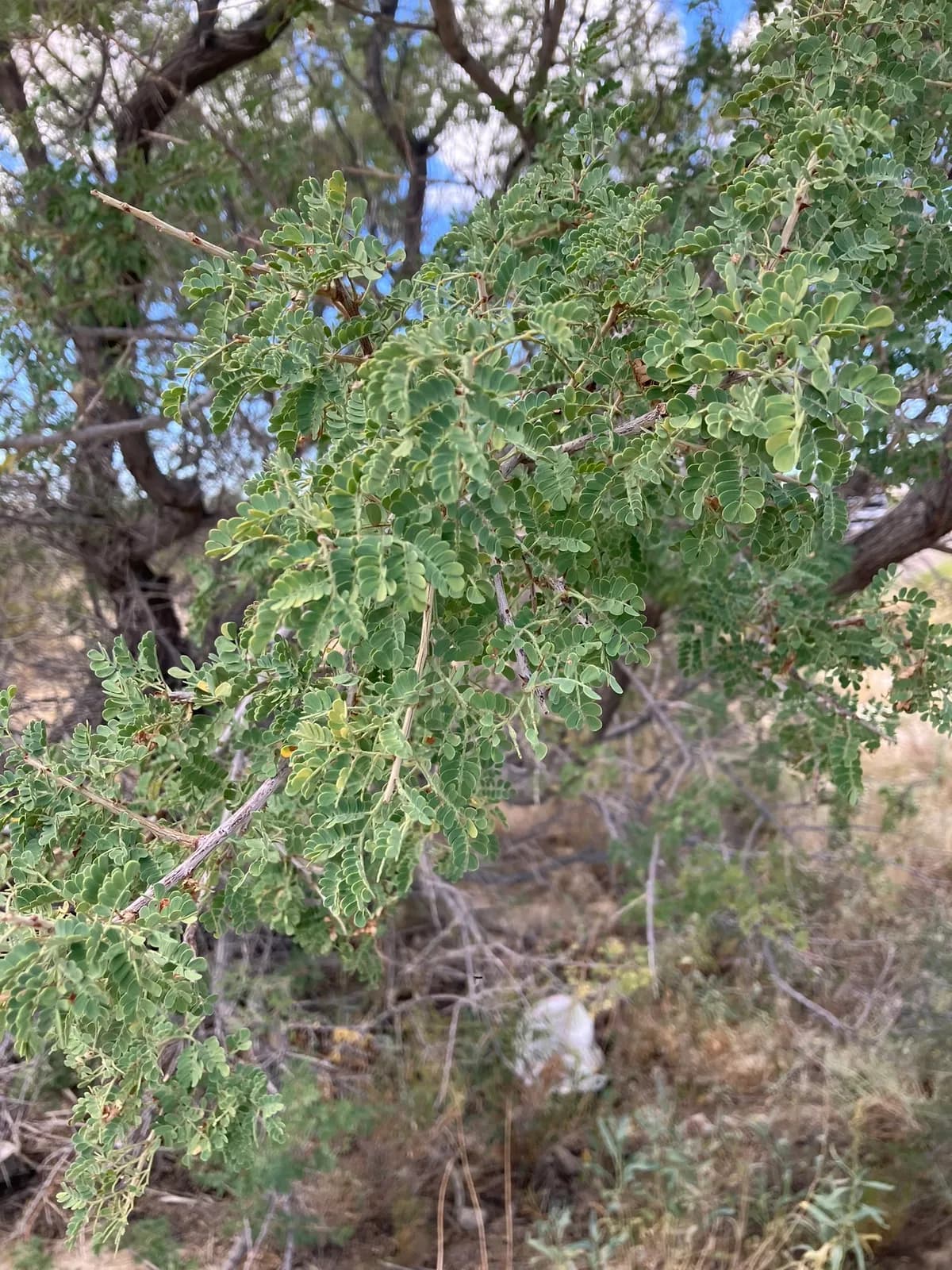
Senegalia greggii is a thorny, multi-trunked desert tree that produces small, fragrant pale yellow flower spikes from spring through fall and tolerates dry, low water conditions.
Toxicity unknown
Gregg Catclaw Acacia (Senegalia greggii) is not listed by the ASPCA Animal Poison Control Center (opens in new tab) or the other sources we check, so we have no verdict for it either way. Absence from those lists is not a clearance. If your pet shows symptoms after eating any plant, call the ASPCA at (888) 426-4435.
The USDA PLANTS Database (opens in new tab) does not flag Gregg Catclaw Acacia as toxic to livestock.
Light
full sun
Water
low
Size
180"–240" H × 60"–72" W
Bloom
Mar, Apr, May, Jun, Jul, Aug, Sep, Oct, Nov
Native to
AZ, CA, NM, NV and 1 more states
Pollinators
bees, nectar insects
Before you buy
Your city may pay you to plant this
Cities and water utilities offer rebates for replacing lawn with native and water-wise plants. We track 452 programs across 44 states, each with a link to the provider and the date we last checked it.
Find rebates in your areaBrowse plants for this ecoregion
Gregg Catclaw Acacia is a drought-tolerant native tree that grows 15-20 feet tall with a narrow, upright form. It produces fragrant yellow flower clusters from spring through fall and has small compound leaves that drop in winter. The name comes from its curved thorns that can catch on clothing or skin.
Growing Gregg Catclaw Acacia
Grow Gregg Catclaw Acacia in full sun and low water. Mature plants reach 180 to 240 inches tall and spread 60 to 72 inches wide. Expect moderate maintenance to keep it looking intentional in a front yard.
How to care for Gregg Catclaw Acacia, by region
How to care for Gregg Catclaw Acacia where it is actually grown: year-round basics plus what to do each season, region by region, with the sources for each.
Care guidance last updated: July 2026
Southern California/Northern Baja Coast (includes Los Angeles, CA)
Year-round
Gregg catclaw acacia is a low-desert native tree, so in coastal Los Angeles treat it like a desert plant living in a milder, wetter place and give it the hottest, driest, sharpest-draining spot you have.
- Native to California and the desert Southwest, but its real home is the inland deserts, so it is only marginal this close to the coast (Calscape, Calflora).
- Plant it in fast-draining sandy or gravelly soil, never in heavy wet coastal clay, since poor drainage and rot are the number-one killer.
- Full sun and low water once established, treating it as a small thorny tree that can reach about 20 ft.
- The recurved catclaw thorns catch skin and clothing, so keep it well back from sidewalks, driveways, walkways, and play areas.
- USDA PLANTS lists it as not toxic to livestock or horses, so the thorns, not the leaves, are the real hazard to plan around.
Because this is a thorny tree, siting it back from the sidewalk and corner sightlines and getting ARC or HOA sign-off up front reads as intentional and keeps a setback or safety complaint from turning into a violation letter.
Fall
Fall after the first rains is the best time to plant, so get it in the ground now in the driest, sharpest-draining spot and let winter rain settle the roots.
- Plant after the first fall rains so roots can establish over the cool wet winter.
- Pick the hottest, driest, best-draining corner and avoid any low spot that stays wet.
- Set it well back from the sidewalk, driveway, and any corner sightline before you dig.
- Water it in once at planting, then rely mostly on the coming rains.
- Do not amend heavy clay with just a rich backfill, since a wet pocket in clay will rot the roots.
Choosing the planting spot with setbacks and corner visibility in mind, and clearing it with the ARC before a thorny tree goes in, reads as intentional and avoids a placement dispute later.
Winter
Winter is the wet season here, which is the riskiest time for a desert tree, so the whole job is keeping its roots from sitting in water.
- Turn off any irrigation and let the winter rain do all the watering.
- Check that water drains away fast after a storm and never pools around the trunk.
- If it drops its leaves in a cool snap, that is normal deciduous behavior, so do not react by watering.
- Hold off on feeding and on heavy pruning until the dry season returns.
- Keep mulch pulled back a few inches from the trunk so the base can dry out.
Spring
Spring is bloom time, so enjoy the fuzzy flowers, keep an eye on thorny new growth near paths, and only water if the tree went in last fall.
- Let it bloom and work as a nectar source for bees and butterflies without deadheading.
- If it is a first-year planting, give a deep soak every couple of weeks while spring rains taper off.
- If it is established, hold back on water and let the soil dry between any rain.
- Trim back any low thorny shoots reaching toward a walkway or driveway.
- Skip fertilizer, since this desert native does not want rich feeding.
Summer
Summer is the dry season, so give an established tree little or no water and do your structural pruning now while the wood is dry.
- Do not water an established plant through the hot dry months, since summer irrigation on this desert native invites crown and root rot.
- Water a first-summer planting deeply but infrequently, then start weaning it off.
- Prune in this dry stretch to shape it to a single trunk or a few clean trunks.
- Cut low thorny branches up off the ground so they cannot grab passersby.
- Rake fallen pods and prunings away from walkways so the thorns are not left underfoot.
Pruning to a clean single or multi-trunk shape in the dry season, with low thorny limbs lifted off the sidewalk, reads as an intentional, cared-for tree and heads off a tidiness or safety complaint.
Sources: Calscape (California Native Plant Society): Senegalia greggii Catclaw, USDA PLANTS Database: Senegalia greggii (SEGR4)
Want these tasks as reminders timed to your yard? Pollinator Patch turns this guidance into a season-by-season care plan for the plants you actually grow.
In an HOA neighborhood
Gregg Catclaw Acacia is an HOA-friendly choice in the right placement. Maintenance level: moderate. Tidiness: 2 out of 5.
Works well in: front yard, mid zone.
- Trees often require HOA/ARC approval even when allowed.
- Verify setbacks from sidewalks, driveways, utilities, and structures.
- Confirm mature height/canopy limits and sightline rules for corners.
Wildlife value
The extended blooming period provides nectar for bees and other pollinators from spring through fall. Birds often nest in the thorny branches, which offer excellent protection from predators.
Common questions
- How much water does Senegalia greggii need once established?
- Senegalia greggii is well suited to low water landscapes and typically only needs supplemental irrigation while young. Mature plants growing along desert washes or rocky slopes rely mainly on natural rainfall.
- When does Senegalia greggii bloom?
- Senegalia greggii can flower anywhere from March through November, with the strongest flush usually in spring and additional bloom cycles after summer monsoon rains.
- What insects are attracted to Senegalia greggii flowers?
- The small, puffy yellow flower spikes of Senegalia greggii draw bees and other nectar seeking insects, making it a useful nectar source in dry, sunny landscapes.
- Does Senegalia greggii lose its leaves?
- Senegalia greggii is deciduous and often drops its small, fern like leaves during extended drought or cold periods, leafing out again after rain or warmer weather returns.
- What growing conditions suit Senegalia greggii best?
- Senegalia greggii grows best in full sun on well drained, rocky or sandy soils typical of desert washes, canyons, and arid slopes, and it handles heat and periodic drought well.
- Is Gregg Catclaw Acacia toxic to livestock?
- The USDA PLANTS Database does not flag Gregg Catclaw Acacia as toxic to livestock.
- Is Gregg Catclaw Acacia HOA-friendly?
- Gregg Catclaw Acacia is generally an HOA-friendly choice in the right placement, with moderate maintenance.
These answers were drafted with an AI model from this plant's data. Verify care details with a local expert.
Native range data from the World Checklist of Vascular Plants (Kew). Pollinator and host plant associations compiled from GBIF, iNaturalist, and published ecological literature.
If something looks wrong
Common plant problems, and what to check first
These come up on almost any plant. Each guide lists the likely causes in the order they are worth ruling out, with one thing to check before you act on any of them, and links to the source it came from.
- It is dying right after planting
- Leaves turning yellow
- Wilting even though I watered it
- Brown crispy leaf tips
- Bugs on the plant
Ready to grow Gregg Catclaw Acacia? Add it to your garden in Pollinator Patch to track it and get season-by-season care guidance.
Planning a bed around it? Start a free plan with this plant
Not sure where to start? Take the 2-minute yard quiz