Spotted Beebalm
Monarda punctata
Last reviewed: October 2026
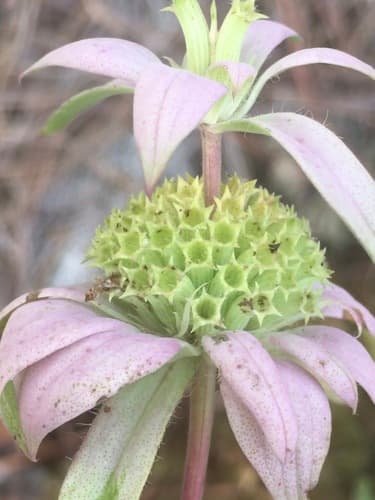
Monarda punctata is a full sun forb that blooms from July through September, tolerating low water and sandy, well drained soils while attracting bees, butterflies, and moths.
Toxicity unknown
Spotted Beebalm (Monarda punctata) is not listed by the ASPCA Animal Poison Control Center (opens in new tab) or the other sources we check, so we have no verdict for it either way. Absence from those lists is not a clearance. If your pet shows symptoms after eating any plant, call the ASPCA at (888) 426-4435.
Light
full sun
Water
low
Size
24"–36" H × 6"–12" W
Bloom
Mar, Apr, May, Jun, Jul, Aug
Native to
AL, AR, CT, FL and 25 more states
Pollinators
bees, butterflies, moths, nectar insects
Deer
Resistant (per Prairie Moon Nursery)
Before you buy
Your city may pay you to plant this
Cities and water utilities offer rebates for replacing lawn with native and water-wise plants. We track 459 programs across 44 states, each with a link to the provider and the date we last checked it.
Find rebates in your areaPicture natives in your own yard
Upload a photo of your yard and Patch Vision shows a rendering of it planted with natives for your region, like Spotted Beebalm.


Browse plants for this ecoregion
Horse-mint is a drought-tolerant native wildflower with distinctive tiered clusters of small tubular flowers surrounded by showy white or pale green bracts. The aromatic foliage and long summer bloom period make it valuable for pollinator gardens. Plants may self-seed in ideal conditions but are not typically aggressive spreaders.
Growing Spotted Beebalm
Grow Spotted Beebalm in full sun and low water. Mature plants reach 24 to 36 inches tall and spread 6 to 12 inches wide. Expect low maintenance to keep it looking intentional in a front yard.
How to care for Spotted Beebalm, by region
How to care for Spotted Beebalm where it is actually grown: year-round basics plus what to do each season, region by region, with the sources for each.
Care guidance last updated: October 2026
Cross Timbers (includes Fort Worth, TX)
Year-round
Spotted beebalm is a Texas native wildflower in the mint family, known for whorls of pale yellow, purple-spotted blooms and a strong oregano-like smell.
- It's native to the Cross Timbers and Blackland Prairie regions of North Texas, so it belongs in a native or pollinator garden here.
- Give it full sun and dry to average, well-drained soil. Sandy or loamy soil is best, but it can handle clay if drainage is decent.
- Bees, butterflies, and other pollinators visit it a lot, and it's a larval host for a couple of moth species.
- It's short-lived, often acting more like a two-year plant than a long-term perennial, but it reseeds easily so a patch usually keeps itself going.
- Powdery mildew can show up in humid, still air. Good spacing and plenty of sun help keep it off the leaves.
- ASPCA does not have a listing for this specific plant, so we can't say for sure whether it's toxic to dogs or cats. Keep new plants out of reach of pets until you know more.
Fall
Fall is when blooming winds down and the plant sets seed for next year's patch.
- Flowering tapers off through fall. Let some seed heads mature if you want the patch to fill back in on its own next year.
- A light fall cutback gives a tidier look, but leaving a few stems standing gives insects a place to shelter over winter.
- This plant often only lives a year or two, so don't be surprised if older plants fade out even as new seedlings take their place.
- Cut back on watering as temperatures drop. Let the soil dry out some between waterings.
A light fall cutback gives a tidy look through winter, though leaving some stems up is better for the moths that use this plant.
Winter
Winter is dormant season. The plant dies back to the ground and there's little to do.
- Foliage dies back after hard freezes. That's normal for this plant, not a sign of a problem.
- Leave the dried stems standing through winter if you can. They shelter overwintering pollinators and the moth larvae that use this plant.
- No watering or fertilizing needed while it's dormant.
- New growth comes back from the roots or from self-sown seedlings once the weather warms up in spring.
Leaving dried stems up over winter is less tidy than a full cutback, but it supports the moths that use this plant. A fall cutback covers the tidy look if that matters more to you.
Spring
Spring is when new growth comes up, either from an established crown or from last year's self-sown seedlings.
- New shoots show up in mid to late spring. Thin out crowded seedlings now if you want fewer, sturdier plants instead of one dense patch.
- Keep soil evenly moist while young plants are establishing, then ease off once they're growing well.
- Skip the fertilizer. Rich soil tends to make this plant floppy and more prone to mildew.
- If old dried stems from last year are still standing, this is a good time to cut them back and clear space for new growth.
Cutting back last year's dried stems now keeps a front bed tidy as new growth starts.
Summer
Summer is bloom season, when spotted beebalm puts on its main flower show and pulls in pollinators.
- Blooms run through summer into fall, with pale yellow, purple-spotted flowers stacked in whorls up the stem.
- It's drought tolerant once established, but an occasional deep soak in the hottest stretches keeps flowering going strong.
- Deadhead spent flower spikes to keep new blooms coming and to control how much it reseeds.
- Check the base of the plant for powdery mildew after humid weather. Space plants out and water the soil, not the leaves.
Deadheading spent blooms through summer keeps the plant looking tidy instead of leggy in a front-yard bed.
Sources: Native Plant Society of Texas - Monarda punctata, Lady Bird Johnson Wildflower Center - Monarda punctata, ASPCA Toxic and Non-Toxic Plant List - Dogs, ASPCA Toxic and Non-Toxic Plant List - Cats, NC State Extension - Monarda
Northern Piedmont (includes Lancaster, PA)
Year-round
Horse-mint likes full sun and well-drained soil. Water it lightly and it mostly takes care of itself.
- Give it full sun. Part shade works but it may flop and get more mildew.
- Pick sandy or loamy soil that drains well. Skip rich soil and heavy mulch against the stems.
- Once settled, it handles dry spells. A deep drink in long dry stretches keeps it blooming longer.
- Space plants for airflow. Crowding invites powdery mildew.
Fall
Fall is for seed and cleanup. Easy chores keep it healthy for next year.
- Collect seed in September or October if you want more plants.
- Sow untreated seed in fall right where you want it.
- Stop fertilizing and cut back watering as nights cool.
- Leave stems standing a while, then cut them back before winter if you prefer tidy beds.
If beds face the street, cut stems back once flowers fade for a neat look.
Winter
In winter the plant rests. Your job is mostly to leave it alone.
- Do not water. Rain and snow are enough, and wet cold soil can rot roots.
- Skip heavy mulch piled on the crown.
- It is rated for cold zones 3 to 8, so Lancaster winters are fine.
- Plan any division or cutting back for early spring.
Spring
Spring is the time to plant, divide, and tidy up as new growth appears.
- Cut old stems to the ground as fresh shoots show in Lancaster's cool spring.
- Plant or divide clumps now so roots settle before summer heat.
- Water new plants about once a week for the first season, then ease off.
- Sow stratified seed in spring if you grow from seed.
Summer
Summer is bloom season. Keep water light and watch for mildew in humid weather.
- Water deeply during hot dry weeks. Skip it when rain has been regular.
- Water at the base in the morning so leaves stay dry.
- Remove spent flowers to tidy the plant and extend bloom.
- Thin crowded stems if you see white powder on leaves.
Sources: Lady Bird Johnson Wildflower Center - Monarda punctata, NC State Extension Plant Toolbox - Monarda punctata
Ridge and Valley (includes Harrisburg, PA)
Year-round
Spotted beebalm wants full sun and soil that drains well. It handles dry spells once settled in, but it is short-lived and can get powdery mildew, so airflow matters.
- Give it 6 or more hours of direct sun. Part shade works too.
- Plant in well-drained loam or sandy soil. Heavy clay that stays soggy is a poor fit.
- Space plants so air moves between them. Crowding invites powdery mildew and rust.
- Let some seed drop in fall so new plants can replace older ones.
Cut back spent stalks in late fall so beds read as intentional.
Fall
Fall is the time to collect or scatter seed and to plant. Seed can be gathered in September or October.
- Collect seed in September or October if you want to start more plants.
- Untreated seed sown in fall can sprout the next spring.
- Water new fall plantings until the ground freezes if rain is scarce.
Winter
Plants die back and rest through Harrisburg winters. Little to do except leave them alone.
- No watering is needed while the ground is frozen.
- Cut dead stalks back to the ground before new growth starts in early spring.
- Mark the spot so you do not dig it up by mistake.
Cutting stalks to the ground once they brown keeps the bed looking intentional.
Spring
Spring is a good window to plant or divide in Harrisburg, PA. New growth needs little beyond a bit of water while roots settle.
- Water new plants about once a week for the first few weeks if rain is light.
- Established plants rarely need extra water in spring.
- Thin crowded clumps to give each stem room and airflow.
Summer
Harrisburg summers are hot and humid, which is when mildew shows up. Steady water in dry stretches keeps plants fresh and blooming longer.
- Water deeply during dry spells. Stressed plants get more disease.
- Water the soil, not the leaves, and do it in the morning.
- Snip spent flowers to tidy the plant and possibly extend bloom.
- Prune a few stems if the clump looks packed, to improve airflow.
Deadheading spent blooms along a front walk keeps the bed looking tended.
Sources: Lady Bird Johnson Wildflower Center: Monarda punctata, NC State Extension Gardener Plant Toolbox: Monarda punctata
Texas Blackland Prairies (includes Dallas, TX)
Year-round
Spotted beebalm is a Texas native wildflower in the mint family, known for whorls of pale yellow, purple-spotted blooms and a strong oregano-like smell.
- It's native to the Cross Timbers and Blackland Prairie regions of North Texas, so it belongs in a native or pollinator garden here.
- Give it full sun and dry to average, well-drained soil. Sandy or loamy soil is best, but it can handle clay if drainage is decent.
- Bees, butterflies, and other pollinators visit it a lot, and it's a larval host for a couple of moth species.
- It's short-lived, often acting more like a two-year plant than a long-term perennial, but it reseeds easily so a patch usually keeps itself going.
- Powdery mildew can show up in humid, still air. Good spacing and plenty of sun help keep it off the leaves.
- ASPCA does not have a listing for this specific plant, so we can't say for sure whether it's toxic to dogs or cats. Keep new plants out of reach of pets until you know more.
Fall
Fall is when blooming winds down and the plant sets seed for next year's patch.
- Flowering tapers off through fall. Let some seed heads mature if you want the patch to fill back in on its own next year.
- A light fall cutback gives a tidier look, but leaving a few stems standing gives insects a place to shelter over winter.
- This plant often only lives a year or two, so don't be surprised if older plants fade out even as new seedlings take their place.
- Cut back on watering as temperatures drop. Let the soil dry out some between waterings.
A light fall cutback gives a tidy look through winter, though leaving some stems up is better for the moths that use this plant.
Winter
Winter is dormant season. The plant dies back to the ground and there's little to do.
- Foliage dies back after hard freezes. That's normal for this plant, not a sign of a problem.
- Leave the dried stems standing through winter if you can. They shelter overwintering pollinators and the moth larvae that use this plant.
- No watering or fertilizing needed while it's dormant.
- New growth comes back from the roots or from self-sown seedlings once the weather warms up in spring.
Leaving dried stems up over winter is less tidy than a full cutback, but it supports the moths that use this plant. A fall cutback covers the tidy look if that matters more to you.
Spring
Spring is when new growth comes up, either from an established crown or from last year's self-sown seedlings.
- New shoots show up in mid to late spring. Thin out crowded seedlings now if you want fewer, sturdier plants instead of one dense patch.
- Keep soil evenly moist while young plants are establishing, then ease off once they're growing well.
- Skip the fertilizer. Rich soil tends to make this plant floppy and more prone to mildew.
- If old dried stems from last year are still standing, this is a good time to cut them back and clear space for new growth.
Cutting back last year's dried stems now keeps a front bed tidy as new growth starts.
Summer
Summer is bloom season, when spotted beebalm puts on its main flower show and pulls in pollinators.
- Blooms run through summer into fall, with pale yellow, purple-spotted flowers stacked in whorls up the stem.
- It's drought tolerant once established, but an occasional deep soak in the hottest stretches keeps flowering going strong.
- Deadhead spent flower spikes to keep new blooms coming and to control how much it reseeds.
- Check the base of the plant for powdery mildew after humid weather. Space plants out and water the soil, not the leaves.
Deadheading spent blooms through summer keeps the plant looking tidy instead of leggy in a front-yard bed.
Sources: Native Plant Society of Texas - Monarda punctata, Lady Bird Johnson Wildflower Center - Monarda punctata, ASPCA Toxic and Non-Toxic Plant List - Dogs, ASPCA Toxic and Non-Toxic Plant List - Cats, NC State Extension - Monarda
In an HOA neighborhood
Spotted Beebalm takes more care to keep looking intentional in a front yard. Maintenance level: low. Consider it for backyard or mid-zone beds rather than the street edge.
Works well in: backyard only.
- Wildflower appearance may be considered too informal
- Can look sparse or weedy when not in bloom
- Self-seeding nature may concern maintenance-focused HOAs
Wildlife value
Excellent nectar source for native bees, butterflies, and moths throughout the summer blooming period. The seeds also provide food for birds in fall.
Common questions
- When does Monarda punctata bloom?
- Horsemint typically flowers from July through September, producing tiered whorls of pale yellow, purple spotted blooms set beneath showy pink and cream bracts.
- What pollinators visit Monarda punctata?
- Bees, butterflies, and moths regularly visit the flowers for nectar, making it a useful plant for pollinator gardens.
- What growing conditions does Monarda punctata need?
- It grows best in full sun and prefers sandy, well drained soils, the kind of open, dry ground found in meadows and roadside habitats.
- How much water does horsemint need?
- Once established, it needs relatively little water and handles dry spells well, making it a good fit for low maintenance or drought prone sites.
- Is Spotted Beebalm HOA-friendly?
- Spotted Beebalm takes more care to look intentional in a front yard. Consider it for backyard or mid-zone beds rather than the street edge.
These answers were drafted with an AI model from this plant's data. Verify care details with a local expert.
Native range data from vouchered herbarium specimen records and regional native plant society lists. Pollinator and host plant associations compiled from GBIF, iNaturalist, and published ecological literature.
If something looks wrong
Common plant problems, and what to check first
These come up on almost any plant. Each guide lists the likely causes in the order they are worth ruling out, with one thing to check before you act on any of them, and links to the source it came from.
- It is dying right after planting
- Leaves turning yellow
- Wilting even though I watered it
- Brown crispy leaf tips
- Bugs on the plant
Ready to grow Spotted Beebalm? Add it to your garden in Pollinator Patch to track it and get season-by-season care guidance.