Narrowleaf Four O'clock
Mirabilis linearis
Last reviewed: October 2026
Toxicity unknown
Narrowleaf Four O'clock (Mirabilis linearis) is not listed by the ASPCA Animal Poison Control Center (opens in new tab) or the other sources we check, so we have no verdict for it either way. Absence from those lists is not a clearance. If your pet shows symptoms after eating any plant, call the ASPCA at (888) 426-4435.
Light
full sun
Water
low
Size
30"–48" H × 30"–48" W
Bloom
Mar, Apr, May, Jun, Jul, Aug
Native to
AZ, CA, CO, KS and 12 more states
Pollinators
bees, butterflies, moths, nectar insects
Before you buy
Your city may pay you to plant this
Cities and water utilities offer rebates for replacing lawn with native and water-wise plants. We track 459 programs across 44 states, each with a link to the provider and the date we last checked it.
Find rebates in your areaPicture natives in your own yard
Upload a photo of your yard and Patch Vision shows a rendering of it planted with natives for your region, like Narrowleaf Four O'clock.


Browse plants for this ecoregion
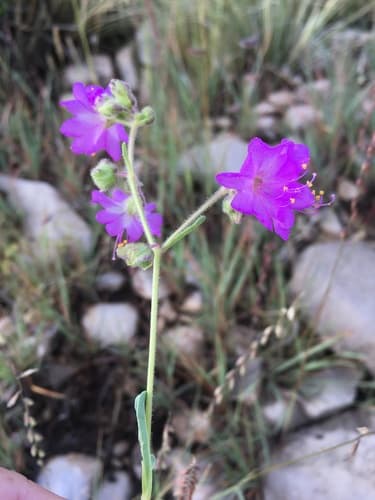
Narrowleaf four o'clock is a compact perennial wildflower with slender leaves and small tubular flowers that open in late afternoon. This drought-tolerant native produces blooms from June through September in shades of pink, purple, or white. The plant forms neat, low mounds that work well in sunny, dry locations.
How to care for Narrowleaf Four O'clock, by region
How to care for Narrowleaf Four O'clock where it is actually grown: year-round basics plus what to do each season, region by region, with the sources for each.
Care guidance last updated: September 2026
Eastern Corn Belt Plains (includes Columbus, OH)
Year-round
Narrowleaf Four O'clock is native to the Great Plains and dry western states, not to Ohio or the Columbus area. It is a low, sprawling perennial that grows from a deep taproot and opens white to pink flowers in late afternoon and evening. In a Columbus garden it is grown as an ornamental xeric novelty, and the main care challenge is that it comes from a much drier climate than central Ohio's humid, clay-heavy soil, so drainage matters more here than it would in its native range.
- Give it full sun and the best-draining spot you have, it comes from dry western prairies, not humid Ohio clay
- It grows from a deep taproot and does not transplant well once established, choose its permanent spot the first year
- Water only when the top few inches of soil are dry, overwatering in Columbus's regular rainfall is the main way this plant fails here
- Keep pets from chewing the roots and foliage, a close relative in the same four o'clock genus, Mirabilis jalapa, is documented as toxic to dogs and cats
Fall
As nights cool and Columbus gets its first fall frost, the top growth will blacken and die back to the ground. The taproot itself survives underground through central Ohio winters, so leave it in place rather than digging it up. Do not move or divide it in fall, the root is deep and brittle and disturbing it now can kill the plant before winter.
- After a hard frost blackens the foliage, cut the dead top growth back to a few inches instead of pulling the whole plant
- Do not dig up or move the taproot in fall, it is deep and brittle and disturbing it now risks killing the plant before winter
- Skip fall fertilizer, it pushes tender new growth right before frost that just dies back anyway
- A light layer of mulch over the root crown after cutback helps buffer Columbus's freeze-thaw cycles, which are harsher than this plant's native western winters
Cutting the blackened stems back to a tidy stub after frost keeps the front bed looking intentional through fall cleanup season, which is HOA-friendly.
Winter
This plant is dormant in winter and needs nothing above ground. The bigger risk in Columbus is wet, slow-draining soil freezing and thawing around the taproot, a condition its native dry western range rarely puts it through.
- Do not water in winter, the dormant root wants the soil on the dry side, not wet from sitting snowmelt
- If a bed drains slowly you will see it in winter, standing water or ice over the root zone is the main way this plant is lost in Ohio
- Leave the cut-back stems and mulch in place, there is nothing to prune or feed until new growth appears in late spring
- If winter dieback looks worse than expected, wait until late spring before assuming it is dead, this plant can be slow to resprout even in its native range
Spring
Wait until after Columbus's last spring frost and until the soil has dried out from spring rain before planting or moving divisions. Central Ohio's clay holds water and stays cold longer than the dry, rocky, or sandy ground this plant grows in naturally, so spring is the time to fix drainage before growth takes off. New shoots from the taproot can be slow to emerge here compared to its native western range.
- Wait to plant until after the last spring frost and until spring rain has drained through the bed
- Work coarse sand or fine gravel into heavy clay before planting so water moves away from the taproot
- New growth from the taproot can emerge later here than in its native western range, do not assume it died over winter
- Skip fertilizer at planting, rich wet spring soil encourages soft growth that struggles once Columbus's humid summer arrives
Summer
Summer heat is when this plant is happiest, since it comes from hot dry prairies, but Columbus's humid summer rain is the main risk here. Flowers typically open in late afternoon and stay open into the evening, closing again by the next morning, which is where the common name comes from.
- Let the soil dry between waterings, in a normal Columbus summer this plant usually needs no supplemental water at all
- Flowers open in late afternoon and evening and close by the next morning, plant it somewhere you use the yard in the evening
- Good air movement around the base helps foliage dry out fast after summer thunderstorms and lowers the chance of rot
- Deadheading is optional, it does not change bloom timing much for this species
Sources: Mirabilis linearis (Narrowleaf four o'clock), Native Plant Database, Lady Bird Johnson Wildflower Center, Four O'Clock (Mirabilis jalapa) toxicity, Pet Poison Helpline
In an HOA neighborhood
Narrowleaf Four O'clock takes more care to keep looking intentional in a front yard. Maintenance level: low. Consider it for backyard or mid-zone beds rather than the street edge.
Works well in: backyard only.
- May be perceived as too wild or weedy for front yard use
- Evening-blooming flowers may not provide daytime visual appeal
- Native wildflower appearance conflicts with traditional landscaping expectations
Wildlife value
The flowers attract bees, butterflies, and night-flying moths with their nectar. The evening blooming habit makes this particularly valuable for sphinx moths and other nocturnal pollinators.
Common questions
- How much sun does Narrowleaf Four O'clock need?
- Narrowleaf Four O'clock grows best in full sun conditions.
- When does Narrowleaf Four O'clock bloom?
- Narrowleaf Four O'clock blooms in March, April, May, June, July, and August.
- Where is Narrowleaf Four O'clock native?
- Narrowleaf Four O'clock (Mirabilis linearis) is native to AZ, CA, CO, KS and 12 more states, per vouchered herbarium specimen records and regional native plant society lists.
- What pollinators does Narrowleaf Four O'clock attract?
- Narrowleaf Four O'clock draws bees, butterflies, moths, and nectar insects.
- Is Narrowleaf Four O'clock HOA-friendly?
- Narrowleaf Four O'clock takes more care to look intentional in a front yard. Consider it for backyard or mid-zone beds rather than the street edge.
Native range data from vouchered herbarium specimen records and regional native plant society lists. Pollinator and host plant associations compiled from GBIF, iNaturalist, and published ecological literature.
If something looks wrong
Common plant problems, and what to check first
These come up on almost any plant. Each guide lists the likely causes in the order they are worth ruling out, with one thing to check before you act on any of them, and links to the source it came from.
- It is dying right after planting
- Leaves turning yellow
- Wilting even though I watered it
- Brown crispy leaf tips
- Bugs on the plant
Ready to grow Narrowleaf Four O'clock? Add it to your garden in Pollinator Patch to track it and get season-by-season care guidance.