Blue Elderberry
Sambucus nigra ssp. caerulea
Last reviewed: September 2026
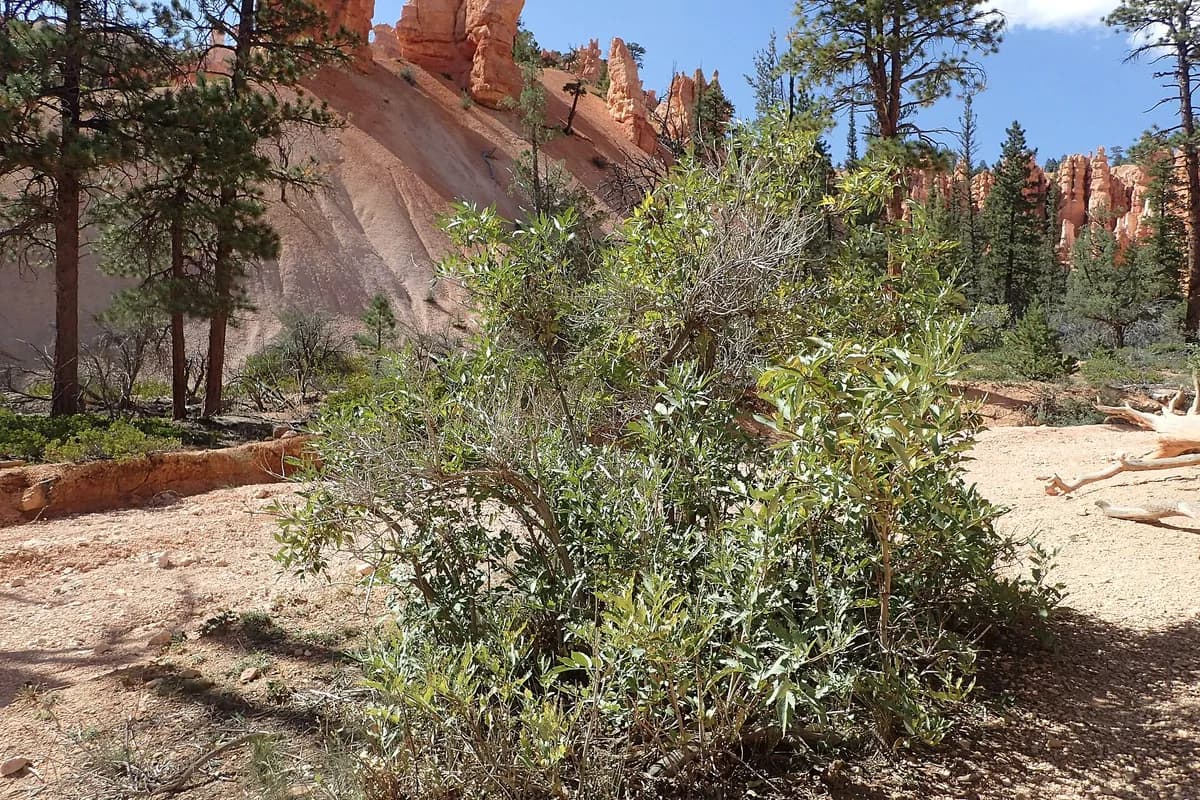
Blue elderberry is a fast growing, part sun shrub often found along California streambanks and woodland edges, with creamy white flower clusters blooming from May through July.
Toxicity unknown
Blue Elderberry (Sambucus nigra ssp. caerulea) is not listed by the ASPCA Animal Poison Control Center (opens in new tab) or the other sources we check, so we have no verdict for it either way. Absence from those lists is not a clearance. If your pet shows symptoms after eating any plant, call the ASPCA at (888) 426-4435.
Blue Elderberry is listed as toxic to grazing livestock such as cattle, sheep, and goats at a moderate level by the USDA PLANTS Database (opens in new tab). This is a livestock indicator and is separate from pet toxicity.
Light
part sun
Water
medium
Size
96"–240" H × 96"–240" W
Bloom
May, Jun, Jul
Native to
CA
Pollinators
bees, butterflies, beetles
Before you buy
Your city may pay you to plant this
Cities and water utilities offer rebates for replacing lawn with native and water-wise plants. We track 459 programs across 44 states, each with a link to the provider and the date we last checked it.
Find rebates in your areaPicture natives in your own yard
Upload a photo of your yard and Patch Vision shows a rendering of it planted with natives for your region, like Blue Elderberry.


Browse plants for this ecoregion
Blue elderberry is a large native shrub with attractive clusters of small white flowers followed by blue-black berries. It grows quickly to form a substantial screen or backdrop with its spreading form and compound leaves.
Growing Blue Elderberry
Grow Blue Elderberry in part sun and medium water. Mature plants reach 96 to 240 inches tall and spread 96 to 240 inches wide. Expect moderate maintenance to keep it looking intentional in a front yard.
How to care for Blue Elderberry, by region
How to care for Blue Elderberry where it is actually grown: year-round basics plus what to do each season, region by region, with the sources for each.
Care guidance last updated: July 2026
Central California Valley (includes Sacramento, CA)
Year-round
Blue Elderberry is a big, tough native shrub that can grow into a small tree, with creamy white flower clusters in late spring and blue berries the birds love. In the Sacramento Valley it wants a fall planting, deep soaking only while it gets established, and then very little summer water once its roots are down.
- Plant it in fall (October or November) so the winter rains soak in and grow deep roots before the first dry summer, this is the right window in the Central Valley, not spring or summer.
- Give it room, a mature Blue Elderberry can reach 10 to 25 feet wide and tall, so set it away from the house and fences.
- On Sacramento's heavy clay, plant it on a slight mound so water drains away from the crown and roots do not sit wet and rot.
- Water deeply but rarely (a slow soak, then let it dry out) only through the first summer or two, then wean it off, an established plant needs little to no summer water on the valley floor.
Fall
Fall is the prime planting season in the Sacramento Valley, and the best time to put a new Blue Elderberry in the ground. Planting now, timed to the first rains, lets roots settle in over winter before next summer's drought.
- Plant now (October into November), as the first rains arrive, so winter moisture establishes the roots before the dry season, this is the ideal Central Valley planting window.
- On heavy valley clay, set the root ball on a slight mound and backfill with native soil, do not dig a bowl that traps water around the crown.
- Give a good soaking-in watering at planting, then let the coming winter rains take over rather than watering on a schedule.
- Add a ring of coarse mulch a few inches back from the trunk to hold fall moisture and keep weeds down, keep the mulch off the crown itself.
A fall-planted elderberry with a tidy mulch ring and a clean bed edge reads as an intentional, cared-for planting from the curb. Staking it straight and defining the bed line keeps a young, sparse shrub from looking like a stray volunteer to an HOA.
Winter
Winter is the valley's cool, wet growing season, not a dead dormant time, and the winter rains do almost all the watering for you. Blue Elderberry may drop leaves in a cold snap but its roots keep working under the rain and fog.
- Let the winter rains handle the watering, in a normal wet Sacramento winter you should not need to add supplemental water at all.
- Do your structural pruning now while it is leafless and dormant-looking, shape it or remove crossing branches before the spring flush.
- Check that water drains away and does not pond at the base during heavy rain, on clay a slight mound and pulled-back mulch keep the crown from sitting wet.
- Mild frost and Tule fog are normal, some leaf drop in a freeze is fine, do not overwater to compensate, just let it rest and rebound in spring.
A leafless winter elderberry can look bare, so a clean bed edge and a neat mulch ring keep it reading as a dormant, intentional planting rather than a dead shrub to an HOA. A quick structural prune for a balanced silhouette also keeps the winter look tidy from the street.
Spring
Spring is when Blue Elderberry leafs out fast and pushes its big creamy white flower clusters, usually May into summer, while the soil is still moist from winter rain. This is the season it feeds bees and butterflies and sets the berries birds will eat.
- Let the soil ride on the moisture left from winter rain, in a normal Sacramento spring you do not need to add water yet as it warms up.
- Enjoy the creamy white bloom (May to July) and leave the flowers alone, they feed bees and butterflies and turn into the blue berries that birds eat.
- If you want a shrubbier shape or fresh flowering wood, do any hard pruning in late winter before the flush, not mid spring while it is actively blooming.
- Watch drainage after late spring rains on clay, if water pools at the base, pull mulch back off the crown so it does not stay soggy.
A spring elderberry in full leaf and creamy bloom reads as a healthy, intentional planting to neighbors and an HOA. Keep a clean, defined edge around its base and a mulched ring so the big shrub looks placed on purpose rather than volunteer.
Summer
Summer in the valley is hot and bone dry, and an established Blue Elderberry wants little to no water now. The single biggest mistake here is soaking a settled native all summer, which invites crown and root rot.
- For an established plant (in the ground more than a year or two), give little or no summer water, it is built for the valley's dry summer and too much water is the number one killer.
- If it is a first-summer plant, water deeply but infrequently, a slow soak every couple of weeks, then let the top of the soil dry before the next one.
- Ripe blue berries appear in summer, cooked ripe fruit is what people use in syrup, but do not eat the berries, leaves, or stems raw, they contain cyanogenic compounds and are toxic raw per the ASPCA Animal Poison Control Center plant database.
- Keep water and mulch off the trunk base, standing summer moisture on the crown in heavy clay is what triggers rot, so err on the dry side.
Sources: Calscape, California Native Plant Society, Blue Elderberry (Sambucus nigra ssp. caerulea), Las Pilitas Nursery, Sambucus mexicana, Blue Elderberry growing notes, UC Master Gardener, fall planting of California natives in the Central Valley, ASPCA Animal Poison Control Center, Elderberry (Sambucus) toxic plant listing, Xerces Society, elderberry as a pollinator and beneficial-insect plant, UC Davis Arboretum, California native winter care and dormancy
In an HOA neighborhood
Blue Elderberry is an HOA-friendly choice in the right placement. Maintenance level: moderate. Tidiness: 3 out of 5.
Works well in: foundation, mid zone.
- Can grow very large (8-20 feet) if not pruned regularly
- May look unkempt during winter dormancy
- Berries can cause staining on hardscapes
Wildlife value
Host plant for mourning cloak butterfly.
Blue elderberry attracts numerous pollinators including bees, butterflies, and beetles to its flowers, while birds eagerly consume the berries. The plant provides excellent nesting habitat for birds.
Common questions
- When does blue elderberry bloom?
- Blue elderberry generally blooms from May through July, producing large flat clusters of small white flowers.
- What pollinators visit blue elderberry?
- Bees, butterflies, and beetles commonly visit the flowers for nectar and pollen.
- How much water does blue elderberry need?
- It grows best with medium moisture but can handle both wetter streamside conditions and drier upland sites once it is established.
- What light conditions suit blue elderberry?
- It grows best in part sun and also tolerates full sun or part shade, depending on soil moisture and local climate.
- Is Blue Elderberry toxic to livestock?
- Blue Elderberry is listed as toxic to grazing livestock such as cattle, sheep, and goats (moderate severity) by the USDA PLANTS Database. This is separate from pet (dog and cat) toxicity.
- Is Blue Elderberry HOA-friendly?
- Blue Elderberry is generally an HOA-friendly choice in the right placement, with moderate maintenance.
These answers were drafted with an AI model from this plant's data. Verify care details with a local expert.
Native range data from vouchered herbarium specimen records and regional native plant society lists. Pollinator and host plant associations compiled from GBIF, iNaturalist, and published ecological literature.
If something looks wrong
Common plant problems, and what to check first
These come up on almost any plant. Each guide lists the likely causes in the order they are worth ruling out, with one thing to check before you act on any of them, and links to the source it came from.
- It is dying right after planting
- Leaves turning yellow
- Wilting even though I watered it
- Brown crispy leaf tips
- Bugs on the plant
Ready to grow Blue Elderberry? Add it to your garden in Pollinator Patch to track it and get season-by-season care guidance.