Showy Goldeneye
Heliomeris multiflora
Last reviewed: September 2026
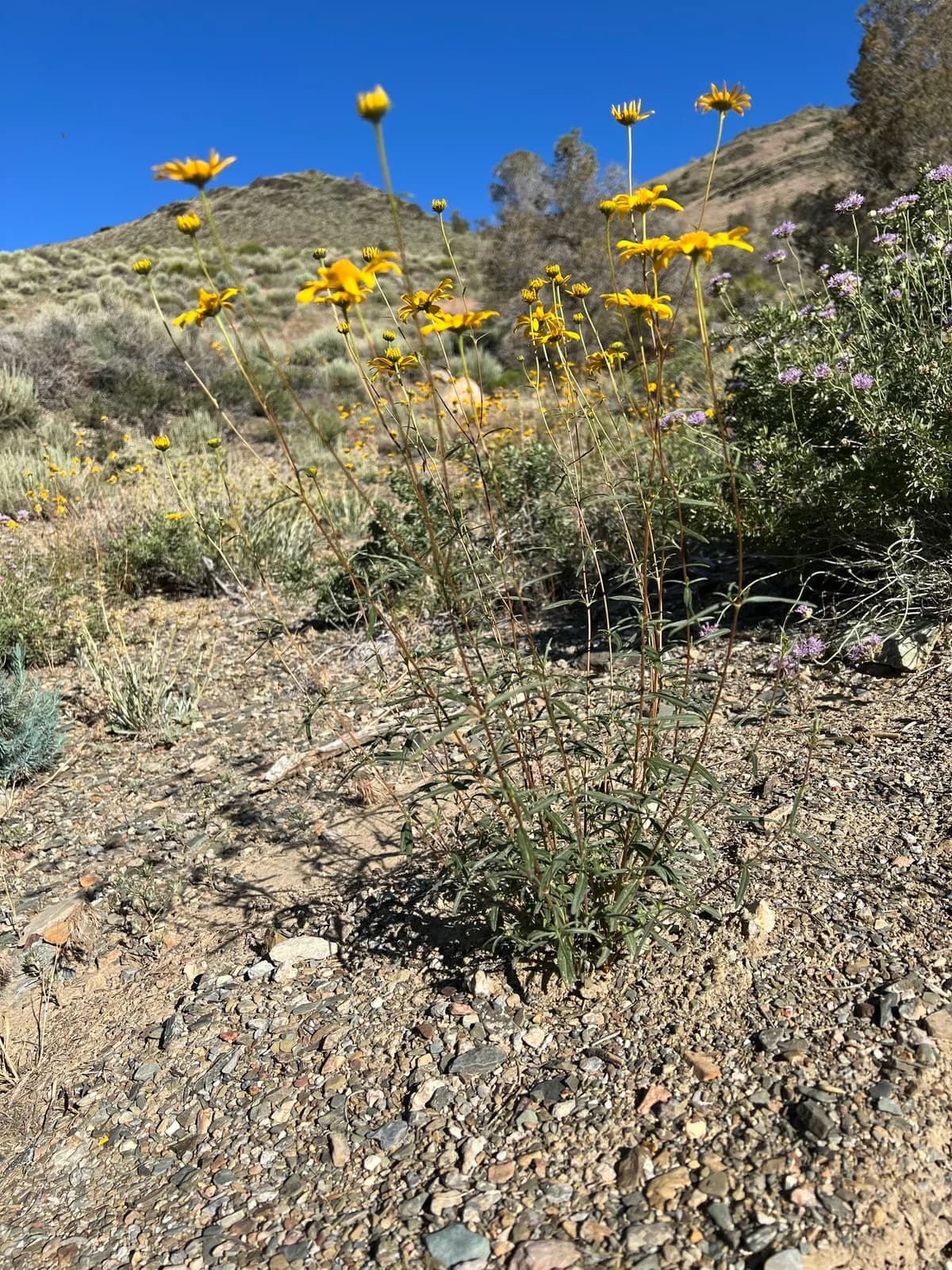
Showy Goldeneye is a sun loving forb that blooms bright yellow from June through September, thriving on dry meadows and rocky slopes throughout the Rocky Mountain and Southwest region.
Toxicity unknown
Showy Goldeneye (Heliomeris multiflora) is not listed by the ASPCA Animal Poison Control Center (opens in new tab) or the other sources we check, so we have no verdict for it either way. Absence from those lists is not a clearance. If your pet shows symptoms after eating any plant, call the ASPCA at (888) 426-4435.
Light
full sun
Water
low
Size
12"–36" H × 12"–24" W
Bloom
Jun, Jul, Aug, Sep
Native to
AZ, CA, CO, ID and 6 more states
Pollinators
bees, butterflies
Before you buy
Your city may pay you to plant this
Cities and water utilities offer rebates for replacing lawn with native and water-wise plants. We track 459 programs across 44 states, each with a link to the provider and the date we last checked it.
Find rebates in your areaPicture natives in your own yard
Upload a photo of your yard and Patch Vision shows a rendering of it planted with natives for your region, like Showy Goldeneye.


Browse plants for this ecoregion
Showy goldeneye produces bright yellow daisy-like flowers from June through September on compact, bushy plants. This drought-tolerant perennial thrives in full sun and requires minimal watering once established. The plants go dormant in winter, dying back to the ground before returning in spring.
Growing Showy Goldeneye
Grow Showy Goldeneye in full sun and low water. Mature plants reach 12 to 36 inches tall and spread 12 to 24 inches wide. Expect low maintenance to keep it looking intentional in a front yard.
How to care for Showy Goldeneye, by region
How to care for Showy Goldeneye where it is actually grown: year-round basics plus what to do each season, region by region, with the sources for each.
Care guidance last updated: August 2026
Middle Rockies (includes Missoula, MT)
Year-round
Showy goldeneye is a sun loving perennial wildflower native to Montana, including the aspen slopes and open montane habitat around Missoula. It puts on a long run of golden yellow, daisy like blooms from midsummer into fall and asks for almost nothing once it settles in.
- USDA confirms this species as native across the Lower 48, and Montana's own Natural Heritage Program lists it as a native (though uncommon) wildflower of aspen woodlands and open slopes, the same habitat type found around Missoula.
- Give it full sun and well drained soil. It does not tolerate wet, heavy ground and prefers sandy, rocky, or loamy sites.
- Mature plants reach roughly two to four feet tall and spread by seed if not deadheaded.
- It is a strong pollinator plant. Several native bumble bee species documented in Montana visit the flowers, along with sweat bees, mining bees, and butterflies.
- This is a low input plant once it is a season or two old. It thrives on natural precipitation in most years and does not need regular fertilizing.
Fall
Blooms can carry into September and October in a mild year, but Missoula's first hard frost risk starts around mid September, so expect the season to end earlier here than it would further south. Decide now whether you want to deadhead or leave seed heads standing.
- Bloom can continue into September and even October, but Missoula's first frost risk begins around September 16, and a hard frost will end the bloom for the year.
- Deadhead spent flowers through early fall if you want to limit self seeding and keep the plant from spreading into nearby beds.
- If you would rather feed birds through winter, leave the seed heads standing after the last bloom instead of cutting the plant back now.
- This is a good window to direct seed for next year if you want more plants. Fall seeding needs no special treatment before winter.
Deadheading spent blooms through early fall keeps the plant compact and tidy if a full bed of standing seed heads reads as unkempt to a front-yard-facing HOA.
Winter
Showy goldeneye goes fully dormant through Missoula's cold, snowy winters and does not need any protection. This species is hardy well into colder zones than USDA zone 5a/5b, so leaving it alone is the right call.
- The plant dies back to the ground and goes dormant for winter. No mulching or wrapping is needed. It is hardy in zones well below Missoula's USDA 5a/5b rating.
- If you left seed heads standing in fall, they provide food for birds through the winter and some winter structure in the bed.
- Snow cover over the dormant crown is a plus, not a concern, in the Missoula area.
- Wait until early spring to cut back any remaining dried stems rather than doing it now. Standing stems give overwintering insects a place to shelter.
A stand of dried seed heads through winter is a deliberate low-maintenance look, not neglect, if you want to explain it to a neighbor or HOA board.
Spring
Missoula's last frost usually lands in mid to late May, so showy goldeneye starts slow this time of year. Clear last year's dried stems before new growth comes up and hold off on watering until the plant is actively growing.
- Cut old stems down to the ground in early spring, before new growth emerges from the base.
- New growth typically does not show up until after Missoula's average last frost (around May 15 to 20), so do not worry if the bed looks bare into May.
- If you are starting new plants from seed, direct seeding in spring works well here. Seeds germinate without any cold stratification needed.
- Hold off on supplemental watering until the plant is clearly growing. Overwatering young growth in cool, wet spring soil can encourage rot.
- This species is hardy well beyond Missoula's USDA zone 5a/5b winters, so no frost protection is needed for established plants.
Clearing last year's dried stems in early spring keeps the front bed looking tended before new growth fills in.
Summer
Summer is when showy goldeneye earns its name, blooming steadily through Missoula's short, warm growing season. It handles the region's dry summer stretches well once established and needs little from you besides the occasional deep watering.
- Bloom typically starts in July and runs into fall, one of the longer bloom windows among Rocky Mountain natives.
- Once established, this plant needs no regular irrigation in a normal precipitation year in the Missoula area. During an extended dry stretch, a deep monthly watering is enough.
- Pinching stem tips back by about a third in early summer can extend the bloom period by delaying peak flowering slightly, if you want blooms to run later into fall.
- It is a good source of nectar for native bees through the heat of summer, including several bumble bee species documented in western Montana.
- Avoid rich, regularly fertilized soil. It flowers best in the same lean, dry conditions it grows in naturally on open slopes.
Sources: USDA PLANTS Database, Heliomeris multiflora profile, Lady Bird Johnson Wildflower Center, Heliomeris multiflora, Montana Field Guide (Montana Natural Heritage Program), Many-flowered Viguiera, plantnative.org, Showy Goldeneye growing guide, Almanac.com, Frost Dates for Missoula, MT (community tip), US Forest Service Treesearch, Showy goldeneye (Heliomeris multiflora)
In an HOA neighborhood
Showy Goldeneye is an HOA-friendly choice. Maintenance level: low. Tidiness: 3 out of 5.
Works well in: mid zone, foundation.
- Can look weedy when dormant
- May spread more than expected
Wildlife value
The long blooming period provides nectar for bees and butterflies throughout the growing season. Seeds also attract finches and other small birds in fall.
Common questions
- When does Showy Goldeneye bloom?
- Showy Goldeneye typically flowers from June through September, with bright yellow daisy-like blooms lasting most of the summer.
- What growing conditions does Showy Goldeneye need?
- It does best in full sun to part sun and prefers low to medium water, tolerating the dry, well-drained soils common on rocky slopes and open meadows.
- What pollinators visit Showy Goldeneye?
- Bees and butterflies regularly visit the flowers for nectar and pollen during the summer bloom period.
- Is Showy Goldeneye easy to grow in a garden setting?
- Yes, it is a low maintenance forb suited to dry, sunny sites and works well in wildflower meadows, rock gardens, or roadside plantings where water is limited.
- Is Showy Goldeneye HOA-friendly?
- Showy Goldeneye is generally an HOA-friendly choice in the right placement, with low maintenance.
These answers were drafted with an AI model from this plant's data. Verify care details with a local expert.
See Showy Goldeneye in a real native yard
Showy Goldeneye is one of the natives used in these Garden Planner yard designs. Tap any one to see the before and after.
The after image is a Garden Planner preview, generated by an AI image model from the real yard photo. It replants the yard with native plants chosen to fit that yard's ecoregion, sun, and HOA strictness. The finished planting will look different.
Native range data from vouchered herbarium specimen records and regional native plant society lists. Pollinator and host plant associations compiled from GBIF, iNaturalist, and published ecological literature.
If something looks wrong
Common plant problems, and what to check first
These come up on almost any plant. Each guide lists the likely causes in the order they are worth ruling out, with one thing to check before you act on any of them, and links to the source it came from.
- It is dying right after planting
- Leaves turning yellow
- Wilting even though I watered it
- Brown crispy leaf tips
- Bugs on the plant
Ready to grow Showy Goldeneye? Add it to your garden in Pollinator Patch to track it and get season-by-season care guidance.