Winecup clarkia
Clarkia purpurea
Last reviewed: September 2026
Winecup clarkia (Clarkia purpurea) is a annual forb native to AZ, CA, OR, WA. It blooms in April, May, and June. The flowers draw native bees.
Toxicity unknown
Winecup clarkia (Clarkia purpurea) is not listed by the ASPCA Animal Poison Control Center (opens in new tab) or the other sources we check, so we have no verdict for it either way. Absence from those lists is not a clearance. If your pet shows symptoms after eating any plant, call the ASPCA at (888) 426-4435.
Light
full sun
Water
low
Size
8"–24" H × 6"–12" W
Bloom
Apr, May, Jun
Native to
AZ, CA, OR, WA
Pollinators
native bees
Before you buy
Your city may pay you to plant this
Cities and water utilities offer rebates for replacing lawn with native and water-wise plants. We track 458 programs across 44 states, each with a link to the provider and the date we last checked it.
Find rebates in your areaBrowse plants for this ecoregion
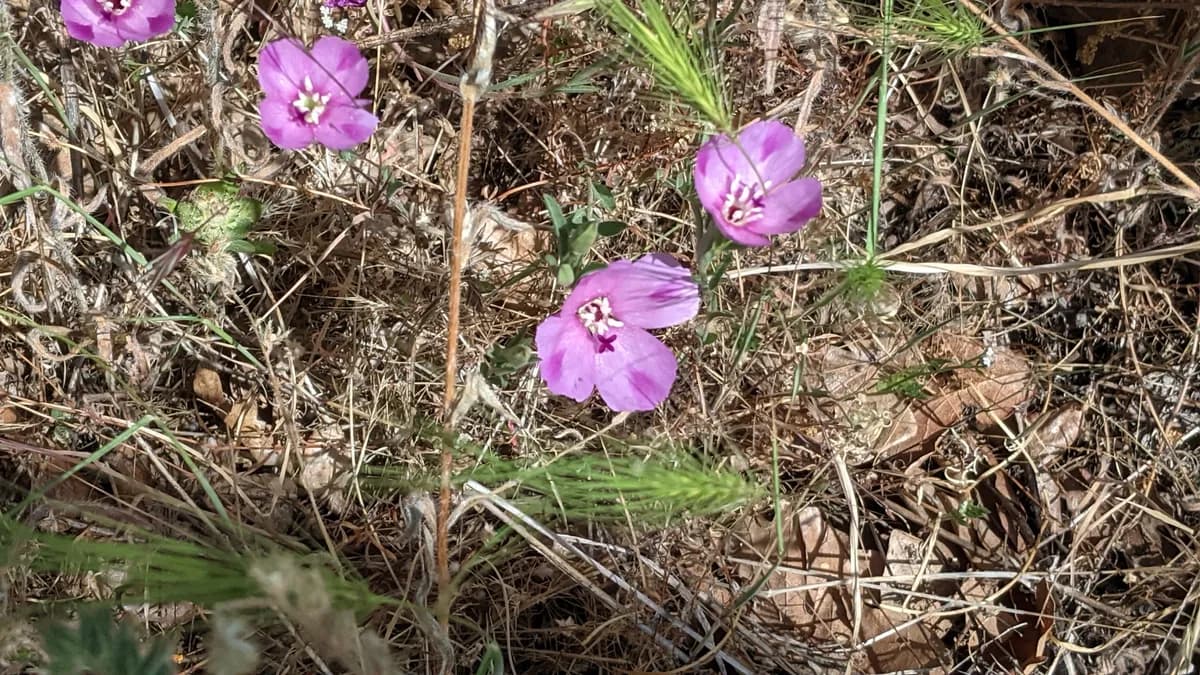
An upright annual wildflower with slender stems and cup-shaped, four-petaled flowers in shades of pink to lavender, often marked with darker blotches at the petal base. Blooms in grassland and open slope habitats in spring, then dries and sets seed by early summer.
Growing Winecup clarkia
Grow Winecup clarkia in full sun and low water. Mature plants reach 8 to 24 inches tall and spread 6 to 12 inches wide.
How to care for Winecup clarkia, by region
How to care for Winecup clarkia where it is actually grown: year-round basics plus what to do each season, region by region, with the sources for each.
Care guidance last updated: September 2026
Mississippi Valley Loess Plains (includes Memphis, TN)
Year-round
Winecup clarkia is a West Coast spring annual that is not native to Tennessee. In the Memphis area's humid, clay soil conditions it can still be grown as a cool season bedding annual if you time the planting and manage drainage.
- Not native to Tennessee. Its wild range is Arizona, California, Oregon and Washington, so grow it here as a garden annual rather than a native planting.
- Treat it as an early season annual. Sow after the last spring frost, typically mid to late March in the Memphis area, and expect bloom in late spring before summer heat sets in.
- Give it full sun and well drained soil. West Tennessee's clay soils hold water, so work compost into the bed at planting.
- Water at the soil line rather than overhead. Memphis's humid summers make this species prone to powdery and downy mildew, and wet foliage makes that worse.
- This is a short lived annual everywhere it grows, native range or not. Plan to replant it from seed each year.
Fall
Fall sowing is optional in the Memphis area. It can get the plant further along by spring, but young seedlings need winter protection since hard freezes are common here.
- If you sow in fall, do it in September or October so seedlings have time to establish before the first freeze, which typically arrives in mid to late November in the Memphis area.
- Cover the bed with a light layer of straw or leaf mulch once cold weather sets in. Memphis winters bring hard freezes that can kill unprotected seedlings, unlike milder Gulf Coast winters.
- If you would rather not manage winter protection, skip fall sowing and wait for spring instead. Both approaches are commonly used for this species.
- Keep the bed weeded through fall so small seedlings are not competing for light and moisture.
Mulched, weeded rows read as a planned bed through the offseason instead of bare dirt.
Winter
Winter behavior depends on whether you sowed in fall or are waiting for spring. Fall sown seedlings pause growth under mulch through the cold, and if you have not sown yet, winter is prep time for the bed.
- Fall sown seedlings mostly pause growth through December and January under mulch. Skip fertilizer at this stage, it will not help and can push tender growth right before a freeze.
- If a hard freeze is forecast and seedlings are exposed, add extra mulch or a frost cloth overnight. Memphis typically sees its coldest stretch in January.
- If you have not sown yet, use winter to prep the bed by loosening the soil and working in compost so it is ready to direct sow after the last frost in spring.
- Keep mulch pulled back slightly from the crown of any seedlings so it does not trap excess moisture against the stem.
A neatly mulched bed reads as maintained through winter rather than abandoned, which matters on an HOA-conscious street.
Spring
Spring is when winecup clarkia grows and blooms in the Memphis area. Direct sow after the last frost and expect flowers within about two months.
- Direct sow seed outdoors after your last spring frost, which typically falls in mid to late March in the Memphis area. Press seed into loosened soil and keep it lightly moist until it comes up, usually one to two weeks.
- Give it full sun and a well drained spot. If your bed holds standing water after rain, work compost into the top several inches before you sow.
- Thin seedlings to about 6 inches apart. Crowded plants trap humidity, and Memphis's humid spring air already makes this species prone to powdery and downy mildew.
- Expect bowl shaped pink, purple or wine red blooms roughly 8 to 10 weeks after sowing, tapering off as late spring heat builds.
A newly seeded bed can look sparse for a few weeks. A small stake or edging along the row shows it is planted on purpose rather than an empty patch, which is worth doing on an HOA-conscious street.
Summer
By summer, winecup clarkia is done blooming in the Memphis area. It is a cool season annual and cannot take the region's summer heat and humidity, so plan to clear it out rather than keep it going.
- Expect the plant to brown and set seed once daytime highs settle into the upper 80s and 90s, typically by June in the Memphis area.
- Let a few seed pods dry and split on the plant if you want it to reseed, or collect and store seed in a paper envelope somewhere cool and dry.
- Pull and compost spent plants promptly. Leaving mildew prone foliage sitting out in a humid Memphis summer just holds moisture against whatever is planted nearby.
- Fill the space with a heat and humidity tolerant summer annual, since this species will not rebloom again until conditions cool.
Clearing out spent plants right away keeps a front bed from reading as neglected during the slow part of summer.
Sources: Lady Bird Johnson Wildflower Center, Clarkia purpurea native range, Calscape, Purple Clarkia growing conditions and range, University of Tennessee Extension, Tennessee Home Fruit and Vegetable Garden Calendar (W436), frost date data, University of Tennessee Extension Master Gardener guide, clay soil and drainage management, Johnny's Selected Seeds, Clarkia key growing information
Western Gulf Coastal Plain (includes Houston, TX)
Year-round
Winecup clarkia is a fast growing spring annual from the West Coast. It is not native to the Houston area, but with the right timing and drainage it can still bloom well before summer heat and humidity shut it down.
- Not native to Texas. Its wild range runs through Arizona, California, Oregon and Washington, so treat it here as a garden annual rather than a native planting.
- Grow it as a cool season annual. Seed it in fall so it grows through Houston's mild winter and blooms in late winter into spring, before summer heat arrives.
- Give it full sun and soil that drains fast. Houston's heavy clay soil holds water around the roots, so work compost or coarse sand into the bed at planting.
- Water at the soil line, not overhead. Wet leaves combined with Houston's humidity is what usually starts mildew problems on this plant.
- Expect the plant to fade and die back once summer heat sets in. That is normal for this species here, not a sign something went wrong.
Fall
Fall is planting season for winecup clarkia in Houston. Direct sow now so it can root in through the mild winter and bloom in late winter to spring.
- Direct sow seed in October or November, once the worst summer heat has broken. Houston's mild winters, USDA zone 9a, let it germinate and grow through the cold months instead of waiting on spring.
- Rake the seedbed loose, scatter seed, and press it in lightly. It needs light to germinate, so do not bury it.
- Keep the top inch of soil lightly moist until seedlings show, usually within one to two weeks.
- Skip fertilizer at planting. Rich soil pushes leafy growth at the expense of flowers.
A freshly seeded bed can look bare through fall. A thin mulch layer between rows shows the space is planted on purpose rather than neglected.
Winter
Winter is active growing time in Houston, not dormancy. Seedlings should be putting on slow, steady growth through the mild cold months ahead of a late winter bloom.
- Expect slow leaf growth through December and January. Flowering will not start until temperatures warm in late winter.
- Thin seedlings to about 6 inches apart once they have a few true leaves. Crowded plants trap humidity around the foliage and invite powdery or downy mildew.
- Cover plants overnight if a hard freeze is forecast. It is rare in Houston but does happen, and a light frost cloth is usually enough protection at this stage.
- Hold off on extra watering unless the soil is dry an inch down. Overwatering in cool, humid weather is the more common problem here than drought.
Thinned, evenly spaced seedlings read as an intentional bed rather than a weedy patch, which matters if the front yard faces the street.
Spring
Spring is bloom season for winecup clarkia in Houston. Expect flowers from around February into April, tapering off once summer heat and humidity arrive.
- Expect bowl shaped pink, purple or wine red flowers from late winter through mid spring, fading as temperatures climb.
- Deadhead spent blooms to keep the plant flowering longer, but let a few seed pods mature late in the season if you want it to reseed for next year.
- Watch for powdery white or fuzzy gray patches on the leaves once humidity rises in April. That is powdery or downy mildew, common on this plant in humid spring weather. Improve airflow and water the soil rather than the leaves before reaching for a fungicide.
- Once plants collapse in the heat, pull them and compost the debris rather than leaving mildewed foliage sitting in the bed.
Deadheading through spring keeps the bed looking maintained rather than leggy, which helps if the planting is visible from the street.
Summer
By summer, winecup clarkia is finished for the year in Houston. It is a cool season annual and cannot handle the region's heat and humidity, so plan to replace it rather than expect it to hang on.
- Expect the plant to brown, set seed, and die back once daytime highs push into the 90s, typically by late May or June in Houston.
- Let seed pods dry and split on their own if you want volunteer plants next fall, or collect and store seed in a paper envelope somewhere cool and dry.
- Clear out dead plants once they finish. Leaving mildewed foliage in the bed through the humid summer just holds moisture against whatever goes in next.
- Consider a heat and humidity tolerant summer annual or native perennial for that spot instead of trying to carry this species through July and August.
Clearing spent plants promptly keeps a front bed from reading as neglected through the slow summer stretch.
Sources: Lady Bird Johnson Wildflower Center, Clarkia purpurea native range, Calscape, Purple Clarkia growing conditions and range, Texas A&M AgriLife Today, fall wildflower planting tips, PlantCareToday, Clarkia Wildflowers Growing and Care (community tip), Johnny's Selected Seeds, Clarkia key growing information
Wildlife value
The flowers are visited by a range of native bees, including specialist bees that collect pollen almost exclusively from Clarkia species.
Common questions
- How much sun does Winecup clarkia need?
- Winecup clarkia grows best in full sun conditions.
- When does Winecup clarkia bloom?
- Winecup clarkia blooms in April, May, and June.
- Where is Winecup clarkia native?
- Winecup clarkia (Clarkia purpurea) is native to AZ, CA, OR, WA, per vouchered herbarium specimen records and regional native plant society lists.
- What pollinators does Winecup clarkia attract?
- Winecup clarkia draws native bees.
Native range data from vouchered herbarium specimen records and regional native plant society lists. Pollinator and host plant associations compiled from GBIF, iNaturalist, and published ecological literature.
If something looks wrong
Common plant problems, and what to check first
These come up on almost any plant. Each guide lists the likely causes in the order they are worth ruling out, with one thing to check before you act on any of them, and links to the source it came from.
- It is dying right after planting
- Leaves turning yellow
- Wilting even though I watered it
- Brown crispy leaf tips
- Bugs on the plant
Ready to grow Winecup clarkia? Add it to your garden in Pollinator Patch to track it and get season-by-season care guidance.