Hairy Grama
Bouteloua hirsuta
Last reviewed: October 2026
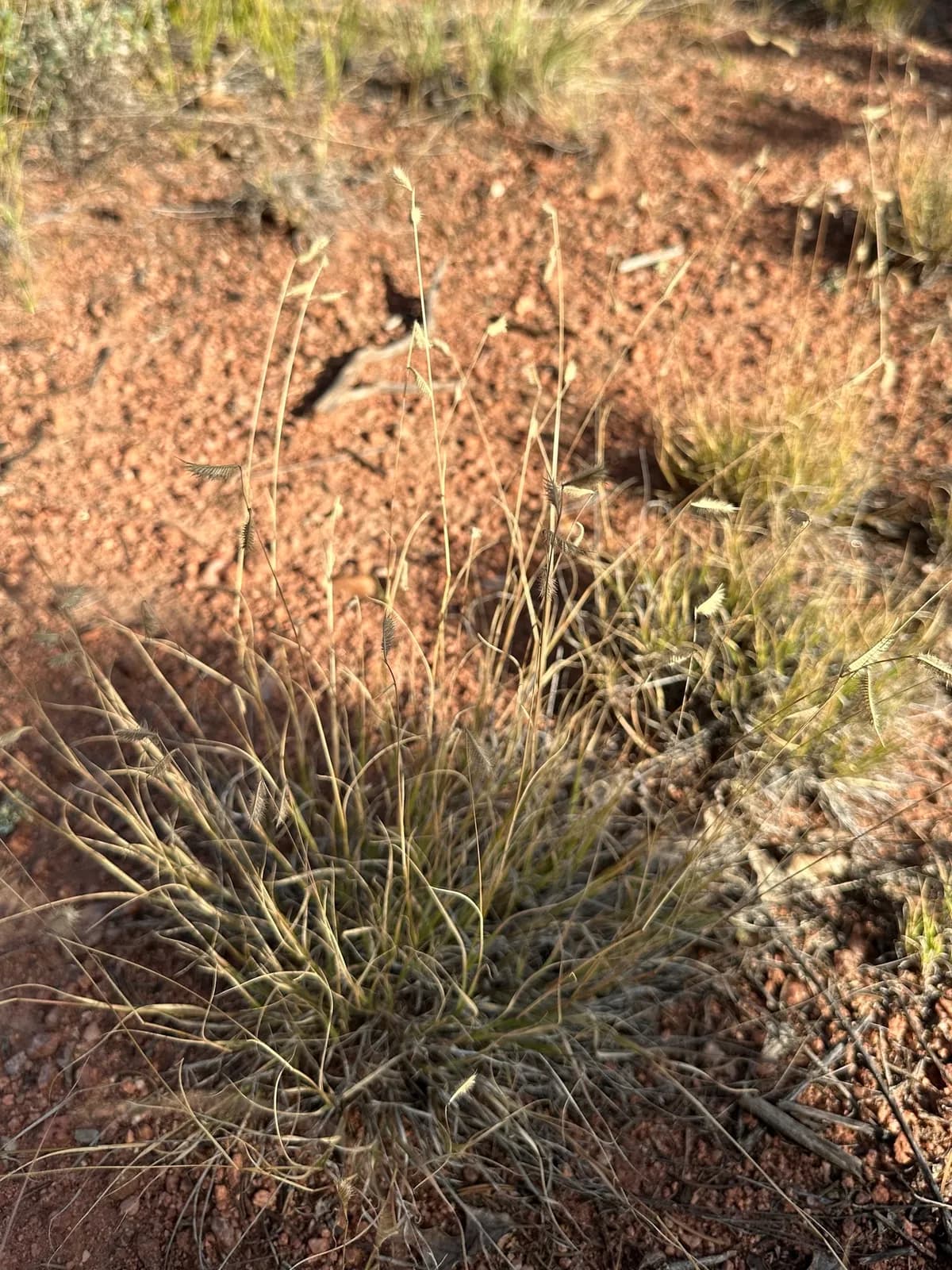
Bouteloua hirsuta, or hairy grama, is a warm season bunchgrass that blooms from June through August and grows well in full sun with low water once established.
Toxicity unknown
Hairy Grama (Bouteloua hirsuta) is not listed by the ASPCA Animal Poison Control Center (opens in new tab) or the other sources we check, so we have no verdict for it either way. Absence from those lists is not a clearance. If your pet shows symptoms after eating any plant, call the ASPCA at (888) 426-4435.
The USDA PLANTS Database (opens in new tab) does not flag Hairy Grama as toxic to livestock.
Light
part sun
Water
low
Size
12"–36" H × 12"–24" W
Bloom
Mar, Apr, May
Native to
AR, AZ, CO, FL and 20 more states
Pollinators
bees, beetles, butterflies
Before you buy
Your city may pay you to plant this
Cities and water utilities offer rebates for replacing lawn with native and water-wise plants. We track 459 programs across 44 states, each with a link to the provider and the date we last checked it.
Find rebates in your areaPicture natives in your own yard
Upload a photo of your yard and Patch Vision shows a rendering of it planted with natives for your region, like Hairy Grama.


Browse plants for this ecoregion
Hairy grama is a compact native bunchgrass that forms neat clumps with distinctive fuzzy seed heads in summer. This drought-tolerant grass stays relatively short and provides excellent texture in xeriscape gardens. It thrives in arid conditions with minimal water once established.
Growing Hairy Grama
Grow Hairy Grama in part sun and low water. Mature plants reach 12 to 36 inches tall and spread 12 to 24 inches wide. Expect low maintenance to keep it looking intentional in a front yard.
How to care for Hairy Grama, by region
How to care for Hairy Grama where it is actually grown: year-round basics plus what to do each season, region by region, with the sources for each.
Care guidance last updated: October 2026
Arizona/New Mexico Mountains (includes Prescott, AZ)
Year-round
Hairy Grama is a low bunchgrass native to the mountain grasslands of central Arizona and New Mexico, including the Prescott area. It grows in full sun, needs very little water once established, and stays under 2 feet tall, which reads as neat and intentional in a front yard.
- Full sun and low water once established, so it fits well in dry front yard beds.
- Grows in dense clumps 6 to 24 inches tall, good for a tidy border or accent planting.
- Native to shallow, sandy or rocky soil in the central Arizona and New Mexico mountain grasslands, including the area around Prescott.
- Most of its growth happens after summer rain arrives. It stays fairly still through spring.
Fall
As the weather cools around Prescott, Hairy Grama slows down and starts to go dormant. Its dry stems and seed heads can be left standing rather than cut back now.
- Growth slows and the plant begins to go dormant as temperatures drop.
- Leaving the dry stems standing through fall gives shelter to overwintering insects.
- No watering needed at this point. It is built for a dry fall.
Standing dry stems can read as unkempt to some HOA reviewers, so it can help to mention the plan to cut back in late winter.
Winter
Hairy Grama is fully dormant through winter around Prescott. Leave the dry stems standing until late winter, then cut them back before spring growth begins.
- The plant is dormant. Its tan, dry color through winter is normal, not a sign of a problem.
- Leave dead stems standing through winter for insect habitat, then cut back in February before new growth starts.
- No water or fertilizer needed while it is dormant.
The tan winter color is expected for this grass and not a dead plant, worth explaining if an HOA review flags it.
Spring
Spring is a quiet season for Hairy Grama around Prescott. It does not put on much new growth until summer rain arrives, so late winter into early spring is the best window to clean up last year's growth before new blades start.
- Cut back last year's dead stems before new growth starts, ideally in February or early March.
- Do not expect much visible growth yet. This grass waits for summer rain to do most of its growing.
- No fertilizer needed. It is built for poor, rocky soil.
Cutting back the dead winter growth in early spring keeps the clump looking tidy before the growing season starts.
Summer
Summer is when Hairy Grama does most of its growing and flowering around Prescott, especially once monsoon rain starts. It still needs very little extra water.
- This is the active growing season. Growth picks up fast once summer rain arrives.
- Small purplish seed heads appear on short spikes above the leaves.
- Mowing to about 3 to 4 inches keeps it looking like a tidy low lawn or border if you want a more manicured look.
Mowing it to 3 to 4 inches during the growing season gives it a clean, low-lawn look that reads as intentional rather than overgrown.
Sources: Lady Bird Johnson Wildflower Center, Native Plant Database: Bouteloua hirsuta, Arizona Native Plant Society, Landscape Plants: Hairy Grama, USDA NRCS Plant Fact Sheet: Hairy Grama (Bouteloua hirsuta), Native Plant Society of Texas, Native Plant of the Week: Hairy Grama
Central Irregular Plains (includes Kansas City, MO)
Year-round
Hairy grama is a small warm-season bunchgrass that likes full sun and dry, well-drained soil.
- It grows about 12 to 24 inches tall.
- It does best in full sun and average to dry soil, and it handles drought well.
- It is found in dry, shallow, sandy or rocky prairie soil in Kansas.
- Soggy or heavily watered beds are not a good match.
- Fuzzy seedheads add texture in late summer.
Fall
In fall the fuzzy seedheads are the show.
- Seedheads are covered in fine hairs and can look green, purple, or bronze.
- Seed is produced through the late growing season.
Winter
Hairy grama rests through winter and needs no care.
- It is hardy in USDA zones 3 to 8.
- Keep the soil on the dry side.
Spring
As a warm-season grass, hairy grama is slow to start in spring.
- Warm-season grasses put on most of their growth once the weather heats up.
- Plant in dry, well-drained soil in full sun.
- Skip extra fertilizer and water.
Summer
Summer is when hairy grama grows and blooms, and it handles dry weather.
- Blooms are expected from June through August in Kansas.
- It tolerates severe drought once established.
- Skipper butterfly caterpillars feed on it.
Sources: Kansas Wildflowers and Grasses: Bouteloua hirsuta, Gardening with Native Grasses in Cold Climates: Hairy grama, Minnesota Wildflowers: Bouteloua hirsuta, Texas A&M Range Plants: Hairy grama
Cross Timbers (includes Fort Worth, TX)
Year-round
Hairy grama is a low, tough native bunchgrass built for Fort Worth's hot summers and mixed clay-to-sandy Cross Timbers soils. Once it is established it asks for almost nothing: no fertilizer, very little water, and only an occasional mow.
- It grows best in full sun but tolerates part shade, expect thinner growth and fewer seed heads in shadier spots.
- It tolerates the full range of Cross Timbers soils, from sandy and rocky to clay loam, and does not need fertilizer or soil amendments.
- Water new plantings regularly through the first growing season to get roots established, then let rainfall take over, mature clumps handle extended dry spells well.
- If you are using it as a mowed native lawn patch, set the mower deck to 3 to 4 inches, it naturally stays short and rarely needs cutting.
- As a warm-season grass it greens up late (well after cool-season lawns) and goes brown and dormant by late fall, that color change is normal, not a problem to fix.
- For denser mowed-lawn coverage, it is often grown alongside buffalograss and blue grama rather than as a single-species patch.
A clean mowed edge along walkways and property lines helps a hairy grama patch read as an intentional HOA-friendly lawn alternative rather than an unmown area, especially once it turns brown for winter.
Fall
In fall, hairy grama finishes its growing season, seed heads mature and dry, and the plant begins shifting into winter dormancy as temperatures drop.
- Seed production and maturation continue into fall, Texas A&M's rangeland guide lists this species setting seed from June into November.
- Fall is a good time to hand-collect mature seed heads if you want to spread or share them, it is not a good time to start new seeding, spring establishment works far better.
- Reduce watering as the weather cools, established plants need little to no supplemental water in fall.
- Expect the foliage to start turning tan and brown as growth slows, this dormancy is normal and does not mean the plant is dying.
- A light hand-weeding pass in fall keeps cool-season weeds from moving into a thin native-grass patch while it slows down for winter.
A quick fall weeding pass keeps a mowed hairy grama patch looking like an intentional planting rather than a neglected corner as it browns for winter.
Winter
Hairy grama is fully dormant in winter. The foliage turns tan to brown and growth stops until warm weather returns in late spring.
- Winter dormancy is a straw-tan color for this warm-season grass, that is the expected look for the season, not a sign it needs water or fertilizer.
- USDA notes it cures well on the stem, which is why it is valued as winter forage, you can leave standing foliage over winter or trim it back for a tidier look.
- No water is needed in winter for established plantings, overwatering a dormant native grass does more harm than good.
- Late winter, just before spring green-up, is a reasonable window to cut the dead foliage back to 3 to 4 inches if you want a tidier reset before new growth starts.
- Skip fertilizer in winter, dormant hairy grama cannot use it and this species generally does not need it at all.
Winter's tan dormant color is the thing most likely to draw an HOA question about this planting, a short note explaining it is a dormant native grass rather than a dead lawn heads off most concerns.
Spring
Spring is when hairy grama wakes up from winter dormancy, and if you are starting new patches in Fort Worth, it is close to the best window to get seed or plugs in the ground.
- Direct-seed or set out plugs from mid to late spring once nights are reliably warm, fall seeding of this warm-season grass tends to produce poor results.
- Expect it to green up later than cool-season turf grasses like fescue, hairy grama often still looks brown into April before new blades emerge.
- USDA notes this species does little visible growing until warmer, wetter weather sets in, so patience in early spring is normal.
- Water newly seeded or newly planted areas lightly and consistently through spring, this is the one period where hairy grama needs regular attention rather than none.
- Watch for small purplish, comb-like flower spikes forming on stems from March into May, that is normal spring flowering, not a sign of stress.
If a landscape committee asks about a bare or brown patch in early spring, hairy grama's later green-up compared to cool-season lawns is the reason, not a failed planting.
Summer
Summer is hairy grama's growing season. In Fort Worth's heat it does most of its growing, flowering, and seed production once warm-season rains arrive, and it needs very little from you.
- Growth speeds up once summer rain arrives, USDA notes this species barely grows before then, so most visible progress happens in early to mid summer.
- It ranks among the more drought-tolerant native prairie grasses, so once established it can get through a hot, dry Fort Worth summer with little or no supplemental watering.
- New plantings still need consistent water through their first summer to finish rooting in, established clumps generally do not.
- Comb-like purplish seed spikes continue forming through summer, let them mature and dry rather than mowing them off if you want the patch to reseed itself.
- Established hairy grama tolerates moderate foot traffic and mowing, but it recovers more slowly from heavy use during the hottest, driest stretches.
Letting seed heads stand and turn tan through late summer is normal for this species and does not need mowing away to still look intentional.
Sources: Lady Bird Johnson Wildflower Center: Bouteloua hirsuta, USDA NRCS Plant Fact Sheet: Hairy Grama, Texas A&M Rangeland: Hairy Grama, PlantNative.org: Hairy Grama Growing Guide (community tip), US Forest Service Fire Effects Information System: Bouteloua hirsuta
East Central Texas Plains (includes College Station, TX)
Year-round
Hairy grama is a small native clump grass. Give it full sun to light shade and well drained soil, it handles sand, rock, clay, or shallow ground. It tops out around 1 to 3 feet tall and about as wide, and it barely needs watering once it settles in.
- Plant in full sun to light shade. It tolerates poor, rocky, or sandy soil as well as clay, as long as drainage is decent.
- Water regularly through the first growing season while roots establish. After that, normal rainfall is usually enough and it handles dry stretches well.
- It forms a tidy clump about 1 to 3 feet tall and 1 to 2 feet wide, a good fit for a bed edge or a small accent patch rather than a lawn substitute.
- The Native Plant Society of Texas lists hairy grama as occurring in the East Central Texas Plains, the ecoregion that covers the College Station area, so it does belong in a Brazos County yard.
Fall
Seed production keeps going into fall, and the clump fades from green to pale yellow as it heads toward dormancy. The first freeze in the Bryan-College Station area typically lands by late November, which is what finally browns the whole plant for the year. Leave the seed heads and stems up rather than cutting back now.
- Seed heads keep forming into fall, seed production runs from around June through November.
- The clump fades from green to pale yellow as it heads into dormancy.
- The first freeze in the Bryan-College Station area typically arrives by late November, and that is what browns the clump for the year.
- Leave the seed heads and stems standing rather than cutting back now. Birds eat the seed and insects use the stems over winter.
A fading, seed headed clump can read as neglected to a strict HOA even though leaving it up is the better move for wildlife. For a tidier look up front, trim just the seed heads and leave the base of the clump standing.
Winter
By winter the clump will already be dormant and tan, since the first freeze around College Station usually lands by late November. Leave the dead stems up for most of the winter, then cut the whole clump back to a few inches late in the season before new growth starts.
- Expect the clump to look tan and dormant most of winter, the first freeze in the Bryan-College Station area typically arrives by late November.
- Leave the dead stems standing through most of winter. Overwintering insects use them, and they still give the bed some texture.
- Toward the end of winter, before new blades start pushing up, cut the whole clump back to a few inches so the new growth has room.
- This species' native range reaches as far north as North Dakota and Wyoming, so a College Station winter freeze is well within what its roots handle.
Dead tan stems left standing through winter are intentional but can look like an unmown patch to a passerby or an HOA. A neat clump edge and a small sign identifying it as a native grass can head off a complaint before your late winter cutback.
Spring
New blades green up from the crown as nights warm, and this is bloom season, running March through May, when the grass sends up its small comblike flower spikes. Water new plantings through spring so roots can establish, an already settled clump usually gets by on normal spring rain.
- New growth greens up from the base as nights warm, typically getting going through March.
- Blooms March through May, with small comblike flower spikes lined up along one side of each stem.
- New plantings need regular water through spring to establish roots. An established clump usually does fine on normal spring rainfall alone.
- Keep young clumps weeded, they start out low and can get crowded out before they fill in.
Summer
Summer heat is when this warm season grass grows fastest. Its native range leans toward drier parts of Texas, so in College Station's hot, humid summers give it well drained soil and avoid low spots that stay soggy after a storm. Skip fertilizer and extra water once it is established.
- This is a warm season grass, so summer heat is its main growing period.
- It leans toward the drier parts of its Texas range, so in College Station's humid summers keep it out of low spots that stay wet after rain.
- Once established it handles a dry summer stretch without extra water.
- Skip fertilizer. This grass is adapted to lean soil and does not need feeding to fill in.
It stays under about knee height and does not spread by runners into surrounding turf, so most HOAs will not flag it as an overgrown patch even during its peak summer growth.
Sources: Native Plant Society of Texas: Hairy Grama plant profile, Lady Bird Johnson Wildflower Center: Bouteloua hirsuta, Texas A&M Rangeplants: Hairy Grama, KBTX: Brazos Valley average first frost and freeze dates (community tip)
Middle Rockies (includes Missoula, MT)
Year-round
Year-round care for hairy grama around Missoula, MT: sun to part shade, dry sandy or rocky well-drained soil.
- The Wildflower Center lists part shade for light.
- It does well in shallow, sandy or rocky soils and has low water needs.
- Texas A&M lists well-drained soils on rocky hills and plains.
- It tolerates severe drought.
- It grows as a bunch grass with a tufted base.
- Height is listed at about 20 inches in one source and about 30 inches in dense clumps in another.
Clumps spaced evenly with a mowed or edged border read as a deliberate grass planting.
Sources: Lady Bird Johnson Wildflower Center: Bouteloua hirsuta, Texas A&M Rangeland: Bouteloua hirsuta
North Central Hardwood Forests (includes Minneapolis, MN)
Year-round
Hairy grama is a warm-season prairie bunchgrass grown for its comb-shaped seed heads, drought tolerance, and low care needs once it settles into a garden bed.
- Give it full sun and fast-draining soil, sandy or rocky spots work best, it struggles in wet clay or a heavily mulched bed.
- It forms a tidy clump about twelve to twenty inches tall including the seed heads, which makes it a good fit for a border, rock garden, or small accent planting.
- Once established it needs very little supplemental water, this is a plant that does better when left alone than when watered or fed on a schedule.
- Skip fertilizer and rich soil amendments, extra fertility makes the clump floppy and less attractive rather than helping it.
- New plantings need regular water through their first growing season while roots establish, after that cut back to only watering during an extended dry spell.
Fall
Fall is when hairy grama puts on its best color, the clump turns a warm tan or bronze and the seed heads stay put, giving the bed real structure into winter.
- Expect the foliage to shift from green to tan or copper as nights cool, usually starting in September, this is normal seasonal dormancy and not dieback.
- The Minneapolis area typically sees its first fall frost in early to mid October, after that the clump finishes coloring and stops active growth for the year.
- Leave the seed heads and foliage standing through fall instead of cutting back now, they feed birds and shelter overwintering insects, and cutting now removes the plant's own cold protection for its crown.
- If you want to plant new grama or divide a clump, do it early in fall well before the first frost so roots have time to settle before the ground cools.
- Trim only the ragged outer edges if the clump is flopping into a walkway, save the full cutback for spring.
Standing tan seed heads through fall read as an intentional planting rather than an unmowed patch, especially with the clump edges kept trim.
Winter
Hairy grama is fully dormant through a Minneapolis winter and needs nothing from you, the standing clump itself is the plan.
- Leave the dried clump standing all winter, it is hardy through a Minneapolis winter without mulch or wrapping once established.
- The tan seed heads and foliage give the bed winter interest and cover for ground feeding birds, this is normal for the plant and not neglect.
- Do not cut the clump back now, wait until early spring, cutting during winter removes cover the crown uses to handle freeze and thaw cycles.
- Snow sitting on the bed is a plus, it insulates the crown, there is no need to add extra mulch on top of it for an established planting.
- If heavy snow flattens the clump it will spring back on its own or can be lightly reshaped at the spring cutback, no action is needed now.
An upright, trimmed clump standing through snow reads as a deliberate winter planting instead of dead growth waiting for removal, which is the impression that matters most during a winter curb-appeal check.
Spring
In the Minneapolis area this grass wakes up later than cool-season lawn grasses, so a brown clump in April or early May is normal, not a sign of trouble.
- Cut back last year's dried growth to about three to four inches in late March or April, before new green blades appear, this keeps the clump tidy and lets light reach the crown.
- Do not expect green growth right away, in the Minneapolis area this warm-season grass often does not green up until May, well after cool-season lawn grass and spring bulbs.
- Early spring, once the ground has thawed and before new growth is more than an inch or two tall, is a good window to divide an overgrown clump or move seedlings.
- Hold off on watering and skip fertilizer until you actually see new green blades emerging from the base.
A late winter or early spring cutback keeps the bed reading as tended rather than left over from last year, which matters most right as neighbors first notice yards waking up.
Summer
Summer is when hairy grama does its best work, this is when the plant sends up its signature comb-shaped seed heads and shrugs off Minneapolis heat and dry spells.
- Look for small comb or eyelash shaped seed heads along one side of each stem from June into August, this is the plant's normal bloom and not a sign of a problem.
- Established clumps shrug off a typical Minneapolis summer dry stretch without extra water, save the hose for new plantings or an unusually long drought.
- Avoid a low spot that collects runoff or heavy watering through summer, wet summer soil causes more trouble for this plant than dry soil does.
- There is no need to deadhead, the seed heads are the ornamental feature and birds will work the seed later in the season.
- Mowing is optional, keep it at three to four inches if using it as a low natural lawn substitute, or leave it unmowed to enjoy the seed heads.
Sources: Lady Bird Johnson Wildflower Center, NPIN: Bouteloua hirsuta, Prairie Restorations: Hairy Grama (Bouteloua hirsuta), Minnesota Wildflowers: Hairy Grama (Bouteloua hirsuta)
Sonoran Basin and Range (includes Palm Springs, CA)
Year-round
Hairy grama is a small clump-forming grass best treated as a drought-tolerant accent in Palm Springs gardens, not a lawn substitute, with pet toxicity currently unverified by the ASPCA.
- Hairy grama grows in loose tufts or clumps, not as a spreading turf, so plan on it as a border or accent planting rather than a lawn replacement.
- The authoritative native range for this species runs from the northern and central Great Plains south through Texas and into Arizona. It is not documented as native to California, so treat any planting in the Palm Springs area as an introduced landscape grass rather than a local native.
- Give it full sun and fast-draining sandy or rocky soil. Wet or heavy clay spots will rot the roots.
- It is a warm-season grass, meaning it greens up and actively grows through the hot months, then goes dormant and turns tan in cool weather.
- Once established, usually after its first year, it tolerates long dry spells well, but young clumps in Palm Springs' intense summer heat still need regular deep watering to get established.
- The ASPCA's toxic and non-toxic plant lists do not include an entry for hairy grama or grama grass generally, so its toxicity to pets is undetermined either way. Keep grazing pets from eating large amounts of any unverified plant.
Fall
Growth slows and seed heads dry to tan as days shorten. Watering can taper off, and this is a good window to trim for a tidy winter look if you prefer that over leaving seed heads for birds.
- Growth slows as days shorten and temperatures drop. The seed heads dry out and turn tan, which is expected.
- Cut back on watering as the plant heads toward dormancy. Established clumps need little to no supplemental water once it cools off.
- Leaving the dried seed heads standing through fall adds texture and can offer seed for birds, but trimming the faded stalks now is also a reasonable choice if a tidier front-yard look matters more to you.
- Check for weeds encroaching around the base of the clump before winter, since this grass will not fill in bare soil the way a turf lawn does.
- No fertilizer needed as the plant moves into dormancy.
Trimming the faded seed stalks in fall is an easy way to keep the planting looking tidy through winter if that matters for curb appeal.
Winter
The plant goes fully dormant and turns tan. It needs very little water now, and late winter is the best time for the year's main cutback before spring growth resumes.
- The plant goes dormant and turns tan or straw-colored. This is normal, not a sign the plant has died.
- Little to no water is needed while it is dormant, unless the region goes through an unusually long dry stretch even by desert standards.
- Hairy grama's documented native range includes cold-winter states like North Dakota and Illinois, so an established clump is generally well adapted to occasional cold nights, though a young, newly planted clump is more vulnerable than an established one.
- Late winter, before new spring growth starts, is the classic time to cut the whole clump back to a few inches tall. This is the single most useful tidy-up task of the year for a front yard.
- No fertilizer needed during dormancy.
The late-winter cutback is the main curb-appeal task of the year, keeping the clump from looking scraggly once spring growth returns.
Spring
Spring is when new green blades push up from last year's clump. Water to help establish new growth and finish any winter cutback before green-up takes over.
- Watch for new green blades emerging from the base of last year's growth as temperatures warm. This is normal, not a sign of a struggling plant.
- Water deeply but infrequently to support new growth, especially for a clump that is less than a year old.
- If you have not already cut back last year's dried growth, do it now before new blades take over. Trim the clump down to a few inches for a clean look.
- Skip fertilizer. This grass is adapted to poor, rocky, and sandy soils and heavy feeding tends to make the clump floppy rather than healthier.
- No flowering yet this early. Hairy grama's small seed heads typically appear once summer heat arrives.
Cutting back last year's dried growth before spring green-up keeps the clump from looking dead or weedy along a front walkway.
Summer
Summer is hairy grama's active growing season. It looks fullest and greenest now, and its small comb-like seed heads appear from around July into September.
- This is the plant's active growing season. Given some water, it will look its greenest and most vigorous during the hottest months.
- In Palm Springs' low desert heat, a deep soak every one to two weeks in the absence of rain keeps it looking full. Water more often for young, still-establishing plants.
- Expect small, one-sided, comb-like seed heads to appear from around July into September. This is a normal seasonal look, not a problem.
- Avoid daily shallow watering. Infrequent, deep watering supports the deep root system that gives this grass its drought tolerance.
- Correctly spaced, established clumps generally do not need staking, even with tall seed stalks up.
Sources: Lady Bird Johnson Wildflower Center, Native Plant Database: Bouteloua hirsuta, Missouri Department of Conservation, Field Guide: Hairy Grama, ASPCA, Toxic and Non-Toxic Plants (G listing, checked for grama/Bouteloua entries)
Southeastern Wisconsin Till Plains (includes Milwaukee, WI)
Year-round
Hairy grama is a native, warm-season, clump-forming prairie grass in Wisconsin, at home in dry, sandy, or gravelly full-sun spots. It stays under two feet tall and needs very little care once it is established.
- Plant in full sun, at least six hours of direct light a day
- Choose sandy, gravelly, or otherwise well-drained soil, not heavy wet clay
- Skip fertilizer, this grass is adapted to lean prairie soils
- Water during the first season to help roots establish, then let rainfall take over
- Expect little visible growth until summer heat arrives, that is normal for this grass
Fall
In fall the seedheads dry to a tan color and the clump goes dormant with the first hard frosts. This is a season to enjoy the grass's texture rather than cut it down.
- Let seedheads and foliage stand through fall instead of cutting back now
- Standing stems protect the growing point at the soil line from early cold snaps
- Tan, dried seedheads add texture to a fall bed and catch morning frost well
- Skip fall fertilizer, the plant is heading into dormancy and will not use it
- Avoid piling wet leaves or mulch over the crown, this grass prefers to stay dry
Leaving seedheads standing through fall is a common native-prairie look and reads as intentional rather than unkempt, especially with a defined bed edge.
Winter
Hairy grama is fully dormant in winter, with dried tan clumps and comb-like seedheads standing above the snow for texture. No active care is needed until the early spring cutback.
- No watering, fertilizing, or cutting needed during winter dormancy
- Dried seedheads and foliage standing above the snow are normal and add winter interest
- Standing stems also shelter overwintering insects at the base of the clump
- Wait until early spring to cut back, not now
- If a section flops under heavy snow, leave it, this will not harm the plant
A standing native grass clump kept inside a defined bed reads as an intentional, HOA-conscious winter look rather than an unmowed one.
Spring
Hairy grama is a warm-season grass, so it wakes up later than lawn grasses and can look bare into late spring. Spring is mainly cleanup time, not growing time, for this plant.
- Cut old growth back to a few inches above the soil in early spring, before new blades appear
- Cutting in spring lets the crown warm faster, leftover old growth can delay new growth by weeks
- Do not worry if the clump still looks brown into May, it is simply waiting on warmer soil
- Divide overcrowded clumps now if you want to spread the grass to a new spot
- Skip heavy fertilizer, a light layer of compost is plenty
A quick early spring cutback clears away last year's dried grass before new growth fills in, which keeps a front bed looking tidy and HOA-friendly.
Summer
Summer is when hairy grama does its real growing and flowering, sending up small comb-like seedheads once the weather turns hot. It is also the most drought-tolerant part of its year, and established plants rarely need any watering.
- Expect comb-like flowering seedheads mid to late summer once heat settles in
- Established clumps handle Wisconsin dry spells without supplemental water
- Seedheads may turn purple to bronze as they mature, this color change is normal
- Leave seedheads in place, they support native bees and are a larval host for giant and green skipper butterflies
- Avoid overhead watering or wet mulch against the crown, this grass wants dry conditions
Sources: USDA Forest Service Fire Effects Information System, Bouteloua hirsuta, Lady Bird Johnson Wildflower Center, Bouteloua hirsuta (Hairy grama), UW-Madison Extension, Gardening with Native Ornamental Grasses, University of Illinois Extension, Is it too late to cut back ornamental grasses?
Southwestern Tablelands (includes Colorado Springs, CO)
Year-round
Year-round care for hairy grama around Colorado Springs, CO: sun to part shade, dry sandy or rocky well-drained soil.
- The Wildflower Center lists part shade for light.
- It does well in shallow, sandy or rocky soils and has low water needs.
- Texas A&M lists well-drained soils on rocky hills and plains.
- It tolerates severe drought.
- It grows as a bunch grass with a tufted base.
- Height is listed at about 20 inches in one source and about 30 inches in dense clumps in another.
Clumps spaced evenly with a mowed or edged border read as a deliberate grass planting.
Sources: Lady Bird Johnson Wildflower Center: Bouteloua hirsuta, Texas A&M Rangeland: Bouteloua hirsuta
Texas Blackland Prairies (includes Dallas, TX)
Year-round
Hairy grama is a low, clump-forming warm-season prairie grass that thrives on lean, well-drained soil around Dallas. It is native to Texas per the Lady Bird Johnson Wildflower Center. The main way people kill it is kindness: too much water and too much fertilizer make it flop. Treat it tough and it stays tidy.
- To establish, water a new plug or transplant about once a week for the first summer, then taper off. Once its roots are down it wants dry spells, not steady moisture.
- Skip the rich compost and heavy feeding. This grass evolved on thin Blackland Prairie soils, so lean ground keeps it upright and dense instead of floppy.
- A thin layer of mulch is fine to hold moisture while it settles in, but keep mulch pulled back off the crown so the base does not stay wet and rot.
- Leave the clump standing through winter and cut it back once in late winter. Do not shear it repeatedly through the season or you lose the fine seed-head texture that makes it worth growing.
Fall
Fall is when the clump finishes seeding and starts to go tan and dormant as Dallas nights cool. Decide now how much self-seeding you want and whether to keep the winter look.
- To limit spread, snip off and bag the seed heads before they shatter. To fill in a patch, leave them and let seed drop where you want more grass.
- Do not cut the clump down now. The standing tan foliage protects the crown through winter and gives good cool-season texture.
- Ease off watering as temperatures drop. The grass is heading into dormancy and does not need it.
Tidying up scattered seed heads in fall keeps the planting looking deliberate rather than weedy at the curb, which lowers the odds of an HOA-conscious neighbor flagging it.
Winter
Dallas winters are mild enough that hairy grama, hardy to about zone 8, needs no special protection. It simply sits dormant as a tan tuft until spring.
- Leave the clump standing all winter. The dry foliage shelters the crown and looks good with frost on it.
- No watering needed in a normal Dallas winter. The grass is fully dormant.
- Hold the big cutback until late winter, right at the edge of spring, rather than doing it early. Cutting too soon exposes the crown during any late cold snap.
Keeping one neat, upright tan clump through winter reads as an intentional dormant grass rather than a dead weed, which is the tidy-silhouette look that avoids a violation letter in a managed neighborhood.
Spring
Spring is cutback and clean-up time in the Dallas area. Hairy grama is a warm-season grass, so it stays dormant and tan until the soil warms, then greens up and pushes new blades.
- Cut last year's dead clump down to a few inches in late February or early March, before the new green growth starts. This is the one hard cutback of the year.
- Rake out the old dead blades from the center so light and air reach the new shoots.
- Hold off on watering unless spring is unusually dry. Dallas spring rain usually covers what it needs while it is waking up.
A clean late-winter cutback reads as intentional upkeep and helps the clump green up tidy, so a dormant-looking tan tuft in a front yard does not draw a violation letter.
Summer
Summer is the grass's strong season around Dallas. It handles the heat well and blooms with its distinctive eyelash-shaped seed heads. Your job is mostly to leave it alone.
- Once established, water only during a real drought, maybe once every two to three weeks in a long dry stretch. Deep and infrequent beats a light daily sprinkle.
- Do not fertilize in summer. Feeding in the heat pushes soft, floppy growth that ruins the neat clump shape.
- Enjoy the seed heads as they form. If you want more plants, this is when they set seed you can collect or let drop.
Sources: Lady Bird Johnson Wildflower Center Bouteloua hirsuta, USDA NRCS Hairy Grama plant fact sheet, Gardenia Bouteloua hirsuta Hairy Grama, Texas AandM Rangelands Hairy Grama
In an HOA neighborhood
Hairy Grama is an HOA-friendly choice. Maintenance level: low. Tidiness: 4 out of 5.
Works well in: front yard, foundation, street edge, mid zone.
- May look sparse in winter months
Wildlife value
The summer blooms attract bees and beetles, while the seed heads provide food for birds and small mammals. As a native grass, it supports local wildlife throughout the growing season.
Common questions
- What growing conditions suit Bouteloua hirsuta best?
- Hairy grama grows best in full sun with low to medium water. It is well adapted to dry, rocky, or sandy soils found on prairies and plains and does not need supplemental irrigation once established.
- When does hairy grama bloom?
- Hairy grama blooms from June through August, producing short, comb-like, one-sided flower spikes typical of the Bouteloua genus.
- What insects visit hairy grama flowers?
- Bees and beetles are commonly observed visiting the flowers of hairy grama.
- Does hairy grama stay green year round?
- No. Like most warm season grasses, hairy grama greens up in late spring, grows actively through summer, and dies back to tan or brown foliage after frost.
- What kind of habitat does hairy grama typically grow in?
- It is commonly found on dry prairies, rocky slopes, and open grasslands across the Great Plains and parts of the Southwest, often on thin or gravelly soils.
- Is Hairy Grama toxic to livestock?
- The USDA PLANTS Database does not flag Hairy Grama as toxic to livestock.
- Is Hairy Grama HOA-friendly?
- Hairy Grama is generally an HOA-friendly choice in the right placement, with low maintenance.
These answers were drafted with an AI model from this plant's data. Verify care details with a local expert.
Native range data from the World Checklist of Vascular Plants (Kew). Pollinator and host plant associations compiled from GBIF, iNaturalist, and published ecological literature.
If something looks wrong
Common plant problems, and what to check first
These come up on almost any plant. Each guide lists the likely causes in the order they are worth ruling out, with one thing to check before you act on any of them, and links to the source it came from.
- It is dying right after planting
- Leaves turning yellow
- Wilting even though I watered it
- Brown crispy leaf tips
- Bugs on the plant
Ready to grow Hairy Grama? Add it to your garden in Pollinator Patch to track it and get season-by-season care guidance.