Hoary Skullcap
Scutellaria incana
Last reviewed: September 2026
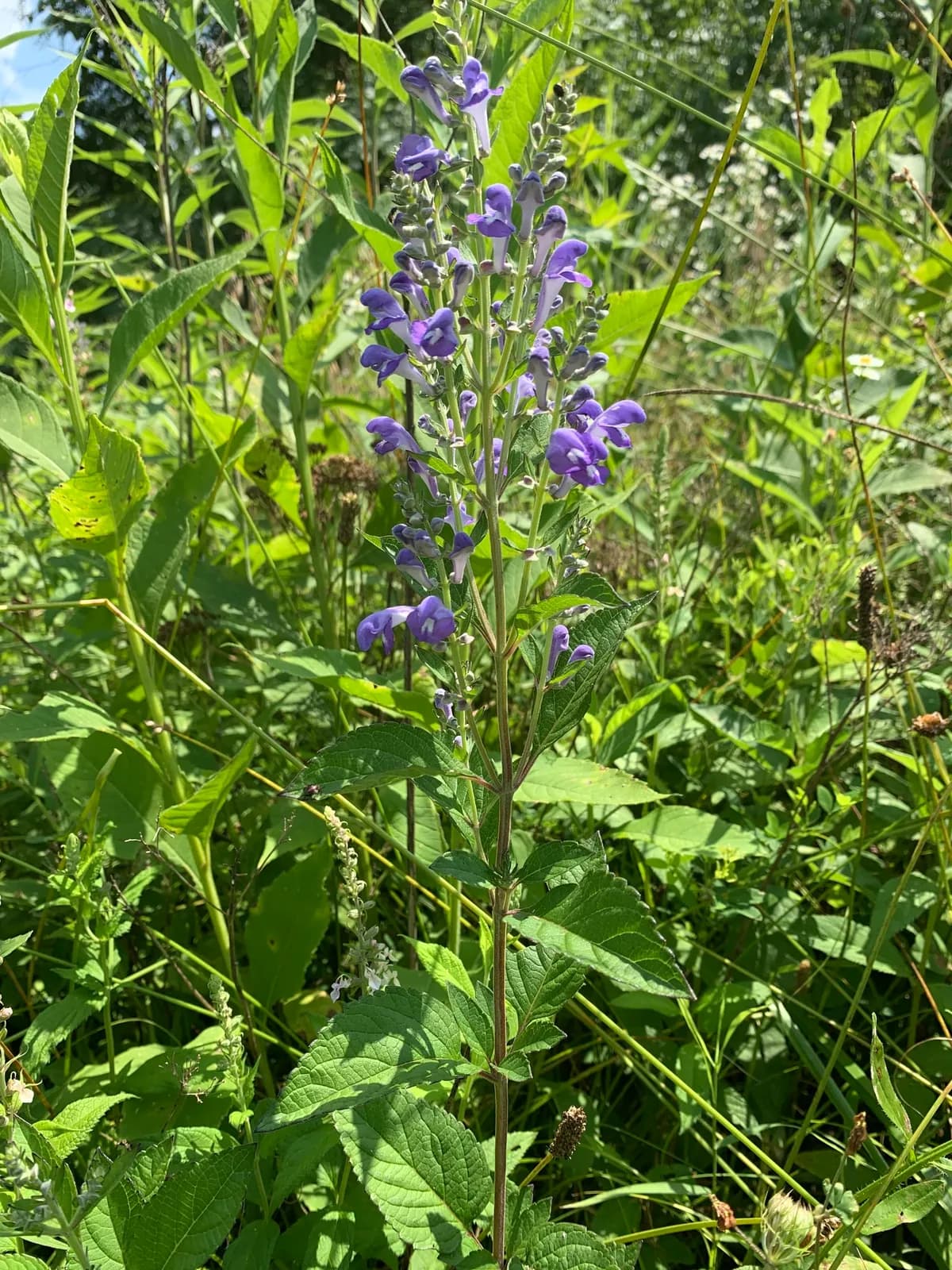
Scutellaria incana, known as hoary skullcap, is a tall perennial forb with blue-violet flowers that bloom from June through September in part sun along woodland edges and open prairies.
Toxicity unknown
Hoary Skullcap (Scutellaria incana) is not listed by the ASPCA Animal Poison Control Center (opens in new tab) or the other sources we check, so we have no verdict for it either way. Absence from those lists is not a clearance. If your pet shows symptoms after eating any plant, call the ASPCA at (888) 426-4435.
Light
part sun
Water
medium
Size
12"–36" H × 12"–24" W
Bloom
Jun, Jul, Aug, Sep
Native to
AL, AR, FL, GA and 20 more states
Pollinators
bees, butterflies
Before you buy
Your city may pay you to plant this
Cities and water utilities offer rebates for replacing lawn with native and water-wise plants. We track 459 programs across 44 states, each with a link to the provider and the date we last checked it.
Find rebates in your areaPicture natives in your own yard
Upload a photo of your yard and Patch Vision shows a rendering of it planted with natives for your region, like Hoary Skullcap.


Browse plants for this ecoregion
Hoary skullcap is a native perennial that produces spikes of small blue to purple flowers from summer through early fall. This compact wildflower grows in clumps with soft, grayish-green foliage and works well in mixed perennial borders or naturalized areas.
Growing Hoary Skullcap
Grow Hoary Skullcap in part sun and medium water. Mature plants reach 12 to 36 inches tall and spread 12 to 24 inches wide. Expect low maintenance to keep it looking intentional in a front yard.
How to care for Hoary Skullcap, by region
How to care for Hoary Skullcap where it is actually grown: year-round basics plus what to do each season, region by region, with the sources for each.
Care guidance last updated: October 2026
Northern Piedmont (includes Lancaster, PA)
Year-round
Downy skullcap is a tall, easy perennial with spikes of purple-blue flowers in midsummer. It handles light from shade to full sun and soil from dry to moist. It asks for little once it is settled in.
- Grows 2 to 3 feet tall and 1.5 to 2 feet wide.
- Light from deep shade to full sun. Part shade is a good start.
- Soil dry to moist and well drained. Sources list acidic soil, so skip lime.
- Flowers open June through September, mostly July and August.
- Sources disagree on deer. NC State lists it as resistant, Wildflower Center says deer browse it.
Cut spent flower spikes if you want a tidier look.
Fall
Seed capsules form from late summer into fall as the plant winds down.
- Leave seed heads if you want more plants.
- Cut stems back after frost to clean up the bed.
- Water only during a dry stretch.
- Rake leaves off the crown.
Winter
The plant is dormant in winter with no care needed.
- No watering or feeding is needed.
- Cut old stems down any time before new growth.
- Keep heavy mulch off the crown.
- Mark the spot so it is easy to find in spring.
Spring
Plant or divide as growth starts in April. Give it room to reach full height.
- Plant in sun to part shade in well-drained soil.
- Water new plants about once a week if rain is under an inch.
- Do not add lime or fertilizer.
- Space plants 1.5 to 2 feet apart.
Summer
Flower spikes open in midsummer. It tolerates heat and drought once rooted.
- Water deeply in long dry spells, then let the soil dry.
- Water new plants more often.
- Remove spent flower spikes if you want a neater look.
- Check for deer browsing and protect it if needed.
Sources: NC State Extension Plant Toolbox: Scutellaria incana, Lady Bird Johnson Wildflower Center: Scutellaria incana
Southeastern Plains (includes Tallahassee, FL)
Year-round
Hoary skullcap is native to the Florida Panhandle's open, dry woodlands, including the clay-rich Red Hills around Tallahassee, so it is naturally suited to your yard once it is sited well.
- This plant is native to the Florida Panhandle, found in dry, open woodlands from the Red Hills down through much of the eastern US.
- Give it full sun to light shade and well-drained soil. It tolerates both Tallahassee's sandy patches and the area's heavier clay.
- Once established it is fairly drought tolerant, though during Tallahassee's hot, humid summer an occasional deep soak helps between thunderstorms.
- A light 2 inch mulch layer is enough. Good drainage matters more than moisture retention for this species.
- Common mistake: planting it in a low, soggy spot. Skullcap wants well-drained ground and can struggle if water pools around the roots after Tallahassee's heavy summer downpours.
Fall
Fall is mild and pleasant in Tallahassee, and a second good window for planting or dividing skullcap as the summer storms ease off.
- Seeds ripen in early fall. Leave some spikes standing to self-sow or to feed birds.
- Cut back foliage once it browns, though it is fine to leave it standing into winter for structure.
- Watering needs drop off as fall rain and cooler temperatures return.
- This is a good second planting window if you missed spring.
Winter
Tallahassee winters are mild, usually just light frost with rare hard freezes, and skullcap simply dies back and returns reliably each spring.
- Cut old stems back to the ground in late winter before new growth starts. This is the plant's one real yearly maintenance task.
- No need to mulch heavily for cold protection. Panhandle winters are not severe enough to require it.
- Well-drained soil still matters in winter since Tallahassee's clay-heavy Red Hills soil can stay soggy after winter rain.
- Expect the plant to look bare through winter, that is normal, new growth returns in spring.
Spring
Spring, before Tallahassee's summer heat and humidity set in, is a good time to plant or divide skullcap.
- Plant or divide clumps in March or April while temperatures are still mild.
- New growth comes up from the base. Cut back any old winter stems now if you did not in late winter.
- Keep new transplants watered while roots establish, before the summer thunderstorm pattern kicks in.
- Watch for the first hot spells, they can arrive early in North Florida.
Summer
Tallahassee's long, hot, stormy summer is skullcap's main bloom season, spikes of blue-purple flowers from June into September.
- Expect blooms from June through September, right through the Panhandle's hottest, most humid stretch.
- Deadhead spent flower spikes to keep it blooming longer, or leave a few to self-sow for next year.
- Good drainage matters most now. Frequent Panhandle thunderstorms can waterlog low spots fast.
- No extra fertilizer needed, Tallahassee's summer rain and humidity keep it going on its own.
Sources: Atlas of Florida Plants - Scutellaria incana, Missouri Botanical Garden Plant Finder - Scutellaria incana, NC State Extension Gardener Plant Toolbox - Scutellaria incana, Lady Bird Johnson Wildflower Center - Scutellaria incana
In an HOA neighborhood
Hoary Skullcap is an HOA-friendly choice. Maintenance level: low. Tidiness: 3 out of 5.
Works well in: foundation, mid zone.
- May appear sparse in early spring
- Flowers are small and less showy than common garden perennials
Wildlife value
The tubular flowers are particularly attractive to native bees and provide nectar for butterflies throughout the long blooming season.
Common questions
- When does hoary skullcap bloom?
- Scutellaria incana typically blooms from June through September, producing spikes of blue-violet flowers.
- How much light does Scutellaria incana need?
- It grows best in part sun but tolerates conditions ranging from full sun to part shade, often at woodland edges or clearings.
- How much water does this plant require?
- Scutellaria incana prefers medium moisture soil that is not consistently wet or overly dry.
- What pollinators visit Scutellaria incana?
- Bees and butterflies are the main visitors, drawn to the tubular blue-violet flowers for nectar.
- What habitat does hoary skullcap grow in?
- It is commonly found in open woodlands, meadows, and along roadsides across the eastern and midwestern United States, where it forms upright clumps each growing season.
- Is Hoary Skullcap HOA-friendly?
- Hoary Skullcap is generally an HOA-friendly choice in the right placement, with low maintenance.
These answers were drafted with an AI model from this plant's data. Verify care details with a local expert.
Native range data from vouchered herbarium specimen records and regional native plant society lists. Pollinator and host plant associations compiled from GBIF, iNaturalist, and published ecological literature.
If something looks wrong
Common plant problems, and what to check first
These come up on almost any plant. Each guide lists the likely causes in the order they are worth ruling out, with one thing to check before you act on any of them, and links to the source it came from.
- It is dying right after planting
- Leaves turning yellow
- Wilting even though I watered it
- Brown crispy leaf tips
- Bugs on the plant
Ready to grow Hoary Skullcap? Add it to your garden in Pollinator Patch to track it and get season-by-season care guidance.