Opuntia gomei
Opuntia gomei
Last reviewed: October 2026
Opuntia gomei is a perennial succulent native to LA, NM, TX. It blooms in April, May, and June. The flowers draw native bees.
Opuntia gomei is not on the ASPCA Animal Poison Control Center toxic plant list for dogs or cats (aspca.org (opens in new tab), last reviewed 2026-08-15). If your pet shows symptoms after eating any plant, call the ASPCA at (888) 426-4435.
Light
full sun
Water
low
Size
24"–60" H × 36"–72" W
Bloom
Apr, May, Jun
Native to
LA, NM, TX
Pollinators
native bees
Before you buy
Your city may pay you to plant this
Cities and water utilities offer rebates for replacing lawn with native and water-wise plants. We track 458 programs across 44 states, each with a link to the provider and the date we last checked it.
Find rebates in your areaPicture natives in your own yard
Upload a photo of your yard and Patch Vision shows a rendering of it planted with natives for your region, like Opuntia gomei.


Browse plants for this ecoregion
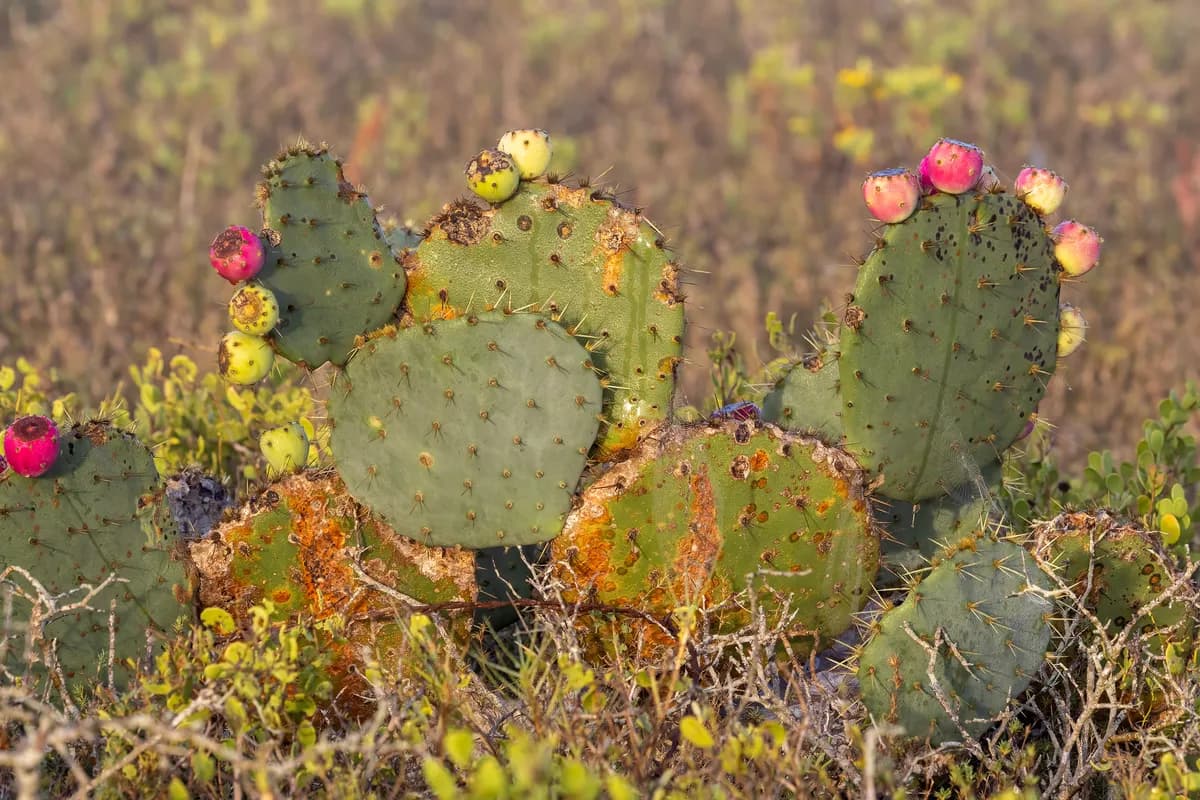
This prickly pear is a spreading, jointed succulent with broad flattened pads covered in spines, producing bright yellow flowers in late spring. It grows in dry, sandy open ground.
Growing Opuntia gomei
Grow Opuntia gomei in full sun and low water. Mature plants reach 24 to 60 inches tall and spread 36 to 72 inches wide.
How to care for Opuntia gomei, by region
How to care for Opuntia gomei where it is actually grown: year-round basics plus what to do each season, region by region, with the sources for each.
Care guidance last updated: August 2026
Cross Timbers (includes Fort Worth, TX)
Year-round
Old Mexico pricklypear (Opuntia gomei) wants full sun, quick drainage, and a lot of room, and the Fort Worth area's naturally sandier Cross Timbers soil is actually a point in its favor.
- Give it full sun and soil that drains fast. This plant comes from hot, dry brushland in South Texas and Tamaulipas and does not want a low spot that holds water.
- Much of the Fort Worth area sits in the Cross Timbers ecoregion, where native soils run coarse and sandy rather than heavy clay, which naturally helps this cactus avoid the soggy roots that cause rot. If your yard has been amended with heavier topsoil, check that water still drains within a few hours after a rain.
- Water established plants deeply but rarely, letting the soil dry out completely between waterings. Overwatering, not underwatering, is the most common way to lose a pricklypear.
- This Old Mexico selection was bred for smooth, nearly spineless pads, but every areole still carries tiny hairlike glochids that irritate skin on contact. Handle pruned or fallen pads with barbecue tongs or thick gloves, not bare hands.
- Expect a broad, arching shrub that reaches roughly 5 feet tall and 8 feet wide over several years, so give it room before it crowds a walkway, fence line, or foundation bed.
- Check periodically for cochineal scale, which shows up as white cottony tufts that bleed deep red when crushed. A strong spray of water knocks off a light infestation, and insecticidal soap covers anything heavier.
The smooth-padded, spineless look and shrub-like habit read as tidy near a front walk, but the plant needs its full 5 by 8 foot mature footprint, so plan the setback before it fills out.
Fall
Fall is the last good window for pruning or dividing before the average first freeze, and the time to taper off water.
- The Fort Worth area's average first freeze lands around November 22, per National Weather Service records, so early to mid fall is a good window to finish any pruning, dividing, or transplanting while the plant can still callus over and root before hard cold arrives.
- Taper watering as the days shorten and the heat breaks. Going into winter with dry soil is far better for this cactus than going in wet.
- Fruit may still be ripening on some plants into fall. Leave it for wildlife if you are not harvesting, and clear any dropped pads or fruit off a walkway, since both still carry glochids.
- Give the pads one more scale check before cooler weather slows that pest down on its own for the season.
Winter
A typical Fort Worth winter is well within this cactus's cold tolerance, but a hard Arctic outbreak is a real risk worth planning for.
- This selection is reported hardy to about 10 degrees Fahrenheit, which covers a normal Fort Worth winter (USDA zone 8a). The region has also seen sharp Arctic outbreaks well below that mark, including a record low of 2 degrees below zero Fahrenheit at DFW airport during the February 2021 winter storm, so cover in ground plants or move potted ones under shelter whenever a hard freeze warning goes out.
- Do not water in winter. Dry, dormant pads handle cold far better than wet ones, and winter watering right before a freeze is a common way to lose pads to rot.
- Pads may take on a reddish or purplish tint and look slightly shriveled in cold weather. That is a normal stress response, and they typically green up and plump back out once temperatures warm.
- Winter is otherwise low maintenance. Skip fertilizer entirely until new growth appears in spring.
Spring
Spring in Fort Worth means waiting out the last frost, then planting, dividing, or taking cuttings once the soil warms.
- Hold off on planting new pads, dividing a clump, or transplanting until after the average last freeze. For the Fort Worth area that lands around March 12, per National Weather Service records, and a late cold snap can hit a freshly cut pad harder than an established plant.
- New pads emerge from last year's growth through spring. Skip fertilizer, this cactus grows fine in ordinary soil and extra nitrogen just produces weak, floppy pads.
- Spring rain usually covers this plant's water needs on its own. Do not add supplemental watering unless several weeks pass with no rain at all.
- This is the best season to take a pad cutting for propagation, since warm soil and active growth help a cut pad root fastest.
Summer
Summer heat is this plant's comfort zone in Fort Worth, watering stays minimal, and it is prime season to watch for scale insects.
- Fort Worth summers regularly bring weeks of triple-digit heat, and an established plant handles it without help. A young or newly planted specimen benefits from one deep soak every 3 to 4 weeks during a long dry stretch, not more often.
- Yellow flowers typically open in late spring into early summer, followed later by reddish fruit. Both are normal and do not need to be removed.
- Warm weather is when cochineal scale is most active. Check the pads every few weeks for white cottony patches and hose them off before an infestation spreads.
- Watch drainage after a heavy summer thunderstorm. Standing water around the roots in hot, humid weather is one of the fastest routes to pad and root rot.
Sources: Spadefoot Nursery, Old Mexico Pricklypear (Opuntia gomei) care sheet, Texas Parks and Wildlife Department, Texas Ecoregions overview (Cross Timbers soils), Texas Master Gardener, Williamson County, Cochineal Scale Insect on Prickly Pear, Jayme Garden, Opuntia gomei Old Mexico pad cutting listing (propagation and handling notes), National Weather Service, Fort Worth office, Annual Normals, Means, and Extremes, National Weather Service, Fort Worth office, Freeze Data and Cold Season Temperatures
Texas Blackland Prairies (includes Dallas, TX)
Year-round
Old Mexico pricklypear (Opuntia gomei) wants full sun and quick drainage, and Dallas's heavy Blackland Prairie clay makes drainage the one thing to actively engineer.
- Give it full sun and soil that drains fast. This plant comes from hot, dry brushland in South Texas and Tamaulipas and does not want a low spot that holds water.
- Dallas sits in the Texas Blackland Prairies ecoregion, known for heavy black clay (Vertisol) soil that swells when wet and drains slowly. For this cactus, that means planting on a raised mound or berm, or amending generously with expanded shale or coarse gravel, rather than planting it directly in unamended clay.
- Water established plants deeply but rarely, letting the soil dry out completely between waterings. In Dallas clay, overwatering is the most common way to lose a pricklypear to rot.
- This Old Mexico selection was bred for smooth, nearly spineless pads, but every areole still carries tiny hairlike glochids that irritate skin on contact. Handle pruned or fallen pads with barbecue tongs or thick gloves, not bare hands.
- Expect a broad, arching shrub that reaches roughly 5 feet tall and 8 feet wide over several years, so give it room before it crowds a walkway, fence line, or foundation bed.
- Check periodically for cochineal scale, which shows up as white cottony tufts that bleed deep red when crushed. A strong spray of water knocks off a light infestation, and insecticidal soap covers anything heavier.
The smooth-padded, spineless look and shrub-like habit read as tidy near a front walk, but the plant needs its full 5 by 8 foot mature footprint and a raised, well-drained planting spot, so plan both the setback and the mound before it fills out.
Fall
Fall is the last good window for pruning or dividing before the average first freeze, and the time to taper off water.
- The Dallas-Fort Worth area's average first freeze lands around November 22, per National Weather Service records, so early to mid fall is a good window to finish any pruning, dividing, or transplanting while the plant can still callus over and root before hard cold arrives.
- Taper watering as the days shorten and the heat breaks. Going into winter with dry soil is far better for this cactus than going in wet, especially in Dallas's slow-draining clay.
- Fruit may still be ripening on some plants into fall. Leave it for wildlife if you are not harvesting, and clear any dropped pads or fruit off a walkway, since both still carry glochids.
- Give the pads one more scale check before cooler weather slows that pest down on its own for the season.
Winter
A typical Dallas winter is well within this cactus's cold tolerance, but a hard Arctic outbreak is a real risk worth planning for.
- This selection is reported hardy to about 10 degrees Fahrenheit, which covers a normal Dallas winter (USDA zone 8a, with some parts of the metro mapped to 8b). The region has also seen sharp Arctic outbreaks well below that mark, including a record low of 2 degrees below zero Fahrenheit at DFW airport during the February 2021 winter storm, so cover in ground plants or move potted ones under shelter whenever a hard freeze warning goes out.
- Do not water in winter. Dry, dormant pads handle cold far better than wet ones, and winter watering right before a freeze is a common way to lose pads to rot, especially where clay soil is already slow to drain.
- Pads may take on a reddish or purplish tint and look slightly shriveled in cold weather. That is a normal stress response, and they typically green up and plump back out once temperatures warm.
- Winter is otherwise low maintenance. Skip fertilizer entirely until new growth appears in spring.
Spring
Spring in Dallas means waiting out the last frost, then planting, dividing, or taking cuttings once the soil warms, ideally on a raised, well-drained spot.
- Hold off on planting new pads, dividing a clump, or transplanting until after the average last freeze. For the Dallas-Fort Worth area that lands around March 12, per National Weather Service records, and a late cold snap can hit a freshly cut pad harder than an established plant.
- If you are planting new pads this spring, set them into a raised, amended spot rather than straight into Dallas's heavy clay so spring rains do not sit around the roots.
- New pads emerge from last year's growth through spring. Skip fertilizer, this cactus grows fine in ordinary soil and extra nitrogen just produces weak, floppy pads.
- This is the best season to take a pad cutting for propagation, since warm soil and active growth help a cut pad root fastest.
Summer
Summer heat is this plant's comfort zone in Dallas, watering stays minimal, and it is prime season to watch for scale insects and standing water after storms.
- Dallas summers regularly bring weeks of triple-digit heat, and an established plant handles it without help. A young or newly planted specimen benefits from one deep soak every 3 to 4 weeks during a long dry stretch, not more often.
- Yellow flowers typically open in late spring into early summer, followed later by reddish fruit. Both are normal and do not need to be removed.
- Warm weather is when cochineal scale is most active. Check the pads every few weeks for white cottony patches and hose them off before an infestation spreads.
- A heavy summer thunderstorm can pond on Dallas's dense clay for longer than you would expect. Check that the base of the plant drains within a few hours, since standing water in hot, humid weather is one of the fastest routes to pad and root rot.
Sources: Spadefoot Nursery, Old Mexico Pricklypear (Opuntia gomei) care sheet, Texas Parks and Wildlife Department, Blackland Prairie Ecological Region, Texas Master Gardener, Williamson County, Cochineal Scale Insect on Prickly Pear, Jayme Garden, Opuntia gomei Old Mexico pad cutting listing (propagation and handling notes), National Weather Service, Fort Worth office, Freeze Data and Cold Season Temperatures, D Magazine, What You Need To Know About the Historic Dallas Fort Worth Winter Storm (February 2021) (community tip)
Wildlife value
The flowers are worked by native bees, including specialist cactus-visiting bees, and the fruit that follows is eaten by birds and mammals.
Common questions
- How much sun does Opuntia gomei need?
- Opuntia gomei grows best in full sun conditions.
- When does Opuntia gomei bloom?
- Opuntia gomei blooms in April, May, and June.
- Where is Opuntia gomei native?
- Opuntia gomei is native to LA, NM, TX, per the World Checklist of Vascular Plants (Kew).
- Is Opuntia gomei toxic to dogs?
- Opuntia gomei is not on the ASPCA Animal Poison Control Center toxic plant list for dogs (aspca.org).
- Is Opuntia gomei toxic to cats?
- Opuntia gomei is not on the ASPCA Animal Poison Control Center toxic plant list for cats (aspca.org).
- What pollinators does Opuntia gomei attract?
- Opuntia gomei draws native bees.
Native range data from the World Checklist of Vascular Plants (Kew). Pollinator and host plant associations compiled from GBIF, iNaturalist, and published ecological literature.
If something looks wrong
Common plant problems, and what to check first
These come up on almost any plant. Each guide lists the likely causes in the order they are worth ruling out, with one thing to check before you act on any of them, and links to the source it came from.
- It is dying right after planting
- Leaves turning yellow
- Wilting even though I watered it
- Brown crispy leaf tips
- Bugs on the plant
Ready to grow Opuntia gomei? Add it to your garden in Pollinator Patch to track it and get season-by-season care guidance.