Scarlet Lobelia
Lobelia cardinalis
Last reviewed: July 2026
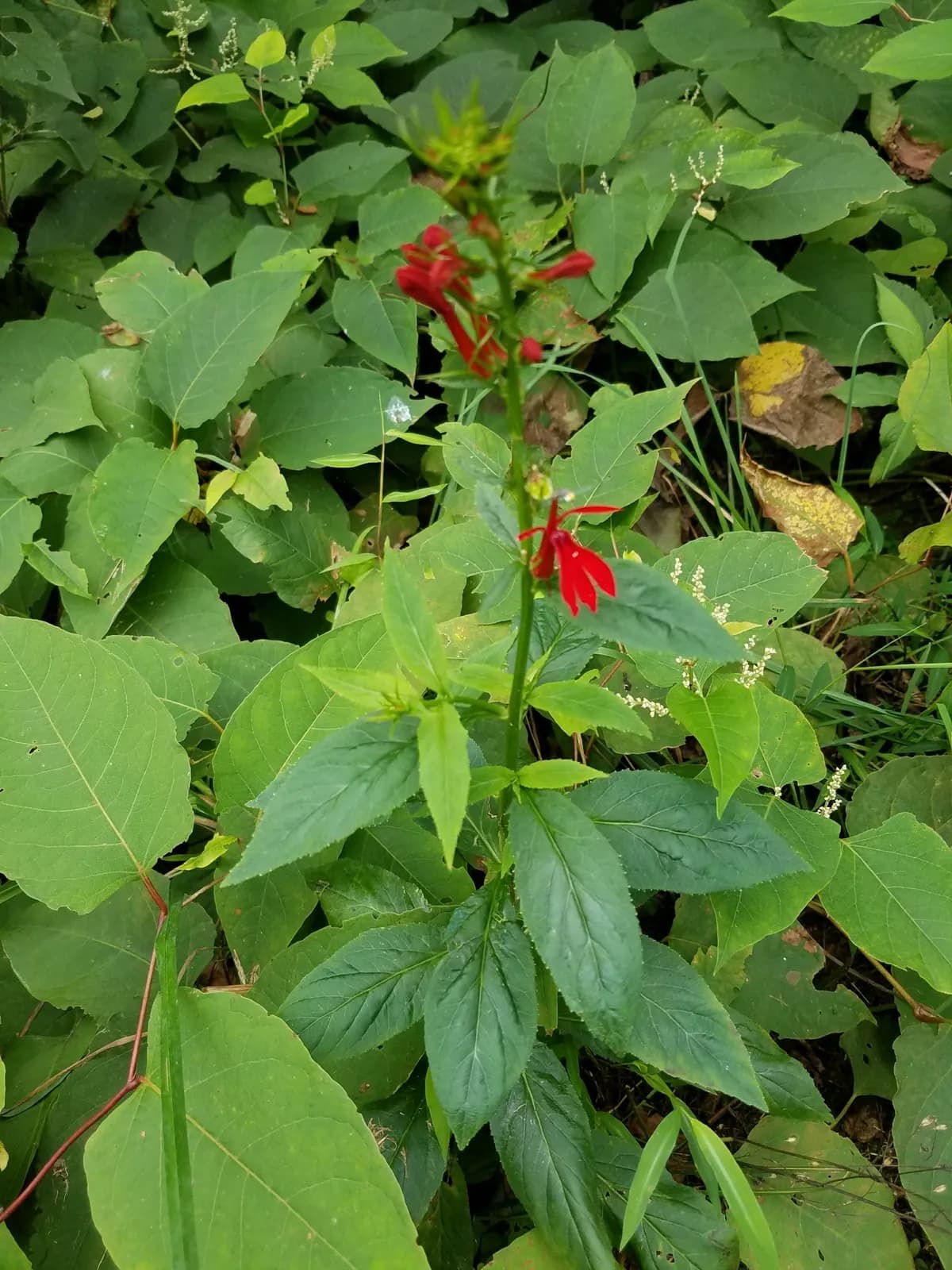
Lobelia cardinalis produces brilliant red flower spikes from July through September, thriving in moist soils across most of the United States. This native perennial attracts hummingbirds, bees, and butterflies to gardens and naturalized areas.
Scarlet Lobelia is toxic to dogs and cats.
Listed as toxic by the ASPCA Animal Poison Control Center (opens in new tab) (last reviewed 2026-05-21). If your pet has been exposed, call the ASPCA Animal Poison Control Center at (888) 426-4435and your veterinarian's emergency line.
Pollinator Patch flags toxic plants so you can choose a pet-safe native alternative for your yard.
The USDA PLANTS Database (opens in new tab) does not flag Scarlet Lobelia as toxic to livestock.
Light
part sun
Water
high
Size
12"–48" H × 12"–24" W
Bloom
Jul, Aug, Sep
Native to
AL, AR, AZ, CA and 38 more states
Pollinators
hummingbirds, bees, butterflies
Deer
Resistant (per Prairie Moon Nursery)
Browse plants for this ecoregion
Scarlet lobelia produces brilliant red flower spikes that create striking vertical accents in the garden from summer through early fall. This moisture-loving native perennial thrives in partly shaded areas with consistent water and forms clumps of dark green foliage.
Growing Scarlet Lobelia
Grow Scarlet Lobelia in part sun and high water. Mature plants reach 12 to 48 inches tall and spread 12 to 24 inches wide. Expect moderate maintenance to keep it looking intentional in a front yard.
In an HOA neighborhood
Scarlet Lobelia is an HOA-friendly choice. Maintenance level: moderate. Tidiness: 4 out of 5.
Works well in: front yard, foundation, mid zone.
- Requires consistent moisture which may increase maintenance expectations
Wildlife value
The bright red tubular flowers are specifically adapted for hummingbirds, making this an excellent hummingbird magnet. Bees and butterflies also visit the blooms regularly.
Common questions
- When does Lobelia cardinalis bloom?
- Scarlet Lobelia blooms from July through September, producing striking red flower spikes that are particularly attractive to hummingbirds.
- What pollinators visit Lobelia cardinalis?
- This native plant attracts hummingbirds as its primary pollinators, along with bees and butterflies that visit the tubular red flowers.
- Where is Scarlet Lobelia native?
- Lobelia cardinalis is native to most U.S. states, from coast to coast, including Alabama through Wyoming and from Maine to California.
- What growing conditions does Lobelia cardinalis prefer?
- Scarlet Lobelia thrives in consistently moist to wet soils and tolerates full sun to partial shade, making it ideal for rain gardens and pond edges.
- Is Scarlet Lobelia toxic to dogs?
- Yes. Scarlet Lobelia is listed as toxic to dogs by the ASPCA Animal Poison Control Center (aspca.org). If your pet has been exposed, call the ASPCA Animal Poison Control Center at (888) 426-4435.
- Is Scarlet Lobelia toxic to cats?
- Yes. Scarlet Lobelia is listed as toxic to cats by the ASPCA Animal Poison Control Center (aspca.org). If your cat has been exposed, call the ASPCA Animal Poison Control Center at (888) 426-4435.
- Is Scarlet Lobelia toxic to livestock?
- The USDA PLANTS Database does not flag Scarlet Lobelia as toxic to livestock.
- Is Scarlet Lobelia HOA-friendly?
- Scarlet Lobelia is generally an HOA-friendly choice in the right placement, with moderate maintenance.
Native range data from the USDA PLANTS Database and regional native plant society lists. Pollinator and host plant associations compiled from GBIF, iNaturalist, and published ecological literature.
Pollinator Patch flags toxic plants like Scarlet Lobelia and shows pet-safe natives for your ecoregion instead.
Not sure where to start? Take the 2-minute yard quiz