Spiny Sida
Sida spinosa
Last reviewed: September 2026
Toxicity unknown
Spiny Sida (Sida spinosa) is not listed by the ASPCA Animal Poison Control Center (opens in new tab) or the other sources we check, so we have no verdict for it either way. Absence from those lists is not a clearance. If your pet shows symptoms after eating any plant, call the ASPCA at (888) 426-4435.
Light
full sun
Water
low
Size
12"–36" H × 6"–18" W
Bloom
Jul, Aug, Sep
Native to
AZ, FL, LA, TX
Pollinators
bees, beetles
Before you buy
Your city may pay you to plant this
Cities and water utilities offer rebates for replacing lawn with native and water-wise plants. We track 459 programs across 44 states, each with a link to the provider and the date we last checked it.
Find rebates in your areaPicture natives in your own yard
Upload a photo of your yard and Patch Vision shows a rendering of it planted with natives for your region, like Spiny Sida.


Browse plants for this ecoregion
Spiny sida is a low-growing annual wildflower with small yellow blooms that appear throughout the summer months. This drought-tolerant plant thrives in sunny locations and requires minimal watering once established. Despite being native, it has a somewhat weedy appearance and can self-seed readily.
How to care for Spiny Sida, by region
How to care for Spiny Sida where it is actually grown: year-round basics plus what to do each season, region by region, with the sources for each.
Care guidance last updated: September 2026
Mississippi Alluvial Plain (includes Memphis, TN)
Year-round
Spiny sida is a common, fast growing annual that shows up readily in sunny, disturbed Memphis garden soil, and it can be managed for pollinator value or kept in check depending on what you want from the bed.
- Grows best in full sun and average to poor, well drained soil, including disturbed or compacted spots.
- Small yellow flowers open in sunny conditions and provide some nectar for small pollinators.
- Stems carry small spines, so wear gloves when handling or pulling it.
- Self seeds readily, so decide early whether you want to let it spread or deadhead to control it.
- If you would rather not keep it, pull young plants before seed pods form to limit spread.
Because it self seeds freely in open soil, deadheading spent flowers keeps a bed looking tidy for an HOA-conscious front yard.
Fall
Flowering continues into early fall in Memphis, after which spiny sida sets its spiny seed pods.
- Blooming continues until the first fall frost slows growth.
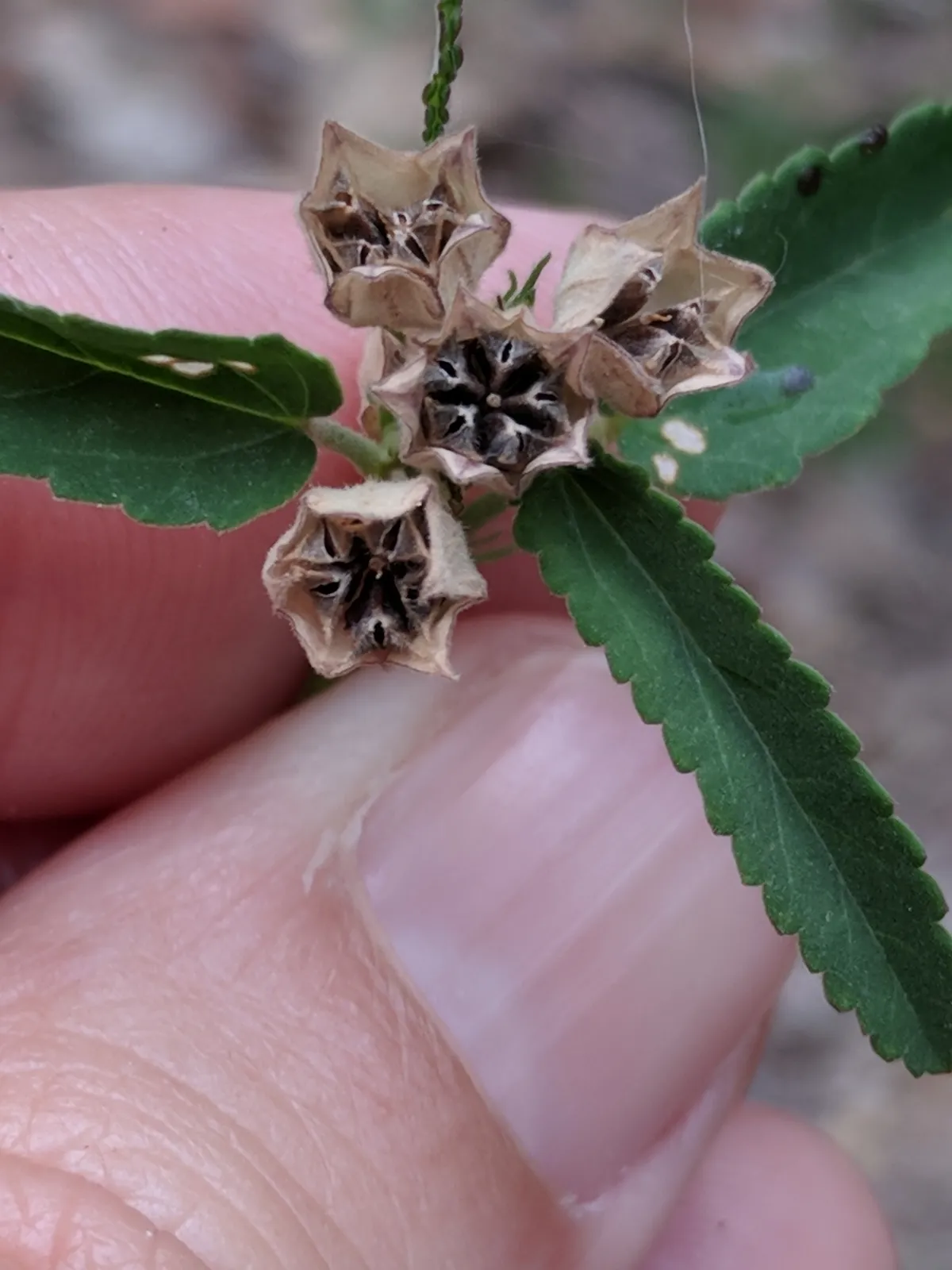
- Seed pods that follow the flowers are bur like and can stick to clothing, shoes, and animal fur as they pass by, so mature plants near paths are worth pulling before the pods set.
- Pull plants before pods fully mature if you want to reduce next year's seedlings.
- Leave a few plants to seed if you are fine with it returning for pollinator value.
Winter
As an annual, spiny sida is killed by Memphis's first hard frost and will not return from the same roots next spring.
- Plants die back completely after the first fall frost, averaging around early November in Memphis.
- Remove dead stalks once they have browned, since the spines remain on dried stems.
- Seed that dropped over summer and fall stays in the soil and will germinate again next spring.
- No winter care is needed since it does not overwinter as a living plant.
Spring
Spiny sida germinates readily once Memphis soil warms after the last spring frost.
- Seed germinates in warm soil, typically after Memphis's average last frost in mid to late March.
- Pull unwanted seedlings early while the spines are still soft and easy to manage.
- If keeping some for pollinators, thin to a few well spaced plants rather than a dense patch.
- No fertilizer or soil amendment is needed to get it going.
Summer
Spiny sida thrives in Memphis's hot, humid summer, flowering steadily in full sun.
- Small yellow flowers open during the day in full sun through the summer.
- Tolerates heat, humidity, and dry spells without extra watering.
- Deadhead spent flowers regularly if you want to limit how much it reseeds.
- Watch for the small spines on stems when weeding nearby, especially with bare hands.
Sources: University of Tennessee Extension: Arrowleaf Sida / Prickly Sida (D51), ASPCA Toxic and Non-Toxic Plants List, National Weather Service Memphis: Frost and Freeze Data
In an HOA neighborhood
Spiny Sida takes more care to keep looking intentional in a front yard. Maintenance level: low. Consider it for backyard or mid-zone beds rather than the street edge.
Works well in: backyard only.
- Has spines that may be considered undesirable
- Weedy appearance typical of aggressive annual plants
- Tends to self-seed and spread unpredictably
Wildlife value
The small yellow flowers attract bees and beetles during the summer blooming period. As an annual, it provides seasonal nectar resources for pollinators from July through September.
Common questions
- How much sun does Spiny Sida need?
- Spiny Sida grows best in full sun conditions.
- When does Spiny Sida bloom?
- Spiny Sida blooms in July, August, and September.
- Where is Spiny Sida native?
- Spiny Sida (Sida spinosa) is native to AZ, FL, LA, TX, per the World Checklist of Vascular Plants (Kew).
- What pollinators does Spiny Sida attract?
- Spiny Sida draws bees and beetles.
- Is Spiny Sida HOA-friendly?
- Spiny Sida takes more care to look intentional in a front yard. Consider it for backyard or mid-zone beds rather than the street edge.
Native range data from the World Checklist of Vascular Plants (Kew). Pollinator and host plant associations compiled from GBIF, iNaturalist, and published ecological literature.
If something looks wrong
Common plant problems, and what to check first
These come up on almost any plant. Each guide lists the likely causes in the order they are worth ruling out, with one thing to check before you act on any of them, and links to the source it came from.
- It is dying right after planting
- Leaves turning yellow
- Wilting even though I watered it
- Brown crispy leaf tips
- Bugs on the plant
Ready to grow Spiny Sida? Add it to your garden in Pollinator Patch to track it and get season-by-season care guidance.