Wild Petunia
Ruellia nudiflora
Last reviewed: August 2026
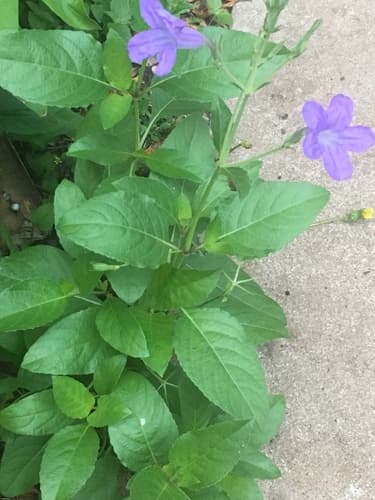
Ruellia nudiflora is a low, clump-forming forb with lavender-purple, petunia-like flowers that open from spring through late fall in sunny, well-drained sites across warm southern climates. It draws butterflies and other nectar-feeding insects.
Toxicity unknown
Wild Petunia (Ruellia nudiflora) is not listed by the ASPCA Animal Poison Control Center (opens in new tab) or the other sources we check, so we have no verdict for it either way. Absence from those lists is not a clearance. If your pet shows symptoms after eating any plant, call the ASPCA at (888) 426-4435.
Light
full sun
Water
low
Size
12"–24" H × 6"–12" W
Bloom
Mar, Apr, May, Jun, Jul, Aug, Sep, Oct, Nov
Native to
AL, AZ, TX
Pollinators
butterflies, nectar insects
Before you buy
Your city may pay you to plant this
Cities and water utilities offer rebates for replacing lawn with native and water-wise plants. We track 452 programs across 44 states, each with a link to the provider and the date we last checked it.
Find rebates in your areaBrowse plants for this ecoregion
Wild Petunia is a low-growing native perennial that produces small purple flowers from spring through fall. This drought-tolerant plant forms neat clumps and requires minimal care once established.
Growing Wild Petunia
Grow Wild Petunia in full sun and low water. Mature plants reach 12 to 24 inches tall and spread 6 to 12 inches wide. Expect low maintenance to keep it looking intentional in a front yard.
How to care for Wild Petunia, by region
How to care for Wild Petunia where it is actually grown: year-round basics plus what to do each season, region by region, with the sources for each.
Care guidance last updated: August 2026
Western Gulf Coastal Plain (includes Houston, TX)
Year-round
Western wild petunia comes from the well drained rocky soils of the Texas Hill Country, so in Houston's heavy clay the key is getting drainage right before anything else.
- Plant in part shade to shade with soil that drains well, amend Houston's heavy clay with expanded shale or coarse sand before planting
- Once established it tolerates both dry spells and regular moisture, but water only when the top few inches of soil dry out
- Mulch 2 to 3 inches deep to buffer Houston's swings between heavy rain and humid heat
- The most common mistake is planting it in a low spot or unamended clay, standing water after Houston's frequent downpours will rot the roots
Its naturally dense, neat, rounded form reads as tidy from the curb, a plus for an HOA-conscious front bed, just get the drainage right first.
Fall
Fall is peak bloom season for western wild petunia, right as Houston's hurricane season winds down.
- Enjoy the main bloom window, showy lavender purple flowers on a neat, rounded form run through September and October
- Check the planting bed for pooling water after any tropical storm and improve drainage if you see it
- Deadheading is not needed, let the plant set seed if you want it to fill in
- Trim only wind damaged or broken stems after a storm
Winter
Houston winters are mild most years, and western wild petunia is cold tolerant enough to handle the occasional freeze.
- Expect the plant to hold up through typical Houston winter lows, it is noted as cold tolerant
- After a hard freeze, wait to prune until you see where new growth resumes in spring
- Cut back watering substantially, wet clay soil combined with winter cold raises the risk of root rot
- A dry mulch layer helps buffer roots during any cold snap
Spring
Houston spring brings frequent rain, so newly planted western wild petunia rarely needs extra watering.
- Check drainage after spring downpours, standing water for more than a few hours around the roots is a warning sign
- Watch for new growth, this species is easy and fast from seed, thin seedlings if they come up too thick
- Skip fertilizer, this species grows fine in lean, rocky type conditions and does not need rich feeding
- Hold off on heavy pruning this season, let the plant fill out ahead of its late summer bloom
Summer
Houston summers are hot, humid, and prone to heavy rain, all of which test a plant bred for drier rocky ground.
- Prioritize drainage over watering, this species is heat tolerant but struggles if roots stay wet in Houston's humidity
- Watch for fungal leaf spotting in the humidity and thin crowded stems for airflow
- Expect the showy purple flowers to begin by late summer, blooming runs August through October
- Let dry spells between Houston's heavy rain events run their course rather than adding supplemental water
Sources: Lady Bird Johnson Wildflower Center - Ruellia occidentalis
Want these tasks as reminders timed to your yard? Pollinator Patch turns this guidance into a season-by-season care plan for the plants you actually grow.
In an HOA neighborhood
Wild Petunia is an HOA-friendly choice. Maintenance level: low. Tidiness: 4 out of 5.
Works well in: front yard, foundation, street edge, mid zone.
Wildlife value
The long blooming season provides nectar for butterflies and other beneficial insects from March through November. Its extended flowering period makes it valuable for supporting pollinators throughout most of the growing season.
Common questions
- When does Ruellia nudiflora bloom?
- It typically flowers from March through November, with individual blooms opening for a single day before new ones take their place.
- What pollinators visit Ruellia nudiflora?
- The flowers attract butterflies along with other nectar-seeking insects.
- What growing conditions suit Ruellia nudiflora best?
- It does well in full sun with low water needs, thriving in well-drained soils typical of open fields, roadsides, and woodland edges in warm regions like Texas, Arizona, and Alabama.
- Is Wild Petunia HOA-friendly?
- Wild Petunia is generally an HOA-friendly choice in the right placement, with low maintenance.
These answers were drafted with an AI model from this plant's data. Verify care details with a local expert.
Native range data from the World Checklist of Vascular Plants (Kew). Pollinator and host plant associations compiled from GBIF, iNaturalist, and published ecological literature.
If something looks wrong
Common plant problems, and what to check first
These come up on almost any plant. Each guide lists the likely causes in the order they are worth ruling out, with one thing to check before you act on any of them, and links to the source it came from.
- It is dying right after planting
- Leaves turning yellow
- Wilting even though I watered it
- Brown crispy leaf tips
- Bugs on the plant
Ready to grow Wild Petunia? Add it to your garden in Pollinator Patch to track it and get season-by-season care guidance.
Planning a bed around it? Start a free plan with this plant
Not sure where to start? Take the 2-minute yard quiz