False Indigo Bush
Amorpha fruticosa
Last reviewed: October 2026
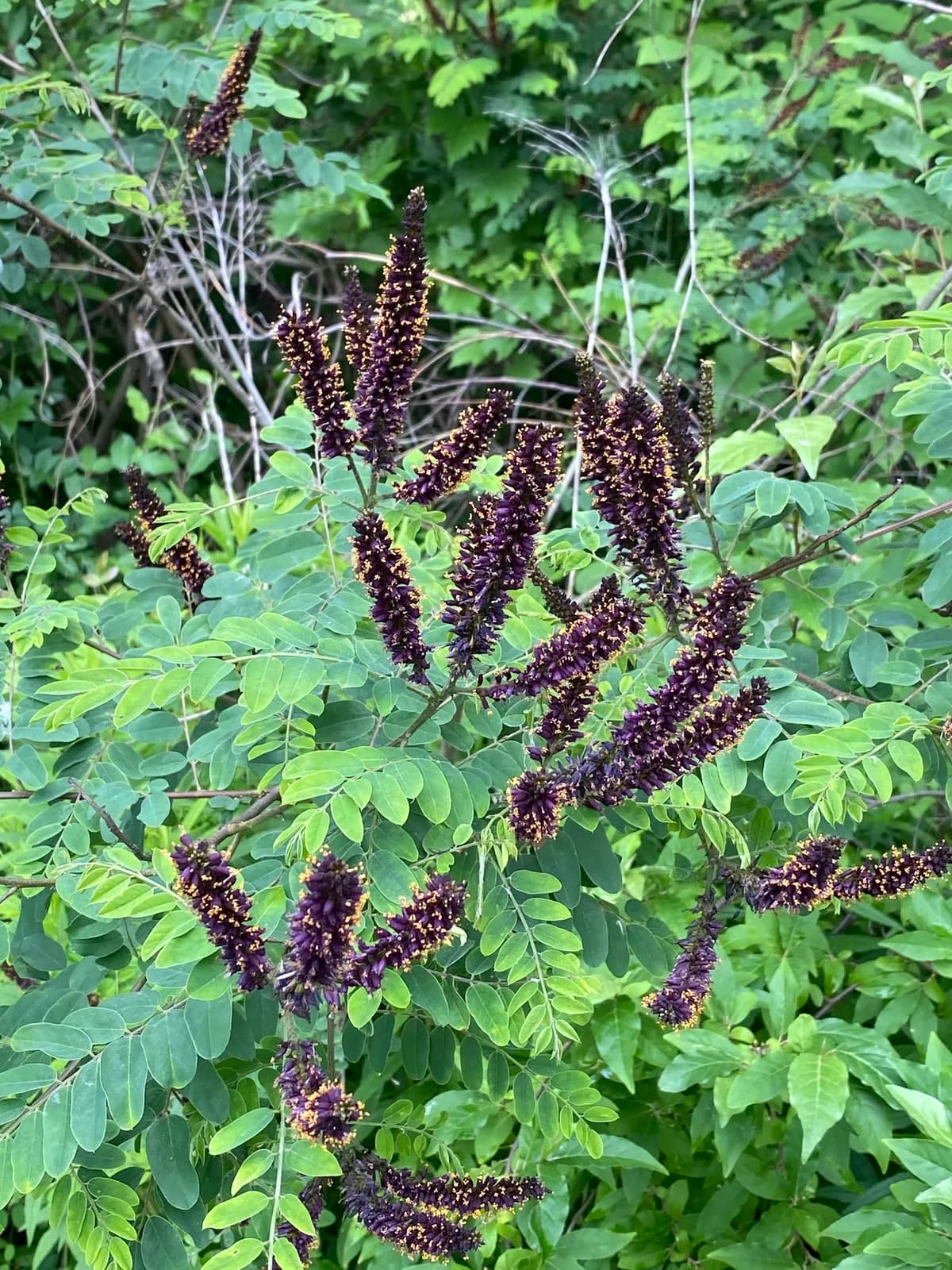
Bastard indigo-bush is a fast-growing deciduous shrub that blooms from May through July with dense spikes of purple flowers. It grows well in full sun with medium moisture but also tolerates wetter streambanks and drier upland sites.
Toxicity unknown
False Indigo Bush (Amorpha fruticosa) is not listed by the ASPCA Animal Poison Control Center (opens in new tab) or the other sources we check, so we have no verdict for it either way. Absence from those lists is not a clearance. If your pet shows symptoms after eating any plant, call the ASPCA at (888) 426-4435.
False Indigo Bush is listed as toxic to grazing livestock such as cattle, sheep, and goats at a slight level by the USDA PLANTS Database (opens in new tab). This is a livestock indicator and is separate from pet toxicity.
Light
full sun
Water
medium
Size
72"–144" H × 72"–144" W
Bloom
Mar, Apr, May
Native to
AL, AZ, CA, CO and 17 more states
Pollinators
bees, butterflies, moths, hummingbirds
Deer
Resistant (per Prairie Moon Nursery)
Before you buy
Your city may pay you to plant this
Cities and water utilities offer rebates for replacing lawn with native and water-wise plants. We track 459 programs across 44 states, each with a link to the provider and the date we last checked it.
Find rebates in your areaPicture natives in your own yard
Upload a photo of your yard and Patch Vision shows a rendering of it planted with natives for your region, like False Indigo Bush.


Browse plants for this ecoregion
Bastard indigo-bush is a large native shrub that produces spikes of small purple flowers from May through July. This robust plant can reach 8-20 feet tall and wide, making it suitable for larger landscape spaces where a substantial shrub is desired.
Growing False Indigo Bush
Grow False Indigo Bush in full sun and medium water. Mature plants reach 72 to 144 inches tall and spread 72 to 144 inches wide. Expect low maintenance to keep it looking intentional in a front yard.
How to care for False Indigo Bush, by region
How to care for False Indigo Bush where it is actually grown: year-round basics plus what to do each season, region by region, with the sources for each.
Care guidance last updated: September 2026
Cross Timbers (includes Fort Worth, TX)
Year-round
False Indigo Bush is a big shrub, not a front bed plant. It reaches 8 to 20 feet tall, often spreads wider than it is tall, and sends up new shoots from its roots, so give it room at the back or side of the lot or use it as a screen.
- Plan for a mature footprint of at least 12 feet across, and keep it 10 feet or more away from a walkway, driveway or window.
- Best spots are a back property line, a side fence, a low wet corner, or the edge of a creek or drainage swale, since this is a bottomland shrub that takes occasional flooding better than most.
- Full sun to light shade, average to moist soil. In heavy black clay, set it high on a slight mound so water does not sit around the crown. In the sandier soils west of the metro it drains fast, so plan on watering more often through the first summer.
- Expect new shoots (suckers) to come up a few feet out from the main clump. Cut or mow them once a year and the patch stays where you put it.
- It is native to Texas and it feeds the caterpillars of the silver spotted skipper and the dogface butterflies, so leave the chewed leaves alone and skip insecticide sprays on it.
Sited along a back or side line with one yearly sucker cleanup, this shrub reads as an intentional screen rather than a volunteer thicket. At this size it is a poor fit for a visible front bed, which is why our data does not mark it HOA-friendly.
Fall
Fall is the better window for planting a woody shrub here. Cool air and autumn rain let the roots grow before winter, so a fall planting establishes far more easily than a spring one.
- Plant from mid October through November, well ahead of the mid November first frost, and water it in once a week until the ground turns cold.
- Dig the hole twice as wide as the pot and no deeper. In heavy black clay, set the top of the root ball an inch or two above the surrounding grade so it is not sitting in water after a storm.
- If you want more plants, collect the seed pods in late summer or early fall when they turn yellowish brown. The seed needs a nick in its coat or a long warm water soak before it will sprout.
- Cut back any suckers that spread during the growing season, then rake and re-cut the bed edge so the footprint is clear going into winter.
- Leaves drop in fall. Leave a loose layer under the shrub as free mulch, or rake it into a back corner where insects can overwinter in it.
A defined footprint and a crisp bed edge going into winter is what makes a bare deciduous shrub read as a planned part of the yard rather than something that got away from you.
Winter
The shrub drops its leaves and stands as bare stems all winter, which is normal. Winter is when the real pruning happens, and our short hard freezes do not bother it.
- Its native range runs all the way north into Canada, so it needs no wrapping or protection here, even during a severe Arctic outbreak.
- Late February is the pruning window. To reset a shrub that has gotten too big or too bare at the bottom, cut the whole thing back to 12 to 18 inches. It comes back strongly from the base.
- Take out dead, crossed or broken stems at ground level now, while there are no leaves in the way and you can see the structure.
- In a dry, warm winter stretch, give it one deep watering a month, especially in sandy soil that drains fast.
- Dig out unwanted suckers while the ground is soft from winter rain and the bare stems are easy to spot.
Bare stems on a shrub this size can look unkempt, so the February cut plus a tidy footprint give it a deliberate winter shape during the months when nothing in the bed is growing.
Spring
Spring is pruning and planting time. Get any shaping done before the leaves come out in March, then enjoy the purple flower spikes from about May into early July.
- Make your shaping cuts in late February or early March, before new leaves appear. Taking out the oldest third of the stems at ground level keeps the shrub from going bare and leggy at the bottom.
- Plant new shrubs from mid March once the last frost has passed, so the roots get the mild spring weeks to settle in.
- Water a first year shrub deeply once a week through spring, more often in fast draining sandy soil, and skip a week when spring storms have already soaked the ground.
- Walk the base in April and cut off any suckers that have come up outside the space you gave it.
- Skip the fertilizer. This is a bean family shrub that makes its own nitrogen with the help of bacteria on its roots.
A late winter cut plus a clean bed edge in March is what makes a shrub this large read as maintained instead of wild, which matters most in the season when neighbors are outside looking at yards.
Summer
July and August are the hard weeks in North Texas. An established plant handles the heat and the dry spells, but one planted this year can die in a single week without water.
- Water a first year shrub deeply every 4 to 5 days once afternoons reach 100F. A plant in its second year or later usually only needs a deep soak every 10 to 14 days.
- Before you water, push a finger 2 inches into the soil and only water if it is dry that deep. Black clay holds water for days while sandy loam dries out fast, so the same schedule would drown one and starve the other.
- Spread 2 to 3 inches of mulch out to the edge of the branches, kept off the stems, to hold moisture through the rainless stretches.
- Seed pods form after the flowers fade in July. Clip the spent spikes then if you would rather not have seedlings coming up nearby.
- Do not prune hard in the heat. Limit summer cuts to broken or clearly dead stems.
Clipping the spent flower spikes and keeping the mulch line crisp through August is a 10 minute job that keeps the planting looking cared for in the month when most yards look their worst.
Sources: Lady Bird Johnson Wildflower Center, Amorpha fruticosa, Missouri Botanical Garden Plant Finder, Amorpha fruticosa, USDA NRCS Plant Guide, Desert False Indigo (Amorpha fruticosa), USDA PLANTS Database plant profile, Amorpha fruticosa (AMFR), native status
Texas Blackland Prairies (includes Dallas, TX)
Year-round
False Indigo Bush is a big shrub, not a front bed plant. It reaches 8 to 20 feet tall, often spreads wider than it is tall, and sends up new shoots from its roots, so give it room at the back or side of the lot or use it as a screen.
- Plan for a mature footprint of at least 12 feet across, and keep it 10 feet or more away from a walkway, driveway or window.
- Best spots are a back property line, a side fence, a low wet corner, or the edge of a creek or drainage swale, since this is a bottomland shrub that takes occasional flooding better than most.
- Full sun to light shade, average to moist soil. In heavy black clay, set it high on a slight mound so water does not sit around the crown. In the sandier soils west of the metro it drains fast, so plan on watering more often through the first summer.
- Expect new shoots (suckers) to come up a few feet out from the main clump. Cut or mow them once a year and the patch stays where you put it.
- It is native to Texas and it feeds the caterpillars of the silver spotted skipper and the dogface butterflies, so leave the chewed leaves alone and skip insecticide sprays on it.
Sited along a back or side line with one yearly sucker cleanup, this shrub reads as an intentional screen rather than a volunteer thicket. At this size it is a poor fit for a visible front bed, which is why our data does not mark it HOA-friendly.
Fall
Fall is the better window for planting a woody shrub here. Cool air and autumn rain let the roots grow before winter, so a fall planting establishes far more easily than a spring one.
- Plant from mid October through November, well ahead of the mid November first frost, and water it in once a week until the ground turns cold.
- Dig the hole twice as wide as the pot and no deeper. In heavy black clay, set the top of the root ball an inch or two above the surrounding grade so it is not sitting in water after a storm.
- If you want more plants, collect the seed pods in late summer or early fall when they turn yellowish brown. The seed needs a nick in its coat or a long warm water soak before it will sprout.
- Cut back any suckers that spread during the growing season, then rake and re-cut the bed edge so the footprint is clear going into winter.
- Leaves drop in fall. Leave a loose layer under the shrub as free mulch, or rake it into a back corner where insects can overwinter in it.
A defined footprint and a crisp bed edge going into winter is what makes a bare deciduous shrub read as a planned part of the yard rather than something that got away from you.
Winter
The shrub drops its leaves and stands as bare stems all winter, which is normal. Winter is when the real pruning happens, and our short hard freezes do not bother it.
- Its native range runs all the way north into Canada, so it needs no wrapping or protection here, even during a severe Arctic outbreak.
- Late February is the pruning window. To reset a shrub that has gotten too big or too bare at the bottom, cut the whole thing back to 12 to 18 inches. It comes back strongly from the base.
- Take out dead, crossed or broken stems at ground level now, while there are no leaves in the way and you can see the structure.
- In a dry, warm winter stretch, give it one deep watering a month, especially in sandy soil that drains fast.
- Dig out unwanted suckers while the ground is soft from winter rain and the bare stems are easy to spot.
Bare stems on a shrub this size can look unkempt, so the February cut plus a tidy footprint give it a deliberate winter shape during the months when nothing in the bed is growing.
Spring
Spring is pruning and planting time. Get any shaping done before the leaves come out in March, then enjoy the purple flower spikes from about May into early July.
- Make your shaping cuts in late February or early March, before new leaves appear. Taking out the oldest third of the stems at ground level keeps the shrub from going bare and leggy at the bottom.
- Plant new shrubs from mid March once the last frost has passed, so the roots get the mild spring weeks to settle in.
- Water a first year shrub deeply once a week through spring, more often in fast draining sandy soil, and skip a week when spring storms have already soaked the ground.
- Walk the base in April and cut off any suckers that have come up outside the space you gave it.
- Skip the fertilizer. This is a bean family shrub that makes its own nitrogen with the help of bacteria on its roots.
A late winter cut plus a clean bed edge in March is what makes a shrub this large read as maintained instead of wild, which matters most in the season when neighbors are outside looking at yards.
Summer
July and August are the hard weeks in North Texas. An established plant handles the heat and the dry spells, but one planted this year can die in a single week without water.
- Water a first year shrub deeply every 4 to 5 days once afternoons reach 100F. A plant in its second year or later usually only needs a deep soak every 10 to 14 days.
- Before you water, push a finger 2 inches into the soil and only water if it is dry that deep. Black clay holds water for days while sandy loam dries out fast, so the same schedule would drown one and starve the other.
- Spread 2 to 3 inches of mulch out to the edge of the branches, kept off the stems, to hold moisture through the rainless stretches.
- Seed pods form after the flowers fade in July. Clip the spent spikes then if you would rather not have seedlings coming up nearby.
- Do not prune hard in the heat. Limit summer cuts to broken or clearly dead stems.
Clipping the spent flower spikes and keeping the mulch line crisp through August is a 10 minute job that keeps the planting looking cared for in the month when most yards look their worst.
Sources: Lady Bird Johnson Wildflower Center, Amorpha fruticosa, Missouri Botanical Garden Plant Finder, Amorpha fruticosa, USDA NRCS Plant Guide, Desert False Indigo (Amorpha fruticosa), USDA PLANTS Database plant profile, Amorpha fruticosa (AMFR), native status
Western Gulf Coastal Plain (includes Houston, TX)
Year-round
Bastard indigo-bush (Amorpha fruticosa) is native to the Gulf Coast Prairies around Houston and takes local clay soil and dry spells in stride once it settles in.
- Give it full sun to part shade. More sun generally means a fuller shape and more bloom.
- It handles Houston's heavy clay, sandy soil, and low spots that hold water after rain, and it also tolerates dry stretches once roots are established.
- Expect fast growth to 6 to 12 feet tall, with a loose, upright habit. It needs room and benefits from a hard cutback every year or two.
- Deep purple flower spikes open from April through June and draw bees, butterflies, and hummingbirds.
- It spreads by root suckers and can form a thicket over time, so plan where you want it to grow before you plant it.
Fall
Fall in Houston is mild and rain often picks up, which makes it a good window to plant a new bastard indigo-bush or leave this year's growth alone until winter cutback.
- Fall's cooler, wetter weather is a good time to plant a new shrub since roots can establish before next summer's heat arrives.
- Seed pods that formed after spring bloom are ripening now. Leave them on if you want self seeding or a food source for birds, or clip them off for a tidier look.
- Hold off on hard pruning until the plant is fully dormant in winter. Cutting too early can push tender new growth that an early cold snap could damage.
- Houston's first frost typically arrives in late November to early December, marking the end of active growth for the year.
Winter
Houston winters are mostly mild, and this is the season to give bastard indigo-bush its yearly hard cutback while it is dormant.
- Before new growth starts, usually sometime in January or early February here, cut the whole plant back to about 6 to 12 inches from the ground.
- This hard cutback keeps the shrub from getting tall and leggy and encourages a fuller shape with more flowers come spring.
- The plant is deciduous and drops its leaves for winter, so do not worry about the bare look. It comes back quickly once it warms up.
- Houston winters are usually mild, but the region does see occasional hard freezes. An established bastard indigo-bush handles typical local cold fine without covering.
The hard cutback leaves a stubby, bare looking base for a few weeks, so time it with that in mind if a tidy winter look matters for your front yard.
Spring
Spring is when bastard indigo-bush leafs out and starts its long bloom run in the Houston area, so this is the season to watch for root suckers and let the flower show happen.
- New growth pushes out quickly once nights warm, and the deep purple flower spikes typically start opening in April.
- Check the base of the plant for root suckers coming up nearby and pull or mow them while they are young if you want to keep the plant contained.
- Water new or first year plants during dry spring stretches until the root system is established. Older, settled plants usually do not need extra water.
- Skip fertilizer. This shrub grows fine in average Houston soil without it.
Pulling root suckers as they appear keeps the planting bed edge neat if a tidy front yard look matters to you.
Summer
Houston summers are hot and dry stretches are common. Once established, bastard indigo-bush needs little from you this season.
- Established plants, past their first year, tolerate Houston's summer dry spells without supplemental water.
- Bloom is largely finished by early summer, and the plant puts its energy into leafy growth, so expect it to look a bit leggier as the season goes on.
- Watch for minor leaf spot or powdery mildew in humid stretches. These are usually cosmetic and do not need treatment.
- If growth looks floppy or lopsided, a light shaping cut now can hold it over until the harder winter cutback.
Sources: Lady Bird Johnson Wildflower Center Native Plant Database, Amorpha fruticosa, Native Plant Society of Texas, Amorpha fruticosa plant profile, NC State Extension Gardener Plant Toolbox, Amorpha fruticosa
In an HOA neighborhood
False Indigo Bush takes more care to keep looking intentional in a front yard. Maintenance level: low. Consider it for backyard or mid-zone beds rather than the street edge.
Works well in: backyard only.
- Extremely large mature size unsuitable for most residential front yards
- Common name includes 'bastard' which some may find objectionable
- Can appear somewhat wild and unstructured in growth habit
Wildlife value
Host plant for silver-spotted skipper, dogface butterfly.
The flowers attract bees, butterflies, and moths during its long blooming period. This shrub also provides nesting habitat and cover for birds due to its substantial size.
Common questions
- When does bastard indigo-bush bloom?
- Bastard indigo-bush blooms from May through July, forming narrow, spike-like clusters of small purple flowers at the branch tips.
- What pollinators does bastard indigo-bush attract?
- The flowers draw bees, butterflies, and moths, making it a useful addition to pollinator gardens and restoration plantings.
- How much water does this shrub need?
- It grows best with medium moisture but is adaptable, tolerating both periodically flooded streambanks and drier, well-drained soils once it is established.
- Is bastard indigo-bush evergreen?
- No, it is deciduous and drops its compound leaves in fall, leafing out again each spring.
- How much sun does bastard indigo-bush need to flower well?
- It flowers most heavily in full sun but will still grow and bloom, though less densely, in partial sun or light shade.
- Is False Indigo Bush toxic to livestock?
- False Indigo Bush is listed as toxic to grazing livestock such as cattle, sheep, and goats (slight severity) by the USDA PLANTS Database. This is separate from pet (dog and cat) toxicity.
- Is False Indigo Bush HOA-friendly?
- False Indigo Bush takes more care to look intentional in a front yard. Consider it for backyard or mid-zone beds rather than the street edge.
These answers were drafted with an AI model from this plant's data. Verify care details with a local expert.
Native range data from the World Checklist of Vascular Plants (Kew). Pollinator and host plant associations compiled from GBIF, iNaturalist, and published ecological literature.
If something looks wrong
Common plant problems, and what to check first
These come up on almost any plant. Each guide lists the likely causes in the order they are worth ruling out, with one thing to check before you act on any of them, and links to the source it came from.
- It is dying right after planting
- Leaves turning yellow
- Wilting even though I watered it
- Brown crispy leaf tips
- Bugs on the plant
Ready to grow False Indigo Bush? Add it to your garden in Pollinator Patch to track it and get season-by-season care guidance.