Buttonbush
Cephalanthus occidentalis
Last reviewed: October 2026
Common buttonbush is a wetland-loving shrub that produces round white flower clusters from June through August, drawing bees, butterflies and moths to ponds, ditches and streambanks.
Toxicity unknown
Buttonbush (Cephalanthus occidentalis) is not listed by the ASPCA Animal Poison Control Center (opens in new tab) or the other sources we check, so we have no verdict for it either way. Absence from those lists is not a clearance. If your pet shows symptoms after eating any plant, call the ASPCA at (888) 426-4435.
Buttonbush is listed as toxic to grazing livestock such as cattle, sheep, and goats at a moderate level by the USDA Forest Service (FEIS); Texas A&M AgriLIFE Extension (opens in new tab). This is a livestock indicator and is separate from pet toxicity.
Light
full sun
Water
high
Size
72"–144" H × 72"–72" W
Bloom
Jun, Jul, Aug
Native to
AL, AR, AZ, CA and 28 more states
Pollinators
bees, butterflies, moths, nectar insects
Deer
Resistant (per Prairie Moon Nursery)
Before you buy
Your city may pay you to plant this
Cities and water utilities offer rebates for replacing lawn with native and water-wise plants. We track 459 programs across 44 states, each with a link to the provider and the date we last checked it.
Find rebates in your areaPicture natives in your own yard
Upload a photo of your yard and Patch Vision shows a rendering of it planted with natives for your region, like Buttonbush.


Browse plants for this ecoregion
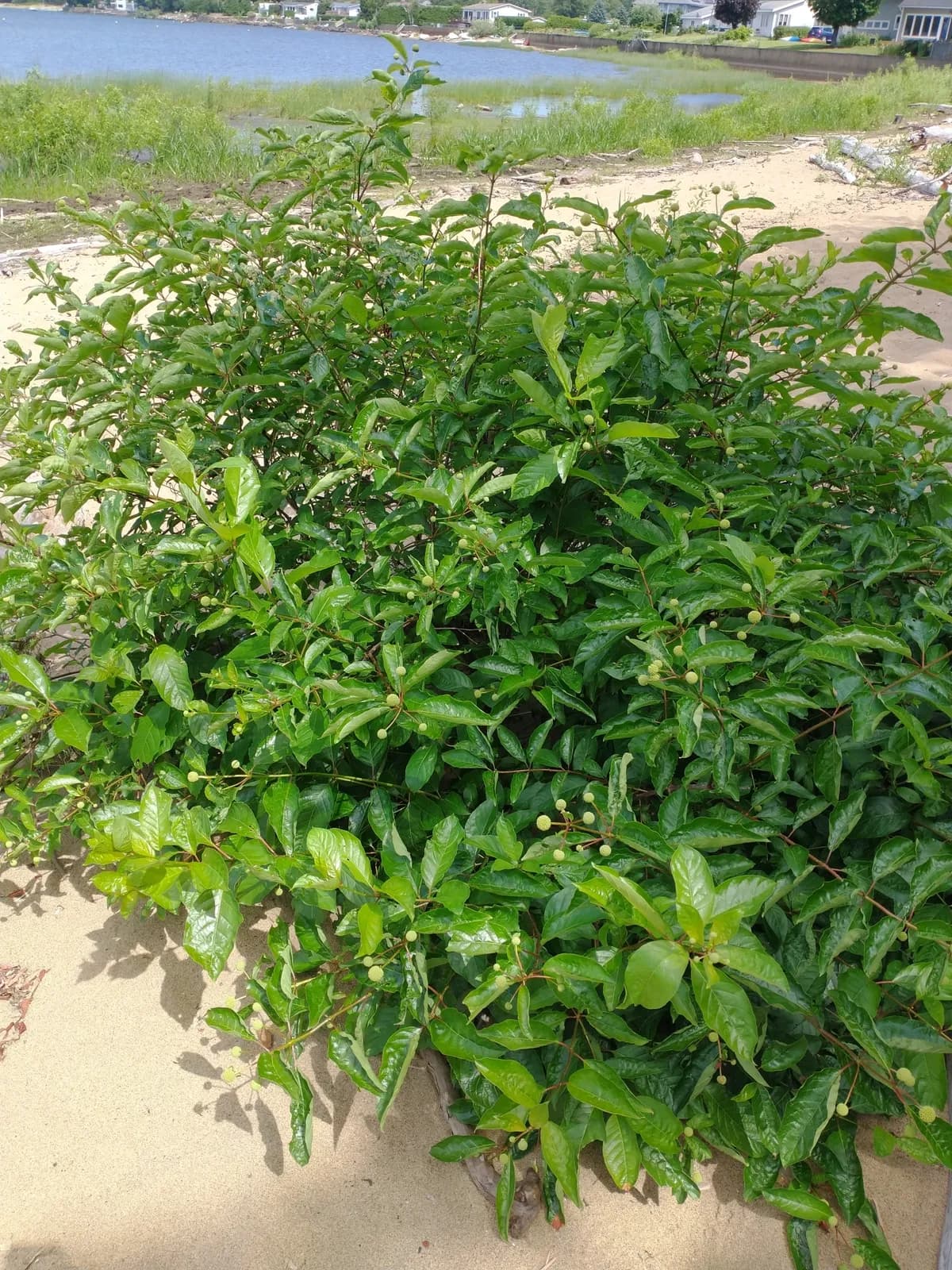
Common buttonbush is a native shrub that produces distinctive white, spherical flower clusters from June through August. It naturally grows in wetlands and requires consistently moist to wet soil conditions to thrive. This deciduous shrub can reach 4-10 feet in both height and width at maturity.
Growing Buttonbush
Grow Buttonbush in full sun and high water. Mature plants reach 72 to 144 inches tall and spread 72 to 72 inches wide. Expect moderate maintenance to keep it looking intentional in a front yard.
How to care for Buttonbush, by region
How to care for Buttonbush where it is actually grown: year-round basics plus what to do each season, region by region, with the sources for each.
Care guidance last updated: October 2026
Cross Timbers (includes Fort Worth, TX)
Year-round
Buttonbush is a wet-loving native shrub for the Cross Timbers, best planted where water naturally collects. It grows 6 to 12 feet tall with white pincushion flowers in summer and feeds a lot of pollinators.
- Buttonbush is native throughout Texas in swamps, pond margins, and stream edges per the Lady Bird Johnson Wildflower Center, so give it a low, wet, or irrigated spot near Fort Worth, not a dry slope.
- It tolerates standing water up to about three feet and is intolerant of dry soil, so it shines as a rain-garden or pond-edge anchor.
- The round white summer flowers draw bees, butterflies, and monarchs per the Xerces Society.
- It is a larval host for the Titan sphinx and Hydrangea sphinx moths per the Xerces Society.
- The foliage is poisonous to livestock per the Lady Bird Johnson Wildflower Center, so keep it out of reach of grazing animals.
A single, well-watered buttonbush at a pond edge or low spot reads as an intentional flowering shrub. Keep it shaped to one tidy clump so it looks planned rather than volunteer.
Fall
Blooms fade into round seed balls that hold through fall. Birds work the seed heads and you get a second season of interest.
- Spent flowers turn into reddish-brown button seed heads that persist into fall and add texture.
- Waterfowl and other birds eat the seeds per the Lady Bird Johnson Wildflower Center, so leave the seed balls in place.
- Keep watering until fall rains take over, the plant still wants steady moisture.
- Skip hard pruning now, save shaping for early spring so you do not cut off next year's flower wood.
Winter
Buttonbush drops its leaves and rests in winter. Bare, crooked stems are normal, and this is the window to plan any hard cutback for early spring.
- The plant is deciduous, so bare stems all winter are expected and not a problem.
- Persistent seed balls stay on the branches and give winter structure.
- If a plant has gotten leggy, plan to cut it back hard in late winter or early spring, it resprouts vigorously.
- Water is rarely needed in winter dormancy unless the low spot dries out completely during a warm dry spell.
Bare winter stems can look untidy up front. A quick cleanup of broken branches and a defined mulch ring keeps it reading as a cared-for planting through the dormant months.
Spring
Spring is planting and shaping time. Get buttonbush in the ground while soil is moist and prune before new growth if you want to control size.
- Plant in early spring in a low or irrigated spot so roots settle before summer heat around Fort Worth.
- Prune in early spring to control size or to revitalize an old plant per NPSOT, since it flowers on new wood.
- Water deeply and often the first spring, buttonbush uses a lot of water and will not tolerate drying out.
- Leaves push out later than many shrubs, so bare stems in early spring are normal and not a sign of trouble.
Summer
Summer is the show. White globe flowers open June through September and pull in bees and butterflies during the hottest, driest stretch of the Cross Timbers year.
- Flowers appear June through September per the Lady Bird Johnson Wildflower Center, giving nectar when many other shrubs are done.
- Keep the soil wet through summer, buttonbush is intolerant of dry soil and will drop leaves if it dries out.
- The blooms feed bees, butterflies, and monarchs per the Xerces Society, so leave them for the pollinators.
- No fertilizer needed, this is a tough wetland native that does best when simply kept watered.
The flowers are a genuine curb-appeal moment. A tidy, watered buttonbush in full bloom looks like a deliberate ornamental, which helps in a manicured front-yard setting.
Sources: Lady Bird Johnson Wildflower Center, Cephalanthus occidentalis, Xerces Society, Planting for Pollinators: Button Bush, NPSOT, Cephalanthus occidentalis
East Central Texas Plains (includes College Station, TX)
Year-round
Buttonbush is a native wetland shrub of the Post Oak Savanna, growing along creeks, ponds, and wet bottomlands. It anchors a wet low spot or pond edge near College Station.
- NPSOT lists buttonbush as native to the East Central Texas Plains, so it belongs in the region's creek bottoms and pond margins, not on dry upland sites.
- It tolerates standing water and is intolerant of dry soil per the Lady Bird Johnson Wildflower Center.
- White summer globe flowers feed bees, butterflies, and monarchs per the Xerces Society.
- It hosts the Titan sphinx and Hydrangea sphinx moths per the Xerces Society.
- The foliage is poisonous to livestock per the Lady Bird Johnson Wildflower Center, worth noting on rural and ranch-edge lots.
In a wet Post Oak Savanna low spot, a shaped buttonbush turns standing water into a flowering feature. One tidy clump with a mulch ring reads as intentional in a front yard.
Fall
Blooms mature into round seed balls in fall. Birds work the seed heads and the plant keeps its structure.
- Round seed heads follow the flowers and hold into fall.
- Waterfowl and other birds eat the seeds per the Lady Bird Johnson Wildflower Center.
- Keep watering until fall rains take over.
- Delay hard pruning until early spring to protect next year's blooms.
Winter
Buttonbush goes dormant and drops its leaves in winter. Bare stems are normal, and late winter is the time for any hard cutback.
- The shrub is deciduous, so leafless winter stems are expected.
- Persistent seed balls stay on the branches and add winter texture.
- Cut a leggy plant back hard in late winter or early spring, it resprouts strongly.
- Watering is seldom needed in dormancy unless a warm dry spell parches the low spot.
Spring
Spring is planting and shaping season. Set buttonbush in a moist low spot and prune before new growth for size control.
- Plant in early spring so roots establish before summer heat around College Station.
- Prune in early spring to control size or revitalize per NPSOT, blooms form on new wood.
- Water deeply and consistently the first season, the plant will not tolerate drying out.
- Late leaf-out is normal, do not mistake bare early-spring stems for a dead plant.
Summer
Summer is peak bloom. White globe flowers open June through September and feed pollinators through the heat.
- Flowers appear June through September per the Lady Bird Johnson Wildflower Center.
- Keep the root zone wet all summer, buttonbush drops leaves if it dries out.
- Blooms feed bees, butterflies, and monarchs per the Xerces Society.
- Skip fertilizer, steady moisture is what matters.
In bloom the shrub reads as a chosen ornamental, which reassures neighbors in a tidy front-yard setting.
Sources: NPSOT, Cephalanthus occidentalis, Lady Bird Johnson Wildflower Center, Cephalanthus occidentalis, Xerces Society, Planting for Pollinators: Button Bush
Eastern Corn Belt Plains (includes Columbus, OH)
Year-round
Buttonbush loves wet feet and is rated for USDA zones 5 to 9.
- It wants consistently moist to wet soil and can handle standing water.
- Full to part sun gives the most flowers, and shade gives poor bloom.
- It needs little pruning and has no significant problems listed.
- The Lady Bird Johnson Wildflower Center lists the foliage as poisonous to livestock, so keep it away from grazing animals.
Fall
Fall is when seed balls feed ducks and songbirds.
- Leave the seed heads for wildlife.
- Keep the soil moist until the ground freezes.
Winter
Winter needs almost no work from you.
- It needs little pruning, so only remove dead or crossing stems.
- Leave the structure standing for birds.
Light shaping in late winter keeps it neat near a front walk.
Spring
Spring is slow, so give it time before judging winter damage.
- Wait for new growth before trimming anything.
- Add mulch to keep the soil moist.
Summer
Summer is the flower season, with round white or pink blooms from June to September.
- Water often so the soil never dries out.
- Bees, butterflies, and other pollinators visit the flowers.
Sources: NC State Extension Plant Toolbox: Cephalanthus occidentalis, Lady Bird Johnson Wildflower Center: Cephalanthus occidentalis
Edwards Plateau (includes San Antonio, TX)
Year-round
Buttonbush is a native Hill Country wetland shrub that grows along streams and pond edges. In the Edwards Plateau it works as a flowering anchor for a wet low spot, seep, or rain garden.
- NPSOT lists buttonbush as native to the Edwards Plateau, where it grows along Hill Country streams and rivers, so site it where water collects near San Antonio.
- It needs consistent moisture and is intolerant of dry soil per the Lady Bird Johnson Wildflower Center, so it is not a dry rocky-slope plant.
- White summer globe flowers feed bees, butterflies, and monarchs per the Xerces Society.
- It hosts the Titan sphinx and Hydrangea sphinx moths per the Xerces Society.
- The foliage is poisonous to livestock per the Lady Bird Johnson Wildflower Center, worth noting on Hill Country properties with horses or goats.
On the thin, rocky Edwards Plateau, a buttonbush signals a deliberately placed water feature or rain garden. Kept to one shaped clump with a clean mulch ring, it looks intentional in a front yard.
Fall
Flowers give way to round seed balls that carry the plant into fall. Birds feed on them and the seed heads add structure.
- Button-shaped seed heads form after bloom and persist into fall.
- Birds and waterfowl eat the seeds per the Lady Bird Johnson Wildflower Center, so leave them standing.
- Keep watering until fall rains arrive, moisture demand stays high.
- Hold off on hard pruning, wait for early spring to protect next year's blooms.
Winter
Buttonbush goes dormant and drops its leaves in winter. Crooked bare stems are normal, and late winter is the time to plan a hard cutback if needed.
- The shrub is deciduous, so leafless stems all winter are expected.
- Persistent seed balls hold on through the cold and add winter interest.
- Cut a leggy plant back hard in late winter or early spring, it comes back strong.
- Watering is seldom needed in dormancy unless a warm dry spell parches the low spot.
A tidy dormant-season cleanup and a clean mulch ring keep the bare stems looking maintained rather than neglected.
Spring
Spring is the planting and shaping window. Set buttonbush in a moist low spot and do any size-control pruning before it leafs out.
- Plant in early spring so roots establish before San Antonio's hot dry summer.
- Prune in early spring to shape or rejuvenate per NPSOT, it blooms on new growth.
- Water heavily and consistently the first season, Hill Country soils drain fast and buttonbush will not tolerate drying out.
- Late leaf-out is normal, do not assume a bare early-spring plant is dead.
Summer
Summer brings the white globe flowers, June through September, right when Hill Country heat peaks and pollinators need reliable nectar.
- Flowers open June through September per the Lady Bird Johnson Wildflower Center.
- Keep the root zone wet all summer, in fast-draining Edwards Plateau soil this may mean frequent watering.
- Blooms feed bees, butterflies, and monarchs per the Xerces Society.
- No fertilizer is needed, steady water matters far more than feeding.
In full bloom it reads as an ornamental flowering shrub, which reassures neighbors used to clipped Hill Country front yards.
Sources: NPSOT, Cephalanthus occidentalis, Lady Bird Johnson Wildflower Center, Cephalanthus occidentalis, Xerces Society, Planting for Pollinators: Button Bush
Mississippi Alluvial Plain (includes Memphis, TN)
Year-round
Buttonbush wants wet feet, and the deep silty clay bottomland in this valley gives it exactly that. It is rated an obligate wetland plant, so poor drainage, seasonal flooding, and even shallow standing water are all fine. Put it in full sun if you want the heaviest bloom, though it will still flower in part shade. Give it room, because it reaches 5 to 12 feet tall and 4 to 8 feet wide and grows into an open, arching shrub rather than a tidy mound. The one thing it will not tolerate is dry ground.
- Full sun gives the heaviest flowering, and part shade still works if that is what the spot offers (Missouri Botanical Garden).
- It is an obligate wetland plant that handles moist soil, poor drainage, and standing water, so a low wet corner is the right place for it (Lady Bird Johnson Wildflower Center).
- Plan for 5 to 12 feet tall and 4 to 8 feet wide at maturity, and set plants at least 6 feet apart so they do not crowd each other (Missouri Botanical Garden).
- Its documented range runs from Canada down through the Mississippi River valley and south to Florida and Texas, which takes in this whole region (Lady Bird Johnson Wildflower Center).
- The flower heads are a strong nectar source for native bees, bumble bees, and honey bees, and the shrub is a larval host for titan sphinx and hydrangea sphinx moths (Lady Bird Johnson Wildflower Center).
- The foliage is documented as poisonous and livestock will not eat it, which is worth knowing if you keep animals with access to the bed (Lady Bird Johnson Wildflower Center).
Buttonbush grows loose and arching, not compact, so in a front bed give it a clean mulch edge and a defined bed line. That framing reads as intentional and keeps the planting HOA-friendly.
Fall
Fall is the best planting window in this valley. The soil stays warm long after the air cools, and the first frost does not arrive until early November near Memphis and later toward the Gulf end, so new roots get months to settle before summer heat returns. Resist the urge to tidy the shrub now, because a fall cut pushes soft growth right into freeze season. Let the leaves drop and leave the round fruit heads standing. Supplemental watering can taper off on its own as fall rain picks back up.
- Buttonbush transplants well, so October into November is a good stretch to plant or move one in this region (University of Tennessee).
- Hold pruning until late winter instead of cutting in fall, since the recommended window is late winter to early spring (Missouri Botanical Garden).
- Leave the ball shaped fruit heads standing, they persist through winter and give the bare shrub something to show (Missouri Botanical Garden).
- Ease off supplemental water as fall rain returns, and do not worry about a soggy bed, because this shrub tolerates wet soil and flooding (Missouri Botanical Garden).
- It is deciduous, so expect a full leaf drop and bare branching after the first hard frost (Lady Bird Johnson Wildflower Center).
Bare branches studded with old seed balls can read as neglect from the curb. Placing something evergreen nearby, or keeping the bed edge sharp, holds the front planting together through the cold months.
Winter
Winter is quiet for buttonbush here, and cold is not the concern. The plant is rated for USDA zones 5 through 9, which is far hardier than anything a zone 8a winter or an ice night in this valley will produce. Late winter is the one real task window, roughly February through early March depending on how far south you are, when you can shape the shrub or cut a leggy one near the ground before buds break. Winter wet is a non issue, since this is a wetland shrub that shrugs off a flooded low spot. The dried fruit balls hold on the bare stems until spring.
- Rated for USDA zones 5 through 9, so hard freezes and ice at zone 8a are well inside what this shrub handles (Missouri Botanical Garden).
- Late winter, before growth starts, is the window to shape it or bring the size down (Missouri Botanical Garden).
- For a shrub that has gotten woody and sparse, cut the stems near ground level while it is fully dormant (Missouri Botanical Garden).
- A winter flooded or waterlogged bed is fine, since this is an obligate wetland plant that grows in swamps and pond margins (Lady Bird Johnson Wildflower Center).
- The dry fruit balls stay on the bare branches through the cold months, so there is structure to look at before the late spring leaf out (Missouri Botanical Garden).
A hard rejuvenation cut leaves a cluster of short stubs that stays stark until the late spring leaf out. For a front-yard shrub, spreading that cut over two winters keeps the bed from looking bare for a full season.
Spring
The main spring job is pruning, and the window closes early. Cut before the buds break, which across this valley runs from roughly early February at the Gulf end to mid or late March near Memphis. After that, be patient. Buttonbush leafs out late, so a bare shrub in early April is normal here and not a sign that winter killed it. Spring is also a good time to set out new plants while the rain is steady and the clay is still moist.
- Prune in late winter or early spring before growth starts, and only to shape or hold the size down, because minimal pruning is needed (Missouri Botanical Garden).
- If the shrub has gone leggy, cut it near ground level in early spring and it will rebuild from the base (Missouri Botanical Garden).
- Do not write it off if the branches are still bare in April, since the bright green leaves emerge late in spring (Missouri Botanical Garden).
- New plants transplant well, so spring planting works as long as you water them in and keep the root zone moist through the first season (University of Tennessee).
- There are no serious insect or disease problems on this shrub, so there is nothing to spray for in spring (Missouri Botanical Garden).
Because it leafs out late, a front-yard buttonbush can look like a dead shrub well into April. A crisp bed edge and a few early perennials nearby signal that the planting is tended, not abandoned.
Summer
Water is the whole job in summer. Bloom runs from June into September with the strongest show in July and August, and the shrub needs steady moisture to hold its leaves through the heat. In a normal year the 50 to 55 inches of rain here covers it, but a two or three week dry spell in July or August will make it wilt and drop foliage. When that happens, soak the root zone deeply instead of sprinkling. Leave the spent flower heads alone, they become the round fruit that carries the plant into winter.
- Expect white pincushion flower heads roughly 1.5 inches across from June into September, peaking in the July and August heat (Lady Bird Johnson Wildflower Center).
- This is a high water use shrub, so give it a deep soaking during any summer dry stretch rather than letting the clay crack open (Lady Bird Johnson Wildflower Center).
- It needs a reliable source of moisture in a garden setting, which usually means a low spot, a rain garden, or a pond edge in this bottomland (University of Tennessee).
- Leave the spent heads on the plant, they ripen into ball shaped fruit that persists through the winter (Missouri Botanical Garden).
- Chewed leaves in midsummer are often sphinx moth caterpillars using the shrub as a larval host, so leave them be (Lady Bird Johnson Wildflower Center).
Midsummer growth gets arching and open. Shearing it into a ball removes the bloom, so instead keep the surrounding bed weeded and edged, which is what makes an informal shrub read as a chosen plant.
Sources: Lady Bird Johnson Wildflower Center, Cephalanthus occidentalis, Missouri Botanical Garden Plant Finder, Cephalanthus occidentalis, USDA PLANTS Database, Cephalanthus occidentalis (CEOC2), University of Tennessee, Tennessee Yards plant profile, Buttonbush
Mississippi Valley Loess Plains (includes Memphis, TN)
Year-round
Common buttonbush is a native Tennessee wetland shrub that thrives in the wet, low-lying spots where most other shrubs struggle, and its round pincushion flower clusters draw heavy pollinator traffic all summer.
- Buttonbush is confirmed native to Tennessee by USDA PLANTS and the Lady Bird Johnson Wildflower Center, and it grows naturally in swamps and along pond and stream banks statewide.
- It tolerates standing water and poorly drained soil, making it a strong choice for a low or soggy corner of a Memphis yard, a rain garden edge, or a drainage swale.
- The round, creamy white flower clusters open through summer and are a documented draw for native bees, bumble bees, honey bees, and butterflies.
- Expect a spreading shrub in the 5 to 12 foot range at maturity, so give it room away from walkways and give it a spot with reliable moisture rather than a dry bed.
Fall
Fall in Memphis gives a long window to get a new buttonbush established before the first freeze, and the shrub needs no fall pruning since it flowers on next year's new growth.
- Memphis's average first fall freeze arrives around November 12, which leaves most of October as a good window to plant and still get roots established before dormancy.
- Leaves begin dropping and the round seed heads persist on the branches into winter.
- No fall pruning is needed, buttonbush sets next year's flowers on new spring growth, so cutting back now would not affect next year's bloom either way.
- If watering has been supplemental through summer, taper off as leaves drop and let the plant follow the season into dormancy on its own.
The persistent round seed heads read as intentional winter interest rather than an unkept bed, so there is no need to cut the shrub back for a front-facing planting.
Winter
Winters in the Memphis area are mild enough for this zone 8a shrub that established buttonbush needs no special protection, just a light hand with pruning until spring.
- Established buttonbush is fully dormant through the Memphis winter and tolerates the occasional hard freeze without harm.
- Bare branches and dried seed heads persist through the season and offer some winter forage for birds.
- Winter, while the ground is workable and the plant is dormant, is a good time to plan or dig a new wet-area planting site for spring.
- Hold off on major pruning beyond removing storm-damaged limbs, save larger cuts for right before spring growth resumes.
A bare, twiggy winter silhouette near the street is temporary and fills back in quickly once spring growth starts, so no winter screening or replacement is needed.
Spring
In the Memphis area, wait out the last spring frost before planting or moving buttonbush outdoors, and expect it to leaf out later than many neighboring shrubs.
- Memphis's average last spring frost lands around March 30, so hold off on planting new buttonbush or setting container stock outdoors until after that point.
- New leaves tend to emerge later in spring than many other shrubs, that lag is normal for this species and not a sign of winter dieback.
- Remove only winter-damaged or dead wood before new growth pushes out, buttonbush blooms on new growth so light spring cleanup will not cost you flowers.
- Keep the root zone consistently moist from the start of the growing season, this is one of the few yard shrubs where more water is the goal, not less.
Summer
Summer is peak bloom and peak pollinator activity for buttonbush in Memphis, and the shrub's wetland habit means it needs the least extra watering of anything in a typical yard.
- Bloom runs roughly June through August in the Memphis area, with the heaviest pollinator traffic while the round white flower clusters are open.
- Memphis summers turn hot and dry between rain events, but a buttonbush sited in a low spot, rain garden, or near a downspout will usually need far less supplemental watering than the rest of the bed.
- Standing water after a storm will not harm this shrub, which is part of why it earns a place in retention areas and drainage corners other plants cannot handle.
- As flowers fade late in the season, watch for the round seed heads forming, they will feed ducks and other water birds later on.
Sources: Lady Bird Johnson Wildflower Center, Cephalanthus occidentalis plant profile, USDA PLANTS Database, Cephalanthus occidentalis plant profile, University of Tennessee Extension, Tennessee Smart Yards, Cephalanthus occidentalis, National Weather Service Memphis, average frost and freeze dates
Northeastern Coastal Zone (includes New York, NY)
Year-round
Buttonbush is a moisture-loving native shrub that grows well in the New York City area as long as it never dries out. The single most important thing is steady water. Give it a low-maintenance year: water deeply, mulch, and prune only in late winter.
- Establishment: for the first two to three years, water deeply once or twice a week so the root zone stays damp. This shrub is sensitive to drought and struggles if it dries out, per the Morton Arboretum.
- Once established: it still wants consistently moist to wet soil, so keep watering in dry spells. It tolerates standing water and seasonal flooding far better than dry ground, per NC State Extension.
- Mulch: keep a two to three inch layer of shredded bark or leaf mulch over the root zone to hold moisture, and pull it back a couple inches from the stems.
- Common mistake: planting it in a normal dry front-yard bed and treating it like a drought-tolerant shrub. Site it in your lowest, dampest spot or a rain garden instead.
Fall
In the fall the flowers turn into reddish-brown button seed heads and the leaves drop. In the NYC area this is a leave-it-alone season, with one tidy-up choice for curb appeal.
- Do not prune now. Wait until late winter so you do not cut off next year's bloom wood, per NC State Extension.
- Keep watering until the ground gets cold. Going into winter with damp roots suits this wetland shrub.
- You can leave the button seed heads standing for winter interest and birds, or snip the spent heads if you prefer a neater front-yard look.
If your street prefers a tidy look, clipping the spent seed heads in fall reads as intentional care and lowers the odds of a violation letter, while leaving them is fine on a more relaxed block.
Winter
Buttonbush is cold-hardy through NYC-area winters and needs almost nothing while dormant. Late winter is your one pruning window if the shrub needs shaping.
- This is the time to prune if needed. Cut in late winter before new growth, since it flowers on new wood, per NC State Extension.
- Winter care is otherwise hands-off. The bare stems and leftover seed heads give a calm winter silhouette.
The bare, upright winter form and leftover seed heads read as an intentional, cared-for planting rather than a dead shrub, which keeps a tidy-minded HOA satisfied.
Spring
Spring is the window for any pruning and for a fresh mulch top-up. In the NYC area, do this in March or early April before the leaves push out.
- Prune now if at all. Buttonbush blooms on new growth, so cut in late winter to early spring before growth starts. Do not prune after June or you remove the developing flower buds, per NC State Extension.
- It needs little pruning. Remove dead or crossing stems and, if it got leggy, you can cut it back hard to renew a bushier shape.
- Refresh mulch to two or three inches and start watching soil moisture as things warm up. Water deeply if April turns dry.
A clean late-winter prune reads as intentional to neighbors and keeps the shrub from looking overgrown, which helps you avoid a violation letter for a messy front-yard planting.
Summer
Summer is bloom season and the time this shrub is most at risk from drying out. NYC-area July and August heat plus dry stretches mean water is the whole job.
- Water is the priority. Keep the soil consistently moist through summer heat. Flowering is poor in dry soil, and the plant is sensitive to drought, per NC State Extension.
- Enjoy the round white flowers. They draw bees and butterflies, so leave them and skip any summer pruning.
- Check mulch and top up if it has thinned. During a dry spell, a deep soak once or twice a week beats a light daily sprinkle.
Sources: NC State Extension Cephalanthus occidentalis, The Morton Arboretum Buttonbush
South Central Plains (includes Beaumont, TX)
Year-round
Buttonbush is a core native wetland shrub of the Piney Woods, common in swamps, bottomland forests, and along slow streams. It anchors a wet, part-shaded low spot or pond edge near Beaumont.
- The Lady Bird Johnson Wildflower Center lists buttonbush as native throughout Texas in swamps and stream margins, which are abundant in the East Texas Piney Woods, so it fits the region's wet bottomlands.
- It tolerates standing water and part shade and is intolerant of dry soil per the Lady Bird Johnson Wildflower Center, so it handles the shaded, soggy sites common under a pine-hardwood canopy.
- White summer globe flowers feed bees, butterflies, and monarchs per the Xerces Society.
- It is a larval host for the Titan sphinx and Hydrangea sphinx moths per the Xerces Society.
- The foliage is poisonous to livestock per the Lady Bird Johnson Wildflower Center.
In a shaded, wet Piney Woods corner where little else flowers, a shaped buttonbush brings blooms. One tidy clump with a mulch ring reads as an intentional planting rather than volunteer brush.
Fall
Flowers mature into round seed balls in fall. Birds feed on them and the plant keeps its texture past bloom.
- Round seed heads follow the flowers and hold into fall.
- Waterfowl and other birds eat the seeds per the Lady Bird Johnson Wildflower Center.
- Little extra water is usually needed, Piney Woods fall soils stay moist.
- Delay hard pruning until early spring to keep next year's flower wood.
Winter
Buttonbush drops its leaves and rests in the mild East Texas winter. Late winter is the window for any hard cutback.
- The shrub is deciduous, so leafless winter stems are expected.
- Persistent seed balls stay on the branches and add winter structure.
- Cut a leggy plant back hard in late winter or early spring, it resprouts strongly.
- Watering is essentially unnecessary in the wet dormant season.
Spring
Spring is planting and shaping time, and the wet East Texas spring makes it easy. Prune before leaf-out for size control.
- Plant in early spring, Piney Woods spring rains help new plants establish.
- Prune in early spring to shape or revitalize per NPSOT, blooms form on new wood.
- It handles part shade well here, so a spot under high pine canopy is fine as long as it stays wet.
- Late leaf-out is normal, bare early-spring stems are not a sign of trouble.
Summer
Summer is peak bloom. White globe flowers open June through September and feed pollinators through the humid East Texas heat.
- Flowers appear June through September per the Lady Bird Johnson Wildflower Center.
- In the wet Piney Woods, summer watering is usually light, just keep the site from drying out in a drought.
- Blooms feed bees, butterflies, and monarchs per the Xerces Society, and part shade does not reduce flowering much here.
- Skip fertilizer, moisture is what keeps it healthy.
In bloom it looks like a chosen flowering shrub, a welcome bit of color in a shady East Texas front yard.
Sources: Lady Bird Johnson Wildflower Center, Cephalanthus occidentalis, Xerces Society, Planting for Pollinators: Button Bush, NPSOT, Cephalanthus occidentalis
Southern Texas Plains (includes McAllen, TX)
Year-round
Buttonbush is a native wetland shrub of the South Texas Plains, found along resacas, ponds, and stream margins. It works as a flowering anchor for a wet low spot or water's edge near McAllen.
- The Lady Bird Johnson Wildflower Center lists buttonbush as native throughout Texas in swamps, pond margins, and stream edges, which includes South Texas water bodies, so plant it where water collects.
- It tolerates standing water and is intolerant of dry soil per the Lady Bird Johnson Wildflower Center, so give it a wet or irrigated site, not the dry brushland.
- In the long South Texas warm season it can bloom over an extended stretch, feeding bees, butterflies, and monarchs per the Xerces Society.
- It hosts the Titan sphinx and Hydrangea sphinx moths per the Xerces Society.
- The foliage is poisonous to livestock per the Lady Bird Johnson Wildflower Center, worth noting on ranch-edge properties.
Along a resaca edge or in an irrigated low spot, a shaped buttonbush reads as a deliberate flowering shrub. Keep it to one clump so it looks placed rather than wild.
Fall
Blooms mature into round seed balls in fall. Birds feed on them and the plant keeps giving structure and wildlife value.
- Round seed heads follow the flowers and hold into fall.
- Waterfowl and other birds eat the seeds per the Lady Bird Johnson Wildflower Center.
- Keep the soil moist, fall in deep South Texas can stay hot and dry.
- Delay any hard pruning until early spring so you keep next year's flower wood.
Winter
Winter dormancy is mild and brief in South Texas. Buttonbush may hold leaves longer here, and late winter is the time for any hard cutback.
- The shrub is deciduous, though the mild South Texas winter can shorten the leafless period.
- Persistent seed balls stay on the stems for winter texture.
- Do any hard rejuvenation cut in late winter, before the early spring flush.
- Water is rarely needed in the cool months unless a dry warm spell parches the site.
Spring
South Texas warms early, so plant and shape buttonbush in late winter to early spring before the heat sets in.
- Plant early while soil moisture is easiest to keep, McAllen heat arrives fast.
- Prune in early spring to control size or rejuvenate per NPSOT, since blooms form on new wood.
- Water deeply and often through the first season, buttonbush will not tolerate drying out.
- Growth and leaf-out start early here, so an established plant may green up sooner than in North Texas.
Summer
Summer is peak bloom and peak water demand. The white globe flowers feed pollinators through the hottest South Texas months.
- Main bloom runs through summer, roughly June into September per the Lady Bird Johnson Wildflower Center, and the warm South Texas season can stretch it.
- Keep the soil consistently wet, high heat plus fast drainage means frequent watering here.
- Flowers draw bees, butterflies, and monarchs per the Xerces Society.
- Skip fertilizer, reliable moisture is what keeps it healthy.
In bloom it looks like a chosen ornamental, which reads well in a tidy front yard even in a region where most shrubs are dry-land brush.
Sources: Lady Bird Johnson Wildflower Center, Cephalanthus occidentalis, Xerces Society, Planting for Pollinators: Button Bush, NPSOT, Cephalanthus occidentalis
Texas Blackland Prairies (includes Dallas, TX)
Year-round
Buttonbush is a native wetland shrub of the Blackland Prairies, found along creeks and pond margins in the heavy clay soils around Dallas. It anchors a wet low spot or rain garden well.
- The Lady Bird Johnson Wildflower Center lists buttonbush as native throughout Texas in swamps, pond edges, and stream margins, which includes Blackland creeks and stock ponds, so plant it where water pools.
- It handles the region's heavy clay and even standing water, and is intolerant of dry soil per the Lady Bird Johnson Wildflower Center.
- White summer globe flowers feed bees, butterflies, and monarchs per the Xerces Society.
- It is a larval host for the Titan sphinx and Hydrangea sphinx moths per the Xerces Society.
- The foliage is poisonous to livestock per the Lady Bird Johnson Wildflower Center.
Buttonbush is one of the few flowering shrubs that thrives in a soggy Blackland low spot. Shaped to one clump with a clean edge, it turns a problem wet corner into an intentional feature.
Fall
Flowers become round seed balls in fall. Birds feed on them and the seed heads extend the plant's interest.
- Round button seed heads follow the flowers and persist into fall.
- Birds and waterfowl eat the seeds per the Lady Bird Johnson Wildflower Center.
- Keep watering until fall rains take over.
- Hold hard pruning for early spring so you keep next season's flower wood.
Winter
Buttonbush drops its leaves and goes dormant in winter. Bare crooked stems are normal, and late winter is the window for a hard cutback.
- The shrub is deciduous, so leafless stems through winter are expected.
- Persistent seed balls hold on the branches and give winter structure.
- Cut a leggy plant back hard in late winter or early spring, it resprouts vigorously.
- Water is rarely needed in dormancy unless the clay dries and cracks during a warm dry spell.
A dormant-season trim of broken stems and a clean mulch ring keep the bare shrub reading as maintained through winter.
Spring
Spring is planting and shaping time. Put buttonbush in a wet clay low spot and prune before it leafs out if you want to keep it compact.
- Plant in early spring while the clay holds spring moisture.
- Prune in early spring to shape or rejuvenate per NPSOT, it flowers on new growth.
- Water deeply the first season even in clay, buttonbush wants steady moisture and will not tolerate drying out.
- Late leaf-out is normal, bare early-spring stems do not mean the plant failed.
Summer
Summer is peak bloom. The white globe flowers open June through September and feed pollinators through the Dallas heat.
- Flowers appear June through September per the Lady Bird Johnson Wildflower Center.
- Keep the soil wet through summer, even in moisture-holding clay a buttonbush should not dry out.
- Blooms feed bees, butterflies, and monarchs per the Xerces Society.
- No fertilizer needed, water is what keeps it thriving.
In bloom it looks like a deliberate ornamental, which reassures neighbors in a tidy Blackland Prairie subdivision.
Sources: Lady Bird Johnson Wildflower Center, Cephalanthus occidentalis, Xerces Society, Planting for Pollinators: Button Bush, NPSOT, Cephalanthus occidentalis
Western Gulf Coastal Plain (includes Houston, TX)
Year-round
Buttonbush is a core native wetland shrub of the Gulf Coast Prairies and Marshes. It thrives in the region's wet soils and standing water and works as a flowering anchor for a rain garden, pond edge, or soggy low spot near Houston.
- NPSOT lists buttonbush as native to the Gulf Coast Prairies, one of its strongest natural habitats, so it fits the region's abundant wet ground.
- It tolerates standing water up to about three feet and is intolerant of dry soil per the Lady Bird Johnson Wildflower Center, making it ideal for Houston's low, wet spots.
- White summer globe flowers feed bees, butterflies, and monarchs per the Xerces Society.
- It is a larval host for the Titan sphinx and Hydrangea sphinx moths per the Xerces Society.
- The foliage is poisonous to livestock per the Lady Bird Johnson Wildflower Center.
In flood-prone Houston yards, buttonbush turns a chronically wet corner into a blooming feature. Kept to one shaped clump with a defined mulch ring, it reads as a planned rain garden rather than a wild patch.
Fall
Flowers become round seed balls in fall. Birds feed on them and the plant carries interest past bloom.
- Round seed heads follow the flowers and persist into fall.
- Waterfowl and other birds eat the seeds per the Lady Bird Johnson Wildflower Center.
- Little to no extra water is usually needed, Gulf Coast fall soils stay moist.
- Hold hard pruning for early spring to keep next season's flower wood.
Winter
Buttonbush goes dormant and drops its leaves in the mild Gulf Coast winter. Late winter is the time for any hard cutback.
- The shrub is deciduous, though the mild coastal winter can shorten the leafless stretch.
- Persistent seed balls hold on the branches for winter texture.
- Cut a leggy plant back hard in late winter or early spring, it resprouts vigorously.
- Watering is essentially not needed in the wet winter season.
A quick late-winter tidy of broken stems and a clean mulch ring keep the dormant shrub looking cared for.
Spring
Spring is planting and shaping time, and the wet Gulf Coast spring makes establishment easy. Prune before leaf-out for size control.
- Plant in early spring, the region's spring rains help new plants settle in.
- Prune in early spring to shape or rejuvenate per NPSOT, blooms form on new wood.
- Watering is often minimal here thanks to naturally wet soil, but do not let a new plant dry out.
- Late leaf-out is normal, bare early-spring stems are not a problem.
Summer
Summer is peak bloom. White globe flowers open June through September and feed pollinators through the humid Gulf Coast heat.
- Flowers appear June through September per the Lady Bird Johnson Wildflower Center.
- In naturally wet Gulf Coast soil, summer watering is often light, just do not let the site dry out in a drought.
- Blooms feed bees, butterflies, and monarchs per the Xerces Society.
- No fertilizer needed, this wetland native thrives on moisture alone.
In full bloom it looks like a deliberate ornamental, which reads well in a manicured Houston-area front yard.
Sources: NPSOT, Cephalanthus occidentalis, Lady Bird Johnson Wildflower Center, Cephalanthus occidentalis, Xerces Society, Planting for Pollinators: Button Bush
In an HOA neighborhood
Buttonbush takes more care to keep looking intentional in a front yard. Maintenance level: moderate. Consider it for backyard or mid-zone beds rather than the street edge.
Works well in: backyard only.
- Requires wet soil conditions that may create drainage issues
- Large mature size may appear uncontrolled
- Informal growth habit lacks structured appearance
Wildlife value
The unique ball-shaped flowers attract bees, butterflies, and moths throughout the summer blooming period. Birds also benefit from the seeds produced after flowering.
Common questions
- When does buttonbush bloom?
- Common buttonbush blooms from June through August, producing distinctive round white flower clusters that resemble small pincushions.
- What pollinators does buttonbush attract?
- Buttonbush flowers draw bees, butterflies and moths, which feed on the abundant nectar in its ball shaped flower heads.
- How much water does buttonbush need?
- Buttonbush needs consistently wet to moist soil and tolerates standing water, so it does well along pond edges, ditches and low areas that flood periodically.
- What light conditions does buttonbush prefer?
- Buttonbush grows well in full sun to part shade, and it tends to flower most heavily where it gets more direct sunlight.
- What is the growth habit of buttonbush?
- Buttonbush is a multi-stemmed deciduous shrub that can spread wide as it matures, often used to stabilize banks and edges of wet sites.
- Is Buttonbush toxic to livestock?
- Buttonbush is listed as toxic to grazing livestock such as cattle, sheep, and goats (moderate severity) by the USDA Forest Service (FEIS); Texas A&M AgriLIFE Extension. This is separate from pet (dog and cat) toxicity.
- Is Buttonbush HOA-friendly?
- Buttonbush takes more care to look intentional in a front yard. Consider it for backyard or mid-zone beds rather than the street edge.
These answers were drafted with an AI model from this plant's data. Verify care details with a local expert.
Native range data from the World Checklist of Vascular Plants (Kew). Pollinator and host plant associations compiled from GBIF, iNaturalist, and published ecological literature.
If something looks wrong
Common plant problems, and what to check first
These come up on almost any plant. Each guide lists the likely causes in the order they are worth ruling out, with one thing to check before you act on any of them, and links to the source it came from.
- It is dying right after planting
- Leaves turning yellow
- Wilting even though I watered it
- Brown crispy leaf tips
- Bugs on the plant
Ready to grow Buttonbush? Add it to your garden in Pollinator Patch to track it and get season-by-season care guidance.