Fire-pink
Silene virginica
Last reviewed: September 2026
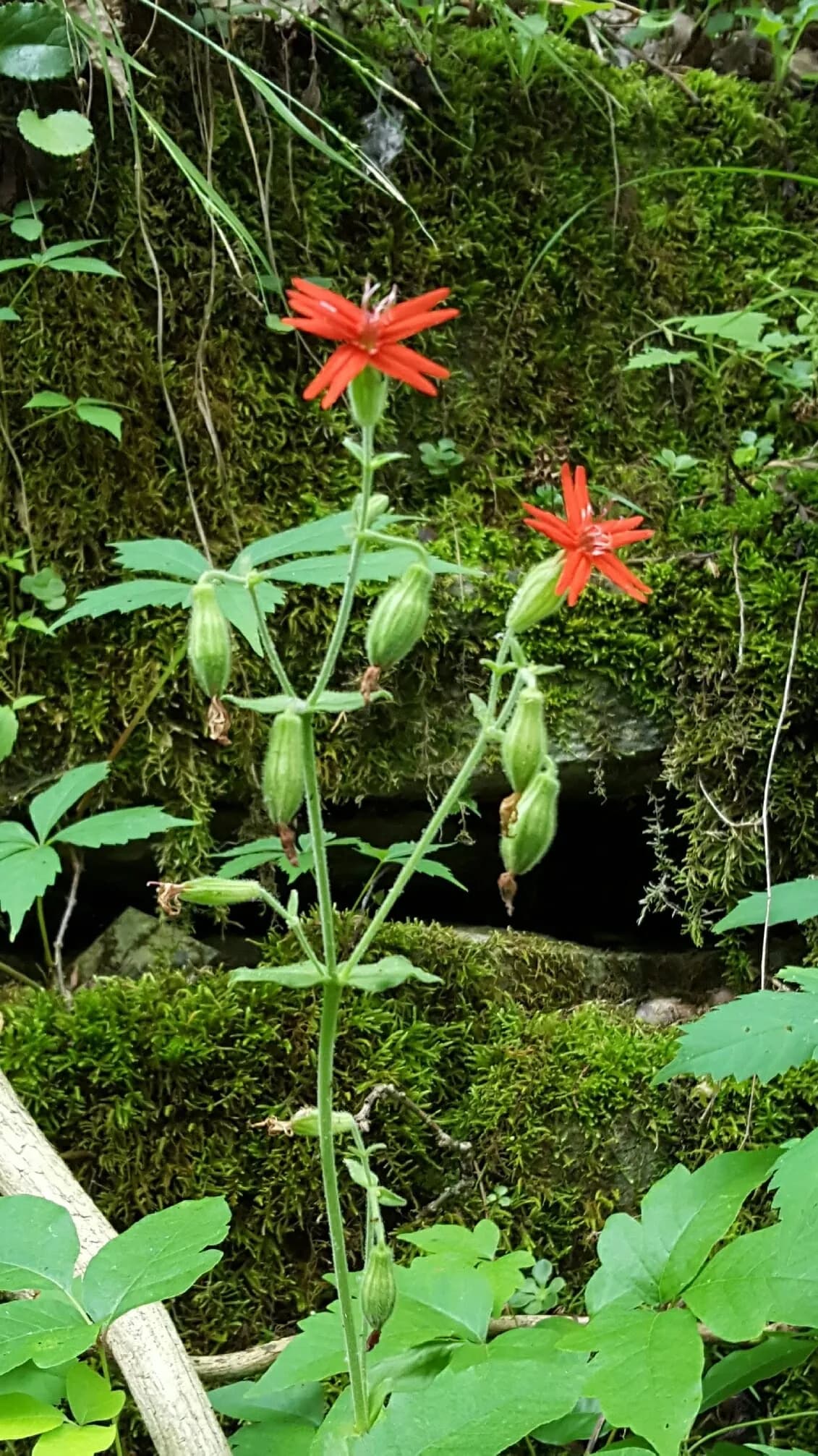
Fire pink is a woodland forb with brilliant red star-shaped flowers that bloom from May through July, thriving on rocky slopes and open forest edges in full sun to part shade.
Toxicity unknown
Fire-pink (Silene virginica) is not listed by the ASPCA Animal Poison Control Center (opens in new tab) or the other sources we check, so we have no verdict for it either way. Absence from those lists is not a clearance. If your pet shows symptoms after eating any plant, call the ASPCA at (888) 426-4435.
Light
full sun
Water
medium
Size
12"–24" H × 6"–12" W
Bloom
May, Jun, Jul
Native to
AL, AR, DE, GA and 19 more states
Pollinators
hummingbirds, butterflies, bees
Before you buy
Your city may pay you to plant this
Cities and water utilities offer rebates for replacing lawn with native and water-wise plants. We track 459 programs across 44 states, each with a link to the provider and the date we last checked it.
Find rebates in your areaPicture natives in your own yard
Upload a photo of your yard and Patch Vision shows a rendering of it planted with natives for your region, like Fire-pink.


Browse plants for this ecoregion
Fire-pink produces brilliant scarlet star-shaped flowers on slender stems from late spring through summer. This compact native wildflower forms neat clumps with narrow green leaves and thrives in sunny, well-drained locations.
Growing Fire-pink
Grow Fire-pink in full sun and medium water. Mature plants reach 12 to 24 inches tall and spread 6 to 12 inches wide. Expect low maintenance to keep it looking intentional in a front yard.
How to care for Fire-pink, by region
How to care for Fire-pink where it is actually grown: year-round basics plus what to do each season, region by region, with the sources for each.
Care guidance last updated: October 2026
Arkansas Valley (includes McAlester, OK)
Year-round
Year-round care for fire-pink around McAlester, OK: part shade, well-drained soil, low to medium water.
- It prefers part shade with dappled light. NC State says it will tolerate full sun but prefers afternoon shade.
- It likes well-drained, rocky, acid soil, and poor soil is preferred.
- Water needs are low to medium. It tolerates both dry and moist conditions.
- It is usually about 1 foot tall and blooms from spring into summer.
- It is a short-lived perennial, so start a few new plants each year.
A small wildflower tucked into a shaded bed with a clean edge reads as an intentional planting.
Sources: Lady Bird Johnson Wildflower Center: Silene virginica, NC State Extension Gardener Plant Toolbox: Silene virginica
Central Corn Belt Plains (includes Chicago, IL)
Year-round
Fire pink is a short lived perennial with bright red flowers that likes dappled light and lean, well drained soil. It is uncommon in the Chicago area wild, so treat it as a gardened plant and give it the drainage it wants.
- Plant in part shade or dappled light
- Use lean, well drained, slightly acidic soil
- Avoid deep shade and soggy clay
- Let it self seed to keep plants coming
Fall
Fall is a good time to plant or scatter seed.
- Scatter ripe seed on bare, lightly loosened soil
- Keep new plants watered until frost
- Mark the spot so seedlings are not weeded out
- Expect some plants to fade after two to three years
Winter
Plants are dormant and hardy in cold winters.
- No watering needed
- A light leaf mulch is fine, keep it off the crown
- Avoid soggy winter spots
- Wait for spring to tidy up
Spring
Growth starts in spring and buds form by late spring.
- Plant nursery grown plants after frost
- Water weekly until established
- Do not add rich compost
- Watch for slugs on young growth
Summer
Flowering runs from late spring into midsummer, and hummingbirds visit the red blooms.
- Water when the top inch is dry, no more
- Keep afternoon sun light
- Leave a few seed pods to drop seed
- Avoid heavy mulch on the crown
Sources: Lady Bird Johnson Wildflower Center: Silene virginica, Illinois Wildflowers: Fire Pink (community tip)
Eastern Corn Belt Plains (includes Columbus, OH)
Year-round
Fire pink is a native Ohio wildflower that draws hummingbirds to shaded rock gardens and woodland edges with clusters of bright red spring flowers.
- It is native to Ohio, naturally found in open woods and on rocky slopes across the eastern Corn Belt region.
- It grows best in dappled or partial shade with a little morning sun. It also tolerates more sun if the soil stays on the cool side.
- Soil needs to drain well. Rocky or sandy spots work better than heavy, wet clay.
- Plants reach about 1 to 2 feet tall with loose, sprawling stems and clusters of star shaped red flowers.
- Hummingbirds are the main pollinator, and butterflies and long tongued bees visit too.
- It is a short lived perennial, usually living just two to three years, but it reseeds itself if a few spent flowers are left in place.
Fall
Fall in Columbus is short pruning and cleanup time before the ground freezes, since this Ohio native does not need much done to it.
- Columbus normally sees its first fall freeze around late October, so finish any dividing or planting a few weeks ahead of that so roots have time to settle.
- Once the flower stems turn brown and die back, trim them off at the base. Leave the low rosette of leaves in place, since that carries the plant through winter.
- Letting a few seed heads scatter naturally helps build a fuller patch over time. Fire pink self sows more reliably than it survives being dug up and moved.
- Skip fall fertilizer. It is not needed and can push weak growth right before frost.
- A thin layer of leaf mulch once the ground starts to cool protects the crown without smothering it.
This is a good time for a fall tidy-up. Trimming the spent stems keeps a front bed looking intentional, an HOA-friendly step before winter.
Winter
Winter in Columbus is a quiet stretch. Fire pink is hardy here and mostly takes care of itself once the ground freezes.
- Columbus winters (roughly USDA zone 6a to 6b) are cold enough for reliable dormancy, and this plant is hardy through zone 4, so no extra winter protection is needed in most yards.
- Leave the basal leaf rosette alone. Do not cut it back. It stays green through winter and is what regrows in spring.
- Skip watering unless there is a long dry, unfrozen spell in December or January, which happens occasionally in central Ohio.
- Winter is a fine time to plan where new fire pink could go next spring, since it prefers a partly shaded spot with sharp drainage rather than a wet low corner of the yard.
- Keep deicing salt away from the crown if the bed sits near a driveway or walkway. Salt runoff can injure the roots of most woodland natives.
Spring
Spring is when Columbus area fire pink wakes up and starts blooming, usually right around the time hummingbirds return.
- Columbus usually clears its last spring frost by mid to late April. Wait until then to plant new fire pink outside or move divisions.
- Flowers typically open in April and keep going into early summer.
- Water new plantings regularly while roots settle in, then let the soil dry a bit between waterings. Wet feet cause the roots to rot.
- If an older clump needs dividing, early spring before flowering is a good window to do it.
- Skip the fertilizer. This plant is adapted to lean, rocky soil, and rich soil makes the stems flop over.
Summer
By summer the big flush of blooms is winding down, so the main job is helping the plant get through Columbus area heat and any dry spells.
- Deadheading spent flowers can stretch the bloom season a little longer. Leave a few flowers to go to seed if a fuller patch next year is the goal.
- Central Ohio summers can turn dry between rains. Give the plant a deep soak during those stretches, especially in its first year.
- A light mulch layer keeps roots cool and holds moisture in the well drained soil this plant needs, without burying the crown.
- It is normal for this short lived wildflower to look mostly done blooming by midsummer. That is not a sign of a problem.
- Heavy summer storms can flop the loose stems over. Growing it among sturdier neighbors or light staking helps it stay upright.
Deadheading through summer keeps a front bed looking tidy, an easy HOA-friendly habit.
Sources: Lady Bird Johnson Wildflower Center, Silene virginica, University of Illinois Extension, Fire Pink, NC State Extension Plant Toolbox, Silene virginica, National Weather Service Wilmington OH, Fall Frost/Freeze Climatology (Columbus)
Interior River Valleys and Hills (includes Peoria, IL)
Year-round
Fire pink is a native Illinois wildflower that brings hummingbirds to shaded rock gardens and woodland edges with clusters of bright red spring flowers.
- It is native to Illinois, found naturally in open woods, rocky slopes, and thickets across the state, including river valley country like the area around Peoria.
- It does best in dappled or partial shade with a little morning sun. It can take more sun if the soil stays cool and moist.
- Soil needs to drain well. Rocky, sandy, or gravelly ground suits it better than heavy clay that holds water.
- Plants reach about 1 to 2 feet tall with loose stems and star shaped red flowers.
- Hummingbirds do most of the pollinating, with butterflies and long tongued bees visiting for nectar too.
- It is short lived, usually two to three years per plant, but it reseeds itself readily if a few flowers are left to go to seed.
Fall
Fall around Peoria means cleanup before the ground freezes, since this Illinois native needs little done to it going into winter.
- Peoria's average first fall frost lands around mid October, with the first freeze following about a week or two later. Finish any dividing or planting a few weeks ahead of that so roots have time to settle.
- Once the flower stems turn brown and die back, trim them off at the base. Leave the low rosette of leaves in place, since that carries the plant through winter.
- Letting a few seed heads scatter naturally helps build a fuller patch over time. Fire pink self sows more reliably than it survives being dug up and moved.
- Skip fall fertilizer. It is not needed and can push weak growth right before the first freeze.
- A thin layer of leaf mulch once the ground starts to cool protects the crown without smothering it.
This is a good time for a fall tidy-up. Trimming the spent stems keeps a front bed looking intentional, an HOA-friendly step before winter.
Winter
Winter around Peoria is colder than points further south and east, but fire pink is hardy here and mostly looks after itself once dormant.
- Peoria sits in roughly USDA zone 5b to 6a. Fire pink is hardy to zone 4, so it handles a typical central Illinois winter without extra protection.
- Leave the basal leaf rosette alone over winter. It stays green and is what the plant regrows from in spring.
- No winter watering is needed except during a long dry, unfrozen stretch, which is uncommon but does happen some Januarys.
- Winter is a good time to plan next spring's planting spot: a partly shaded, sharply drained site rather than a low corner of the yard that collects water.
- Keep deicing salt away from the crown if the bed sits near a driveway or sidewalk. Salt runoff can injure the roots of most woodland natives.
Spring
Spring is the main event for fire pink around Peoria, with blooms opening not long after the ground thaws.
- Peoria's average last spring freeze falls around mid April, with frost risk lingering into late April some years. Hold off planting or moving divisions outside until after that.
- Bloom typically runs from April into June in this part of Illinois.
- Water new plantings regularly while roots establish, then ease off. Let the soil dry between waterings since soggy soil causes root rot.
- Early spring before flowering is a good window to divide an established clump if it has gotten crowded.
- Skip fertilizer. This plant grows naturally in lean, rocky soil, and rich soil makes the stems weak and floppy.
Summer
By summer the spring flush of blooms is mostly finished, so care shifts to helping the plant handle Illinois heat and any dry spells.
- Deadheading spent flowers can stretch the bloom season a little longer. Leave a few flowers to go to seed if a fuller patch next year is the goal.
- Central Illinois summers can turn dry between rains. Give the plant a deep soak during those stretches, especially in its first year.
- A light mulch layer keeps roots cool and holds moisture in the well drained soil this plant needs, without burying the crown.
- It is normal for this short lived wildflower to look mostly done blooming by midsummer. That is not a sign of a problem.
- Heavy summer storms can flop the loose stems over. Growing it among sturdier neighbors or light staking helps it stay upright.
Deadheading through summer keeps a front bed looking tidy, an easy HOA-friendly habit.
Sources: Lady Bird Johnson Wildflower Center, Silene virginica, University of Illinois Extension, Fire Pink, NC State Extension Plant Toolbox, Silene virginica, National Weather Service Lincoln IL, Peoria Frost and Freeze Records
Northern Piedmont (includes Lancaster, PA)
Year-round
Fire-pink likes lean, well-drained soil and a spot with morning sun and afternoon shade. It is a short-lived perennial, so letting it drop seed keeps it going.
- Plant in part sun with some afternoon shade. Full sun works if the soil stays a little moist.
- Use well-drained, lean soil. Rocky or sandy ground is fine, and rich wet soil is not.
- Expect about 2 to 3 years per plant. Let a few seed pods ripen so new plants fill in.
- Lancaster sits well inside its hardy range of zones 4 to 8.
Fall
Fall is a good time to plant, divide, and let seed settle in.
- Plant or divide clumps in late fall once the heat has passed.
- Water new plants weekly until the ground freezes if rain is scarce.
- Let spent stems and seed capsules stand so seed can drop.
- Pull out any weeds crowding the low leaf rosettes.
If you want a tidy look by the street, trim the dried stems after seed has dropped.
Winter
Winter needs almost nothing. The plant is hardy through Lancaster cold.
- Do not water or feed. Dormant plants rot in soggy soil.
- Skip heavy mulch on top of the crown. A light layer of leaves is plenty.
- Check that water is draining away from the planting after heavy rain or snowmelt.
- Look for small green rosettes in late winter as new growth starts.
Spring
Spring is when fire-pink wakes up and gets ready to bloom in late spring.
- Plant new ones in early spring, or divide clumps by separating the leaf rosettes.
- Water new plants about once a week until they settle in. Established plants need little.
- Skip rich fertilizer or compost. Lean soil keeps plants sturdy.
- Expect scarlet flowers from late May into early summer in Lancaster.
Summer
Summer is the main stress test. Good drainage matters more than extra water.
- Established plants handle dry spells. Water deeply only during long dry stretches.
- Do not let water pool around the crown in humid Lancaster summers.
- Afternoon shade helps plants in the hottest weeks.
- Leave a few seed pods on the plant so it can reseed.
Sources: NC State Extension Gardener Plant Toolbox - Silene virginica, University of Illinois Extension Hort Answers - Fire Pink
Ouachita Mountains (includes Hot Springs, AR)
Year-round
Year-round care for fire-pink around Hot Springs, AR: part shade, well-drained soil, low to medium water.
- It prefers part shade with dappled light. NC State says it will tolerate full sun but prefers afternoon shade.
- It likes well-drained, rocky, acid soil, and poor soil is preferred.
- Water needs are low to medium. It tolerates both dry and moist conditions.
- It is usually about 1 foot tall and blooms from spring into summer.
- It is a short-lived perennial, so start a few new plants each year.
A small wildflower tucked into a shaded bed with a clean edge reads as an intentional planting.
Sources: Lady Bird Johnson Wildflower Center: Silene virginica, NC State Extension Gardener Plant Toolbox: Silene virginica
In an HOA neighborhood
Fire-pink is an HOA-friendly choice. Maintenance level: low. Tidiness: 3 out of 5.
Works well in: front yard, foundation, mid zone.
Wildlife value
The bright red tubular flowers are specifically adapted to attract hummingbirds, while also providing nectar for butterflies and native bees.
Common questions
- When does fire pink bloom?
- Fire pink typically flowers from May through July, producing clusters of bright red, five-petaled blooms on slender stems.
- What pollinators does fire pink attract?
- The tubular red flowers of fire pink are especially attractive to ruby-throated hummingbirds, along with various butterflies and bees that visit for nectar.
- What growing conditions does fire pink need?
- Fire pink prefers full sun to partial shade and well-drained soil with medium moisture, often growing naturally on rocky slopes, ledges, and open woodland edges.
- Is fire pink easy to grow in a home garden?
- Fire pink adapts well to rock gardens and woodland borders as long as it gets good drainage and does not sit in constantly wet soil.
- Is Fire-pink HOA-friendly?
- Fire-pink is generally an HOA-friendly choice in the right placement, with low maintenance.
These answers were drafted with an AI model from this plant's data. Verify care details with a local expert.
Native range data from vouchered herbarium specimen records and regional native plant society lists. Pollinator and host plant associations compiled from GBIF, iNaturalist, and published ecological literature.
If something looks wrong
Common plant problems, and what to check first
These come up on almost any plant. Each guide lists the likely causes in the order they are worth ruling out, with one thing to check before you act on any of them, and links to the source it came from.
- It is dying right after planting
- Leaves turning yellow
- Wilting even though I watered it
- Brown crispy leaf tips
- Bugs on the plant
Ready to grow Fire-pink? Add it to your garden in Pollinator Patch to track it and get season-by-season care guidance.