Fragrant Gaillardia
Gaillardia suavis
Last reviewed: August 2026
Gaillardia suavis, or fragrant gaillardia, is a low mounding prairie forb with maroon flower heads that bloom from March through May in rocky, well drained soils across the southern Great Plains.
Toxicity unknown
Fragrant Gaillardia (Gaillardia suavis) is not listed by the ASPCA Animal Poison Control Center (opens in new tab) or the other sources we check, so we have no verdict for it either way. Absence from those lists is not a clearance. If your pet shows symptoms after eating any plant, call the ASPCA at (888) 426-4435.
Light
part sun
Water
medium
Size
12"–36" H × 12"–36" W
Bloom
Mar, Apr, May
Native to
KS, OK, TX
Pollinators
bees, nectar insects
Before you buy
Your city may pay you to plant this
Cities and water utilities offer rebates for replacing lawn with native and water-wise plants. We track 452 programs across 44 states, each with a link to the provider and the date we last checked it.
Find rebates in your areaBrowse plants for this ecoregion
Fragrant Gaillardia is a native Texas wildflower that produces cheerful daisy-like blooms in shades of yellow, orange, and red during spring months. This drought-tolerant perennial forms neat clumps and provides reliable color in garden beds with minimal care required.
Growing Fragrant Gaillardia
Grow Fragrant Gaillardia in part sun and medium water. Mature plants reach 12 to 36 inches tall and spread 12 to 36 inches wide. Expect low maintenance to keep it looking intentional in a front yard.
How to care for Fragrant Gaillardia, by region
How to care for Fragrant Gaillardia where it is actually grown: year-round basics plus what to do each season, region by region, with the sources for each.
Care guidance last updated: August 2026
Western Gulf Coastal Plain (includes Houston, TX)
Year-round
Fragrant Gaillardia is a low-water, full-sun prairie perennial that needs sharp drainage more than anything else in a Houston garden.
- Needs full sun, at least 6 hours of direct light a day, and soil that drains well. It does not like to sit in wet soil.
- Native to parts of Kansas, Oklahoma, and Texas, but its natural habitat is inland prairies with limestone or sandy soil, not the humid Gulf Coast marsh country around Houston, so here it grows as a garden perennial rather than a true local native.
- Once established, it is drought tolerant and does best with only moderate water. Let the soil dry out between waterings rather than keeping it consistently moist.
- The flowers are fragrant, one reason the plant is sometimes called perfumeballs, and they bloom on leafless stalks above a low clump of basal leaves.
- Deadhead spent blooms just above a leaf node to keep new flowers coming. Avoid a hard cutback into the older woody stems, especially in hot weather.
- It is not on the ASPCA's toxic plant list for dogs, cats, or horses. The foliage can still cause mild skin irritation after heavy contact, so it is worth keeping an eye on close-contact chewing.
Fall
Fall's milder temperatures give a good window for a light rebloom, dividing crowded clumps, and cleaning up the plant before winter.
- Cooler fall weather can bring a lighter second flush of blooms if you kept up with deadheading over the summer.
- Fall is one of the better times to divide an overgrown clump or take stem cuttings, while the soil is still warm enough for roots to establish before winter.
- As flowering slows, cut back the spent flower stalks to clean up the clump for the season.
Cutting back spent flower stalks in fall keeps the bed looking tended from the street without touching the plant's woody base.
Winter
Houston's mild winters mean this plant mostly just rests, with only an occasional hard freeze to plan for.
- The genus is documented cold hardy through USDA zone 9, which comfortably covers the Houston area, so this plant does not need routine winter protection here.
- After a freeze browns the foliage, cut back the dead stalks and leaves. Wait until you see clear freeze damage rather than cutting back preemptively.
- Hold off on fertilizing over winter. Wait until active spring growth resumes.
- If a hard freeze warning comes through, a light layer of mulch over the crown is a simple precaution.
Cutting back freeze-browned stalks keeps the front bed looking neat through winter without harming the plant.
Spring
Spring is this plant's main bloom window in Houston, and the best time to get its drainage right before summer heat and rain arrive.
- March through May is the plant's documented bloom period, so expect the fragrant flower heads to open on tall bare stalks through spring.
- If you are planting or dividing this spring, work coarse sand or organic matter into the bed first. Houston's heavy clay holds water long after rain, and wet soil is the main way this plant struggles here.
- Deadhead as blooms fade to keep the plant flowering longer into early summer.
- Watch new spring growth for aphids, a common early-season pest on this genus.
Summer
Houston's heat is not the real risk for this plant. The combination of humidity and wet soil is.
- Established plants are drought tolerant and need only moderate water. In Houston's humid summers, err on the side of underwatering, since root rot from wet soil is the more common problem than drought stress.
- High humidity raises the chance of powdery mildew and leaf spot. Give plants room to breathe, space them out, and avoid wetting the foliage late in the day.
- If the plant looks leggy by midsummer, light deadheading and shaping is fine, but avoid a severe cutback during peak heat. Cutting hard into old stems in hot weather can kill the plant outright.
- Rich soil or heavy fertilizer pushes leafy growth over flowers, so skip summer feeding.
Sources: Lady Bird Johnson Wildflower Center, Gaillardia suavis plant profile, NC State Extension Gardener Plant Toolbox, Blanket Flower (Gaillardia), ASPCA Toxic and Non-Toxic Plant List, Texas A&M AgriLife Extension, Soil Preparation
Want these tasks as reminders timed to your yard? Pollinator Patch turns this guidance into a season-by-season care plan for the plants you actually grow.
In an HOA neighborhood
Fragrant Gaillardia is an HOA-friendly choice. Maintenance level: low. Tidiness: 3 out of 5.
Works well in: front yard, foundation, street edge, mid zone.
Wildlife value
This plant attracts bees and beneficial nectar-feeding insects during its spring blooming period. The seeds may also provide food for small birds later in the season.
Common questions
- What does Gaillardia suavis look like?
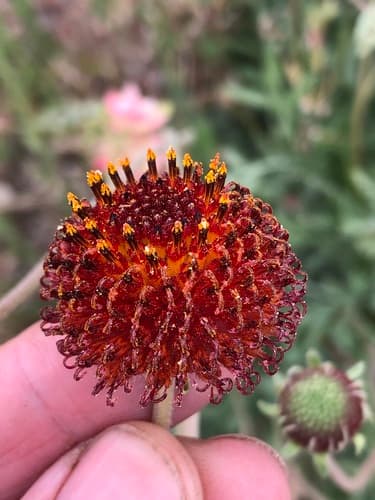
- Fragrant gaillardia forms a low rosette of narrow, lobed leaves topped by rounded flower heads with dark maroon to brownish red disc florets, sometimes with short yellow ray tips. The blooms have a light, sweet fragrance, which gives the plant its common name.
- When does fragrant gaillardia bloom?
- It typically flowers from March through May, with individual plants producing multiple flower heads on slender stems through the spring season.
- What pollinators does Gaillardia suavis attract?
- The flower heads draw bees and a range of other nectar seeking insects, making it a useful spring nectar source in prairie and grassland plantings.
- How much water does Gaillardia suavis need?
- It does best with medium moisture and also tolerates lower water conditions once established, reflecting its origins in dry prairie and rocky soil sites.
- How much sun does fragrant gaillardia need to flower well?
- It flowers most reliably in part sun to full sun locations, though it can handle a bit more shade for part of the day without stopping bloom entirely.
- Is Fragrant Gaillardia HOA-friendly?
- Fragrant Gaillardia is generally an HOA-friendly choice in the right placement, with low maintenance.
These answers were drafted with an AI model from this plant's data. Verify care details with a local expert.
Native range data from the World Checklist of Vascular Plants (Kew). Pollinator and host plant associations compiled from GBIF, iNaturalist, and published ecological literature.
If something looks wrong
Common plant problems, and what to check first
These come up on almost any plant. Each guide lists the likely causes in the order they are worth ruling out, with one thing to check before you act on any of them, and links to the source it came from.
- It is dying right after planting
- Leaves turning yellow
- Wilting even though I watered it
- Brown crispy leaf tips
- Bugs on the plant
Ready to grow Fragrant Gaillardia? Add it to your garden in Pollinator Patch to track it and get season-by-season care guidance.
Planning a bed around it? Start a free plan with this plant
Not sure where to start? Take the 2-minute yard quiz