American Beautyberry
Callicarpa americana
Last reviewed: August 2026
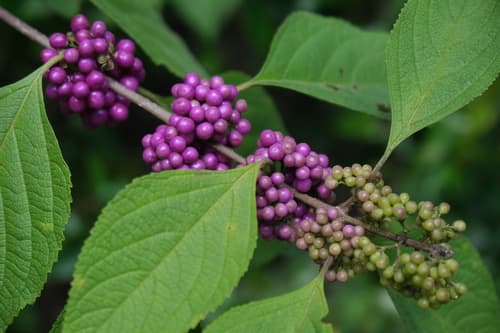
American beautyberry is a low-maintenance shrub that blooms from March through August and produces clusters of purple berries in late summer and fall. It thrives in part sun and tolerates low water once established.
Toxicity unknown
American Beautyberry (Callicarpa americana) is not listed by the ASPCA Animal Poison Control Center (opens in new tab) or the other sources we check, so we have no verdict for it either way. Absence from those lists is not a clearance. If your pet shows symptoms after eating any plant, call the ASPCA at (888) 426-4435.
The USDA PLANTS Database (opens in new tab) does not flag American Beautyberry as toxic to livestock.
Light
part sun
Water
low
Size
48"–72" H × 48"–72" W
Bloom
Mar, Apr, May, Jun, Jul, Aug
Native to
AL, AR, FL, GA and 11 more states
Pollinators
butterflies
Before you buy
Your city may pay you to plant this
Cities and water utilities offer rebates for replacing lawn with native and water-wise plants. We track 452 programs across 44 states, each with a link to the provider and the date we last checked it.
Find rebates in your areaBrowse plants for this ecoregion
American Beautyberry is a native Texas shrub known for its stunning purple berry clusters that appear in fall after small pink flowers bloom from spring through summer. This drought-tolerant plant grows into a rounded shape and provides year-round interest with its seasonal changes.
Growing American Beautyberry
Grow American Beautyberry in part sun and low water. Mature plants reach 48 to 72 inches tall and spread 48 to 72 inches wide. Expect low maintenance to keep it looking intentional in a front yard.
How to care for American Beautyberry, by region
How to care for American Beautyberry where it is actually grown: year-round basics plus what to do each season, region by region, with the sources for each.
Care guidance last updated: July 2026
Arkansas Valley (includes McAlester, OK)
Year-round
American beautyberry grows natively in the Arkansas Valley, where oak-pine and oak-hickory woods on the valley slopes and forest edges give it the part shade and moist ground it needs. It is a loose, rounded shrub best known for the rings of magenta berries it puts out along its stems in fall. It fits naturally into a woodland-edge or foundation bed with some afternoon shade.
- Native to the oak-pine and oak-hickory forest cover of the Arkansas Valley, part of its documented range from the Atlantic and Gulf coastal plains west into southeastern Oklahoma (Lady Bird Johnson Wildflower Center).
- Grows best with part shade and moist, well drained soil, full open-prairie sun and heavy clay can stunt it.
- Reaches 3 to 6 feet tall and wide as a landscape shrub.
- Berries feed at least 10 bird species through fall and winter, especially northern bobwhite (Lady Bird Johnson Wildflower Center).
Reads as an intentional, well kept shrub along a fence line or bed edge, especially once fall berries color up.
Fall
Fall is when beautyberry earns its name. Clusters of magenta berries wrap the stems, standing out first against yellowing leaves and then against bare wood as the season goes on. Birds work through the berry crop over the course of fall, so a thinning display later in the season is normal.
- Berries ripen to a bright magenta and hold on the stems well into late fall.
- At least 10 bird species feed on the berries, especially northern bobwhite, expect birds around the plant this time of year (Lady Bird Johnson Wildflower Center).
- Leaves yellow and drop earlier than many nearby shrubs, that is typical for this species.
- A good time to collect ripe berries for seed if you want to propagate more plants.
The berry show reads as intentional fall interest, a solid choice for a bed that needs color once summer bloomers wind down.
Winter
Winter is quiet for beautyberry. Stems go bare once the birds finish off the berries and the leaves drop. Late winter is the right time for a hard prune if the shrub has grown leggy, since it flowers and fruits on new wood and recovers fast from a cutback.
- Beautyberry flowers and fruits on new growth, a hard prune in late winter down to about a foot encourages fuller growth without losing next season's berries.
- Root hardy through Arkansas Valley winters, some stem tip dieback can happen in a hard freeze but the plant recovers from the base.
- Skip supplemental watering during dormancy unless winter is unusually dry.
- Bare winter stems look sparse up front, pair with an evergreen nearby if winter curb appeal matters.
A late-winter cutback keeps the shrub compact and deliberate looking rather than sprawling.
Spring
Beautyberry is slow to leaf out in spring, often later than other shrubs nearby, so give it time before assuming it did not make it through winter. Small pale flower clusters start forming at the leaf joints by late spring. This is a good window to prune for shape while the plant is just getting going.
- Late leaf-out is normal, wait until other shrubs are well underway before checking for winter damage.
- Prune dead or crossed stems as new growth starts to keep a tidy shape through the season.
- Flower buds form small and pale at the base of new leaves, easy to miss at a glance.
- Mulch helps hold spring soil moisture through the Arkansas Valley's variable spring rainfall.
Summer
Summer brings the small lavender flowers and the start of the berry crop, with pollinators working the blooms steadily through the heat. A long dry stretch can cause the plant to drop leaves and lose developing berries, which is a drought response rather than a sign of disease.
- Extended summer drought can trigger leaf drop and berry loss, a documented stress response, not dieback (USDA Forest Service Fire Effects Information System).
- Deep watering during dry spells protects the berry crop headed into fall.
- Part shade helps in Arkansas Valley summer heat, full sun in open exposure can scorch the leaves.
- Flowers are subtle but draw a steady run of bees through the season.
Sources: Lady Bird Johnson Wildflower Center - Callicarpa americana, USDA Forest Service Fire Effects Information System - Callicarpa americana, Clemson Cooperative Extension - Callicarpa americana
Cross Timbers (includes Fort Worth)
Year-round
American beautyberry is a native understory shrub for the oak woodlands and moist thickets of the Cross Timbers around Fort Worth.
- It grows best in part shade with moist, well-drained soil, doing well under the oak canopy typical of Cross Timbers woodlands, though it tolerates more sun with extra water.
- It is documented as native to the Eastern Cross Timbers and nearby Grand Prairie woodland edges, part of its range from Virginia west to Oklahoma and Texas, per the Native Plant Society of Texas and USDA Forest Service.
- Its small summer flowers draw native bees and other pollinators, and the fall berry clusters feed more than 40 bird species building up fat for migration, per Florida Wildflower Foundation and university extension sources.
- American beautyberry is not on the ASPCA toxic plant list for dogs, cats, or horses.
Fall
Fall is the shrub's showpiece season, when clusters of bright purple berries ring the stems and feed migrating birds.
- Dense clusters of magenta-purple berries form along the stems from about August through October, the plant's most ornamental period.
- More than 40 bird species use the fruit for fat reserves during fall migration, so leaving berries in place supports wildlife through the season.
- No pruning is needed now. Cutting back would remove the berry display that gives the shrub its curb appeal this time of year.
- Berries hold on the stems well after leaf drop, giving weeks of color even as surrounding plants fade for winter.
A beautyberry loaded with purple fall berries is a clear seasonal highlight that reads as intentional, healthy landscaping.
Winter
Winter is when beautyberry drops its leaves and goes dormant, showing bare stems until spring pruning.
- The shrub is deciduous and drops its leaves in winter, leaving bare woody stems until spring growth resumes.
- Hold off on major pruning until early spring, right before new growth starts, since cutting too early can expose stems to hard freezes.
- Established plants tolerate typical Cross Timbers winter cold well and need little to no supplemental water during dormancy.
- Any remaining berries that birds haven't eaten will usually be gone by midwinter as food sources elsewhere become scarce.
Spring
Spring is when beautyberry leafs out and is best pruned hard before new growth takes off.
- Prune stems back by about a third to a half in early spring before new growth starts, since flowers and berries form on new wood.
- New leaves emerge light green and expand quickly once the weather warms.
- Water regularly while the shrub is establishing new growth, especially on drier Cross Timbers sandy soils.
- This is a good time to transplant or plant new beautyberry, giving roots the full growing season to establish before next winter.
Summer
Summer is bloom season, when small pink flowers quietly set up the shrub's signature fall berries.
- Small pink to lavender flower clusters appear along the stems in summer, drawing native bees and other pollinators.
- Keep soil evenly moist during hot stretches, since consistent water now supports a heavier berry set in fall.
- The shrub can look a bit ragged and open in high summer heat, which is normal and not a sign of decline.
- Avoid heavy pruning now, since summer growth is what will carry this year's flowers into berries.
Sources: Callicarpa americana - Native Plant Society of Texas, SPECIES: Callicarpa americana - USDA Forest Service FEIS, ASPCA Toxic and Non-Toxic Plants (search: beautyberry), American beautyberry - Florida Wildflower Foundation (community tip), FPS90/FP090: Callicarpa americana - UF/IFAS Extension
East Central Texas Plains (includes College Station)
Year-round
American beautyberry is a native understory shrub well suited to the oak-hickory woodlands and sandy soils of the Post Oak Savanna around College Station.
- It thrives in part shade under an open oak canopy with moist, well-drained sandy soil, which matches Post Oak Savanna conditions closely.
- It is documented as native to the Northern and Southern Post Oak Savanna, part of a range extending from Virginia to Florida and west through Arkansas, Oklahoma, and Texas, per the Native Plant Society of Texas and USDA Forest Service.
- Its summer flowers support native bees and other pollinators, and its fall berries feed more than 40 bird species preparing for migration, per the Florida Wildflower Foundation and university extension sources.
- American beautyberry is not on the ASPCA toxic plant list for dogs, cats, or horses.
Fall
Fall is when beautyberry puts on its best show, with dense purple berry clusters that feed migrating birds.
- Clusters of bright magenta-purple berries ring the stems from around August through October, the plant's peak ornamental period.
- The fruit ripens just as fall bird migration ramps up, and more than 40 species are documented feeding on it for fat reserves before long flights.
- Leave the berries in place. This is the shrub's showcase season and pruning now would remove the display.
- Berries often persist on bare stems into late fall even after the leaves drop, adding weeks of color to the Post Oak Savanna landscape.
A beautyberry covered in fall berries is an obvious, well-kept seasonal feature that reads as deliberate landscaping.
Winter
Winter dormancy leaves beautyberry as bare stems, resting until spring pruning kicks off new growth.
- As a deciduous shrub, it drops its leaves for winter and shows bare woody stems until spring.
- Wait until early spring to do major pruning. Cutting in the middle of winter can expose fresh wounds to a hard freeze.
- Established shrubs handle typical Post Oak Savanna winter cold without extra care and need little to no supplemental water while dormant.
- Most remaining berries will have been eaten by birds or dropped by this point in the season.
Spring
Spring is prime pruning time for beautyberry, right before new growth pushes out fresh stems.
- Cut stems back by about a third to a half in early spring before new growth begins, since this year's flowers and berries form on new wood.
- New leaves come in quickly once temperatures warm, filling the shrub out within a few weeks.
- Water new or recently transplanted shrubs regularly, since Post Oak Savanna's sandy soils drain fast and dry out quicker than clay.
- Spring is a good planting window here, giving the shrub a full growing season to root in before next winter.
Summer
Summer brings the small pink flower clusters that set up beautyberry's signature fall berry display.
- Small pink to lavender flowers cluster along the stems in summer and draw native bees along with other pollinators.
- Keep soil moisture consistent through the hottest stretch, since Post Oak Savanna's sandy soils dry out fast and steady water now supports heavier fall berries.
- The shrub may look loose and a bit sparse in peak summer heat, which is normal growth habit, not stress.
- Skip pruning during summer so this season's new growth can carry through to berry set.
Sources: Callicarpa americana - Native Plant Society of Texas, SPECIES: Callicarpa americana - USDA Forest Service FEIS, ASPCA Toxic and Non-Toxic Plants (search: beautyberry), FPS90/FP090: Callicarpa americana - UF/IFAS Extension, American beautyberry - Florida Wildflower Foundation (community tip)
Edwards Plateau (includes San Antonio)
Year-round
American Beautyberry grows in the Edwards Plateau's woodland edges and moist draws, especially the Balcones Canyonlands fringe rather than open dry caliche flats.
- It prefers moist, part-shade sites such as woodland margins, bluff bottoms, and creek edges, and tolerates calcareous (limestone-influenced) soil as long as drainage is decent.
- The Native Plant Society of Texas lists Callicarpa americana as occurring in the Edwards Plateau and Balcones Canyonlands ecoregions of Central Texas.
- The berry clusters are an important fall food source for birds like mockingbirds and cardinals.
- American Beautyberry is not on the ASPCA toxic plant list for dogs or cats.
Fall
Fall is the payoff season, when clusters of bright purple berries line the stems and draw in birds.
- Leave the berry clusters in place. They're the main wildlife value of the plant and feed birds through fall and into winter.
- This is also the best time for the one major annual prune, cutting the shrub back hard after berries drop to keep it full next year.
- No fertilizing needed this time of year.
A beautyberry loaded with purple clusters reads as a deliberate ornamental feature, not a messy shrub.
Winter
Winter is dormant season and the ideal time for the shrub's hard annual cutback.
- Cut the whole shrub back to about a foot from the ground in late winter, since beautyberry blooms and fruits on new wood.
- This hard prune keeps the plant compact and encourages a fuller shape and heavier berry set next fall.
- No watering is generally needed once the plant is dormant and established.
A hard winter cutback might look bare for a few weeks, but it's what keeps the shrub tidy and full-looking through the rest of the year.
Spring
Spring is when new leaves and stems emerge, and it's the best window to shape the shrub before summer growth takes off.
- Prune out any winter dieback once new leaf buds show, cutting back to healthy wood.
- Light, one-time fertilizing isn't necessary in reasonably fertile Hill Country soils.
- Water new plantings regularly through spring to help roots establish in rocky ground.
Summer
Summer heat is when this shrub can look a little rangy, but it's setting up for its big fall berry display.
- Water during extended dry spells, since Hill Country summers can be brutal even for an otherwise tough native.
- Light shade during the hottest part of the day helps keep leaves from scorching.
- Avoid heavy pruning now. Flower buds that become fall berries are already forming.
Sources: Callicarpa americana - Native Plant Society of Texas (community tip), Callicarpa americana (American beautyberry) - Lady Bird Johnson Wildflower Center, Callicarpa americana (American Beautyberry) - North Carolina Extension Gardener Plant Toolbox
Mississippi Alluvial Plain (includes Memphis, TN)
Year-round
American beautyberry is native to the Mississippi Valley Loess Plains around Memphis and fits right into the region's woodland-edge landscapes.
- This shrub is native across the southeastern and south-central US, including the Mississippi Valley Loess Plains around Memphis, where it grows at woodland margins, bluff tops, and forest openings (US Forest Service Fire Effects Information System).
- It grows well in part shade and tolerates the region's humid summers without much complaint.
- Established plants are drought tolerant and only need occasional deep watering once they are settled in.
- Prune back hard in late winter to keep the shrub full, since flowers and berries form on new growth.
- The fall berry clusters bring in more than 40 bird species along with deer and other small wildlife.
Fall
Fall is the standout season, with bright purple berries drawing in birds across the loess plains.
- The purple berry clusters peak in fall and are the clearest sign this planting is intentional and cared for.
- Birds including mockingbirds, robins, and catbirds will start feeding on the berries as they ripen.
- There is no need to clean up spent berries. Leave them for wildlife through fall and winter.
- Take note of the shrub's size now if you plan a harder cutback come late winter.
The bright purple fall berries read as an intentional ornamental planting, not overgrowth.
Winter
Winter is dormant with one important pruning window before spring.
- Cut back to 12 to 18 inches in late winter, before new growth starts. This is the key task for keeping the shrub full each year.
- The bare, twiggy winter look is normal for this shrub once leaves and remaining berries have dropped.
- Clear out dead or crossing branches at the same time for better shape going into spring.
- No winter protection is needed in the Memphis area. This shrub is well suited to the region's winters.
A bare winter silhouette is expected for this shrub, not a problem. Late-winter pruning tidies it up before spring growth.
Spring
Spring growth kicks in as the loess plains warm up.
- Finish late pruning early in spring, cutting stems back to about 12 to 18 inches before new growth really gets going.
- Water new plantings consistently through their first spring in this region's silty loess soils, which can drain fast.
- Small lavender flower clusters appear along the stems as the shrub leafs out.
- Mulch helps hold moisture in loess soils, which can dry out quickly on slopes and bluffs typical of this ecoregion.
Summer
Summer is easy care once the shrub is established in the Memphis area's humid climate.
- This shrub handles the long, hot, humid Mid-South summer well and mostly just needs deep watering during dry stretches.
- Green berry clusters begin forming mid to late summer and will turn purple as fall approaches.
- Skip regular fertilizer. Average soil supports healthy growth without extra feeding.
- Give it room to spread since it naturally forms a wide, multi-stemmed shape in a good growing season.
Sources: SPECIES: Callicarpa americana - USDA Forest Service FEIS
Mississippi Valley Loess Plains (includes Memphis, TN)
Year-round
American beautyberry is native to the Mississippi Alluvial Plain and fits naturally into the bottomland-adjacent landscapes around Memphis.
- This shrub is native to the Mississippi Alluvial Plain, growing naturally at forest edges, swamp margins, and woodland openings across this bottomland region (US Forest Service FEIS; Lady Bird Johnson Wildflower Center).
- It tolerates the heavier, moisture-retentive soils common in the alluvial plain better than a lot of woody shrubs, as long as it is not sitting in standing water.
- Part shade is ideal, though it takes more sun with regular water in the first year or two.
- Prune back hard in late winter to keep growth full, since flowers and berries form on new wood each year.
- Fall berry clusters bring in more than 40 bird species plus deer and small mammals common to the region.
Fall
Fall is the highlight season, with bright purple berries drawing birds across the alluvial plain.
- The purple berry clusters peak in fall, giving the yard a clear, intentional-looking seasonal feature.
- Birds start feeding on the berries this time of year, adding wildlife activity right in the yard.
- Leave the berries in place. There is no need to clean them up, and they will keep feeding birds into winter.
- Note the shrub's size now if a harder cutback is needed come late winter.
The bright purple fall berry display reads as a tended ornamental planting, not overgrowth.
Winter
Winter is dormant, with the same key pruning step as the rest of its range.
- Cut stems back to 12 to 18 inches in late winter before new growth starts. This is the main upkeep task each year.
- A bare, twiggy winter look is normal for this shrub once leaves and remaining berries drop.
- Remove dead or crossing branches during the same pruning pass for better structure next season.
- No winter protection is needed in the Memphis area. This shrub handles the region's winters without issue.
A bare winter silhouette is expected, not a sign of decline. The late-winter cutback keeps it tidy before spring.
Spring
Spring growth is vigorous once the alluvial plain's soils warm up.
- Finish late pruning early in spring, cutting stems back to 12 to 18 inches before new growth takes off.
- Water new plantings regularly through the first spring, though established alluvial-plain soils often hold enough moisture on their own.
- Small lavender flower clusters show up along the stems as the shrub leafs out.
- Watch drainage in low spots. This shrub tolerates moist soil but not standing water for long stretches.
Summer
Summer is easy going, with the shrub filling out through the region's long humid stretch.
- This shrub handles the long, hot, humid summer typical of the Mississippi Alluvial Plain and needs little beyond occasional deep watering in dry spells.
- Green berry clusters form mid to late summer and will ripen to purple as fall approaches.
- No regular fertilizer needed in this region's naturally fertile alluvial soils.
- Give it plenty of room since it can spread wide in a favorable growing season.
Sources: SPECIES: Callicarpa americana - USDA Forest Service FEIS, Callicarpa americana - Lady Bird Johnson Wildflower Center
Ouachita Mountains (includes Broken Bow, OK)
Year-round
American beautyberry is a native understory shrub in the Ouachita Mountains, right at home in the shortleaf and loblolly pine and oak woods that cover this part of southeastern Oklahoma. It grows along forest edges, in open thickets, and on moist slopes where some light gets through the canopy. In fall it puts on a show with clusters of bright magenta berries that ring the stems. Give it part shade and a spot that stays moist but drains, and it mostly takes care of itself.
- Native to the pine and oak woodlands of the Ouachita Mountains, not just tolerant of them (Lady Bird Johnson Wildflower Center).
- Prefers part shade, moist rich soil, and some wind or root protection from open exposure.
- Grows 3 to 6 feet tall and wide in a typical yard setting, larger in ideal forest-edge conditions.
- Fall berries are an important food source for at least 10 bird species, especially northern bobwhite (Lady Bird Johnson Wildflower Center).
A tidy, rounded shrub that reads as an intentional planting along a fence line or foundation bed, especially once the fall berries come in.
Fall
Fall is beautyberry's moment. The magenta berry clusters ring the stems and stand out against the plant's yellowing leaves, then against bare branches once leaves drop. Birds start working the berries as the season goes on, so do not be surprised if the display thins out before winter.
- Berry clusters ripen to a bright magenta and persist on bare stems into late fall.
- At least 10 bird species eat the berries, especially northern bobwhite, so a heavy bird visit is normal, not a problem (Lady Bird Johnson Wildflower Center).
- Leaves yellow and drop earlier than many companion shrubs, this is normal seasonal behavior.
- Good time to collect and dry seed if propagating, berries hold their color well after picking.
The berry display reads as deliberate fall color, a strong pick for a foundation bed that needs interest after the summer bloomers fade.
Winter
Winter is dormant and mostly hands off. Stems go bare after the birds finish the berry crop and leaves drop. This is the right time for a hard prune if the plant has gotten leggy, since beautyberry blooms on new wood and bounces back fast from a cutback.
- Beautyberry blooms and fruits on new growth, so a hard prune in late winter, cutting back to a foot or so, encourages a fuller shape and does not cost you next year's berries.
- Root hardy through Ouachita Mountains winters, stems may show some tip dieback in a hard freeze but recover from the base.
- No need to water during dormancy unless the winter is unusually dry.
- Bare winter stems can look sparse in a front bed, plan companion evergreens nearby if winter structure matters for curb appeal.
A late-winter hard prune keeps the shrub compact and tidy rather than sprawling, which reads better from the street.
Spring
Spring is when beautyberry wakes up slowly. New leaves come in later than a lot of other shrubs, so do not assume a bare plant in early spring is dead. Small, pale lavender flower clusters start forming along the stems by late spring, tucked in at the leaf joints. This is a good window to shape the plant if it grew leggy last year.
- Beautyberry often leafs out later than nearby shrubs, wait until late spring before writing it off as winter-killed.
- Prune out dead or crossing stems now, right as new growth starts, to keep the shape tidy for the season.
- Flower clusters form small and pale, easy to miss, at the base of new leaves.
- A light layer of mulch around the root zone helps hold spring moisture through the Ouachita Mountains' variable spring rain.
Summer
Summer is bloom and early berry season. The small lavender flowers open along the stems and pollinators work them steadily through the heat. Watch the leaves during a dry stretch. Beautyberry can drop leaves and lose developing berries during prolonged summer drought, which is a stress signal, not a disease.
- Prolonged summer drought can cause temporary leaf drop and loss of developing berries, this is a known drought response, not dieback (USDA Forest Service Fire Effects Information System).
- Deep, infrequent watering during dry spells helps hold onto the berry crop for fall.
- Flowers are small and easy to overlook, but they draw in a steady stream of bees through summer.
- Full sun in Ouachita Mountains summer heat can scorch leaves, part shade keeps the plant looking better.
Sources: Lady Bird Johnson Wildflower Center - Callicarpa americana, USDA Forest Service Fire Effects Information System - Callicarpa americana, Clemson Cooperative Extension - Callicarpa americana
Ozark Highlands (includes Springfield, MO)
Year-round
American beautyberry is one of the few truly southern shrubs that reaches into the Ozark Highlands around Springfield, so growing it here is really about copying the one spot it hangs on in the wild: rocky, well drained dolomite and limestone slopes in light woodland shade. The Missouri Department of Conservation lists it as native but uncommon in the southeastern Ozarks, growing on wooded dolomite bluffs along the White River, so give it a part shade edge and fast draining ground and it settles in. It is a tidy, rounded shrub that reads as a deliberate planting, which keeps it HOA-friendly, and the flowers feed bees and butterflies before the bright purple fall berries feed robins, cardinals, and mockingbirds.
- Native footing in this ecoregion is narrow. MDC records it on wooded dolomite slopes above the White River and Bull Shoals in the far southern Ozarks, so treat it as a shade woodland shrub, not a full sun prairie plant.
- Plant it in the dappled light under high oak or hickory branches. Ozark uplands here are rocky and drain fast, which is exactly what beautyberry wants, so avoid low wet spots where water sits.
- It is not on the ASPCA toxic plant list, so it is a reasonable pick for a front yard where dogs or cats roam.
- Give it room to reach about 4 to 6 feet wide. A single plant with a clean mulch ring looks intentional and calm at the curb.
Fall
Fall is beautyberry's whole reason for being in an Ozark yard. From August into November the branches load up with tight clusters of bright purple berries that ring the stems, and around Springfield those berries feed robins, cardinals, mockingbirds, and other birds during migration and into winter. Leave the fruit up. It is the showpiece and the wildlife food both.
- Do not cut the shrub back in fall. The purple berries and the birds that eat them, including American robin, northern cardinal, and mockingbird per the Missouri Department of Conservation, are the payoff for the whole year.
- Let fallen oak and hickory leaves settle around the base. That leaf litter mimics the Ozark woodland floor and feeds the soil for free.
- The berries appear August through November, so this is the season the shrub earns its front yard spot with color rather than pruning.
- If you want to share, cut a few berry stems for a vase indoors without hurting the plant.
Beautyberry keeps its bright fruit while leaves drop, so the bare stems studded with purple berries read as an intentional seasonal display rather than a neglected shrub, which keeps a fall yard looking cared for to an HOA-conscious neighbor.
Winter
Winter is the quiet season and the edge of what beautyberry can take in the Ozark Highlands. Springfield sits near the cold northern limit of this southern shrub, so the plan is to protect the roots and wait. Any berries the birds missed cling to bare stems into early winter, and then you leave the shrub alone until the early spring cutback.
- Mulch the root zone a few inches deep before hard freezes. Springfield is near this shrub's cold edge in the Ozarks, and a mulch blanket over the fast draining rocky soil buffers the roots through cold snaps.
- Expect it to die back somewhat in a hard winter. That is normal at this northern limit, and it regrows from the base once spring warms.
- Leave any remaining berries and the bare framework standing. Do the real cutback in early spring, not now.
- Hold off on watering. Dormant roots in cold Ozark ground do not need it, and soggy winter soil is a bigger risk than dryness.
A dormant beautyberry is just bare twigs in winter, which can look like a dead shrub. A neat mulch ring and clean edge around it signals the planting is intentional and maintained, avoiding a tidy yard complaint before spring growth returns.
Spring
Spring is the setup season for beautyberry in the Ozark Highlands. It leafs out late, so do not panic if bare stems stay quiet while everything else greens up around Springfield. This is the window to plant new shrubs into the rocky, fast draining upland soil it likes and to cut back last year's stems, since it blooms and fruits on new wood that grows this year.
- Cut the whole shrub back hard in early spring, down to about 6 to 12 inches, before new growth pushes. It flowers and fruits on the current year's stems, so a spring cut gives you a fuller shape and a heavier berry show in fall.
- This is the best time to set out new plants. Work in the cool damp weeks so roots settle before Ozark summer heat, and pick a part shade spot with the sharp drainage the local dolomite slopes provide.
- Water a new plant deeply about once a week through spring if rain is short. Established shrubs on these rocky uplands need very little once their roots are down.
- Skip heavy fertilizer. Ozark woodland soil is lean and beautyberry is used to it, so a thin layer of leaf mulch is plenty.
A hard early spring cutback can look drastic for a few weeks. Doing it before neighbors are out much, and keeping a clean edge and mulch ring around the stub, reads as intentional pruning rather than a dead shrub and heads off a curb appeal complaint.
Summer
Summer is when beautyberry flowers and quietly sets the berries that make it worth growing. Around Springfield the small rose to pink blooms open from June into August and draw bees and butterflies. On the rocky Ozark uplands where this shrub belongs, the main job is light shade and just enough water to carry it through a hot dry stretch, since deep prolonged watering is not what it is built for.
- The June to August flowers feed bees and butterflies per the Missouri Department of Conservation, so leave them be and let the shrub work as a pollinator stop.
- Part afternoon shade matters here. On an exposed slope the leaves can wilt in peak Ozark heat, so an east side or high canopy spot keeps it comfortable.
- Water an established shrub only during a real drought, and then soak it deeply and let the fast draining rocky soil dry between waterings. Its wild footing on White River dolomite slopes rarely stays wet.
- Hold off on shearing now. Cutting in summer removes the developing berry clusters you want for fall.
Sources: Missouri Department of Conservation field guide, American Beautyberry, Lady Bird Johnson Wildflower Center, Callicarpa americana, ASPCA toxic and non-toxic plants, letter B (beautyberry not listed)
Piedmont (includes Atlanta, GA)
Year-round
American beautyberry is a native Piedmont shrub that thrives in Atlanta-area yards with little fuss once it settles in.
- This shrub is native to the Piedmont, including the Atlanta area, and grows naturally along woodland edges and forest openings (Lady Bird Johnson Wildflower Center).
- Give it part shade to full sun and let the soil dry out some between waterings once it is established. It handles Georgia's clay soils fine.
- Prune hard in late winter, cutting stems back to about 12 to 18 inches. New growth is where the flowers and berries form, so this keeps the plant full instead of leggy (Piedmont Master Gardeners).
- The purple berry clusters that show up in late summer feed more than 40 bird species, plus foxes, raccoons, and other wildlife.
- Deer will nibble the leaves sometimes but the plant bounces back quickly, so it holds up better than a lot of other shrubs in yards with deer pressure.
Fall
Fall is the payoff season, when the berry clusters turn bright purple and bring in the birds.
- The bright purple berry clusters along the stems are the main show in fall and read as an intentional, cared-for planting rather than an overgrown patch.
- Mockingbirds, catbirds, robins, and other birds will start working the berries, so expect some visiting wildlife this time of year.
- You do not need to deadhead or remove spent berries. Leave them for the birds through fall and into winter.
- This is a good time to plan next late-winter's pruning if the shrub got taller than you want this season.
The purple berry display reads as a tended ornamental feature, which helps with curb appeal during fall.
Winter
Winter is dormant and mostly hands off, aside from one key pruning window.
- Late winter, before new growth starts, is the time to cut stems back to 12 to 18 inches above the ground. This is the single most important yearly task for this shrub (Piedmont Master Gardeners).
- The shrub will look bare and twiggy through winter after the leaves and remaining berries drop. That is normal and not a sign of a problem.
- Remove any dead, damaged, or crossing branches during the same pruning session so the plant regrows with good structure.
- No winter protection is needed in the Atlanta area. This shrub handles Piedmont winters fine.
A bare, twiggy look in winter is expected for this shrub, not neglect. Late-winter pruning right after the leaves drop keeps it tidy for spring.
Spring
Spring is when new canes push out fast and set up the whole season's berry show.
- Finish any late pruning early in spring before new growth really takes off. Cutting back to 12 to 18 inches keeps the shrub from getting sprawly (Piedmont Master Gardeners).
- Water new plantings regularly through their first spring while roots are still getting established.
- Small pink to lavender flower clusters start showing up along the stems, which is a good sign the plant is settling in well.
- Mulch around the base to hold moisture and keep down early-season weeds, but keep mulch a few inches off the stems.
Summer
Summer heat is when this shrub looks its best and needs the least help from you.
- Once established, American beautyberry is drought tolerant through Georgia's hot summers and usually only needs deep watering during extended dry spells.
- Flowers give way to small green berries starting mid to late summer that will ripen to the signature purple in fall.
- Skip regular fertilizer. This shrub does fine in average soil and heavy feeding just pushes floppy growth.
- Check for any storm damage after summer thunderstorms since branches can be a little brittle where they meet the main stem.
Sources: Callicarpa americana - Lady Bird Johnson Wildflower Center, Callicarpa (Beautyberry) - Piedmont Master Gardeners, American Beautyberry - GNPS 2018 Plant of the Year (community tip)
South Central Plains (includes Beaumont)
Year-round
American Beautyberry is a common understory shrub across the Piney Woods, right at home in the region's woodland edges and moist, acidic soils.
- It grows well in part shade under pine-hardwood canopy and tolerates the region's naturally moist, acidic soils without any amendment.
- The Native Plant Society of Texas and the Pineywoods Native Plant Center in Nacogdoches both feature Callicarpa americana as native to the Piney Woods ecoregion.
- Its purple berry clusters are a key fall food source for songbirds throughout East Texas.
- American Beautyberry is not on the ASPCA toxic plant list for dogs or cats.
Fall
Fall is when the berry clusters turn bright purple and become one of the most recognizable sights in East Texas woodlands.
- Let the berries stay on the shrub. Birds rely on them heavily through fall migration and into winter.
- This is a good time for the annual hard prune once berries have mostly dropped.
- No fertilizer needed heading into dormancy.
A beautyberry full of purple clusters reads as an intentional native accent, not overgrowth.
Winter
Winter dormancy is the time for the shrub's one major cutback of the year.
- Cut back to about a foot from the ground in late winter, since new growth is where next season's flowers and berries form.
- Mild Piney Woods winters mean little to no additional cold protection is needed.
- Skip watering unless there's an unusually dry stretch.
A hard winter cutback keeps the shrub compact and full-looking through the rest of the year instead of leggy.
Spring
Spring brings quick new growth in the Piney Woods' warm, humid conditions.
- Prune any winter-damaged stems once new leaves emerge.
- Established plants rarely need extra water this time of year given regular East Texas rainfall.
- New transplants benefit from a layer of mulch to hold moisture in sandy Piney Woods soils.
Summer
Summer humidity keeps this shrub lush through the hottest months, with flower clusters forming for fall berries.
- Water only during unusual dry spells. Piney Woods summers are typically humid enough to keep it going.
- Avoid pruning now since it removes the buds that become fall berries.
- Watch for leaf spot in especially wet, shaded spots, though it's rarely serious.
Sources: Callicarpa americana - Native Plant Society of Texas (community tip), Callicarpa americana (American beautyberry) - Lady Bird Johnson Wildflower Center, Callicarpa americana (American Beautyberry) - North Carolina Extension Gardener Plant Toolbox
Southeastern Plains (includes Tallahassee)
Year-round
American beautyberry is a native shrub across the Southeastern Plains around Tallahassee, right in the Gulf Coastal Plain heart of its range.
- This shrub is native throughout the Gulf Coastal Plain from Virginia to Texas, and the Tallahassee area sits right in the middle of that range, per the USDA Forest Service Fire Effects Information System.
- It grows as an understory shrub in open woodlands, pine flatwoods, and along woodland edges, so give it filtered shade to part sun rather than deep shade.
- It tolerates a wide range of soil moisture, from occasional flooding to fairly dry stretches, which makes it forgiving in typical yard conditions.
- Left alone it forms a loose, arching shrub 4 to 8 feet tall. If you want a tidier look near the house, you can prune it back hard in late winter.
- Deer tend to leave it alone, which is useful if deer browse is an issue in your neighborhood.
Fall
Fall is peak show season, with heavy clusters of purple berries lining bare-looking stems as leaves start to drop.
- The purple berry clusters are at their showiest in fall and are a strong food source for a wide range of songbirds heading into winter.
- This is a good time to skip deadheading. Leave the berries on the plant so birds can use them through fall and into winter.
- Leaves begin to yellow and drop later in fall in this part of Florida, which is normal and not a sign of stress.
- If you want to collect seed or start new plants from cuttings, fall berries are viable material for propagation.
The bright purple berry clusters read as an intentional ornamental feature rather than an overgrown look, which helps with curb appeal during HOA drive-bys.
Winter
Winter is dormancy and the right time for a hard cutback if you want a compact shrub next year.
- The plant drops its leaves in winter in the Tallahassee area, though it can stay semi-evergreen in milder winters further south in Florida.
- Late winter, before new growth starts, is the recommended time to cut the whole shrub back hard if you want to control its size, since it blooms and fruits on new wood.
- Bare winter stems can look a little rough in a front yard. A hard prune now sets up a fuller, tidier shape by summer.
- No frost protection is typically needed in this region.
A hard late-winter cutback keeps the shrub from looking straggly or overgrown once the growing season resumes.
Spring
Spring is when new growth flushes out and small pink flower clusters start forming along the stems.
- New leaves emerge in mid to late spring, later than a lot of other shrubs, so don't assume a bare plant in early spring is dead.
- Small pink to lavender flower clusters form where the leaves meet the stem, setting up the berry clusters that show later in the year.
- This is the best window to do any shaping cuts, since the plant is about to push a full season of new growth.
- Established plants need little supplemental water in spring in most of the Tallahassee area given normal rainfall.
Summer
Summer brings full green foliage and the start of the signature purple berry clusters.
- By mid to late summer the small flowers give way to clusters of bright purple (occasionally white) berries that ring the stems.
- The shrub handles Florida summer heat and humidity well and rarely needs extra watering once established, per UF/IFAS.
- It can get leggy in full sun with regular water, so a light shaping cut after flowering keeps it fuller without removing the berries that are forming.
- Watch for a few chewed leaves from caterpillars. That's normal and the plant recovers fine without spraying.
Sources: USDA Forest Service FEIS - Callicarpa americana, Florida Native Plant Society - Callicarpa americana, UF/IFAS - Callicarpa americana: American Beautyberry
Southern Coastal Plain (includes Orlando)
Year-round
American beautyberry is native to the Southern Coastal Plain around Orlando and grows well in the region's pine flatwoods and woodland edges.
- This shrub's native range runs from Virginia to Florida and west to Texas, and central Florida's Southern Coastal Plain sits solidly within that range, per USDA Forest Service data.
- In this region it naturally grows in pine flatwoods, hammock edges, and disturbed woodland margins, so part sun to light shade suits it best.
- It handles both sandy Florida soils and periods of heavy summer rain without issue.
- Expect a loose, arching form 4 to 8 feet tall and wide unless you prune it back.
- It's generally left alone by deer, which is a plus in areas with heavy deer pressure.
Fall
Fall is when the signature purple berry clusters take over the stems and draw in birds.
- The bright purple berries reach peak color and density in fall, making this the shrub's showiest season.
- Songbirds rely on these berries heading into cooler months, so it's best to skip pruning and let the fruit stay on the plant.
- Leaf drop in central Florida is often light and gradual in fall compared to more northern parts of the range.
- If you want to propagate more plants for the yard, fall berries can be used to collect seed.
Heavy, uniform berry clusters read as a deliberate ornamental planting rather than a wild or neglected look.
Winter
Winter is mild in central Florida, and the shrub may stay semi-evergreen or only partly drop its leaves.
- In the Orlando area the plant can stay semi-evergreen through a mild winter rather than going fully bare like it does further north.
- Late winter is still the best time for a hard cutback if you want to control size, since new flowers and berries form on fresh growth.
- No frost protection is generally needed in this part of Florida.
- If a cold snap does burn back some leaves, the shrub resprouts readily from the base once temperatures warm.
Spring
Spring brings new leaf growth and the first small flower clusters that lead to the fall berry show.
- Leaves flush out in spring, and small pink to lavender flowers form in clusters along the stems shortly after.
- If the plant looks bare in early spring, give it time. It typically leafs out later than many other shrubs in central Florida landscapes.
- Spring is the right window for any shaping cuts, since flowering and fruiting happen on the new growth that follows.
- Established plants generally don't need extra irrigation beyond normal central Florida spring rainfall.
Summer
Summer heat and humidity suit this shrub well, and the berry clusters begin forming as flowers fade.
- Small flowers give way to green berry clusters through summer that will ripen to purple in fall.
- The plant is well adapted to central Florida's hot, humid summers and typically doesn't need supplemental watering once established, per UF/IFAS.
- A light shaping trim after the spring flush keeps the shrub fuller without cutting off the berry clusters that are developing.
- Some caterpillar leaf damage in summer is normal and doesn't require treatment.
Sources: USDA Forest Service FEIS - Callicarpa americana, Florida Native Plant Society - Callicarpa americana, UF/IFAS - Callicarpa americana: American Beautyberry
Southern Florida Coastal Plain (includes Miami)
Year-round
American beautyberry is native to South Florida's coastal plain, where it grows in dry broadleaf scrub and pine woodlands.
- The Florida Native Plant Society lists this shrub's native range as reaching south through Florida into the Miami area, growing in dry broadleaf evergreen shrublands and pine woodlands.
- It handles South Florida's swing from wet season downpours to long dry stretches, since its moisture tolerance ranges from occasional flooding to fairly dry conditions.
- In this far-south part of its range it tends to stay evergreen rather than losing its leaves in winter.
- Give it part sun to light shade and average landscape soil. It isn't picky about soil type.
- Its loose, arching habit fits an informal planting bed better than a clipped hedge look.
Fall
Fall is when the purple berry clusters peak and become an important food source for local birds.
- Dense clusters of purple berries line the stems in fall, the shrub's most ornamental season.
- Birds actively feed on the berries this time of year, so it's best to avoid pruning and let the fruit stay put.
- Because the shrub often stays evergreen in South Florida, the berry display shows against green leaves rather than bare stems.
- Fall berries can be collected for seed if you want to grow more plants for the yard.
The dense purple berry clusters against green foliage read as a polished ornamental planting, which helps in HOA-conscious front yards.
Winter
Winter is mild in South Florida, and the shrub typically stays evergreen with little to no dieback.
- In the Miami area this shrub is typically evergreen through winter rather than dropping its leaves like it does further north.
- If you want to manage its size, late winter is still the best window for a hard cutback, since flowers and berries form on new growth.
- Frost is rarely a concern in this part of Florida, so winter protection generally isn't needed.
- Berries may still be present into early winter, continuing to feed birds after other food sources have thinned out.
Spring
Spring in South Florida brings a flush of new growth and the season's first flower clusters.
- New leaves and small pink to lavender flower clusters appear along the stems in spring, setting up the berries that follow later in the year.
- Because the shrub often stays evergreen this far south, spring growth adds onto existing foliage rather than replacing bare stems.
- Spring is a good time for a light shaping cut if the plant has gotten leggy, since flowering happens on new growth.
- Established plants in South Florida generally don't need extra watering with normal spring rain.
Summer
Summer's heat and heavy rains suit this shrub well as berry clusters begin to form.
- Flowers fade into green berry clusters through the wet season, ripening toward purple later in the year.
- The plant tolerates South Florida's intense summer rain and humidity without issue, and rarely needs supplemental irrigation once established.
- A light trim after the spring bloom keeps the shrub tidy without removing developing berry clusters.
- Occasional caterpillar feeding on leaves in summer is normal and not a reason to spray.
Sources: Florida Native Plant Society - Callicarpa americana, USDA Forest Service FEIS - Callicarpa americana, UF/IFAS - Callicarpa americana: American Beautyberry
Southwestern Appalachians (includes Chattanooga, TN)
Year-round
American beautyberry is native to eastern Tennessee's Southwestern Appalachians and does well in Chattanooga-area yards.
- This shrub is native across the eastern half of Tennessee, including the Southwestern Appalachians around Chattanooga, where it grows naturally at forest edges and in woodland openings (Tennessee Smart Yards, University of Tennessee Extension).
- It likes part shade best, especially some afternoon shade in the hotter parts of the Tennessee Valley, but tolerates more sun with regular water.
- Established plants are fairly drought tolerant and do not need much beyond occasional deep watering in dry stretches.
- Prune back hard in late winter since flowers and berries form on new growth each year. This keeps the shrub from getting rangy.
- The berry clusters draw in mockingbirds, robins, and other songbirds, plus deer and small mammals.
Fall
Fall brings the bright purple berry display that makes this shrub stand out.
- The purple berry clusters along the stems peak in fall and give the yard a clear seasonal focal point.
- Birds start visiting for the berries this time of year, which is part of the appeal if you want more wildlife activity in the yard.
- Leave the berries on the plant. They are not something you need to clean up, and they will keep feeding birds into winter.
- This is a good time to note if the shrub needs a harder cutback next late winter to control its size.
The purple fall berries read as an intentional ornamental feature rather than an overgrown shrub.
Winter
Winter is dormant, with one key pruning task before spring growth starts.
- Cut stems back to 12 to 18 inches in late winter before new growth begins. This is the main yearly maintenance task for this shrub (Tennessee Smart Yards, University of Tennessee Extension).
- Expect a bare, twiggy look through winter once the leaves and last berries have dropped. That is normal for this shrub.
- Clear out any dead or crossing branches during the same pruning session for better shape next season.
- No winter protection needed in the Chattanooga area. This shrub is well suited to Tennessee winters.
A bare winter look is expected, not a sign of a dying plant. The late-winter cutback keeps it tidy heading into spring.
Spring
Spring growth comes on strong once the weather warms in the Tennessee Valley.
- Wrap up any late pruning early in spring before new canes start pushing out. Cut stems back to about a foot to 18 inches.
- Keep new plantings watered regularly through their first spring while the root system is still developing.
- Small lavender to pink flower clusters appear along the stems as the season goes on.
- Watch for late frosts common in the Appalachian foothills, which can nip new growth back but rarely cause lasting damage.
Summer
Summer is low maintenance here as the shrub fills out and starts forming berries.
- This shrub handles the humid Tennessee Valley summer well and only needs supplemental water during extended dry spells once established.
- Small green berry clusters form along the stems mid to late summer and will ripen to purple in fall.
- No regular fertilizer needed. Average garden soil is enough for healthy growth.
- Give it some room to spread since it can get multi-stemmed and wide in a good growing season.
Sources: Callicarpa americana - Tennessee Smart Yards, Lady Bird Johnson Wildflower Center, Callicarpa americana
Texas Blackland Prairies (includes Dallas)
Year-round
American beautyberry is an understory shrub for the Dallas and Austin area, grown for its clusters of brilliant purple berries in late summer and fall.
- Plant in part shade to full sun in average, well-drained soil. It grows naturally in Blackland woodlands and Piney Woods understories (Native Plant Society of Texas).
- It has a naturally loose, arching form. Without pruning it can look leggy, so plan on a yearly cutback if you want a tidier shape.
- The dense purple berry clusters persist into winter and are a favorite food for birds (Birds and Blooms).
- Crushed leaves have a documented history as a natural mosquito repellent, thanks to compounds called callicarpenol and intermedeol (UF/IFAS Extension).
- American beautyberry is not toxic to dogs or cats, according to the ASPCA.
Fall
The showpiece season. Clusters of brilliant purple berries wrap the stems and draw in birds.
- Leave the berries for the birds. They are a favorite fall and winter food source (Birds and Blooms).
- No pruning now. The berries are the point of this season.
- No watering or feeding needed.
A shrub covered in purple berry clusters is a clear visual statement of an intentional, well-kept native planting.
Winter
Berries often persist after the leaves drop, feeding birds through the mild Blackland winter.
- The purple berry clusters can remain even once the shrub is bare, adding winter color and bird food (Gardener's Path).
- Established plants are cold hardy here and need no protection.
- Late winter is your pruning window if the shrub needs shaping.
Leftover winter berries on bare stems read as an intentional wildlife feature, not neglect.
Spring
This is the pruning window. Beautyberry blooms and fruits on new growth, so cut hard now if you want a compact shape.
- Prune back to about a foot above the ground at the end of winter or very early spring for a more compact, bushier plant (Gardener's Path).
- New growth comes on quickly after a hard cutback.
- No fertilizer needed. Average soil suits it well.
A late-winter or early-spring hard prune is the single move that keeps this naturally loose, arching shrub reading as tended instead of leggy.
Summer
Small pink to lavender flower clusters appear along the stems, setting up the fall berry show.
- Water during establishment; once mature it tolerates typical Blackland conditions with only occasional deep watering in a hard dry spell.
- No pruning needed now. Save that for late winter.
- Give it room. The arching branches spread wider than many gardeners expect.
Sources: Lady Bird Johnson Wildflower Center, Native Plant Society of Texas, Callicarpa americana, UF/IFAS Extension, American Beautyberry and Mosquitoes, ASPCA Animal Poison Control Center, Toxic and Non-Toxic Plants, Birds and Blooms, American Beautyberry (community tip), Gardener's Path, American Beautyberry (community tip)
Western Gulf Coastal Plain (includes Houston)
Year-round
American beautyberry is a natural fit for the Houston area, common as an understory shrub in the region's coastal woodlands.
- Plant in part shade to full sun in average, moist, well-drained soil. It grows naturally in coastal woodlands, moist thickets, and low bottomlands across the Gulf Coast (Native Plant Society of Texas).
- It has a naturally loose, arching form. Without pruning it can look leggy, so plan on a yearly cutback if you want a tidier shape.
- The dense purple berry clusters persist into winter and are a favorite food for birds (Birds and Blooms).
- Crushed leaves have a documented history as a natural mosquito repellent, thanks to compounds called callicarpenol and intermedeol (UF/IFAS Extension).
- American beautyberry is not toxic to dogs or cats, according to the ASPCA.
Fall
The showpiece season. Clusters of brilliant purple berries wrap the stems and draw in birds.
- Leave the berries for the birds. They are a favorite fall and winter food source (Birds and Blooms).
- No pruning now. The berries are the point of this season.
- No watering or feeding needed.
A shrub covered in purple berry clusters is a clear visual statement of an intentional, well-kept native planting.
Winter
A short, mild dormancy. Berries often persist after the leaves drop, feeding birds.
- The purple berry clusters can remain even once the shrub is bare, adding winter color and bird food (Gardener's Path).
- Mild Gulf winters mean established plants need no protection.
- Late winter is your pruning window if the shrub needs shaping.
Leftover winter berries on bare stems read as an intentional wildlife feature, not neglect.
Spring
This is the pruning window. Beautyberry blooms and fruits on new growth, so cut hard now for a compact shape.
- Prune back to about a foot above the ground at the end of winter or very early spring for a bushier plant (Gardener's Path).
- New growth comes on quickly in the warm Gulf spring.
- No fertilizer needed.
A late-winter or early-spring hard prune is the single move that keeps this naturally loose, arching shrub reading as tended instead of leggy.
Summer
Small pink to lavender flower clusters appear along the stems, setting up the fall berry show.
- Established plants rarely need extra water in a normal rainy Gulf summer.
- No pruning needed now. Save that for late winter.
- Give it room. The arching branches spread wider than many gardeners expect.
Sources: Native Plant Society of Texas, Callicarpa americana, Lady Bird Johnson Wildflower Center, UF/IFAS Extension, American Beautyberry and Mosquitoes, ASPCA Animal Poison Control Center, Toxic and Non-Toxic Plants, Gardener's Path, American Beautyberry (community tip), Birds and Blooms, American Beautyberry (community tip)
Want these tasks as reminders timed to your yard? Pollinator Patch turns this guidance into a season-by-season care plan for the plants you actually grow.
In an HOA neighborhood
American Beautyberry takes more care to keep looking intentional in a front yard. Maintenance level: low. Consider it for backyard or mid-zone beds rather than the street edge.
Works well in: backyard only.
- Height exceeds typical HOA-friendly range
Wildlife value
The flowers attract butterflies and other pollinators throughout the growing season. The bright purple berries are a valuable food source for birds in fall and winter.
Common questions
- When does American beautyberry bloom?
- American beautyberry produces small clusters of pink to lavender flowers from March through August, with the bloom period varying somewhat depending on local climate and growing conditions.
- How much sun does American beautyberry need?
- This shrub grows best in part sun. It can handle brighter conditions with more consistent moisture and tolerates somewhat shadier spots, though flowering and berry production are usually heaviest with more light.
- Does American beautyberry attract pollinators?
- Yes. The small flowers attract butterflies, and the shrub is often included in pollinator garden plantings for this reason.
- How much water does American beautyberry need?
- American beautyberry tolerates low water once it is established, though it performs best with medium, consistent moisture, especially during its spring and summer bloom period.
- Is American beautyberry deciduous?
- Yes, it is a deciduous shrub, dropping its leaves in fall or winter after the berries have formed.
- Is American Beautyberry toxic to livestock?
- The USDA PLANTS Database does not flag American Beautyberry as toxic to livestock.
- Is American Beautyberry HOA-friendly?
- American Beautyberry takes more care to look intentional in a front yard. Consider it for backyard or mid-zone beds rather than the street edge.
These answers were drafted with an AI model from this plant's data. Verify care details with a local expert.
Native range data from vouchered herbarium specimen records and regional native plant society lists. Pollinator and host plant associations compiled from GBIF, iNaturalist, and published ecological literature.
If something looks wrong
Common plant problems, and what to check first
These come up on almost any plant. Each guide lists the likely causes in the order they are worth ruling out, with one thing to check before you act on any of them, and links to the source it came from.
- It is dying right after planting
- Leaves turning yellow
- Wilting even though I watered it
- Brown crispy leaf tips
- Bugs on the plant
Ready to grow American Beautyberry? Add it to your garden in Pollinator Patch to track it and get season-by-season care guidance.
Planning a bed around it? Start a free plan with this plant
Not sure where to start? Take the 2-minute yard quiz