Dwarf larkspur
Delphinium tricorne
Last reviewed: November 2026
Dwarf larkspur (Delphinium tricorne) is a perennial forb native to AL, AR, DC, GA and 18 more states. It blooms in April and May. The flowers draw bumble bees.
Watering reminders and freeze alerts for Dwarf larkspur, free in the app.


Dwarf larkspur is toxic to dogs and cats.
Listed as toxic by the ASPCA Animal Poison Control Center (opens in new tab) (last reviewed 2026-08-15). If your pet has been exposed, call the ASPCA Animal Poison Control Center at (888) 426-4435 and your veterinarian's emergency line.
The Pollinator Patch App flags toxic plants so you can choose a native alternative that is not on the ASPCA toxic plant list.
Native swaps for a yard with pets
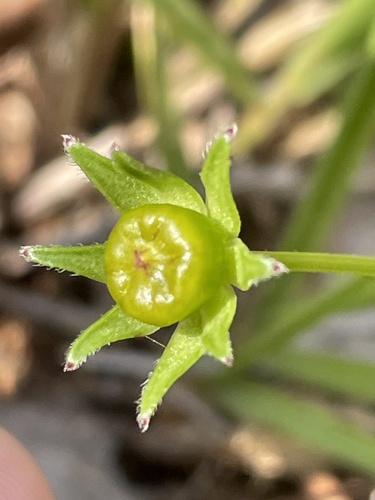
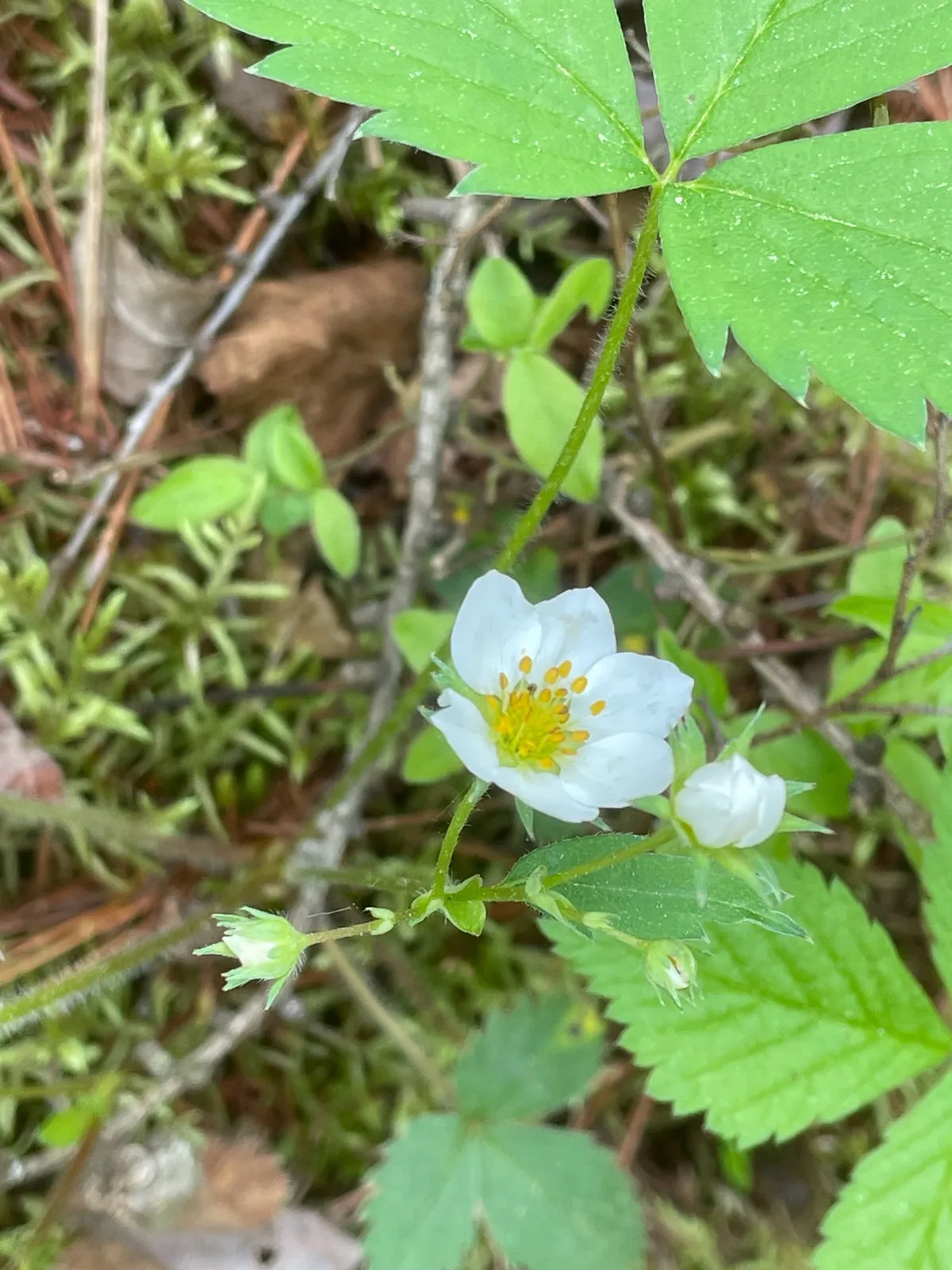
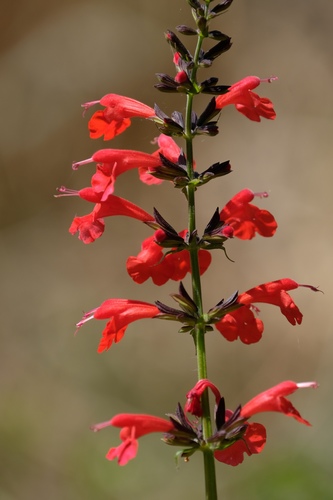
Dwarf larkspur is listed as toxic to dogs by the ASPCA Animal Poison Control Center. These natives fill a similar role in a planting and are not on the ASPCA toxic plant list for dogs or cats. Each plant's page carries its dated record.
Light
part shade
Water
medium
Size
8"–24" H × 8"–12" W
Bloom
Apr, May
Native to
AL, AR, DC, GA and 18 more states
Pollinators
bumble bees
Before you buy
Your city may pay you to plant this
Cities and water utilities offer rebates for replacing lawn with native and water-wise plants. We track 464 programs across 44 states, each with a link to the provider and the date we last checked it.
Find rebates in your areaPicture natives in your own yard
Upload a photo of your yard and Patch Vision shows a rendering of it planted with natives for your region, like Dwarf larkspur.
Browse plants for this ecoregion
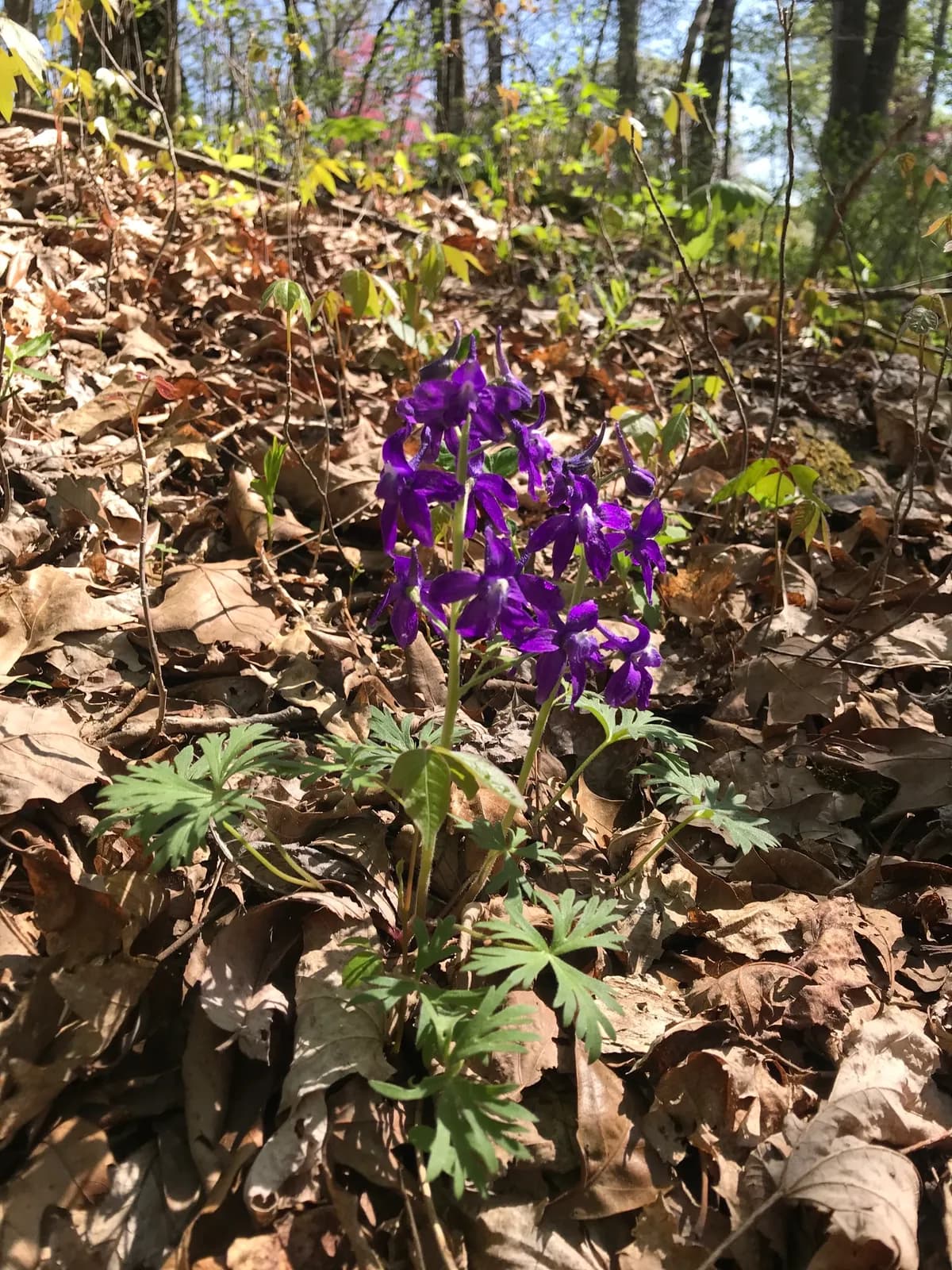
A spring ephemeral with deeply lobed leaves and a loose spike of deep blue to purple spurred flowers. Emerges, blooms, and goes fully dormant by early summer in rich deciduous woodland.
Growing Dwarf larkspur
Grow Dwarf larkspur in part shade and medium water. Mature plants reach 8 to 24 inches tall and spread 8 to 12 inches wide.
How to care for Dwarf larkspur, by region
How to care for Dwarf larkspur where it is actually grown: year-round basics plus what to do each season, region by region, with the sources for each.
Care guidance last updated: November 2026
Eastern Corn Belt Plains (includes Columbus, OH)
Year-round
Dwarf larkspur is hardy in Columbus but fussy, wanting rich moist well-drained soil, afternoon shade, and a spot out of the wind.
- NC State lists it hardy in zones 4a through 7b, which includes central Ohio.
- It likes fertile, moist soil with lots of organic matter and good drainage.
- Full sun or partial shade works, and it prefers some afternoon shade.
- Pick a sheltered spot out of the wind and stake taller plants if needed.
- NC State rates its maintenance as high and says it struggles in humid summers.
Fall
In fall, keep the soil well-drained and clear away leaf debris that holds disease.
- Crown rot is a listed disease, so good drainage matters year round.
- Leaf spots and mildew can overwinter on debris, so tidy fallen leaves nearby.
- Keep the wind-sheltered spot you chose.
Winter
Winter needs no protection beyond good drainage, since it is rated hardy to zone 4a.
- The listed hardiness of 4a through 7b covers Columbus winters.
- Wet winter soil raises crown rot risk, so avoid low spots that stay soggy.
- Leave it in the ground and do not pot it up.
Spring
In spring, give it rich soil, steady moisture, and watch for slugs.
- Keep the soil moist but well-drained.
- Slugs, snails, and aphids are listed pests, so check young growth.
- Stake taller stems if they start to flop.
Summer
Humid Ohio summers are the hard part, so give afternoon shade and good airflow.
- NC State says it struggles in humid summers.
- Afternoon shade helps, since it prefers some.
- Powdery mildew, botrytis blight, leaf spots, and crown rot are listed diseases, so avoid soggy soil.
- Water at the base rather than over the leaves.
Sources: NC State Extension Plant Toolbox: Delphinium tricorne
Wildlife value
Spring flowers rely on bumble bees strong enough to access the nectar spur, providing an early-season food source before most summer blooms open.
Common questions
- How much sun does Dwarf larkspur need?
- Dwarf larkspur grows best in part shade conditions.
- When does Dwarf larkspur bloom?
- Dwarf larkspur blooms in April and May.
- Where is Dwarf larkspur native?
- Dwarf larkspur (Delphinium tricorne) is native to AL, AR, DC, GA and 18 more states, per the World Checklist of Vascular Plants (Kew).
- Is Dwarf larkspur toxic to dogs?
- Yes. Dwarf larkspur is listed as toxic to dogs by the ASPCA Animal Poison Control Center (aspca.org). If your pet has been exposed, call the ASPCA Animal Poison Control Center at (888) 426-4435.
- Is Dwarf larkspur toxic to cats?
- Yes. Dwarf larkspur is listed as toxic to cats by the ASPCA Animal Poison Control Center (aspca.org). If your cat has been exposed, call the ASPCA Animal Poison Control Center at (888) 426-4435.
- What pollinators does Dwarf larkspur attract?
- Dwarf larkspur draws bumble bees.
Native range data from the World Checklist of Vascular Plants (Kew). Pollinator and host plant associations compiled from GBIF, iNaturalist, and published ecological literature.
If something looks wrong
Common plant problems, and what to check first
These come up on almost any plant. Each guide lists the likely causes in the order they are worth ruling out, with one thing to check before you act on any of them, and links to the source it came from.
- It is dying right after planting
- Leaves turning yellow
- Wilting even though I watered it
- Brown crispy leaf tips
- Bugs on the plant
Pollinator Patch flags toxic plants like Dwarf larkspur and shows natives not flagged toxic to pets for your ecoregion instead.