Scarlet Strawberry
Fragaria virginiana
Last reviewed: September 2026
Fragaria virginiana is a low-growing forb found in meadows, open woodlands and roadsides across much of the eastern and central United States, with small white flowers blooming April through June.
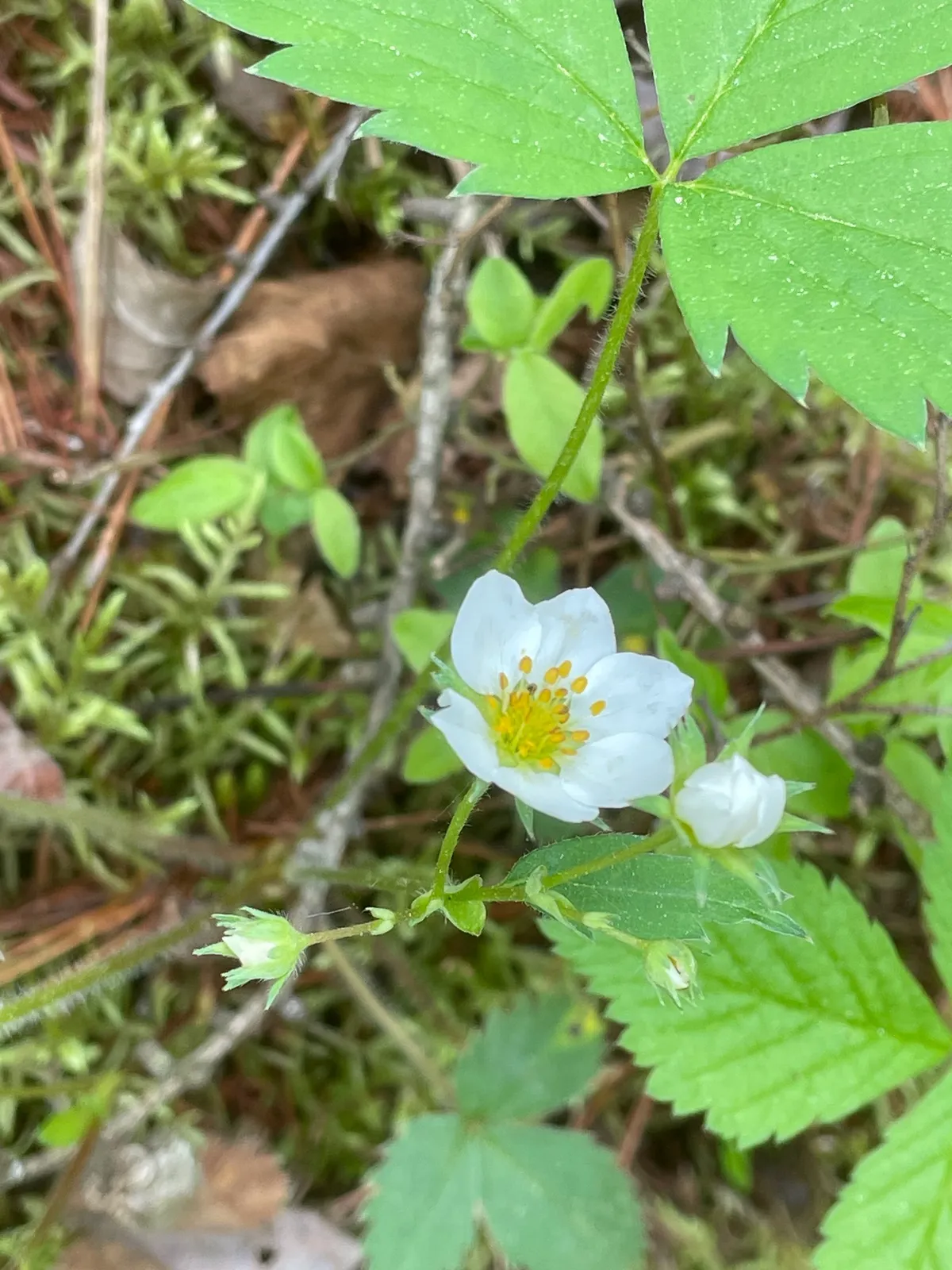
Scarlet Strawberry (Fragaria virginiana) is not on the ASPCA Animal Poison Control Center toxic plant list for dogs or cats (aspca.org (opens in new tab), last reviewed 2026-05-21). If your pet shows symptoms after eating any plant, call the ASPCA at (888) 426-4435.
Light
part sun
Water
medium
Size
4"–8" H × 6"–12" W
Bloom
Apr, May, Jun
Native to
AL, AR, AZ, CA and 44 more states
Pollinators
bees, beetles
Deer
Resistant (per Prairie Moon Nursery)
Before you buy
Your city may pay you to plant this
Cities and water utilities offer rebates for replacing lawn with native and water-wise plants. We track 459 programs across 44 states, each with a link to the provider and the date we last checked it.
Find rebates in your areaPicture natives in your own yard
Upload a photo of your yard and Patch Vision shows a rendering of it planted with natives for your region, like Scarlet Strawberry.


Browse plants for this ecoregion
Scarlet strawberry is a low-growing native groundcover that produces small white flowers in spring followed by tiny red berries. This compact plant spreads gradually by runners to form neat patches, making it useful for filling in garden spaces. The three-leaflet foliage turns attractive shades of red and orange in fall before going dormant.
Growing Scarlet Strawberry
Grow Scarlet Strawberry in part sun and medium water. Mature plants reach 4 to 8 inches tall and spread 6 to 12 inches wide. Expect low maintenance to keep it looking intentional in a front yard.
How to care for Scarlet Strawberry, by region
How to care for Scarlet Strawberry where it is actually grown: year-round basics plus what to do each season, region by region, with the sources for each.
Care guidance last updated: October 2026
Atlantic Coastal Pine Barrens (includes Riverhead, NY)
Year-round
Wild strawberry is a low groundcover that spreads by runners and likes sun to part shade with good drainage.
- Give it full sun to part shade and fertile, well-drained soil. Sandy loam suits it best.
- It spreads by runners that root as they go, so give it room or edge it.
- Water during dry spells, since it struggles in summer heat and humidity.
- Watch for slugs, aphids and leaf spot in humid weather.
A low green carpet reads as tidy groundcover in a front bed.
Fall
Cool fall weather brings the plants back, so it is a good time to plant or thin them.
- Plant or move runners in early fall so roots set before frost.
- Trim runners that wander past the bed edge.
- Keep fallen leaves from smothering the low plants.
Winter
The plant is winter hardy and needs little help.
- A light layer of mulch or leaves helps against frost heaving.
- Keep the bed well drained so crowns do not sit in water.
- Leave it alone until new growth shows in spring.
Spring
Spring is the best time to plant and to enjoy the flowers while the weather is cool.
- Plant in early spring while it is cool, and water weekly until rooted.
- Add compost to Long Island sand to hold moisture.
- Pull weeds early before runners fill in.
Summer
Summer heat can slow it down, so keep the soil evenly moist.
- Water deeply when rain is scarce, since sandy soil dries fast.
- Part shade in the afternoon helps in the hottest weeks.
- It may go dormant in heat, so do not panic if it looks thin.
Sources: NC State Extension Plant Toolbox: Fragaria virginiana
Erie Drift Plain (includes Buffalo, NY)
Year-round
Wild strawberry is an easy groundcover for full sun to partial shade, and it spreads by runners.
- Moist to occasionally dry, well-drained soil works.
- It is listed hardy in zones 5 to 9, which covers Buffalo.
- It can form large colonies over time.
Runners can spread past a bed edge, so give it a clear border along the front yard.
Fall
It prefers cooler fall weather, so this is a good time to divide the patch.
- It prefers cooler spring and fall weather.
- Division is a way to propagate it.
Winter
It is winter hardy, so winter takes little care.
- It is listed winter hardy in zones 5 to 9.
- No special winter care is listed.
Spring
White flowers open in early to mid spring, and it likes the cool weather.
- It prefers cooler spring and fall weather.
- Division is a way to propagate it.
Summer
Summer heat and humidity can slow it down.
- It does not do well in summer heat and humidity and may go dormant.
- It does poorly in strong, drying winds.
- It is listed as drought resistant.
Sources: NC State Extension Gardener Plant Toolbox, Fragaria virginiana
Huron/Erie Lake Plains (includes Toledo, OH)
Year-round
Wild strawberry is a low, spreading groundcover that grows fastest in cool weather and fills in an area by sending out runners that root wherever they touch soil.
- Plant it in full sun to part shade in soil that drains well. It adapts to average soil once established and does not like sitting in standing water.
- It spreads by runners called stolons that root wherever they touch soil, so give it room to roam or plan on trimming runners back if you want it to stay inside one bed.
- The leaves, stems, and berries are not on the ASPCA toxic plant list for dogs, cats, or horses, though a lot of fallen berries on a patio can draw ants and other bugs.
- White flowers open in spring and the small red berries that follow feed birds and other wildlife. The plant also serves as a caterpillar host for the Gray Hairstreak butterfly and its flowers draw native bees.
- Growth is strongest in spring and fall. It can slow down or go semi dormant in the hottest, driest stretch of summer, that is a normal seasonal pattern and not a sign of trouble.
Fall
Fall is a second growth push for wild strawberry as Toledo's weather cools, and it is the best time to divide or tidy the patch before winter.
- As nights cool in September the plant greens back up and keeps growing until the first hard frost, which typically arrives in the Toledo area around mid October.
- This is a good window to dig and move rooted runners to fill bare spots or start a new patch. Do it a few weeks before the ground freezes so new roots can settle in.
- Rake out heavy fallen leaves from nearby trees so they do not smother the low foliage, but a thin layer of leaf litter left in place is fine and helps insulate the crowns.
- Trim any runners that crept past the bed's edge so the patch has a defined border before it goes dormant.
A trimmed, defined edge going into winter reads as an intentional groundcover bed rather than an untended patch, which helps avoid a violation letter.
Winter
Wild strawberry is winter hardy in the Toledo area and the leaves die back or go dull, so a little protection helps it come back strong in spring.
- Toledo sits in USDA hardiness zone 6b, well within this plant's tolerance of zones 3 through 8, so crowns handle typical winter cold without extra protection in most years.
- In an open, windy spot or a winter with little snow cover, a loose 1 to 2 inch mulch of straw or shredded leaves over the crowns adds insulation. Pull it back in early spring once new growth starts.
- Foliage may look tattered, reddish, or partly evergreen through a mild winter, this is normal and does not mean the plant is struggling.
- Skip watering and fertilizing entirely while the plant is dormant.
A light, tidy mulch layer instead of bare dead foliage keeps the bed looking cared for through winter, which reads as intentional rather than neglected.
Spring
Spring is wild strawberry's main growth spurt in the Toledo area. It leafs out early, blooms white through April and May, and starts sending out fresh runners as the soil warms.
- Rake off or cut back any tattered winter foliage in early spring before new leaves fill in, this also tidies the bed for the season.
- Expect white flowers from mid April into May. Toledo's last frost usually falls in late April, so an unusually late freeze can nip open blooms, that is normal and the plant keeps flowering.
- This is when runners take off fastest. Trim or redirect any that are creeping into a lawn, walkway, or a neighbor's bed.
- A light topdress of compost in spring is enough. Skip heavy fertilizer since it pushes leafy growth over flowers and fruit.
Trimming spring runners back to the bed line keeps the patch reading as an intentional groundcover instead of a spreading weed, which helps avoid a violation letter.
Summer
Summer heat can slow wild strawberry down. In Toledo's hot, humid stretch it often goes semi dormant after fruiting, especially if the soil dries out.
- Water during dry spells, about an inch a week, especially if leaves start to look dull or crispy at the edges. Steady moisture also helps any berries mature.
- Small red berries ripen in late spring into early summer. They are not on the ASPCA toxic plant list, so fallen fruit is not a pet hazard, though a lot of squashed berries on a patio can stain.
- Watch for gray mold on the fruit and weevil damage on leaves in humid weeks. Pull off badly affected leaves and improve air flow rather than reaching for a strong spray.
- If growth stalls and leaves look tired in the hottest weeks, that is the plant's normal semi dormant phase and not a problem to fix. It greens back up as nights cool in fall.
Sources: Lady Bird Johnson Wildflower Center, Fragaria virginiana plant profile, ASPCA Animal Poison Control, Wild Strawberry (Fragaria), University of Illinois Extension, Hort Answers: Wild Strawberry
North Central Hardwood Forests (includes Minneapolis, MN)
Year-round
Wild strawberry is a native, low-growing groundcover that does well in the Minneapolis area. It is not on the ASPCA toxic plant list, so it is a calm choice for yards with pets. Give it part sun to full sun and steady water while it gets established, then let it spread by runners to fill in as a natural ground cover.
- Plant in part sun to full sun. It tolerates some shade but flowers and fruits best with more light.
- Water regularly the first season, about 1 inch a week during dry spells, then it needs less once the roots are established.
- It spreads by above ground runners, so edge garden beds a couple times a season to keep it inside its space.
- It stays low, about 4 to 8 inches tall, so it will not block sightlines to house numbers or a front walk.
Because it spreads by runners, edging the bed line so it reads as a tidy groundcover rather than a spreading patch is an easy way to keep this planting HOA-friendly near a front walk or foundation bed.
Fall
Fall is prep time for winter in the Minneapolis area. Leaves may take on a light red tint, and the plant needs its winter mulch in place before hard freezes settle in for good.
- Keep watering into September if the fall stays dry, tapering off as nights turn cool.
- Leave foliage in place until several freezes have passed. It helps the crown hold on to some natural insulation.
- After 2 or 3 hard frosts, usually by late October to early November in the Minneapolis area, add 4 to 6 inches of weed free straw or shredded leaves over the bed.
- Skip fertilizer in fall. New growth pushed late in the season is more likely to be damaged by the first hard freeze.
A neat straw or leaf mulch layer put down right after frost reads as seasonal garden care rather than neglect, keeping the bed HOA-friendly through late fall.
Winter
Winter in the Minneapolis area is cold enough, USDA zone 4b to 5a, that wild strawberry needs its mulch layer in place to protect the crown. The plant stays dormant under snow and mulch until temperatures warm again in spring.
- Keep the straw or leaf mulch layer on through winter. An exposed crown can be damaged well before spring in this climate.
- Snow cover is actually a good insulator, so do not brush snow off the bed once it has settled in.
- No watering or feeding needed while the plant is dormant.
- Check in late winter for mulch that blew away and add more before a big thaw and refreeze cycle.
Spring
Spring is bloom season for wild strawberry in the Minneapolis area, usually April into June. Small white flowers open low to the ground, and while the plant handles a light frost, a hard freeze right after leaf out can still damage buds.
- Rake away winter mulch once the ground has thawed and new leaves are showing, usually mid to late April in the Minneapolis area.
- Watch the local last frost date, close to the first week of May, before counting flower buds as past risk.
- Water if spring stays dry. Aim for about 1 inch a week once the soil is workable.
- Skip heavy fertilizer. A light layer of compost in spring is plenty for a native groundcover.
The white spring bloom reads as a tidy, intentional groundcover along a front bed, an HOA-friendly look as long as the edge stays trimmed.
Summer
Summer in the Minneapolis area brings the heat and humidity wild strawberry handles well once established. Small berries follow the spring bloom, and the plant keeps sending out runners through the season.
- Keep watering at about 1 inch a week during hot, dry stretches, especially in the first year.
- Trim or redirect runners in July and August if you want to keep the patch inside a defined bed line.
- No deadheading needed. Let the small berries ripen for birds and other wildlife if you are not harvesting them.
- A couple inches of shredded leaf mulch keeps roots cool and cuts down on weeding through the hottest stretch.
Keeping runners trimmed to the bed line through summer keeps the planting looking intentional, part of what makes it an HOA-friendly groundcover choice.
Sources: Lady Bird Johnson Wildflower Center - Fragaria virginiana, ASPCA - Strawberry (Fragaria spp.) Toxicity, University of Minnesota Extension - Growing Strawberries in the Home Garden
Northeastern Coastal Zone (includes New York, NY)
Year-round
Wild strawberry is a low, spreading groundcover that sends out runners to fill in bare soil. In New York City's zone 7b, plant it in a spot with part sun to sun and soil that drains well, then let it spread. It is not on the ASPCA toxic plant list for dogs, cats, or horses, so it is a reasonable pick for yards where pets roam.
- Grows only 4 to 8 inches tall and spreads by runners, so it works well as a low border or filler between taller plants
- Prefers part sun to full sun and soil that stays lightly moist but drains, not soggy
- Native to New York and much of the eastern United States, so it is already suited to this area's rain and soil once established
- Small white flowers show up in spring, followed by tiny edible berries in early summer that birds and people both enjoy
- Not on the ASPCA toxic plant list for dogs, cats, or horses
Fall
Fall is a good time for a light cleanup and, if needed, dividing the patch before it goes dormant for winter.
- Cut back any leggy or tattered foliage once growth slows, this keeps the patch looking neat through winter
- This is also a good window to dig and divide a crowded patch if you want to fill in another spot next spring
- Leave a light layer of fallen leaves over the bed instead of stripping it bare, it acts as free winter mulch for the shallow roots
- No fertilizing needed this late, let the plant wind down naturally
A fall cutback of tattered leaves leaves a tidier winter silhouette along the front yard edge.
Winter
Winter in New York City zone 7b is cold enough that wild strawberry usually goes dormant or semi-dormant, and it needs little from you until spring.
- Foliage may stay semi-evergreen in a mild winter or die back in a colder one, both are normal for this plant here
- No pruning or watering needed once the ground is cold, the plant is resting
- A layer of fallen leaves or light mulch over the patch protects the shallow crowns from hard freeze-thaw cycles
- Avoid walking on the patch repeatedly in winter, the crowns sit close to the soil surface and can get compacted
Spring
Spring is when wild strawberry wakes up and starts spreading fast, so this is the best time to shape where it grows before it fills in.
- Clear away last year's dead leaves and any winter debris so new growth and the small white flowers can come through
- Watch for new runners rooting into the lawn or a walkway and snip the ones you do not want, this is the easiest time to keep the patch in bounds
- If you want more coverage, this is a good time to dig up and move rooted runners to a new spot
- Water new plantings regularly until they settle in, established patches usually do fine on spring rain alone
Trimming runners back to a clean edge in spring keeps the patch looking tidy and intentional from the street, which reads as HOA-friendly.
Summer
Summer brings the tiny berries and the fastest runner growth, so the main job is watering during dry spells and keeping the edges neat.
- New York City summers can bring stretches without rain, water during dry weeks since shallow-rooted groundcovers dry out faster than deeper-rooted plants
- Berries ripen in early summer, pick them as they turn red or leave them for birds
- Keep checking for runners crossing into paths or the lawn and trim them back so the bed keeps a clean line
- A light mulch layer around the patch helps hold moisture and keeps weeds down
Keeping the runners edged back from the sidewalk or driveway through summer is an easy way to keep a spreading groundcover looking HOA-conscious.
Sources: ASPCA: Wild Strawberry (Fragaria) toxicity for dogs, cats, horses, Lady Bird Johnson Wildflower Center: Fragaria virginiana native range and growing conditions
Northern Lakes and Forests (includes Bemidji, MN)
Year-round
Wild strawberry is a tough, spreading native groundcover that does well in Bemidji's cooler growing season and needs little upkeep once established.
- Plant in full sun to part shade in well-drained soil, it tolerates dry, sandy conditions once rooted in.
- Space plants about 12 inches apart, it fills in through runners and forms a dense mat within a year or two.
- Renew large patches every 3 to 4 years by digging and replanting healthy runner tips, older centers can thin out over time.
- Keep new plantings watered through their first growing season, established patches only need occasional water during dry spells.
- The berries are small and edible, most gardeners let wildlife such as birds and chipmunks eat them rather than harvesting.
- It is not on the ASPCA toxic plant list for dogs or cats, which makes it a reasonable groundcover choice in a yard shared with pets.
A low, tidy groundcover like this reads as an intentional, HOA-friendly alternative to bare mulch or turf along a border.
Fall
Fall is a good time to plant, divide, or mulch wild strawberry ahead of Bemidji's hard winters.
- Plant or divide by early fall, at least 6 weeks before the ground typically freezes, so roots can settle in.
- Frost is common in northern Minnesota by mid to late September, the plant tolerates this without damage.
- Leave foliage in place through fall rather than cutting it back, it protects the crown and helps the plant hold snow cover.
- In cold, exposed sites, add a light mulch of shredded leaves after the first hard freeze to protect crowns through winter.
- Cut back on watering as the plant heads into dormancy.
Winter
Wild strawberry is winter hardy in Bemidji but benefits from a little extra protection in exposed spots.
- Hardy to USDA zone 4 and colder, which covers the Bemidji area, though a reliable snow cover is the best insulation.
- In spots that go bare or windswept in winter, a light mulch of straw or shredded leaves protects crowns from freeze-thaw damage.
- Avoid walking on or compacting the patch when the ground is frozen, it can damage shallow crowns and runners.
- New leaves emerge again as soon as snow melts, usually by mid-April.
- No pruning is needed over winter, wait until spring cleanup to remove any winter-killed leaves.
Spring
Spring is when wild strawberry flowers and spreads fastest in Bemidji gardens.
- White, five-petaled flowers open in mid to late spring, typically April into May in northern Minnesota.
- New growth resumes as soon as the soil thaws, clear away matted dead leaves left from winter so light reaches the crown.
- This is the best time to divide and transplant runner tips, they root quickly in cool, moist spring soil.
- A late frost can nip open flowers if a hard freeze follows an early warm spell, but the plant itself is unaffected.
- Skip fertilizer, wild strawberry is adapted to lean native soil, and heavy feeding produces more leaves than flowers.
Summer
Small red berries ripen in early summer, and the plant keeps spreading by runners through the warm months.
- Berries typically ripen in June in the Bemidji area, they are edible but small and are often taken by birds and small mammals first.
- Runners root readily in bare soil nearby, trim them back if you want to keep the patch contained to a bed edge.
- Growth can slow or the plant can look ragged during hot, dry stretches, this is normal cool-season behavior, not a problem.
- Water during extended dry periods, about an inch every two weeks if there has been no rain.
- Keep the area weeded while the groundcover fills in, a mature patch will crowd out most weeds on its own.
Sources: Fragaria virginiana (Wild Strawberry), Minnesota Wildflowers, Strawberry, ASPCA Toxic and Non-Toxic Plant List, Frost Dates for Bemidji, MN, Garden.org (community tip), Native Plants, University of Minnesota Extension
Northern Piedmont (includes Lancaster, PA)
Year-round
Wild strawberry is native to Pennsylvania and grows well as a low, spreading groundcover in Lancaster gardens with sun to part shade.
- It is confirmed native to Pennsylvania and grows naturally in fields, meadows, and open woodland edges across the state.
- Give it sun to part shade and average to dry soil. It tolerates moderately acid soil and is not fussy about soil type.
- It spreads by runners (stolons) into a low groundcover only a few inches tall, with small white flowers followed by small edible red berries.
- It is not on the ASPCA toxic plant list for cats, dogs, or horses.
Fall
Fall growth slows down. A light cleanup keeps the patch tidy, and major division waits for spring.
- Growth slows in fall, and in mild years the low foliage can persist partway into winter before dying back.
- A light fall cleanup, removing dead leaves and trimming runners that have wandered past the bed edge, keeps the patch tidy heading into winter.
- Hold off on major division. The Wildflower Center notes rooted plantlets are best separated and transplanted in spring or early summer, not fall.
A fall cleanup pass, removing dead leaves and pulling back stray runners, keeps a strawberry groundcover patch looking maintained rather than untended before winter.
Winter
Winter is mostly dormant. Foliage dies back in cold snaps and the plant returns from its crown and roots in spring.
- Cold weather causes top growth to die back. The species' native range reaches well north of Pennsylvania into Canada, so an established patch returns reliably from the roots and crown here.
- No pruning or winter protection is needed for an established patch in a Lancaster yard.
- This is a good season to plan where you want the patch to spread next year, since it fills in fastest along open, sunny edges.
Spring
Spring is bloom time. Small white flowers appear along with fresh leaves, and new runners start reaching out.
- Small white five-petaled flowers open from April through June, before the berries form.
- New stolons (runners) start reaching out in spring. This is how the plant fills in as a groundcover over a bed or border.
- If you want to keep it contained near a walkway or bed edge, trim runners back in spring before they root down.
Trimming runners back from walkways and bed edges in spring keeps a spreading groundcover looking like a defined planting rather than an encroaching patch.
Summer
Summer brings the small red berries, and the plant keeps spreading by runners.
- Berries ripen in summer following the spring bloom. They are small compared to garden strawberries but edible, and they draw birds and other wildlife.
- The plant is a larval host for the Gray Hairstreak butterfly and has documented value to native bees, according to the Lady Bird Johnson Wildflower Center.
- Keep an eye on runners reaching into lawn or pathways during the growing season, and trim them back if you want a tighter patch.
Runners that creep past a bed edge into a walkway or lawn read as unkempt to a passerby. A mid-summer trim along the border keeps the patch looking intentional.
Sources: Lady Bird Johnson Wildflower Center, Fragaria virginiana, ASPCA, Strawberry toxicity
Ozark Highlands (includes Springfield, MO)
Year-round
Wild strawberry, also called scarlet strawberry, is a low native groundcover across the Missouri Ozarks that spreads into a mat by runners, blooms white in spring, and sets small edible berries.
- It grows statewide in Missouri on open slopes, prairie edges, and old fields, according to the Missouri Department of Conservation, so it is a genuine native choice for a Springfield yard.
- Give it full sun to part shade and well-drained soil. The Missouri Botanical Garden notes it prefers organically rich, sandy loam over heavy clay.
- It spreads by above-ground runners that root as they sprawl, filling in as a low groundcover mat over a season or two.
- White five-petaled flowers open in April and May, followed by small red berries around half an inch across that ripen June into July.
- Birds, box turtles, and rabbits all eat the fruit alongside people, so expect some sharing with wildlife once berries ripen.
Fall
Cooler September and October nights bring a second flush of growth before Springfield's average first frost around October 19, with foliage often turning red and maroon.
- Fall is a good second planting and division window alongside spring, once summer heat has broken.
- Leaves commonly shift to red and maroon tones in autumn before frost, a normal seasonal color change and not a sign of stress.
- Clear out any tattered or diseased leaves before the ground freezes so the crown goes into winter cleaner.
- Stop fertilizing by early fall so new growth has time to harden off before frost.
- Add a fresh layer of mulch once temperatures drop to insulate the shallow crown through an Ozark winter that can swing between mild spells and hard cold snaps.
Clearing out tattered leaves before frost keeps a front-yard patch looking cared for heading into winter.
Winter
Wild strawberry goes fully dormant through a Springfield winter, and the main job is protecting its shallow crown rather than any active growing-season care.
- Foliage dies back or turns brown after hard freezes. The plant regrows from its crown and runners once spring warms up.
- A two to three inch mulch layer protects the shallow crown from the freeze-thaw cycles common in Ozark winters, which can otherwise heave roots toward the surface.
- No watering or feeding is needed while the plant is dormant.
- Leave the bed mostly alone rather than raking it hard. Matted leaves and runners add some insulation around the crown until spring.
- This is a low-upkeep season overall. Growing notes for this species describe it needing little care once established, and that holds through winter dormancy too.
A neat mulch layer keeps a dormant front bed looking intentional instead of bare through winter.
Spring
Spring is Springfield's wild strawberry season, covering the plant's main growth, bloom, and easiest planting window after the last frost.
- Plant or divide runners after Springfield's average last frost, typically mid-April, once the soil has warmed.
- White flowers open in April and May in loose clusters below the leaves, with the season's first berries following by late May or June.
- Thin or transplant rooted runners now if the patch is spreading further than wanted, since spring is when relocated pieces root fastest.
- Water new plantings regularly until they root in. Established patches need little extra water even in a dry spring.
- A light mulch of shredded leaves or bark keeps Ozark clay soils from crusting and holds moisture around the plant's shallow roots.
Summer
Springfield's hot, humid summer is wild strawberry's slow season, so care shifts from encouraging growth to helping the roots ride out the heat.
- Expect the plant to thin out or partly go dormant once fruiting finishes in early summer. That slowdown is normal, not a sign of trouble.
- Water during extended dry spells, which Ozark summers often bring, but avoid regular watering otherwise since the Missouri Botanical Garden rates this species drought tolerant once established.
- Keep mulch topped up to shade the shallow roots from Missouri's intense July and August sun.
- Trim back runners that root into nearby beds or lawn edges if a clean bed line matters to the look of the yard.
- Skip fertilizer in summer. Feeding during heat stress tends to push weak new growth instead of helping the plant recover.
Trimming runners back to the bed line in summer is what keeps this groundcover reading as tended rather than sprawling.
Sources: Missouri Department of Conservation - Wild Strawberry Field Guide, Missouri Botanical Garden Plant Finder - Fragaria virginiana, Prairie Nursery - Wild Strawberry (Fragaria virginiana) growing guide, UW-Madison Arboretum - Fragaria virginiana Wild Strawberry (Native Plant Sale info sheet)
Piedmont (includes Atlanta, GA)
Year-round
Virginia strawberry is a low, spreading groundcover that is native from Newfoundland south to Georgia per both sources. It likes cooler weather and can struggle in summer heat.
- Sun to part shade, and well-drained soil. Clay is tolerated if it drains well.
- Spreads by runners into colonies over time.
- NC State notes leaf spot, root rots and spider mites can show up.
Use it as a tidy edge or groundcover and trim runners back so the front bed stays HOA-friendly.
Fall
Cooler fall weather suits it.
- It prefers cooler spring and fall temperatures.
- Trim runners that wander out of the bed.
- Check for leaf spot and remove bad leaves.
Winter
Rated for zones 5a to 9b, it needs little in winter.
- Atlanta cold is within its range.
- Keep drainage good since root rots are listed as a problem.
- Leave it alone until spring growth.
Spring
Spring brings white flowers and fresh growth.
- Blooms in April to May.
- Separate rooted plantlets in spring or early summer to spread it or share it.
- Small red berries follow and are edible.
Summer
Summer heat is its weak point.
- NC State says it struggles in summer heat.
- Give it part shade and keep soil from staying soggy.
- Watch for leaf scorch and spider mites.
Sources: NC State Extension Plant Toolbox: Fragaria virginiana, Lady Bird Johnson Wildflower Center: Fragaria virginiana
Puget Lowland (includes Seattle, WA)
Year-round
Wild strawberry (Fragaria virginiana), also sold under the trade name scarlet strawberry, is a low native groundcover confirmed in Puget Lowland gardens by the Washington Native Plant Society and the University of Washington's Burke Herbarium. It spreads by runners to form a tidy mat 4 to 8 inches tall, with white spring flowers and small edible red berries. The ASPCA lists Fragaria as non-toxic to dogs, cats, and horses, so a curious dog nosing around the patch is not a concern. It is also a strong early-season food source for native bees.
- Plant in part sun with medium, consistent moisture for the fullest berry set
- Space plants 12 to 18 inches apart, the runners fill gaps on their own
- Confirmed native to the Puget Lowland region by Washington Native Plant Society and Burke Herbarium records
- Non-toxic to dogs and cats per the ASPCA, including the berries and leaves
- Attracts native bees during its April to June bloom
As a spreading groundcover, give it a defined edge or border early so it reads as an intentional lawn alternative rather than an escaped patch. That distinction is what keeps it HOA-friendly.
Fall
Fall is a quiet, good season for wild strawberry. The foliage turns shades of red and maroon before the plant slows down for winter, and this is a good window to divide crowded patches or move rooted runners to a new spot. No pruning is required, the color change is part of the plant's normal cycle, not a problem to fix.
- Let the foliage turn red on its own, that is normal seasonal color, not a sign of stress
- Divide or transplant rooted runners now while the soil is still workable
- Skip fertilizer, established plants do not need a fall feeding
- Rake fallen leaves from nearby trees off the mat so the plant still gets some light
The red fall color is one of the better-looking stretches for this groundcover, worth leaving visible near the front instead of cutting it back early.
Winter
Wild strawberry goes dormant for winter and mostly dies back, which is normal for this plant through a wet, mild Puget Sound winter. It needs no care at this point, seasonal rain covers its water needs and the plant works on its own timeline to return in spring. A dormant patch can look sparse for a few months, that is expected, not a sign the planting failed.
- No watering needed, Seattle's winter rain covers it
- No pruning or cutting back required, let the dieback happen on its own
- Avoid walking or setting equipment on the dormant patch, the crowns are still alive under the thin winter growth
- Expect new growth to return in early spring, do not replant assuming it died
A dormant, thin-looking patch in winter is normal for this plant, not neglect, but a quick edge trim keeps the bed's outline readable to a passerby even while it is dormant.
Spring
Spring is when wild strawberry does its showiest work. Small white flowers with yellow centers open from April through June, drawing in native bees while the mat of bright green leaves fills back in after winter. New growth is soft and can attract slugs, which are common in wet Seattle springs. No fertilizer is needed, established plants pull what they need from typical Puget Sound soil.
- Watch for slug damage on tender new leaves during wet spring weeks
- Water only if spring turns dry, established plants rarely need extra water this early
- Let the runners spread on their own, they fill in bare patches and thicken the mat
- Trim back any winter-damaged leaves to tidy the patch before bloom
A blooming mat of small white flowers reads as tended groundcover rather than a bare bed, which helps at a front-yard glance.
Summer
By early summer the berries ripen small, red, and sweet, with more flavor than a store strawberry but a fraction of the size. Seattle's dry summer stretch means the mat may need occasional water to keep producing and to stop the leaves from looking tired, since this plant evolved for damp forest openings, not a rain-free August. The ASPCA lists Fragaria as non-toxic to dogs and cats, so fallen berries in the yard are not a hazard.
- Water during the typical dry Puget Sound summer stretch if the mat starts looking wilted
- Berries ripen through summer and are non-toxic to dogs and cats per the ASPCA, pick them or leave them
- Pull or redirect runners that creep toward a lawn edge or a neighbor's bed
- A light trim after fruiting keeps the patch neat without hurting the plant
Runners are the main curb-appeal risk in summer. An unedged patch can visibly creep into a lawn or walkway, so a simple edging strip or occasional runner-pulling keeps it looking like an intentional, HOA-friendly groundcover rather than something that got away.
Sources: Washington Native Plant Society, Fragaria virginiana, Burke Herbarium Image Collection, Fragaria virginiana, ASPCA Toxic and Non-Toxic Plants, Strawberry (Fragaria spp.), NC State Extension Gardener Plant Toolbox, Fragaria virginiana, Fourth Corner Nurseries, Fragaria virginiana ssp. platypetala, Virginia Native Plant Society, Wild Strawberry (Fragaria virginiana)
Ridge and Valley (includes Harrisburg, PA)
Year-round
Wild strawberry is a low spreading groundcover for sun to part shade and well-drained soil.
- It grows 4 to 9 inches tall and spreads by runners into patches.
- Give it fertile, well-drained soil that stays moist but sometimes dries out.
- It is rated hardy in zones 5 to 9.
- Division is the recommended way to make more plants.
Low and spreading, so edge it where runners should stay in bounds.
Fall
In fall, growth picks up again in the cooler weather.
- Cooler fall temperatures suit it well.
- Fall is a good time to divide or move rooted runners.
- Water new divisions until the ground freezes.
Winter
In winter, it is hardy and needs nothing special.
- It is rated winter hardy in zones 5 to 9, including Harrisburg.
- No pruning is needed.
- Expect fresh growth when spring warms up.
Spring
In spring, expect white flowers around April to May, then fruit.
- It prefers the cooler temperatures of spring and fall.
- Divide clumps now to start new patches.
- Keep new plants watered while they root in.
Summer
In summer, it may slow down, so water if the soil gets very dry.
- Hot summers can make it slow or go dormant, especially after fruiting.
- Avoid drying winds and poor drainage.
- Runners will root along the ground and widen the patch.
Sources: NC State Extension Plant Toolbox: Fragaria virginiana
Southeastern Wisconsin Till Plains (includes Milwaukee, WI)
Year-round
Wild strawberry, also called scarlet strawberry, is native throughout Wisconsin, including the Milwaukee area, where it forms a low spreading groundcover with white spring flowers and small edible berries.
- It is found throughout Wisconsin on woodland edges, prairies, and old fields, per the UW-Madison Arboretum, making it a genuine native option for a Milwaukee yard.
- Give it full sun to light shade and well-drained soil. Growing notes from the Missouri Botanical Garden list it hardy to USDA zone 4, well within Milwaukee's zone 6a.
- It spreads steadily by above-ground runners that root as they sprawl, filling in as a groundcover mat over a season or two.
- White five-petaled flowers bloom April into June, followed by small red berries that birds, chipmunks, and people all enjoy.
- Once it's established, upkeep is mostly limited to trimming runners that wander past the bed line.
Fall
Cooler September and October nights bring on a second flush of growth in Milwaukee before the average first frost in mid-to-late October, with foliage often turning red and maroon.
- Fall is a good second window for planting or dividing, alongside spring, once summer heat has broken.
- Leaves commonly turn red and maroon in autumn before frost, a normal seasonal color change rather than a sign of stress.
- Clear out diseased or tattered leaves before the ground freezes so the crown overwinters cleaner.
- Hold off on fertilizer by early fall so growth hardens off ahead of Milwaukee's first frost.
- Apply a fresh mulch layer once the ground starts to cool, ahead of the harder freezes that typically arrive in November.
Clearing tattered leaves before frost keeps a front-yard patch looking cared for going into winter.
Winter
Milwaukee winters run colder than wild strawberry sees further south, but the plant is winter-hardy well into USDA zone 4, so the main job is protecting its shallow crown through the cold.
- Foliage dies back after hard freezes. The plant survives on its crown and runners and resprouts in spring even through Wisconsin's colder winters.
- A two to three inch mulch layer, or reliable snow cover, insulates the shallow roots through Milwaukee's sub-freezing stretches.
- No watering or feeding is needed while the plant is dormant.
- Leave fallen leaves and matted runners in place rather than raking hard. They add a bit of extra insulation until spring.
- This is a low-upkeep season overall, in line with the UW-Madison Arboretum's note that established plants need little care.
A fresh mulch layer keeps a front-bed planting looking tended rather than bare during winter's snow-free stretches.
Spring
Spring arrives later in Milwaukee than points further south, so wild strawberry's growth and bloom shift into May, after an average last frost around late April.
- Wait until after Milwaukee's average last frost, typically late April, to plant or divide runners.
- Expect white flowers from May into June, a few weeks behind southern parts of the Midwest.
- Water new plantings regularly while roots establish, and check soil moisture through any dry spring stretches.
- Thin crowded runners now if the patch is spreading past its bed, since spring is the easiest time to relocate rooted pieces.
- A shallow mulch layer helps even out Wisconsin's swings between warm afternoons and frosty spring nights.
Summer
Milwaukee's milder, lake-tempered summers are gentler on wild strawberry than summers further south, though the plant still eases up once its berries are done.
- Berries typically ripen through June and into early July.
- Water during dry spells, especially for first-year plantings. Established patches generally handle typical Milwaukee summer rainfall on their own, since the species is rated drought tolerant.
- Trim runners that cross into paths or neighboring beds to keep the patch looking contained.
- Expect a modest slowdown in new leaf growth after fruiting ends. That's a normal cool-season pattern, not a problem to fix.
- Skip summer fertilizer. This is a cool-season grower that does its real growing in spring and fall, not high summer.
Keeping runners inside the bed line through summer is what reads as planned groundcover rather than an escaped patch.
Sources: UW-Madison Arboretum - Fragaria virginiana Wild Strawberry (Native Plant Sale info sheet), Missouri Botanical Garden Plant Finder - Fragaria virginiana, Prairie Nursery - Wild Strawberry (Fragaria virginiana) growing guide
Western Corn Belt Plains (includes Des Moines, IA)
Year-round
Wild strawberry is a low, spreading native groundcover that does well in Des Moines yards with full sun to part shade and well-drained soil.
- This species is native to Iowa, based on Lady Bird Johnson Wildflower Center range data, and it produces white flowers from April into June.
- It spreads by runners (stolons) that root as they go, so it fills in as a groundcover instead of staying in a neat clump.
- It is not on the ASPCA toxic plant list for dogs, cats, or horses.
- The Wildflower Center gives it a 'Special Value to Native Bees' rating, and the small berries attract wildlife.
- It tops out under a foot tall and handles drought once it's established, which keeps upkeep low.
Its low, tidy height and groundcover habit make it an HOA-friendly choice for front-yard beds, since it reads as a mowed edge rather than a wild patch.
Fall
Fall is a good time to divide and move runners in the Des Moines area before the ground cools off, and the foliage often turns red before winter.
- Foliage frequently takes on maroon or red tones in fall, adding color without any extra work.
- Runners that rooted over summer can be dug and moved to fill bare spots while the plant is easier to handle and the weather is cooler.
- Water through dry fall stretches so plants go into winter without drought stress.
- Iowa State University Extension recommends applying winter mulch to strawberry plantings after the ground has frozen, once temperatures stay consistently low.
Winter
Wild strawberry is semi-evergreen in the Des Moines area, so some leaves may hang on through a mild stretch while a hard freeze knocks them back.
- This species is rated hardy through USDA zone 3, well beyond the cold that Des Moines typically sees in winter.
- A layer of mulch, such as straw or chopped leaves, over the crowns buffers freeze-thaw cycles, which is what actually stresses roots more than steady cold.
- Leave winter mulch in place until new growth starts to show in spring, then pull it back gradually.
- No pruning is needed over winter. Wait until spring to clean up any leaves that browned out.
Spring
Spring is bloom time for wild strawberry in the Des Moines area, and it is also the best window to plant or divide it once the ground has dried out.
- Expect white flowers from April through June.
- Iowa State University Extension notes that early spring is one of the best times to plant strawberries in Iowa, once the soil can be worked.
- If plants were mulched for winter, pull the mulch back gradually as new growth shows rather than all at once, following Iowa State Extension's general strawberry guidance.
- Keep some mulch on hand in April in case a late frost is forecast after flowers open, since open blooms are the most frost-sensitive stage.
- This is when native bees are most active on the flowers.
Summer
Summer brings small edible berries and hotter, more humid conditions that this species does not love.
- Berries ripen after the spring bloom and are small but edible.
- Iowa summer heat and humidity can slow the plant down or push it toward dormancy, so watering during dry stretches helps it keep growing instead of stalling out.
- Trim back or thin runners that are crowding a path or bed edge to keep the patch from spreading further than wanted.
- Watch for gray mold or Verticillium wilt during wet, humid stretches, and for black vine weevil, a pest common to strawberries in general.
Sources: Lady Bird Johnson Wildflower Center, Native Plant Database: Fragaria virginiana, ASPCA, Toxic and Non-Toxic Plants: Wild Strawberry, University of Illinois Extension, Hort Answers: Wild Strawberry, NC State Extension Gardener Plant Toolbox: Fragaria virginiana, Iowa State University Extension and Outreach, Yard and Garden: Planting, Growing and Maintaining Strawberries
Willamette Valley (includes Portland, OR)
Year-round
Scarlet strawberry is a low, spreading groundcover that fruits well across the Willamette Valley when it gets some sun and steady moisture.
- Give it full sun to part shade, a few hours of direct light a day keeps the plant fruiting instead of just spreading leaves.
- Plant it in loose, well drained soil with compost worked in, Portland's native clay holds water and the crowns can rot if they sit wet too long.
- It's native to the Willamette Valley, showing up in oak woodland, upland prairie, and savanna habitat in Benton County, so it's a solid pick for a native yard plan here.
- It spreads by runners and can fill in a bed within a couple of seasons, give it room or plan to trim runners back so it stays where you want it.
- It's not on the ASPCA toxic plant list for dogs, cats, or horses, so it's a good pick for a yard where pets roam.
Fall
Fall's cooler, wetter weather brings scarlet strawberry back into active growth, and it's a good time to tidy the patch before winter.
- As rain returns in October, growth picks back up and runners root easily, making fall another good window to divide or move plants.
- Trim back tired or leggy runners so the patch looks tidy going into winter, this keeps a front yard planting reading as intentional rather than overgrown.
- Leave healthy foliage in place, it often stays green through a mild Portland winter and gives some cover to the crowns.
A quick fall cleanup keeps a strawberry groundcover reading tidy and HOA-friendly through winter.
Winter
Winter is mostly a rest period here, scarlet strawberry needs little care through Portland's mild, wet cold season.
- The plant usually stays semi-evergreen through a typical Portland winter since hard freezes are uncommon in this zone, so there isn't much to protect.
- Skip watering, winter rain in the Willamette Valley usually keeps the soil plenty moist on its own.
- If a longer cold snap is in the forecast, a light mulch layer over the crowns is enough protection, no need to dig plants up or cover them.
Because it often holds some green foliage through winter here, it keeps a front bed from looking bare, a plus for an HOA-conscious yard.
Spring
Spring is when scarlet strawberry wakes up fast here, with white flowers showing by April and fruit following in May or June.
- Expect flowers from April into May as the plant leafs out for the season, with pale pink to white blooms continuing into early summer.
- This is a good window to divide crowded clumps or move rooted runners, since cool wet spring weather helps new starts root without much stress.
- Watch for slugs on new leaves and flowers, they're active in our wet spring weather and will chew through both.
- As the ground starts drying out toward late spring, start checking soil moisture since Willamette Valley rain tapers off through May.
Summer
Summer is the dry season here, so scarlet strawberry needs regular water to keep making berries once the spring rain stops.
- Water it regularly through summer, the Willamette Valley gets very little rain from July through September so new plantings and shallow beds dry out fast without it.
- Fruiting usually wraps up by early summer, then the plant may slow down or go semi-dormant in a hot stretch, that's normal and not a sign of trouble.
- Keep an eye out for spider mites and aphids in the heat, a strong spray of water on the leaves usually knocks both back.
- A light mulch layer around the crowns holds moisture and keeps ripening berries off bare soil.
Sources: Benton Soil & Water Conservation District, Mountain Strawberry (Fragaria virginiana), ASPCA, Toxic and Non-toxic Plants: Wild Strawberry, NC State Extension Gardener Plant Toolbox, Fragaria virginiana
In an HOA neighborhood
Scarlet Strawberry is an HOA-friendly choice. Maintenance level: low. Tidiness: 3 out of 5.
Works well in: foundation, mid zone.
- Dies back completely in winter
- May spread beyond intended area
- Can look sparse when establishing
Wildlife value
The spring flowers attract native bees and beneficial beetles for pollination. The small berries provide food for birds and small mammals.
Common questions
- When does Scarlet Strawberry bloom?
- Fragaria virginiana typically flowers from April through June, producing small white blossoms before setting fruit.
- What pollinates Fragaria virginiana?
- Bees and beetles are the primary visitors to the flowers of Fragaria virginiana, helping with pollination and fruit set.
- What growing conditions suit this plant best?
- It grows well in part sun with medium moisture, though it also tolerates fuller sun or somewhat drier soil once established.
- What kind of plant is Fragaria virginiana?
- It is a low, spreading herbaceous forb that forms mats via runners and produces small edible berries in summer.
- Is Scarlet Strawberry toxic to dogs?
- Scarlet Strawberry is not on the ASPCA Animal Poison Control Center toxic plant list for dogs (aspca.org).
- Is Scarlet Strawberry toxic to cats?
- Scarlet Strawberry is not on the ASPCA Animal Poison Control Center toxic plant list for cats (aspca.org).
- Is Scarlet Strawberry HOA-friendly?
- Scarlet Strawberry is generally an HOA-friendly choice in the right placement, with low maintenance.
These answers were drafted with an AI model from this plant's data. Verify care details with a local expert.
Native range data from the World Checklist of Vascular Plants (Kew). Pollinator and host plant associations compiled from GBIF, iNaturalist, and published ecological literature.
If something looks wrong
Common plant problems, and what to check first
These come up on almost any plant. Each guide lists the likely causes in the order they are worth ruling out, with one thing to check before you act on any of them, and links to the source it came from.
- It is dying right after planting
- Leaves turning yellow
- Wilting even though I watered it
- Brown crispy leaf tips
- Bugs on the plant
Ready to grow Scarlet Strawberry? Add it to your garden in Pollinator Patch to track it and get season-by-season care guidance.