Honey Mesquite
Prosopis glandulosa
Last reviewed: September 2026
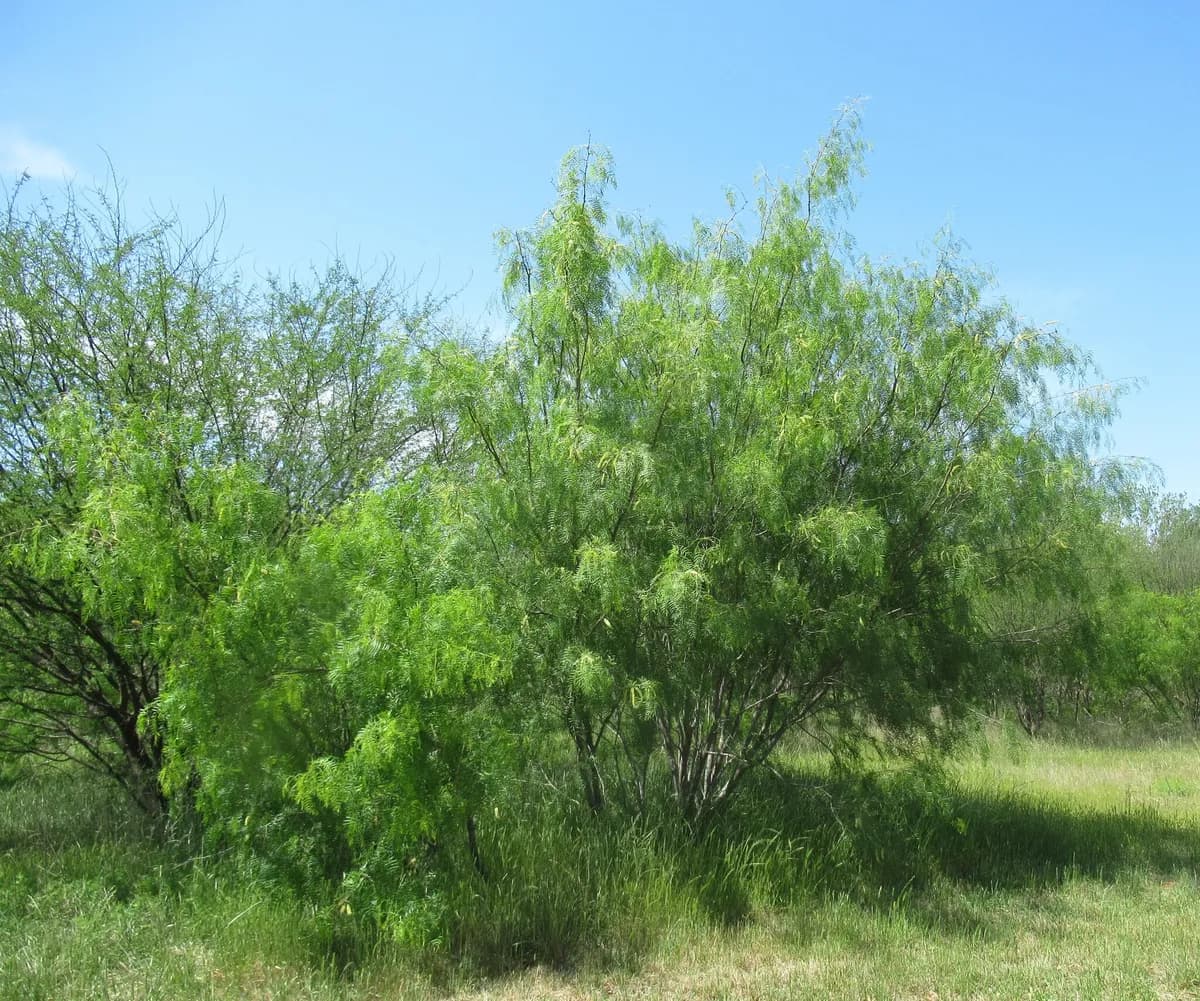
Honey Mesquite is a thorny, drought tolerant tree that produces fragrant pale yellow flower spikes from March through August, drawing bees, butterflies, and other nectar insects to hot, dry landscapes.
Toxicity unknown
Honey Mesquite (Prosopis glandulosa) is not listed by the ASPCA Animal Poison Control Center (opens in new tab) or the other sources we check, so we have no verdict for it either way. Absence from those lists is not a clearance. If your pet shows symptoms after eating any plant, call the ASPCA at (888) 426-4435.
The USDA PLANTS Database (opens in new tab) does not flag Honey Mesquite as toxic to livestock.
Light
full sun
Water
low
Size
300"–360" H × 300"–300" W
Bloom
Mar, Apr, May, Jun, Jul, Aug
Native to
CA, CO, KS, LA and 4 more states
Pollinators
butterflies, bees, nectar insects
Before you buy
Your city may pay you to plant this
Cities and water utilities offer rebates for replacing lawn with native and water-wise plants. We track 452 programs across 44 states, each with a link to the provider and the date we last checked it.
Find rebates in your areaBrowse plants for this ecoregion
Honey Mesquite is a drought-tolerant native Texas tree that can reach 25-30 feet tall and wide. It produces fragrant yellow flower clusters from spring through summer, followed by edible seed pods. The tree has an open, spreading canopy with small compound leaves that provide filtered shade.
Growing Honey Mesquite
Grow Honey Mesquite in full sun and low water. Mature plants reach 300 to 360 inches tall and spread 300 to 300 inches wide. Expect low maintenance to keep it looking intentional in a front yard.
How to care for Honey Mesquite, by region
How to care for Honey Mesquite where it is actually grown: year-round basics plus what to do each season, region by region, with the sources for each.
Care guidance last updated: September 2026
Edwards Plateau (includes San Antonio, TX)
Year-round
Honey mesquite is a tough, deep-rooted tree that needs almost no help once it settles into a San Antonio-area yard.
- Give it full sun. It does not do well tucked into shade.
- It grows fine in sandy, clay, or rocky soil as long as water drains through and does not sit around the roots.
- San Antonio growers rate it very low water use. An established tree usually gets by on rainfall alone, and heavy extra watering just pushes weak, fast growth instead of strong wood.
- The standard tree carries long, sharp thorns, so keep it away from paths and play areas, or plant a thornless variety like Maverick if kids or pets use the yard.
- Honey mesquite is not on the ASPCA's toxic plant list for dogs. A different mesquite species, Algaroba (Prosopis limensis), is the one listed there as non-toxic to dogs, and Lady Bird Johnson Wildflower Center notes no reliable report of it being toxic to cats either.
- The bean pods are eaten by wildlife and livestock, but a Texas A&M range guide warns that cattle or goats that eat mostly beans for two months or more can get sick, so keep grazing animals from loading up on fallen pods.
- It is a strong bee tree, and its leaves are a larval host for Reakirt's blue and the long-tailed skipper butterfly, per Lady Bird Johnson Wildflower Center's native plant database, which also lists Texas within this tree's native range.
Fall
Fall is prune time, and the leaves put on a little color before they drop.
- This is the season to prune a mature tree, keep its size and shape in check, and cut off basal suckers growing at the base.
- The compound leaves often turn a soft yellow before they fall, a nice change from the tree's usual green.
- Watering stays minimal. An established honey mesquite does not need supplemental water going into fall.
- Wear gloves if you are pruning a standard, thorny tree. A thornless variety like Maverick makes fall cleanup easier.
A fall prune to remove basal suckers and tidy the canopy keeps the tree looking clean and intentional from the curb.
Winter
Winter is dormant season. The tree drops its leaves and sits bare until spring warmth pulls it back out.
- The tree drops all its leaves and sits bare through winter. That is normal deciduous behavior, not a sign of trouble.
- Honey mesquite is hardy through USDA zone 7, so a typical San Antonio winter is well within what it can handle.
- With no leaves hiding them, the long thorns on a standard tree are easier to see and avoid this time of year. Watch where you set ladders or hoses near the trunk.
- Skip watering entirely. A dormant, established tree does not need it, and local gardeners watch for the tree to leaf out again as an informal sign that hard freezes are over for the season.
A bare mesquite in winter can look stark from the street. It is normal dormancy, not a dead tree, and no cleanup is needed beyond raking fallen leaves.
Spring
Spring is bloom and leaf-out season, though this tree waits for real warmth before it commits to new growth.
- New leaves usually do not show until the worst of the cold has passed. Local gardeners use mesquite leaf-out as an informal sign that frost season is over.
- Small pale yellow flower spikes start opening in February and keep going into early summer, and bees work them hard.
- If you are training a young tree, spring is a good time to start shaping cuts toward a single trunk or a multi-trunk look, whichever you want long term.
- Skip regular watering. An established tree greens up fine on spring rain alone.
Early shaping cuts toward a clean single trunk or an intentional multi-trunk form keep the tree reading as tidy and tree-like from the street.
Summer
Summer is when the tree is fully leafed out, still flowering in wet years, and shrugging off the heat.
- Full sun and even reflected heat off pavement do not slow this tree down, which makes it a solid pick for a hot, exposed front yard.
- Flowering can stretch into wet summers, sometimes as late as August, so bees may still be working the tree in July.
- Bean pods start ripening in late summer. Raking up the ones that drop keeps beds and walkways looking tidy.
- Keep supplemental water minimal even at peak heat. Overwatering an established tree produces weak, floppy growth instead of strong wood.
Raking up dropped bean pods through late summer keeps the front bed looking neat from the curb.
Sources: Prosopis glandulosa (Honey Mesquite), Native Plant Database, Lady Bird Johnson Wildflower Center, Is the Texas mesquite, Prosopis glandulosa, toxic to cats? Ask Mr. Smarty Plants, Lady Bird Johnson Wildflower Center, Toxic and Non-Toxic Plant List, Dogs, ASPCA, Honey Mesquite, Texas A&M Rangeplants, Honey Mesquite, Garden Style San Antonio, Honey Mesquite, West Texas Gardening (community tip)
Want these tasks as reminders timed to your yard? Pollinator Patch turns this guidance into a season-by-season care plan for the plants you actually grow.
In an HOA neighborhood
Honey Mesquite takes more care to keep looking intentional in a front yard. Maintenance level: low. Consider it for backyard or mid-zone beds rather than the street edge.
Works well in: backyard only.
- Tree size exceeds typical HOA-friendly range
- Best suited for backyard or with special approval
Wildlife value
This tree is excellent for pollinators, attracting bees, butterflies, and other nectar-feeding insects with its long blooming period. The seed pods provide food for wildlife, and the tree serves as habitat for various native species.
Common questions
- When does Honey Mesquite bloom?
- Honey Mesquite generally flowers from March through August, with pale yellow, fragrant catkin-like spikes appearing along the branches.
- What pollinators are attracted to Honey Mesquite?
- The flowers draw bees, butterflies, and other nectar-feeding insects, making the tree a useful nectar source during its long bloom season.
- How much water does Honey Mesquite need to thrive?
- Honey Mesquite is well adapted to low water conditions and performs best with infrequent watering once its deep root system is established.
- What light conditions suit Honey Mesquite best?
- Full sun is ideal for Honey Mesquite, though it can tolerate some part sun exposure without a major decline in flowering or growth.
- Is Honey Mesquite evergreen or deciduous?
- Honey Mesquite is deciduous, shedding its small compound leaflets in fall and leafing out again in spring.
- Is Honey Mesquite toxic to livestock?
- The USDA PLANTS Database does not flag Honey Mesquite as toxic to livestock.
- Is Honey Mesquite HOA-friendly?
- Honey Mesquite takes more care to look intentional in a front yard. Consider it for backyard or mid-zone beds rather than the street edge.
These answers were drafted with an AI model from this plant's data. Verify care details with a local expert.
Native range data from the World Checklist of Vascular Plants (Kew). Pollinator and host plant associations compiled from GBIF, iNaturalist, and published ecological literature.
If something looks wrong
Common plant problems, and what to check first
These come up on almost any plant. Each guide lists the likely causes in the order they are worth ruling out, with one thing to check before you act on any of them, and links to the source it came from.
- It is dying right after planting
- Leaves turning yellow
- Wilting even though I watered it
- Brown crispy leaf tips
- Bugs on the plant
Ready to grow Honey Mesquite? Add it to your garden in Pollinator Patch to track it and get season-by-season care guidance.
Planning a bed around it? Start a free plan with this plant
Not sure where to start? Take the 2-minute yard quiz