Nuttall's Pussytoes
Antennaria parvifolia
Last reviewed: September 2026
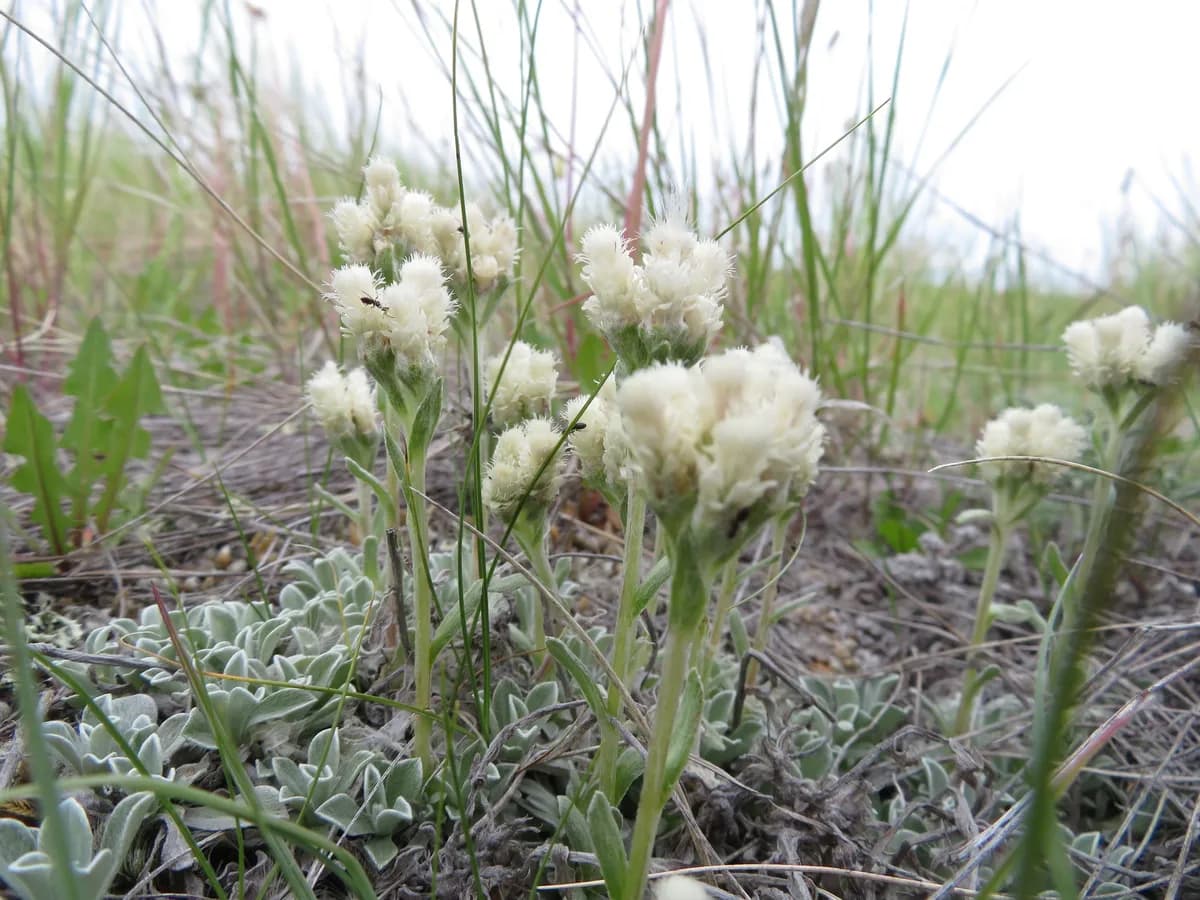
Antennaria parvifolia is a low-growing forb that forms silvery mat-like rosettes and blooms from May through July. It thrives in full sun with low water, making it a good fit for dry, open sites at moderate to high elevations.
Toxicity unknown
Nuttall's Pussytoes (Antennaria parvifolia) is not listed by the ASPCA Animal Poison Control Center (opens in new tab) or the other sources we check, so we have no verdict for it either way. Absence from those lists is not a clearance. If your pet shows symptoms after eating any plant, call the ASPCA at (888) 426-4435.
Light
full sun
Water
low
Size
2"–10" H × 4"–12" W
Bloom
May, Jun, Jul
Native to
AZ, CO, IA, ID and 13 more states
Pollinators
bees, beetles
Before you buy
Your city may pay you to plant this
Cities and water utilities offer rebates for replacing lawn with native and water-wise plants. We track 459 programs across 44 states, each with a link to the provider and the date we last checked it.
Find rebates in your areaPicture natives in your own yard
Upload a photo of your yard and Patch Vision shows a rendering of it planted with natives for your region, like Nuttall's Pussytoes.


Browse plants for this ecoregion
Nuttall's pussytoes is a low-growing native groundcover with soft, silvery-gray foliage that stays attractive year-round. It produces small clusters of white, fuzzy flowers from May through July that resemble tiny cat paws. This drought-tolerant plant spreads slowly to form neat mats, making it excellent for rock gardens and dry slopes.
Growing Nuttall's Pussytoes
Grow Nuttall's Pussytoes in full sun and low water. Mature plants reach 2 to 10 inches tall and spread 4 to 12 inches wide. Expect low maintenance to keep it looking intentional in a front yard.
How to care for Nuttall's Pussytoes, by region
How to care for Nuttall's Pussytoes where it is actually grown: year-round basics plus what to do each season, region by region, with the sources for each.
Care guidance last updated: October 2026
High Plains (includes Lubbock, TX)
Year-round
Siting, soil, watering baseline, size, and host-plant facts for small-leaf pussytoes in Lubbock.
- Small-leaf pussytoes is a low mat-forming perennial with silver-gray leaves that stays under about 6 inches tall. The Lady Bird Johnson Wildflower Center lists Texas within its native range.
- The Wildflower Center lists sun to shade and low water on dry soil. In Lubbock's hot, windy climate, sun with a little afternoon shade is a good middle ground.
- Plant it in well-drained sandy or rocky soil. It spreads by stolons into a dense mat and does well on poor, dry sites where fussier plants struggle.
- Once established it needs very little extra water. Water new plants regularly through their first season, then back off.
- The Wildflower Center lists it as a larval host for the painted lady butterfly.
Fall
Fall planting and mat tidying in Lubbock.
- Fall is a good planting window since cooler weather lets roots settle in before winter.
- Seed sown in fall gets the cold period it needs to germinate, and the seed needs light, so press it onto the soil surface rather than burying it.
- Trim off spent flower stems once they finish and pull out any weeds that crept into the mat.
- Ease off watering as nights cool. The Lubbock area's first frost usually arrives in early November.
A mat edging a front walkway looks tidy when you shear off spent flower stems in fall, and it keeps the planting looking tended.
Winter
Winter hardiness and low-care dormancy in Lubbock.
- The silver-gray leaves stay on through winter, so the mat keeps some color even in cold months.
- This is a hardy Rocky Mountain and Plains species, so Lubbock's winter freezes are not a problem for it.
- Winter water is only needed in a long dry stretch, and then just a light soak on a mild day.
- Avoid piling mulch or leaves on top of the mat, since trapped moisture can rot it. Gravel mulch around it is a better fit.
Spring
Spring planting, division, and early growth in Lubbock.
- Spring is a good time to plant or divide mats once the last hard freeze has passed, usually around mid April on the South Plains.
- Divide stolons or basal rosettes to make new plants, and set them in gritty, well-drained soil.
- Water new divisions every week or so until they root in, then let the soil dry between waterings.
- Painted lady caterpillars may chew a few leaves. Light damage is normal on a host plant.
Summer
Summer heat, wind, and bloom in Lubbock.
- Small creamy flower heads on 6 inch stems open from July through September, per the Wildflower Center.
- Lubbock summers are hot and dry. Established mats handle drought well, but a deep soak every couple of weeks in a long dry spell keeps the leaves from browning.
- If the spot gets punishing afternoon sun and reflected heat, light afternoon shade helps the mat stay silvery and full.
- Skip fertilizer and rich compost. Lean, well-drained soil keeps the mat tight.
Sources: Lady Bird Johnson Wildflower Center: Antennaria parvifolia, South Dakota State University Native Plant Guide: Antennaria parvifolia
Madrean Archipelago (includes Tucson, AZ)
Year-round
Year-round care for Nuttall's pussytoes around Tucson, AZ: sun to shade, dry soil.
- The Wildflower Center lists sun, part shade or shade.
- Soil moisture is listed as dry and water use as low.
- It reaches up to about 6 inches tall.
- The page gives no hardiness or heat limits, so treat it as a trial plant in a hot low-desert yard.
A low carpet under 6 inches suits the front of a bed.
Sources: Lady Bird Johnson Wildflower Center: Antennaria parvifolia
Nebraska Sand Hills (includes Valentine)
Year-round
Year-round care for Nuttall's pussytoes around Valentine: full sun, well drained sandy or rocky soil, and little water once established.
- Give it full sun. It tolerates very light shade, and the Wildflower Center lists sun to shade.
- Plant it in well-drained sandy or rocky soil. It adapts to poor, dry conditions.
- Water use is low. It needs minimal extra water once established.
- Expect a low plant about 2 to 8 inches tall, with a grayish basal rosette.
- It can be propagated by dividing its stolons.
- Small whitish flower clusters appear from July through September.
A low silver-gray mat stays under a few inches tall, so it reads as a neat edging or groundcover along a walk or border.
Sources: Lady Bird Johnson Wildflower Center: Antennaria parvifolia, South Dakota State University Native Plant Guide: Antennaria parvifolia
In an HOA neighborhood
Nuttall's Pussytoes is an HOA-friendly choice. Maintenance level: low. Tidiness: 4 out of 5.
Works well in: front yard, foundation, street edge, mid zone.
Wildlife value
The flowers attract native bees and beetles during the summer blooming period. The evergreen foliage provides year-round habitat for small insects and ground-dwelling creatures.
Common questions
- When does Antennaria parvifolia bloom?
- Antennaria parvifolia typically flowers from May through July, producing small clustered heads on short stems above its gray-green rosettes.
- What pollinators visit Antennaria parvifolia?
- Bees and beetles are the main visitors to Antennaria parvifolia flowers, drawn to the small clustered blooms during the summer months.
- How much water does Antennaria parvifolia need?
- Antennaria parvifolia is adapted to low water conditions and does best in soil that drains well and dries out between rainfalls.
- What kind of light does Antennaria parvifolia prefer?
- This plant grows best in full sun, where its low mats of gray-green leaves can spread and flower reliably.
- What growth habit does Antennaria parvifolia have?
- Antennaria parvifolia is a mat-forming forb with evergreen, felted rosettes that stay low to the ground and spread by short rhizomes or stolons.
- Is Nuttall's Pussytoes HOA-friendly?
- Nuttall's Pussytoes is generally an HOA-friendly choice in the right placement, with low maintenance.
These answers were drafted with an AI model from this plant's data. Verify care details with a local expert.
Native range data from the World Checklist of Vascular Plants (Kew). Pollinator and host plant associations compiled from GBIF, iNaturalist, and published ecological literature.
If something looks wrong
Common plant problems, and what to check first
These come up on almost any plant. Each guide lists the likely causes in the order they are worth ruling out, with one thing to check before you act on any of them, and links to the source it came from.
- It is dying right after planting
- Leaves turning yellow
- Wilting even though I watered it
- Brown crispy leaf tips
- Bugs on the plant
Ready to grow Nuttall's Pussytoes? Add it to your garden in Pollinator Patch to track it and get season-by-season care guidance.