Prairie beardtongue
Penstemon tubaeflorus
Last reviewed: October 2026
Prairie beardtongue (Penstemon tubaeflorus) is a perennial forb native to AR, IA, IL, IN and 12 more states. It blooms in May, June, and July. The flowers draw bees and hummingbirds.
Toxicity unknown
Prairie beardtongue (Penstemon tubaeflorus) is not listed by the ASPCA Animal Poison Control Center (opens in new tab) or the other sources we check, so we have no verdict for it either way. Absence from those lists is not a clearance. If your pet shows symptoms after eating any plant, call the ASPCA at (888) 426-4435.
Light
full sun
Water
low
Size
18"–36" H × 12"–18" W
Bloom
May, Jun, Jul
Native to
AR, IA, IL, IN and 12 more states
Pollinators
bees, hummingbirds
Before you buy
Your city may pay you to plant this
Cities and water utilities offer rebates for replacing lawn with native and water-wise plants. We track 458 programs across 44 states, each with a link to the provider and the date we last checked it.
Find rebates in your areaPicture natives in your own yard
Upload a photo of your yard and Patch Vision shows a rendering of it planted with natives for your region, like Prairie beardtongue.


Browse plants for this ecoregion
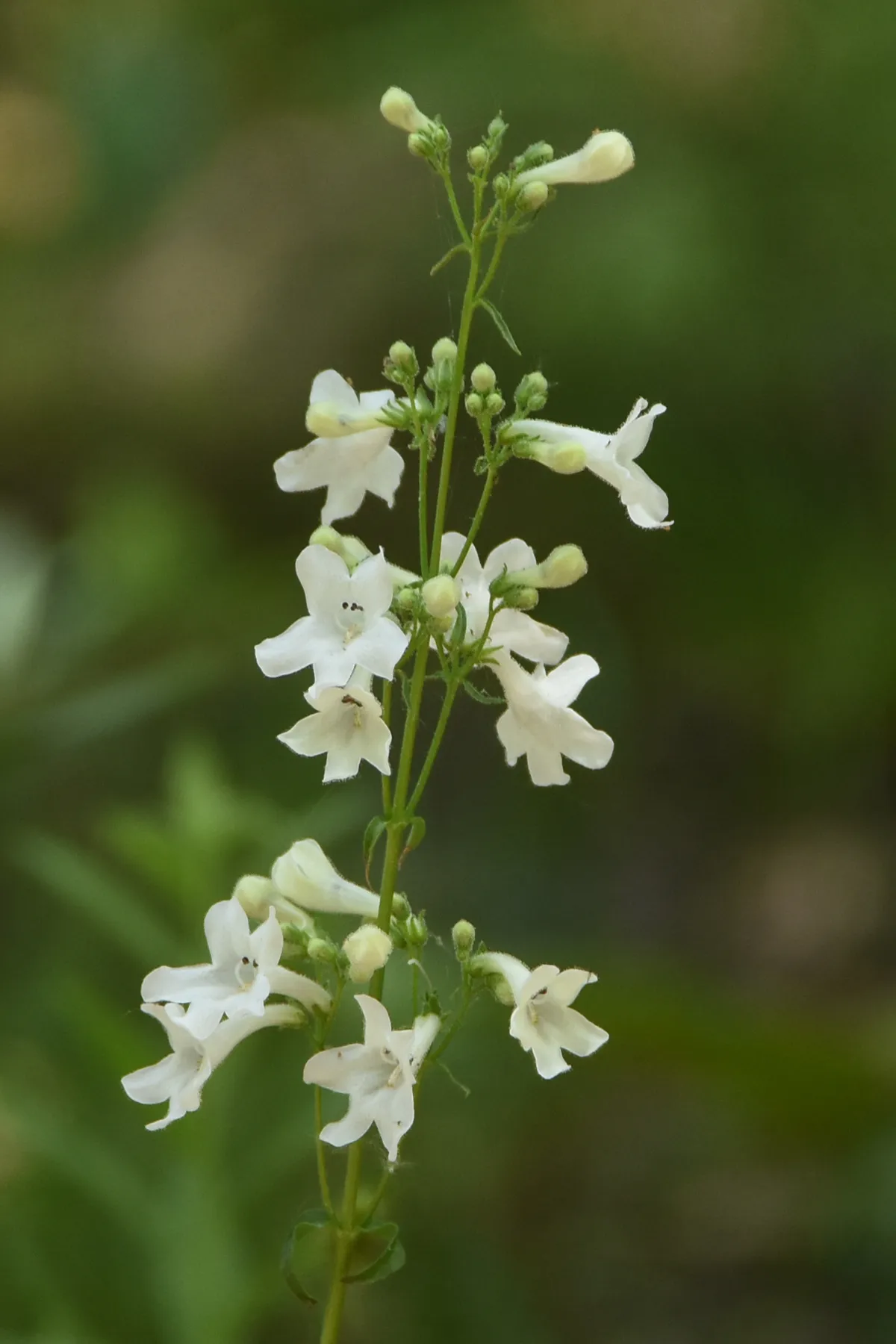
An upright prairie perennial with a basal rosette of leaves and slender spikes of tubular white flowers rising cleanly above the foliage in late spring. It holds a tidy, vertical form.
Growing Prairie beardtongue
Grow Prairie beardtongue in full sun and low water. Mature plants reach 18 to 36 inches tall and spread 12 to 18 inches wide.
How to care for Prairie beardtongue, by region
How to care for Prairie beardtongue where it is actually grown: year-round basics plus what to do each season, region by region, with the sources for each.
Care guidance last updated: September 2026
Ouachita Mountains (includes Hot Springs, AR)
Year-round
Prairie beardtongue is a native Arkansas wildflower with tall spikes of small white trumpet-shaped flowers. It settles in easily once it has full sun and soil that drains well, and needs very little care after that.
- Give it full to part sun and soil that drains well, whether that is rocky, sandy, or regular garden loam. Standing water at the roots is the main way to lose this plant.
- This species grows naturally in the Ouachita Mountains region, which includes Garland County, so a Hot Springs yard is already inside its home range.
- Plants form an upright clump 1 to 3 feet tall with white, tube-shaped flowers blooming from May into summer.
- Bees and butterflies visit the flowers regularly, including long-tongued native bees the Xerces Society names specifically for this plant.
The upright, clumping habit and white flower spikes read as a tidy, HOA-friendly border plant rather than a sprawling wildflower.
Fall
Fall is cleanup time as this plant finishes blooming and goes dormant. It also leaves behind reddish seed pods on red stems that stand out if left standing.
- Hot Springs' average first frost lands in early November, so blooming has already wrapped up and the plant is heading into dormancy well before then.
- Wait until frost has browned the stalks before cutting them back close to the ground. There is no benefit to trimming green stalks early.
- Good drainage matters through fall's rain just as much as summer. University of Tennessee Extension notes well-drained soil is essential to this plant's survival year-round.
- Prairie Moon Nursery describes the seed pods as reddish and perched on red stems, so leaving a few stalks standing into fall adds a bit of fall interest before the final cutback.
Cutting back the dead stalks after frost keeps a front bed looking tended through the dormant months.
Winter
Winter is quiet for this plant. Because it grows wild in this same region, it is already suited to whatever winter Hot Springs typically brings.
- This species occurs naturally in the Ouachita Mountains region that includes Garland County, so it already handles local winter lows without covering or mulching.
- There is nothing to do outdoors right now. Skip watering and feeding a dormant plant.
- If an unusually hard freeze warning comes through, a light layer of leaf mulch over the crown gives extra protection to a plant still in its first year. Established plants do not need it.
Leaving the dormant clump alone over winter keeps a low, tidy footprint in a front bed rather than bare dug-up ground.
Spring
Spring is when new growth appears and the flower stalks that will open by May start forming.
- Hot Springs' average last frost falls in late March, so it works well to clear last year's dead stalks and top-dress with compost once that date passes.
- Keep watering light. This plant does best in medium to dry soil, and spring's wetter stretches are the easiest time to overwater it.
- Give it full to part sun. A spot shaded most of the day will produce fewer flower stalks.
Summer
Summer is bloom season, with the white flower spikes opening through the humid Hot Springs summer. Deadheading spent spikes can stretch the show a bit longer.
- Once a flower spike finishes blooming, snip it off just below the last flower. Missouri Botanical Garden notes this can bring on a second flush of blooms before the season ends.
- Good drainage matters most right now. A humid summer with heavy rain, like Hot Springs gets, is when soggy soil is most likely to rot the roots.
- This plant tolerates heat and dry spells well once established, so extra watering beyond normal rainfall usually is not needed.
- Long-tongued native bees, swallowtail butterflies, and ruby-throated hummingbirds are frequent visitors to the flowers during bloom, per Xerces Society records.
Deadheading spent spikes keeps a front-yard bed looking tended through the rest of the season.
Sources: Lady Bird Johnson Wildflower Center - Penstemon tubaeflorus, Missouri Botanical Garden Plant Finder - Penstemon tubaeflorus, Arkansas Native Plant Society - Penstemon tubiflorus, Xerces Society - Plants for Pollinators: Beardtongue, University of Tennessee Extension Smart Yards - Penstemon tubaeflorus, Almanac.com - Frost Dates for Hot Springs, AR (community tip)
Wildlife value
The tubular white flowers are visited by a range of native bees as well as hummingbirds passing through.
Common questions
- How much sun does Prairie beardtongue need?
- Prairie beardtongue grows best in full sun conditions.
- When does Prairie beardtongue bloom?
- Prairie beardtongue blooms in May, June, and July.
- Where is Prairie beardtongue native?
- Prairie beardtongue (Penstemon tubaeflorus) is native to AR, IA, IL, IN and 12 more states, per the World Checklist of Vascular Plants (Kew).
- What pollinators does Prairie beardtongue attract?
- Prairie beardtongue draws bees and hummingbirds.
Native range data from the World Checklist of Vascular Plants (Kew). Pollinator and host plant associations compiled from GBIF, iNaturalist, and published ecological literature.
If something looks wrong
Common plant problems, and what to check first
These come up on almost any plant. Each guide lists the likely causes in the order they are worth ruling out, with one thing to check before you act on any of them, and links to the source it came from.
- It is dying right after planting
- Leaves turning yellow
- Wilting even though I watered it
- Brown crispy leaf tips
- Bugs on the plant
Ready to grow Prairie beardtongue? Add it to your garden in Pollinator Patch to track it and get season-by-season care guidance.