White Blue-eyed Grass
Sisyrinchium albidum
Last reviewed: September 2026
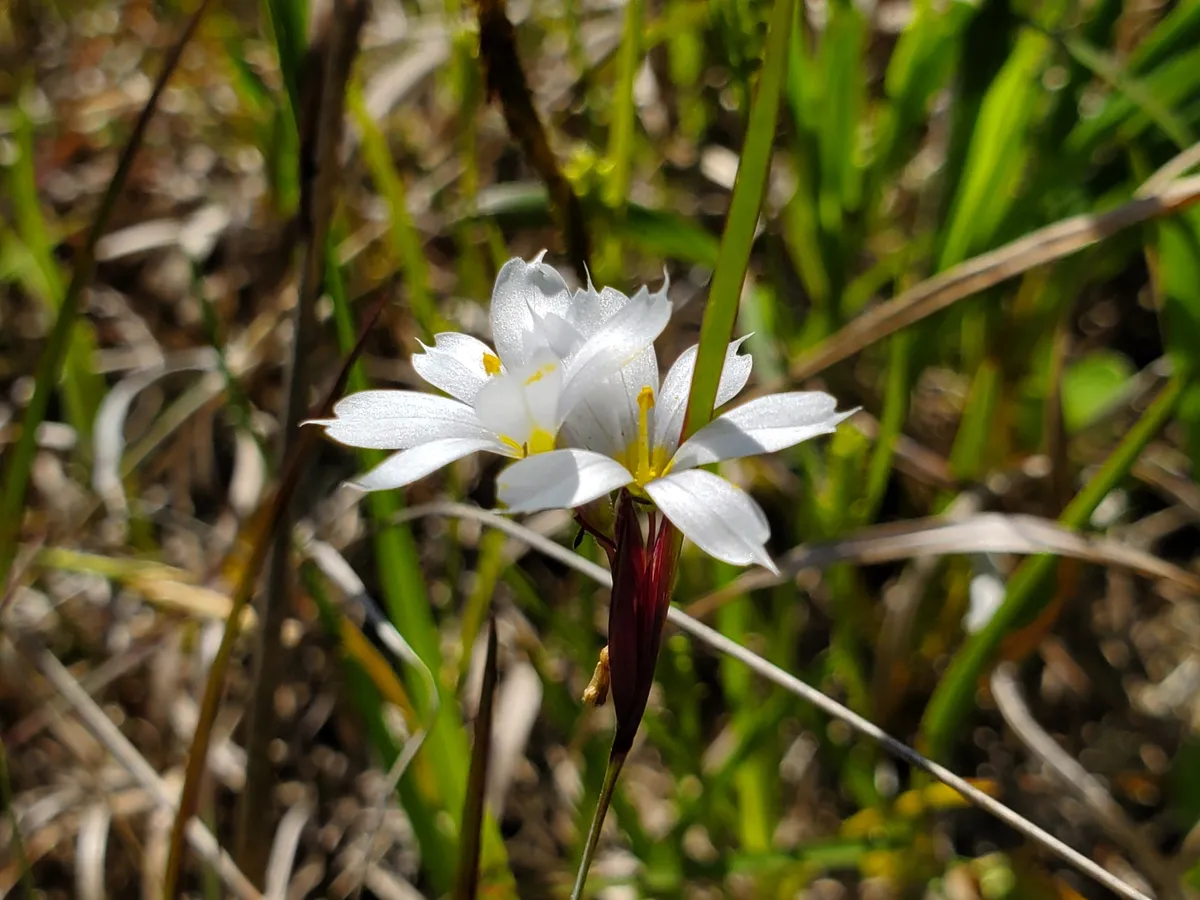
Sisyrinchium albidum, or white blue-eyed grass, is a low-growing forb that blooms in May and June and thrives in full sun with low water needs in prairies, meadows, and open woodland edges.
Toxicity unknown
White Blue-eyed Grass (Sisyrinchium albidum) is not listed by the ASPCA Animal Poison Control Center (opens in new tab) or the other sources we check, so we have no verdict for it either way. Absence from those lists is not a clearance. If your pet shows symptoms after eating any plant, call the ASPCA at (888) 426-4435.
Light
full sun
Water
low
Size
6"–12" H × 4"–8" W
Bloom
May, Jun
Native to
AL, AR, FL, GA and 17 more states
Pollinators
bees, butterflies
Before you buy
Your city may pay you to plant this
Cities and water utilities offer rebates for replacing lawn with native and water-wise plants. We track 459 programs across 44 states, each with a link to the provider and the date we last checked it.
Find rebates in your areaPicture natives in your own yard
Upload a photo of your yard and Patch Vision shows a rendering of it planted with natives for your region, like White Blue-eyed Grass.


Browse plants for this ecoregion
White blue-eyed grass is a delicate native perennial that forms neat clumps of narrow, grass-like foliage. It produces small white flowers with yellow centers in late spring and early summer, creating a charming ground-level display.
Growing White Blue-eyed Grass
Grow White Blue-eyed Grass in full sun and low water. Mature plants reach 6 to 12 inches tall and spread 4 to 8 inches wide. Expect low maintenance to keep it looking intentional in a front yard.
How to care for White Blue-eyed Grass, by region
How to care for White Blue-eyed Grass where it is actually grown: year-round basics plus what to do each season, region by region, with the sources for each.
Care guidance last updated: August 2026
Ridge and Valley (includes Harrisburg, PA)
Year-round
Blue-eyed grass is easygoing in the Harrisburg area. Plant it in a sunny, well-drained spot and let it be.
- Water regularly through the first season to help roots establish, then cut back to occasional watering during dry spells.
- Once established, it tolerates dry soil well and needs little supplemental water beyond typical central Pennsylvania rainfall.
- Keep mulch thin. This small plant can get smothered by a heavy layer, a light topdressing is enough.
- Give it full sun. In shade it produces fewer flowers and gets leggy.
- The most common mistake is planting it in rich, damp, or heavily mulched soil. It thrives on lean, well-drained ground and struggles where water sits.
- It's part of Pennsylvania's native flora, so it's a genuine local choice for a Harrisburg-area garden.
Its short, grass-like clumps stay under 6 inches and read as a neat border edge rather than an unruly patch, an HOA-friendly front-yard choice.
Fall
Fall is the second division window and a quiet season otherwise.
- Divide clumps in October if you didn't in spring. Dormant fall division works just as well.
- Let any remaining seed heads drop if you want the patch to expand on its own.
- No fertilizing is needed heading into fall. Lean soil is what this plant wants year round.
- Clear fallen leaves off the clump so foliage isn't smothered before winter dieback.
Winter
Foliage dies back completely in a Harrisburg winter, and that's normal.
- Expect the grass-like foliage to die back to the ground in central Pennsylvania's cold winters. It returns from the roots in spring.
- No winter protection is needed for established plants.
- Leave the dormant crown undisturbed rather than digging or dividing now, wait for the spring or fall windows instead.
- This is a good season to plan where you'll divide or spread it come spring.
Spring
Spring is bloom time and the best window for planting or dividing.
- Divide established clumps in early spring if you want to spread it to new spots, one of the two recommended division windows.
- Expect the small blue-purple, yellow-centered flowers to open in May.
- Plant new starts once the soil has dried out from snowmelt and can be worked.
- Watch for lanky, floppy growth if the soil is too rich. Thin, average soil keeps it compact.
Summer
After the June bloom fades, a quick trim keeps it tidy through Harrisburg's humid summer.
- Shear the plant back after flowering finishes in June if you want a neater clump and less volunteer seeding.
- Established plants handle Harrisburg's humid summer heat with little to no supplemental water as long as drainage is good.
- Skip the shearing if you'd rather let it self-seed and fill in a bed naturally. It spreads readily by both seed and rhizome.
- Avoid soggy spots during summer storms. Standing water is harder on this plant than heat is.
Sources: USDA Forest Service, Celebrating Wildflowers - Sisyrinchium albidum, Prairie Moon Nursery - Sisyrinchium albidum, University of Wisconsin-Madison Extension - Blue-eyed Grass
In an HOA neighborhood
White Blue-eyed Grass is an HOA-friendly choice. Maintenance level: low. Tidiness: 4 out of 5.
Works well in: front yard, foundation, street edge, mid zone.
Wildlife value
The flowers attract native bees and small butterflies during its May through June bloom period. Its compact size makes it particularly valuable for supporting smaller pollinators in urban settings.
Common questions
- When does white blue-eyed grass bloom?
- Sisyrinchium albidum typically flowers in May and June, producing small white to pale violet blooms on slender, grass-like stems.
- What pollinators visit white blue-eyed grass?
- Bees and butterflies are the main visitors, drawn to the flowers during their May to June bloom period.
- What growing conditions does this plant prefer?
- It grows best in full sun with low water needs, often in well-drained soils found in prairies, meadows, and open woodlands.
- Is white blue-eyed grass a true grass?
- No. Despite its name, Sisyrinchium albidum is a forb in the iris family, not a true grass, and its leaves only resemble grass blades.
- Is White Blue-eyed Grass HOA-friendly?
- White Blue-eyed Grass is generally an HOA-friendly choice in the right placement, with low maintenance.
These answers were drafted with an AI model from this plant's data. Verify care details with a local expert.
Native range data from the World Checklist of Vascular Plants (Kew). Pollinator and host plant associations compiled from GBIF, iNaturalist, and published ecological literature.
If something looks wrong
Common plant problems, and what to check first
These come up on almost any plant. Each guide lists the likely causes in the order they are worth ruling out, with one thing to check before you act on any of them, and links to the source it came from.
- It is dying right after planting
- Leaves turning yellow
- Wilting even though I watered it
- Brown crispy leaf tips
- Bugs on the plant
Ready to grow White Blue-eyed Grass? Add it to your garden in Pollinator Patch to track it and get season-by-season care guidance.