California-poppy
Eschscholzia californica
Last reviewed: September 2026
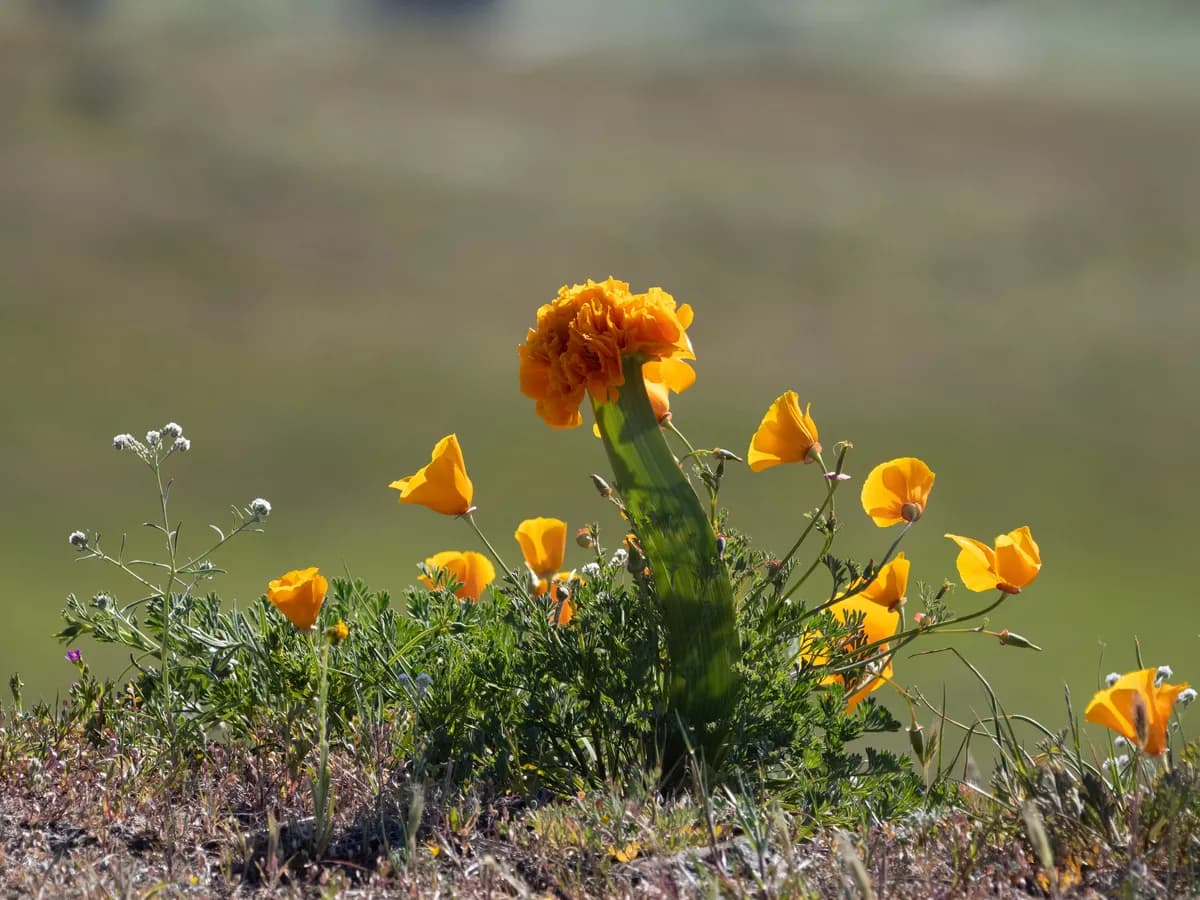
California poppy blooms February through July with bright orange flowers across western states including California, Arizona, and Oregon. This drought-tolerant wildflower attracts bees and beetles in full sun locations.
Toxicity unknown
California-poppy (Eschscholzia californica) is not listed by the ASPCA Animal Poison Control Center (opens in new tab) or the other sources we check, so we have no verdict for it either way. Absence from those lists is not a clearance. If your pet shows symptoms after eating any plant, call the ASPCA at (888) 426-4435.
The USDA PLANTS Database (opens in new tab) does not flag California-poppy as toxic to livestock.
Light
full sun
Water
low
Size
6"–24" H × 6"–18" W
Bloom
Feb, Mar, Apr, May, Jun, Jul
Native to
AZ, CA, NM, NV and 4 more states
Pollinators
bees, beetles
Before you buy
Your city may pay you to plant this
Cities and water utilities offer rebates for replacing lawn with native and water-wise plants. We track 459 programs across 44 states, each with a link to the provider and the date we last checked it.
Find rebates in your areaPicture natives in your own yard
Upload a photo of your yard and Patch Vision shows a rendering of it planted with natives for your region, like California-poppy.


Browse plants for this ecoregion
California poppy has vibrant orange blooms from February through July. This low-water annual grows 6-24 inches tall and reseeds readily in sunny locations. It goes dormant in summer after flowering.
Growing California-poppy
Grow California-poppy in full sun and low water. Mature plants reach 6 to 24 inches tall and spread 6 to 18 inches wide. Expect moderate maintenance to keep it looking intentional in a front yard.
How to care for California-poppy, by region
How to care for California-poppy where it is actually grown: year-round basics plus what to do each season, region by region, with the sources for each.
Care guidance last updated: July 2026
Central California Valley (includes Sacramento, CA)
Year-round
California poppy is a fast, cheerful annual wildflower that plants itself. In the Sacramento Valley you scatter seed in fall, let winter rain grow it, enjoy an orange spring bloom, then let it die back and reseed for next year.
- Sow seed directly in the ground in fall (October to November) right before the first rains, not in spring or summer. It hates being transplanted, so skip the nursery pots and just scatter seed.
- Give it full sun and lean, fast-draining ground. On Sacramento's heavy clay, sow on a slight mound or a raised, gritty spot so water never sits around the roots.
- Water low. Winter and spring rain usually does the whole job. Once it is up and growing, do not add summer water, which rots the roots and kills the plant.
- Let the last flowers dry into papery seed pods and drop their seed, so the patch comes back on its own every year without you replanting.
Fall
Fall is the prime planting time in the Central Valley. As the first rains arrive in October and November, you scatter poppy seed so winter can germinate and grow it.
- Scatter seed on cleared, weed-free ground in October or November, timed to the first real rains. Rake it in lightly so it makes contact with the soil, do not bury it deep.
- On Sacramento clay, work in some grit or sow on a slight mound for sharp drainage. Poppies germinate and grow best where winter water drains away fast.
- Let the rain do the watering. Only hand-water lightly if a dry spell stalls germination right after sowing, then stop once the rains return.
- Sow poppies alongside other fall-planted valley natives so their roots all establish over the wet winter before next summer's drought.
Freshly sown bare soil in the front yard can look unfinished. A defined bed shape with a clean edge, or a light straw cover, signals a deliberate wildflower planting and reads as intentional to neighbors and HOA reviewers.
Winter
Winter is the quiet growing season in Sacramento, not dormancy. Cool rain and Tule fog push the fall-sown seed into low green rosettes that build up for the spring bloom.
- Let winter rain do the watering. In a normal wet winter you add no supplemental water at all. Only water if you hit an unusually long dry, foggy-but-rainless stretch.
- Watch drainage on clay. If seedlings sit in standing water after storms, they rot, so make sure the bed drains and never pools.
- Keep weeds pulled while the ground is soft so the young poppy rosettes are not crowded out before spring.
- Expect green low growth, not flowers, through December to February. Mild frost and fog are fine and part of the normal cycle here.
Low green rosettes over winter can look like weeds to an HOA. A tidy, clearly edged bed keeps the planting reading as an intentional wildflower patch through the off-bloom months rather than an unkempt lawn.
Spring
Spring is peak bloom in the valley. Your fall-sown poppies open into a sheet of orange from March into May while the soil is still moist from winter rain.
- Enjoy the bloom and do almost nothing. Soil is still damp from winter storms, so hold off on the hose and let the spring show run on stored rain.
- As the weather warms in April and May, taper any watering to nothing so the plants harden off toward their natural summer rest.
- Pull competing weeds by hand while the ground is soft, but leave the poppies alone. They resent root disturbance.
- Leave the earliest spent flowers on the plant so they can set the seed pods that will refill the patch next season.
For a front yard, a spring poppy patch reads as intentional if you keep a mowed or spaded edge around the bed and pull tall weeds. A clean border tells a passerby or HOA reviewer this is a planted wildflower bed, not a neglected corner.
Summer
Summer in Sacramento is hot and bone dry, and that is when California poppy finishes its life cycle. The plants set seed, brown out, and die back, which is normal, not a problem to fix with water.
- Do not water. Summer irrigation on a spent poppy patch is the number one local mistake and just invites rot and weeds. The dry season is supposed to be dry.
- Let the plants dry to tan and drop their seed onto the ground. Those seeds are next year's bloom, so resist the urge to rip everything out too early.
- Once the seed has clearly shed (usually by late June or July), you can pull or rake the crispy stalks to tidy the bed.
- If you interplant with summer-active valley natives like California fuchsia or deer grass, water only those spots deeply and rarely, never the bare poppy ground.
A browned-out summer poppy bed can read as dead or messy to an HOA. Cutting back the crispy stalks after seed drops, and keeping a crisp bed edge, keeps the front yard looking intentional and avoids a nuisance or weed-abatement letter.
Sources: Calscape, California Native Plant Society, Eschscholzia californica, Lady Bird Johnson Wildflower Center, Eschscholzia californica, Las Pilitas Nursery, Eschscholzia californica growing notes, UC Master Gardeners, California poppy and Central Valley wildflower care, Las Pilitas Nursery, California native winter care and drainage
In an HOA neighborhood
California-poppy is an HOA-friendly choice in the right placement. Maintenance level: moderate. Tidiness: 2 out of 5.
Works well in: mid zone, street edge.
- Looks messy after blooming when plants dry out
- Self-seeds aggressively which may create unwanted spread
- Dormant period creates brown patches in summer
Wildlife value
California poppy supports native bees and beetles as pollinators. The flowers provide abundant pollen but minimal nectar resources.
Common questions
- When does California poppy bloom?
- California poppy blooms from February through July, producing bright orange flowers throughout spring and early summer.
- Where is California poppy native?
- California poppy is native to Arizona, California, Nevada, New Mexico, Oregon, Texas, Utah, and Washington.
- What pollinators visit California poppy?
- California poppy attracts bees and beetles as primary pollinators, making it valuable for supporting native pollinator populations.
- What growing conditions does California poppy need?
- California poppy thrives in full sun locations with low water requirements, making it an excellent choice for drought-tolerant gardens.
- Is California-poppy toxic to livestock?
- The USDA PLANTS Database does not flag California-poppy as toxic to livestock.
- Is California-poppy HOA-friendly?
- California-poppy is generally an HOA-friendly choice in the right placement, with moderate maintenance.
These answers were drafted with an AI model from this plant's data. Verify care details with a local expert.
Native range data from vouchered herbarium specimen records and regional native plant society lists. Pollinator and host plant associations compiled from GBIF, iNaturalist, and published ecological literature.
If something looks wrong
Common plant problems, and what to check first
These come up on almost any plant. Each guide lists the likely causes in the order they are worth ruling out, with one thing to check before you act on any of them, and links to the source it came from.
- It is dying right after planting
- Leaves turning yellow
- Wilting even though I watered it
- Brown crispy leaf tips
- Bugs on the plant
Ready to grow California-poppy? Add it to your garden in Pollinator Patch to track it and get season-by-season care guidance.